
Model identification and track-system inspection
SANY SY215C Undercarriage Inspection and Fitment Guide
A SANY SY215C undercarriage should not be identified from the base model name alone. Published SY215C materials describe different regional and application configurations, while SY215LC, long-reach, and other lettered versions can use different crawler lengths, roller counts, shoes, and related parts. A dependable inspection starts with the complete machine identity and the components actually installed.
1. Identify the exact SY215C before selecting undercarriage parts
Record the complete model as shown on the identification plate, not a shortened fleet nickname. Capture the serial number, destination-market specification, application package, shoe width, roller count, visible casting or part numbers, and any evidence of a previous conversion. Photograph the full machine from both sides, the plate, complete track groups, component markings, mounting faces, and wear surfaces.
SANY literature for machines carrying the SY215 name has been published in more than one configuration. One official SY215C brochure lists a 600 mm standard shoe, 49 shoes per side, two carrier rollers, and nine lower rollers. Other SY205C/SY215C literature lists different shoe counts for different builds, and the current long-reach product page describes another application-specific machine. These differences make physical verification essential.
This is independent educational content and is not affiliated with or endorsed by SANY. Brand and model names are used only to identify the equipment family.
2. SY215C details that can change parts fitment
| Identification detail | Why it matters | What to send |
|---|---|---|
| Complete model and suffix | SY215C, SY215LC, long-reach, regional, and later lettered versions should not be treated as one build | Clear plate photo and full sales designation |
| Serial number and market | Serial breaks and regional specifications can change assemblies and part numbers | Complete serial or PIN and destination market |
| Roller and shoe count | Helps distinguish crawler length and installed configuration | Count each side after safe cleaning |
| Shoe width and bolt pattern | Affects flotation, leverage, hardware, and chain compatibility | Width, hole spacing, bolt size, and photos |
| Component number and dimensions | Similar-looking rollers, idlers, and sprockets may have different shafts, flanges, holes, or offsets | Readable number plus agreed measurement points |
| Previous undercarriage work | A rebuilt machine may no longer match a simple model lookup | Known repair history and photos of both sides |
3. SANY SY215C undercarriage inspection checklist
Park on stable, level ground, lower the attachment, apply the parking controls, shut down the machine, and isolate energy as directed by the correct operation and maintenance manual. Keep personnel outside the travel path. Track adjusters and recoil springs contain stored energy and require the exact approved procedure.
Track chains, pins, bushings, and links
Clean enough material away to inspect seal areas and articulation. Look for cracked links, damaged seals, dry or stiff joints, uneven rail height, side wear, localized heat, and inconsistent movement. Measure pitch and rail wear only with the correct method and reference limits. Heat or noise is an inspection signal, not proof of one failed part.
Lower rollers and carrier rollers
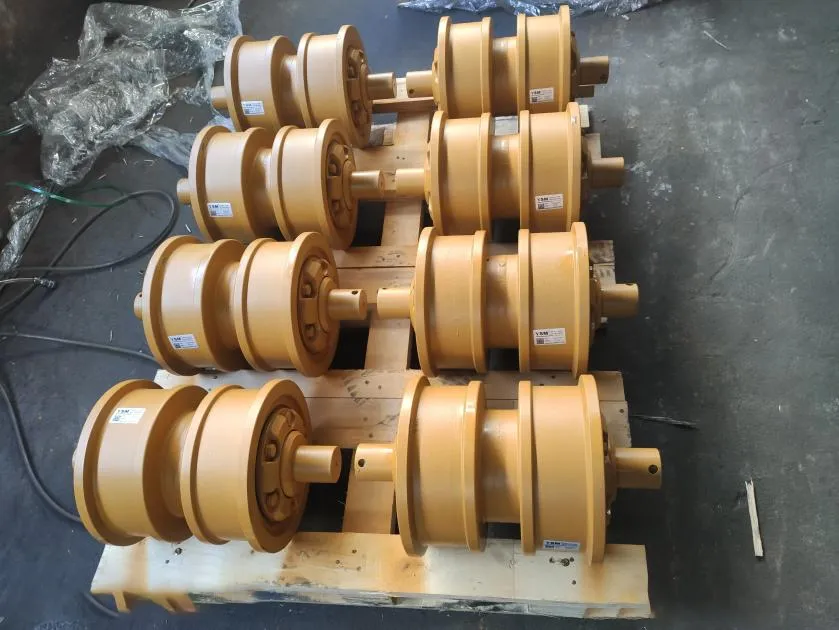
Inspect every position for leakage, flat spots, shell damage, loose fasteners, flange contact, abnormal side wear, and restricted rotation. Compare the same positions on the left and right. Count the rollers because published and installed configurations may differ. A stationary roller can force the chain to slide over the shell and accelerate rail wear.
Front idlers, guides, and adjuster area
Check the idler tread and flanges, shaft or guide play, leakage, guide surfaces, and its position in the track frame. Inspect the adjuster area for fresh grease, damaged fittings, distorted covers, corrosion, impact marks, and blocked drainage. Repeated loss of tension can involve leakage, worn chains, packing, or an incorrect measurement method.
Sprockets and chain engagement
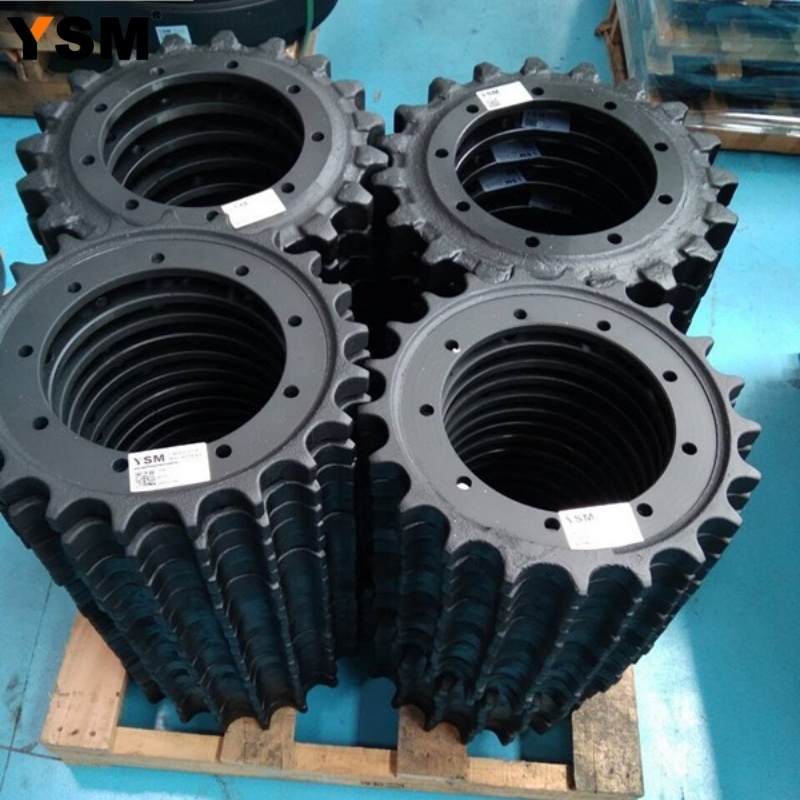
Look for sharp or asymmetric tooth profiles, cracking, loose mounting hardware, side contact, and poor bushing seating. Sprocket wear and chain pitch wear develop together. Replacing one heavily worn mating component without measuring the other can produce rough engagement and concentrated loading.
Track shoes, hardware, and guards
Inspect shoes for cracks, bending, worn grousers, elongated holes, and polished movement marks around fasteners. Check for loose or missing bolts and damaged guards. Record the actual shoe width and pattern; a wider shoe is not automatically the correct choice for every surface because extra leverage can increase side loading.
4. What SY215C undercarriage wear patterns may indicate
| Observed condition | Possible contributors | Useful next check |
|---|---|---|
| One side wears faster | Slope work, repeated turning, packing, alignment, component condition, or frame damage | Compare both sides and review the work pattern |
| Heavy roller-flange contact | Side loading, guide wear, chain alignment, idler play, or repeated tight turns | Inspect rail sides, idler guidance, rollers, and frame |
| Rough sprocket engagement | Pitch wear, tooth wear, stiff joints, packing, incorrect tension, or mismatched components | Clean and measure the chain and sprocket together |
| Track will not remain adjusted | Adjuster leakage, worn chain, changing packing, damaged seals, or inconsistent procedure | Repeat the manual method and inspect safely for leakage |
| One roller position overheats | Internal roller problem, restricted rotation, impact, mounting issue, or localized load | Stop and compare temperature, rotation, leakage, and adjacent wear |
| Loose shoe bolts return | Damaged threads, stretched hardware, worn mating faces, incorrect procedure, or distorted shoes | Inspect the complete joint rather than retightening indefinitely |
A pattern narrows the inspection; it does not establish a root cause without measurements, operating history, and qualified diagnosis.
5. Check SY215C track tension with the correct manual
Track-sag values and measurement procedures can change with the exact crawler configuration, shoe, ground material, and market documentation. Position and clean the machine exactly as the applicable manual directs. Record the ground condition and measurement points so future checks are comparable. Do not borrow a value from another SY215 variant.
An over-tight track increases loading through links, bushings, rollers, idlers, sprockets, adjusters, and travel components. An excessively loose track can slap, mis-track, climb, or derail. Never stand in the release path of pressurized grease or attempt recoil-spring disassembly without trained service support.
6. Plan replacement around the complete wear system
Measure the chains, rollers, carrier rollers, idlers, sprockets, shoes, hardware, guides, and frame condition before defining the repair. Decide whether a local component failure or whole-system wear is present. A new roller or sprocket may not solve an alignment, pitch, frame, or operating problem.
Stop operation and request qualified inspection when
- a link, shoe, roller shell, idler, guard mount, or frame area is cracked;
- the chain climbs the sprocket or the track is close to derailment;
- there is severe leakage, smoke, seizure, or abnormal heat;
- critical fasteners are missing, broken, or repeatedly loose;
- the machine develops sudden tracking, vibration, or impact noise; or
- the adjuster or recoil assembly is visibly damaged.
7. Information needed for SY215C undercarriage parts
- brand, complete model, suffix, application, and regional specification;
- complete serial number or PIN;
- part name, quantity, and readable part or casting number;
- overall, mounting, marking, and wear-surface photos;
- roller count, shoe count, shoe width, link count, and bolt pattern where relevant;
- requested dimensions from agreed reference points;
- destination country and working conditions; and
- known conversions, mixed parts, or previous repairs.
Appearance alone is not proof of compatibility. Use the identification and installed assembly to confirm the part before ordering.
Frequently Asked Questions
Are SY215C and SY215LC undercarriage parts interchangeable?
Do not assume so. The full suffix, serial range, crawler length, roller count, shoe specification, part numbers, and measurements must be checked.
How many lower rollers does an SY215C have?
One official SY215C brochure lists nine per side, but published SY215-family configurations vary. Count the installed rollers and confirm the complete machine identity.
Can a wider track shoe be fitted for better flotation?
Only after checking the approved configuration and working conditions. Shoe width changes flotation and also changes leverage and side loading on the undercarriage.
Should the sprocket be replaced when the chain is replaced?
Measure both as a mating system. The decision depends on tooth profile, chain pitch, engagement, wear limits, and the repair plan for the exact machine.
Technical references
Check SY215C Undercarriage Replacement Options
Send the complete identification, photos, and measurements for a model-specific review. We can check suitable supply options for requested items such as:
- track rollers and carrier rollers;
- front idlers and sprockets;
- track chains, track shoes, and related fasteners.
Corporate Email: sales@china-ysm.com
WhatsApp: +86-18606961587
Compatibility and availability must be confirmed from the complete model, serial number, part number, clear photos, requested dimensions, quantity, destination country, and working conditions before ordering.