
Operator technique and preventive maintenance
Dozer Operating Habits That Accelerate Undercarriage Wear
A bulldozer undercarriage does not wear only because of hours on the meter. Reverse travel, unnecessary speed, repeated turns in one direction, counter-rotation, track spin, side-slope work, and packed material change where and how the track system is loaded. Operators and maintenance teams can use the resulting wear patterns to improve work planning and decide what needs closer inspection.
1. Operating technique matters, but first establish a maintenance baseline
Do not blame an operator before checking the machine. Clean the undercarriage and inspect both sides for loose hardware, leakage, seized rollers, damaged guards, bent shoes, worn idlers, sprocket condition, chain articulation, and frame damage. Confirm track tension by the method and value in the exact operation and maintenance manual.
Wear is influenced by abrasive material, moisture, impact, shoe width, machine configuration, component condition, and maintenance as well as technique. The goal is to connect repeatable site behavior with repeatable wear evidence, not to assign one symptom to one cause.
2. Why excessive reverse travel and speed increase wear
OEM guidance consistently advises minimizing high-speed travel in nonproductive situations, especially reverse travel. Direction changes alter how the chain, bushings, sprocket, rollers, and idlers carry load. More travel cycles also mean more contact cycles, while speed increases impact as links enter and leave the sprocket and move over the rollers.
This does not mean reverse travel is prohibited. Dozers must reverse as part of normal production. The practical target is unnecessary distance and speed: long empty returns, poorly planned access routes, or repeated repositioning that could be shortened safely.
What to review
- average forward and reverse travel distance per production cycle;
- whether the return path can be shortened without creating a safety risk;
- high-speed travel that adds no production value;
- bushing and sprocket-pocket wear trends; and
- temperature, noise, and engagement changes after long travel periods.
3. Repeated one-direction turning and pivot turns create side loading
A dozer that turns the same way through most of a shift can develop unequal left-right wear. Turning pushes chain rails against roller and idler flanges and redistributes load across the shoes. Counter-rotation and tight pivot turns can add stronger lateral forces, particularly on firm, abrasive ground.
Use gradual turns while moving when the job and safety plan allow. Alternate the preferred turning direction over time rather than forcing every production cycle into one pattern. Counter-rotate only when space and task requirements make it necessary. On constrained sites where one-direction turning cannot be avoided, inspect the loaded side more frequently and keep separate left-right measurements.
4. Track spin converts power into wear instead of production
Track spin occurs when available drive effort exceeds usable traction. The grousers scrape rather than advance, increasing shoe and grouser wear while the chain, bushings, and sprocket continue cycling under load. The spinning track can also throw abrasive material into the running gear.
When tracks repeatedly slip, review blade load, cut depth, ground condition, machine angle, travel speed, and shoe suitability. Two controlled passes may be more productive than one pass that stalls and spins. The correct response depends on the site; avoiding spin must never override safe control of the machine.
5. Side-slope work and edge loading can concentrate wear
Working across a slope transfers more load to the downhill side and increases side contact through rails, roller flanges, idlers, and guides. Sharp transitions, rock edges, or partially supported shoes can also twist the track group and load shoe edges. Work up and down slopes where the approved job plan, machine limits, and site safety rules permit.
Never use wear reduction as a reason to choose an unsafe travel direction. Stability, ground assessment, visibility, and the machine manual take priority. Where side-slope work is unavoidable, record which side normally runs downhill and compare left-right wear more often.
6. Packed material can turn acceptable tension into an over-tight track
Mud, clay, demolition material, and frozen debris can fill spaces around the sprocket, rollers, frame, and chain. Packing reduces free movement and can increase effective track tension. It may also stop a carrier roller from rotating, forcing the chain to slide across it.
Clean according to the material and weather risk. Check before packed material hardens or freezes, and recheck tension when the working environment changes. Do not use a universal sag number: machines with different undercarriage designs and measurement locations require different procedures. Track-adjuster grease is pressurized, so adjustment must follow the exact manual.
7. Connect operating habits with visible wear evidence
| Wear evidence | Possible operating contributor | Other checks required |
|---|---|---|
| One side wears faster | Repeated same-direction turns or consistent side-slope loading | Alignment, frame, idler, rollers, guides, packing, and component history |
| Heavy rail-side or flange contact | Tight turns, counter-rotation, edge loading, or side-slope work | Chain alignment, roller and idler play, guards, and track tension |
| Rapid grouser or shoe-edge wear | Track spin, abrasive ground, or partially supported shoes | Shoe selection, blade loading, ground conditions, and damaged shoes |
| Bushing and sprocket wear accelerates | Excessive travel, reverse operation, speed, or track spin | Pitch, tension, tooth profile, articulation, and contamination |
| Carrier roller flat spot or rail polishing | Packing may have stopped the roller from turning | Roller bearing condition, leakage, frame cleanliness, and chain path |
| Wear rises after rain or a material change | Packing or abrasive material changed effective tension and contact | Cleanliness, tension procedure, drainage, and inspection frequency |
These relationships are diagnostic clues, not proof. Confirm the cause through cleaning, measurement, operating records, component inspection, and qualified technical support.
8. Build a practical operator-maintenance feedback loop
- Record the application. Note ground material, moisture, slope, push distance, shoe type, and major route changes.
- Track operating patterns. Record excessive reverse travel, repeated one-side turning, spin, counter-rotation, and long nonproductive travel.
- Inspect consistently. Use the same safe cleaning, measurement, and left-right comparison points.
- Photograph trends. Keep dated images of rails, flanges, bushings, sprockets, shoes, rollers, idlers, and hardware.
- Correct one variable at a time. Change the route, turning pattern, load, speed, or cleaning schedule and monitor the result.
- Escalate abnormal conditions. Cracks, seizure, heavy leakage, repeated loose hardware, derailment risk, smoke, or sudden heat require qualified inspection.
Frequently Asked Questions
Does driving a dozer in reverse always damage the undercarriage?
Reverse travel is normal, but excessive distance and unnecessary speed add wear cycles and change loading. Plan the work to reduce nonproductive reverse travel where it is safe to do so.
Why does one side of a dozer undercarriage wear faster?
Repeated turns in one direction and consistent side-slope loading are possible contributors, but alignment, packing, frame condition, idlers, rollers, guides, and tension also require inspection.
Is a pivot turn always wrong?
No. It may be required in confined work. Use it only when necessary and safe, understand that it increases lateral loading, and inspect more frequently in applications that demand repeated tight turns.
Can cleaning change track tension?
Yes. Packed material can restrict movement and increase effective tension. Clean and measure using the exact manual and the relevant working condition.
Technical references
Review Bulldozer Undercarriage Wear and Replacement Needs
Send the machine identification, left-right wear photos, measurements, and working conditions for a model-specific review. We can check suitable supply options for requested items such as:
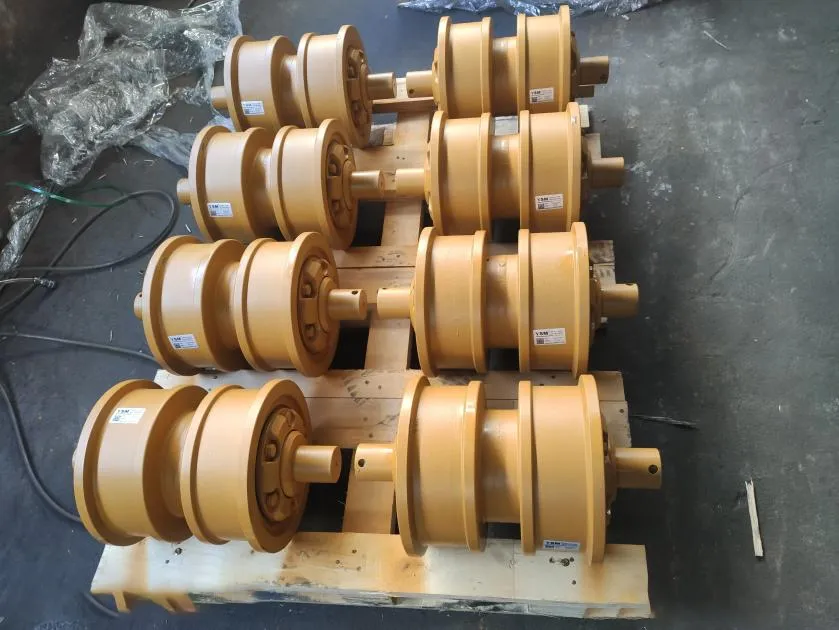
- track rollers and carrier rollers;
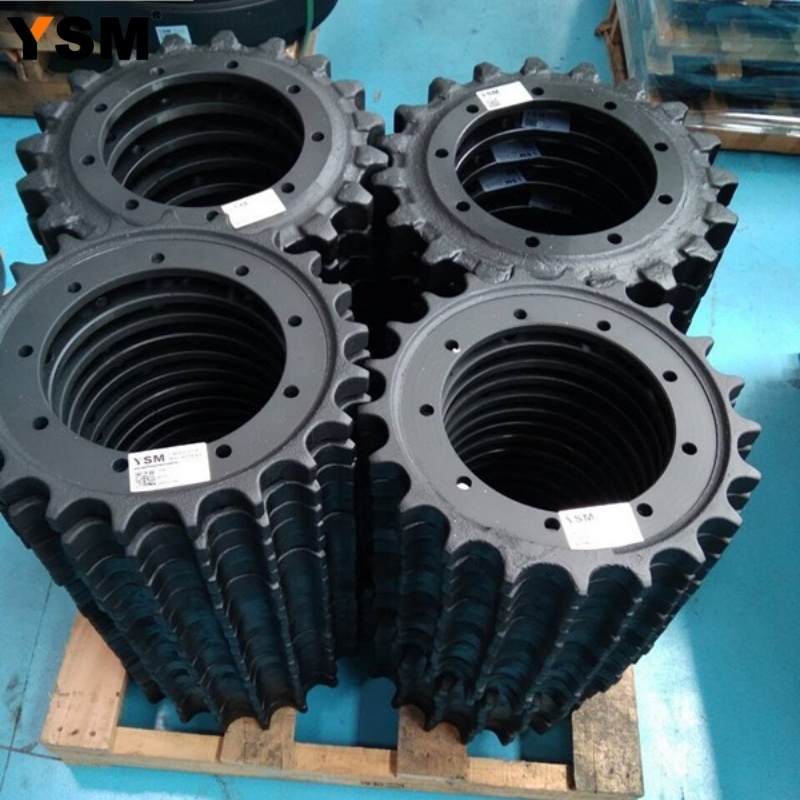
- front idlers and sprocket segments;
- track chains, track shoes, and related fasteners.
Corporate Email: sales@china-ysm.com
WhatsApp: +86-18606961587
Compatibility and availability must be confirmed from the complete model, serial number, part number, clear photos, requested dimensions, quantity, destination country, and working conditions before ordering.