
Daily walk-around and early fault detection
Bulldozer Pre-Shift Undercarriage Inspection Checklist
A useful pre-shift inspection is a repeatable visual and hands-off check, not a substitute for scheduled wear measurement. Before a bulldozer begins work, the operator can identify packed debris, loose hardware, leaks, cracks, damaged shoes, abnormal roller condition, and obvious track problems. Measurements, tension adjustment, lifting, and component removal remain model-specific service tasks.
1. Prepare for a safe and repeatable inspection
Park on firm, level ground in a designated inspection area. Lower the blade and ripper, apply the parking controls, stop the engine, remove the key or isolate the machine as required, and wait for moving parts to stop. Follow site procedures and the exact operation and maintenance manual.
Walk one side from front to rear, then inspect the other side in the same order. Use a light and camera where needed, but do not crawl beneath an unsupported machine or place hands near stored-energy components. Record the machine, hour meter, date, ground condition, and side of each defect.
2. Check for material packing before judging the components
Mud, clay, rock, demolition debris, and frozen material can hide leaks and cracks, prevent rollers from turning, and change effective track tension. Look across the top of the roller frame, around carrier rollers, between links, near the idler, and in the sprocket area.
Remove material using the approved tools and procedure. Do not position yourself where material can fall, and do not use the machine to move the tracks while another person is inside the danger zone. Reinspect after cleaning because fresh oil, grease, polished contact, and damaged hardware may only become visible then.
3. Inspect track shoes, links, pins, bushings, and bolts
Track shoes and grousers
Look for cracked or bent shoes, broken grouser sections, missing hardware, elongated holes, and polished movement marks around bolts. Check whether shoe edges have been heavily side-loaded. A pre-shift check identifies obvious damage; remaining wear percentage requires the correct gauge and reference dimensions.
Links, pins, bushings, and joints
Inspect visible links for cracking, spalling, abnormal side wear, damaged seals, shifted pins, and joints that appear dry or stiff. Compare the left and right sides. Heat, noise, or poor articulation reported from the previous shift should be documented for a controlled service inspection.
Master and mounting hardware
Check for missing, broken, backed-out, or repeatedly loose hardware. Do not apply an assumed torque value from another model. Correct torque, bolt condition, mating-face preparation, and tightening method must come from the applicable service information.
4. Inspect track rollers, carrier rollers, and idlers
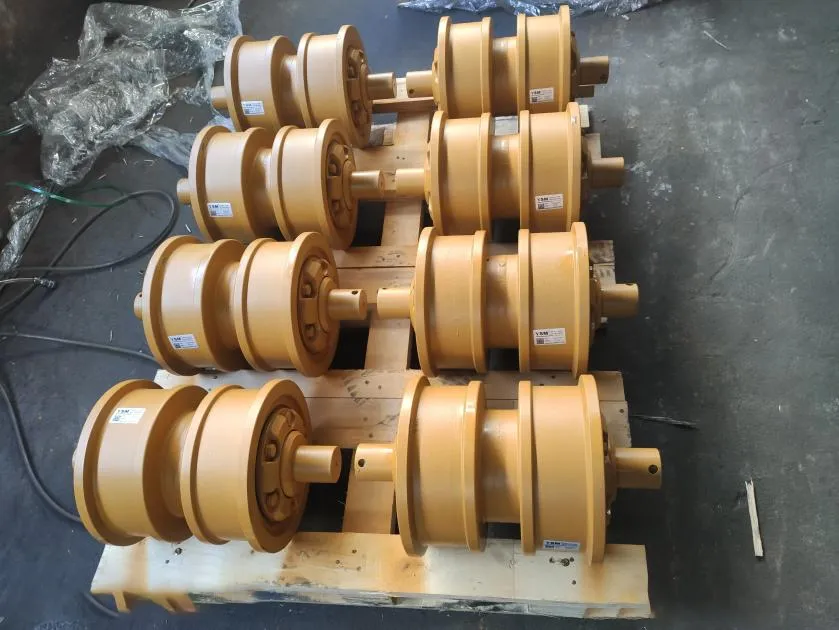
Check every accessible roller position for oil leakage, cracked shells, flat spots, heavy flange contact, impact damage, loose mounting hardware, and debris that could stop rotation. Look for a polished sliding path across a carrier roller, which may indicate the roller is not turning.
At the idler, check visible tread and flange condition, guide contact, fresh leakage, and abnormal position in the frame. A daily visual check cannot confirm internal bearing condition or wear limits, but it can identify changes that justify a technician inspection before the next shift.
5. Inspect sprockets, guards, roller frames, and final-drive area
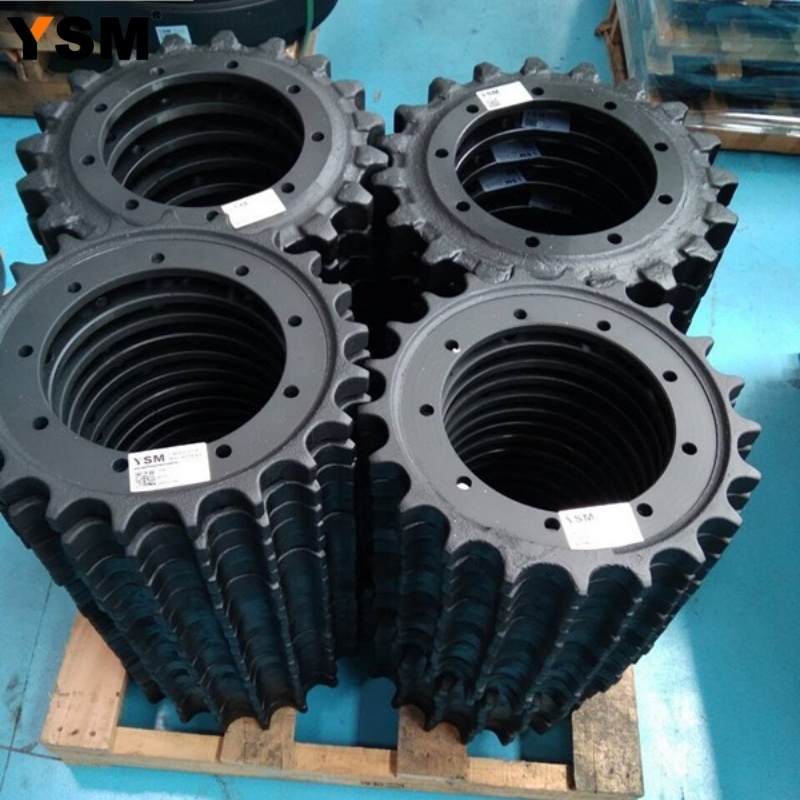
Look for cracked or chipped sprocket teeth or segments, asymmetric wear, loose or missing bolts, and poor chain seating. A pointed tooth may accompany chain-pitch wear, but the chain and sprocket must be measured as a mating system before replacement is planned.
Inspect guards and guides for cracks, looseness, missing bolts, distortion, and contact with the chain. Check roller frames and visible weld areas for fresh cracks or impact. Trace oil around the final-drive area to its actual source; not every wet surface indicates the same failed component.
6. Screen visible track tension without guessing a universal value
Compare both tracks for an obvious change from the machine's normal condition, but do not approve or adjust tension by eyesight alone. Track-sag dimensions and measuring locations vary by bulldozer model, undercarriage design, ground material, and procedure. Use the exact manual when a measurement is required.
Inspect the adjuster area for fresh grease, damaged fittings, distorted covers, impact, and leakage. Track-adjuster grease and recoil springs store energy. Pressure release, adjustment, disassembly, and lifting are qualified service tasks.
7. Bulldozer pre-shift undercarriage checklist
| Check | Acceptable daily observation | Escalate when |
|---|---|---|
| Debris and packing | Inspection areas are visible and moving components are not obstructed | Material cannot be removed safely or has damaged components |
| Track shoes | No obvious crack, severe bend, missing section, or moving joint | A shoe is cracked, distorted, or no longer securely attached |
| Shoe and mounting bolts | No missing, broken, or visibly backed-out hardware | Critical hardware is missing or repeatedly loose |
| Links, pins, and bushings | No visible crack, shifted pin, dry joint, or severe side contact | Cracking, poor articulation, heat, or abnormal noise is reported |
| Track and carrier rollers | No fresh leak, cracked shell, flat spot, loose mount, or blocked rotation | A roller is seized, hot, leaking heavily, or structurally damaged |
| Idler | No fresh leak, severe flange damage, abnormal guide contact, or obvious displacement | Movement, damage, or contact suggests derailment risk |
| Sprocket | No crack, missing segment hardware, or severe engagement problem | Teeth or segments are cracked, loose, or the chain climbs |
| Guards and roller frame | No fresh crack, distortion, missing bolt, or chain interference | A guard contacts the chain or a structural crack is visible |
| Adjuster and tension | No new grease leak, visible damage, or major left-right difference | The track will not hold adjustment or stored-energy parts are damaged |
| Previous-shift report | No unresolved heat, vibration, noise, pulling, or derailment warning | An abnormal condition has not been diagnosed |
8. Stop work and request qualified inspection when
- a track link, shoe, roller shell, idler, guard mount, or frame area is cracked;
- the chain climbs the sprocket or the track is close to derailment;
- a roller or idler is seized, smoking, severely leaking, or abnormally hot;
- critical fasteners are missing, broken, or repeatedly loose;
- the adjuster or recoil assembly is damaged or leaking heavily;
- new impact noise, vibration, pulling, or steering change appears; or
- the defect cannot be inspected without entering an unsafe position.
Close the loop by recording photos, side and position, symptoms, ground conditions, and corrective action. Daily findings become more useful when they can be compared with periodic wear measurements and repair history.
Frequently Asked Questions
Should track tension be adjusted every day?
Inspect for obvious change daily, but measure and adjust only according to the exact machine manual and working condition. Do not use a universal sag number.
Can an operator measure remaining roller life during the walk-around?
Usually not from appearance alone. Formal wear measurement requires the correct tools, reference points, new dimensions, and service limits.
Is a small oil stain around a roller always a failed roller?
No. Clean the area and trace the source. Fresh leakage, heat, noise, restricted rotation, and repeated oil loss strengthen the case for service inspection.
Why should both sides be checked in the same order?
A consistent route reduces missed items and makes left-right differences easier to record and compare over time.
Technical references
Review Bulldozer Undercarriage Inspection Findings
Send the machine identification, left-right photos, component positions, measurements, and working conditions for a model-specific review. We can check suitable supply options for requested items such as:
- track rollers and carrier rollers;
- front idlers and sprocket segments;
- track chains, track shoes, and related fasteners.
Corporate Email: sales@china-ysm.com
WhatsApp: +86-18606961587
Compatibility and availability must be confirmed from the complete model, serial number, part number, clear photos, requested dimensions, quantity, destination country, and working conditions before ordering.