
Bulldozer Track Chain Troubleshooting
Bulldozer Track Chain Snaking: Causes, Inspection and Repair Planning
A bulldozer track chain should articulate around the undercarriage while remaining laterally controlled. When an unloaded chain looks wavy from above, or the chain repeatedly wanders across roller and idler flanges, technicians may describe it as a snaking track. Snaking is a symptom—not a complete diagnosis. Joint clearance, link fit, alignment, structural damage and previous rebuilding all need to be separated before deciding whether to turn pins and bushings, rebuild the chain or replace a larger matched group.
Quick answer
Confirm snaking on a clean, safely isolated machine and, when workshop procedure permits, on an unloaded chain against a straight reference. Look for accumulated lateral movement across several joints, not a single shoe that is bent. Measure track pitch, link-rail wear, bushing condition and end play using the exact wear chart; inspect pin and bushing retention, dry joints, cracks, shoe hardware, rollers, idler, sprocket, guides and frame alignment. A pin-and-bushing turn renews a bushing contact sector on certain designs, but it does not restore worn link counterbores, lost lateral control, cracked links or a distorted frame.
What is a snaking bulldozer track chain?
“Snaking” describes a chain centerline that wanders from side to side instead of lying reasonably straight when unloaded, or a chain that repeatedly shifts laterally through the roller-idler-sprocket path. The effect is cumulative: small clearances or loss of fit at many joints can produce a visible S-shaped line across a long chain even when no individual link looks dramatically bent.
The word is used in current industry search results and older undercarriage literature, but it is not a universal service-limit category. The acceptable method and amount of lateral movement must come from the track manufacturer, chain family or qualified undercarriage shop. Visual waviness can prompt measurement; it cannot set a replacement threshold by itself.
Snaking should also be distinguished from the normal ability of a chain to articulate vertically around the sprocket and idler. Vertical joint motion is required. The concern is abnormal lateral freedom, misalignment or a repeated side-to-side contact pattern that the guides can no longer control.
Snaking is not the same as every side-to-side track complaint
| Complaint | How it differs | First checks |
|---|---|---|
| Snaking chain | Lateral waviness accumulates across multiple joints or repeats along the chain | Joint side play, link fit, straightness, pitch and wear pattern |
| Machine pulls to one side | Travel-direction symptom that can involve power train, brake, hydraulic, ground or undercarriage differences | Operating surface, controls, travel speed, left/right rolling resistance and drive condition |
| Track is simply too loose | Excess vertical sag or poor engagement may let an otherwise straight chain wander | Cleanliness, tension by the exact procedure, adjuster and chain wear |
| One stiff or seized joint | A local joint fails to articulate and may create a repeating bump | Joint movement, temperature, seal leakage and pitch around that location |
| Bent or loose track shoe | A shoe can make the outside edge look crooked while the link centerline remains straight | Shoe flatness, bolts, link mounting surfaces and adjacent shoes |
| Idler or roller misalignment | A straight chain can be pushed sideways by a component or frame that is out of line | Contact polish, flange wear, mounts, guides, frame and adjuster slides |
A machine can have more than one condition. For example, a worn chain may snake more easily, while an idler alignment fault concentrates side load on that same chain. Correcting tension alone may improve the visible path without restoring worn joint fits.
Clues that justify a closer inspection
| Clue | Possible significance | Why it is not conclusive alone |
|---|---|---|
| Unloaded chain shows a gentle lateral S-shape | Accumulated joint side play or link-fit wear | Floor, pulling method and residual twist can affect appearance |
| Alternating polished sides on link rails | Chain is shifting across guidance surfaces | Turns, slopes and a bent guard can create similar marks |
| Heavy wear on roller or idler flanges | Persistent lateral contact | Component alignment may be the primary cause |
| Sprocket teeth or pockets show side wear | Chain is not entering centrally | Sprocket alignment, final-drive mounts or trapped material may contribute |
| Visible pin or bushing end displacement | Retention or link-bore fit may be compromised | Needs cleaning and dimensional confirmation |
| Shoes do not form a straight edge when chain is unloaded | Chain centerline, link, shoe or fastener issue | One bent shoe or damaged mounting surface can distort the line |
| Repeated derailment or chain climbing | Guidance and engagement have become unreliable | Tension, sprocket, idler, guards and operation must also be checked |
Mark the chain and photograph the same section at several positions if the machine can be moved under an approved procedure. A symptom that follows one chain section suggests a local chain or shoe defect; a symptom fixed at one frame location suggests a guide, roller, idler, sprocket or structural issue.
What can cause a bulldozer track chain to snake?
Accumulated pin-and-bushing joint clearance
Internal wear changes the joint relationship and track pitch. When wear is uneven or lateral control at multiple joints is lost, small movements can accumulate into a visible wave. Pitch wear and lateral looseness are related inspection topics, but they are not interchangeable measurements.
Worn or out-of-round link counterbores
Pins and bushings rely on controlled press fits in the links. If the receiving bores or counterbores are enlarged, out of round or damaged by previous movement, the joint may no longer remain true after pressing. Installing new pins and bushings into links that cannot hold the specified fit does not create a sound rebuilt chain.
Pin or bushing retention loss
A pin that migrates, a bushing that moves in the link or a joint assembled to the wrong end dimension can change chain alignment and seal performance. Fresh metal at an end face, unequal projection or repeated end contact is a reason to stop and measure.
Cracked, twisted or previously repaired links
A structural defect can introduce local deviation even if most joints remain serviceable. Field heating, uncontrolled welding or pressing can change material properties and geometry. Do not straighten or repair a forged link without an approved process.
Misaligned idlers, rollers, sprocket or frames
The ITM wear guide emphasizes alignment of track frames, roller frames, idlers and sprockets. Worn idler slides, bent frames, damaged mounts, loose rollers, a shifted final drive or incorrect shimming can push the chain laterally. Misalignment often leaves one-sided polish on link rails, flanges, guards and sprocket sides.
Excessive shoe leverage and high-impact operation
Very wide shoes on firm, rocky or uneven ground increase bending and twisting leverage through shoes and links. Frequent counter-rotation, sharp turns, slope work and track spinning can add side load. This does not mean wide shoes are always wrong; flotation and stability requirements must be balanced against the actual underfoot condition.
Mixed components or an unsuitable rebuild
Combining mismatched links, pins, bushings, seals, master components or sprockets can create inconsistent fit and engagement. A chain with unknown service history may have been machined, turned or assembled more than once. Identification and dimensional records are necessary before another rebuild.
Packing and incorrect tension
Material packed into the undercarriage can tighten the track and change contact paths. A track that is too loose can also shock and wander. Correct cleanliness and tension are baseline conditions for diagnosing snaking, but they do not erase structural or internal wear.
A practical inspection sequence for a suspected snaking track
- Record the complaint. Note whether waviness is seen from the cab, on the ground, during forward/reverse travel or only after removal. Record slopes, turning direction, packing and recent repair work.
- Clean and isolate. Remove material sufficiently to expose rails, flanges, joint ends, shoe bolts, guards and mounting points. Park and isolate by the exact procedure.
- Compare left and right. Photograph both track paths from the same angles. Note contact polish, idler position, roller condition and adjuster exposure.
- Check tension correctly. Use the operation and maintenance manual. Do not use a generic sag value or adjust away the symptom before documenting it.
- Identify local versus repeating behavior. Mark suspicious links or shoes. Under a controlled movement procedure, determine whether the deviation follows the chain section or remains at a frame location.
- Inspect joints and hardware. Look for dry joints, leakage, displaced pins, unequal bushing ends, cracks, loose shoes, damaged master components and previous repairs.
- Inspect the guidance system. Check roller and idler flanges, carrier rollers, sprocket sides, guards, slides, mounts and the frame for asymmetrical wear or damage.
- Move to a workshop measurement if required. A qualified facility can restrain and lay out the chain, establish a straight reference, measure lateral movement and inspect press fits safely.
- Make a system decision. Compare all measurements with the correct wear chart and evaluate the mating sprocket, rollers, idler, shoes and hardware.
Do not infer that the chain is straight because it lies straight under its own tension on the machine. Conversely, a removed chain pulled unevenly across a rough floor can look wavy. The test setup must be repeatable and appropriate to the chain manufacturer or rebuild specification.
Measurements that support—not replace—the diagnosis
| Measurement | Question it helps answer | Control required |
|---|---|---|
| Lateral deviation against a straight reference | Does movement accumulate along an unloaded chain? | Defined chain length, pull condition, surface and measuring points |
| Track pitch across the specified joints | How much internal pin-and-bushing wear has accumulated? | Correct tensioning of the measured span and exact OEM method |
| Link-rail height and width | Is there balanced running-surface life left? | Correct reference face and wear chart |
| External bushing diameter | What is the sprocket-contact wear condition? | Specified orientations and clean contact surface |
| Pin/bushing end position and joint width | Is retention or assembly geometry abnormal? | Design-specific dimensions and calibrated tools |
| Link bore/counterbore and press fit during teardown | Can the link safely retain rebuilt components? | Qualified shop, approved tooling and rebuild specification |
| Roller, idler and sprocket side wear | Is the chain being driven or guided out of line? | Left/right comparison and component-specific gauges |
| Frame and mounting alignment | Is a structural or installation fault imposing lateral load? | Manufacturer datum points and alignment procedure |
Record raw dimensions and units rather than only a calculated percentage. A “75% worn” label is meaningless without the chain family, new dimension, service limit, gauge location and formula. The same principle applies to a lateral-deviation value: it requires a defined test length and setup.
Use calibrated tools and measure more than one location. Local impact damage, one prior repair or uneven travel patterns can make a single reading unrepresentative. Preserve photographs that show tool placement and the component identifier.
Can a snaking chain be turned, rebuilt or repaired?
Pin-and-bushing turn
On an identified conventional fixed-bushing design, a planned turn can reposition the external bushing surface that contacts the sprocket. Caterpillar's current small-dozer guidance describes this principle and also distinguishes rotating-bushing systems. A turn is not universal, and it does not reverse internal wear, restore a worn link bore or straighten a distorted link.
If snaking is caused by opened joint tolerances or lost press fit, rotating the bushing may leave the root problem unchanged. The chain must first meet the design's criteria for link condition, pitch, rails, seals, pins, bushings and retention.
Professional chain rebuild
A rebuild may include approved pins, bushings, seals or master components, but only when the links and other reusable items remain within specification. The shop should control orientation, cleanliness, lubrication, press fit, end dimensions, sealing and final articulation. Mixed or unidentified parts increase risk.
Component or complete-chain replacement
Replacement may be more appropriate when links are cracked or twisted, bores cannot retain components, multiple joints are dry or displaced, rails are near limit, previous repairs are unsuitable, or the remaining components will not provide a balanced life. The mating sprocket must be measured because a new chain running on a severely worn tooth profile can engage poorly and wear quickly.
Alignment repair
If the chain is being forced sideways by the idler, rollers, sprocket, guides or frame, those causes must be corrected. Installing a new chain into a misaligned undercarriage can reproduce the same wear pattern.
How snaking can affect the complete undercarriage
A chain that moves laterally can load the sides of roller and idler flanges instead of running centrally on the treads. It can rub track guides, contact sprocket teeth unevenly and place side load into link rails and joints. The result may be heat, metal loss, noise and less reliable track retention.
Side contact can also create a feedback loop. As flanges and link sides wear, guidance becomes less effective; increased movement creates more side contact. Packing or loose tension can amplify the path change. Early measurements are valuable because severe wear may erase the original contact evidence.
Sprocket condition matters especially. Internal joint wear changes pitch and bushing engagement, while lateral movement changes entry alignment. Tooth points, pocket roots and sides should be examined, not just whether the teeth look sharp from the outside.
Bottom rollers, carrier rollers, idler slides, track guards and mounting hardware also deserve inspection. A single seized roller or bent guide may not create true multi-joint snaking, but it can force a worn chain into a more damaging path.
Maintenance and operating controls that reduce lateral wear
- Keep the undercarriage clean enough to inspect and allow rollers and recoil components to move as intended.
- Check track tension at the required interval and when material or weather changes; use the exact machine dimensions.
- Trend pitch, rail, bushing and flange measurements instead of waiting for a visible wave or derailment.
- Correct loose rollers, idler-slide problems, bent guides, frame damage and mounting issues promptly.
- Avoid unnecessary high-speed reverse travel, track spinning, counter-rotation and repeated same-direction turns.
- Match shoe width and grouser configuration to flotation, impact and traction requirements; do not select maximum width by default.
- Preserve chain identity and rebuild records, including components installed, dimensions, press procedure and service hours.
- Inspect mating sprockets and other guidance components whenever chain work is planned.
Preventive maintenance cannot make every wear pattern symmetrical. Slopes, pushing direction and site layout may load one side more heavily. The aim is to recognize and manage the difference before guidance or joint fits are lost.
Information needed for bulldozer track-chain and undercarriage enquiries
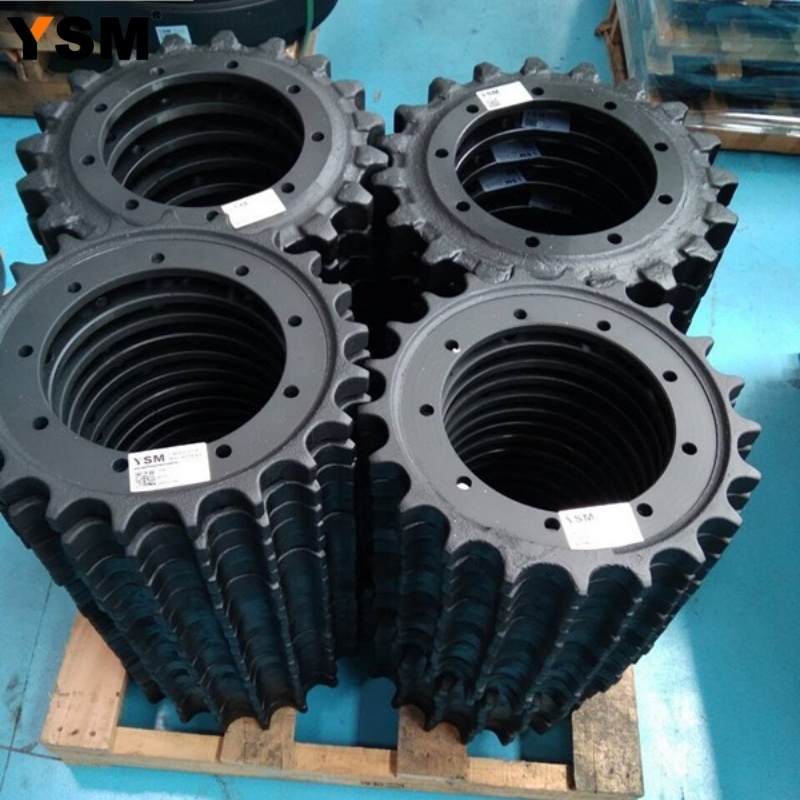
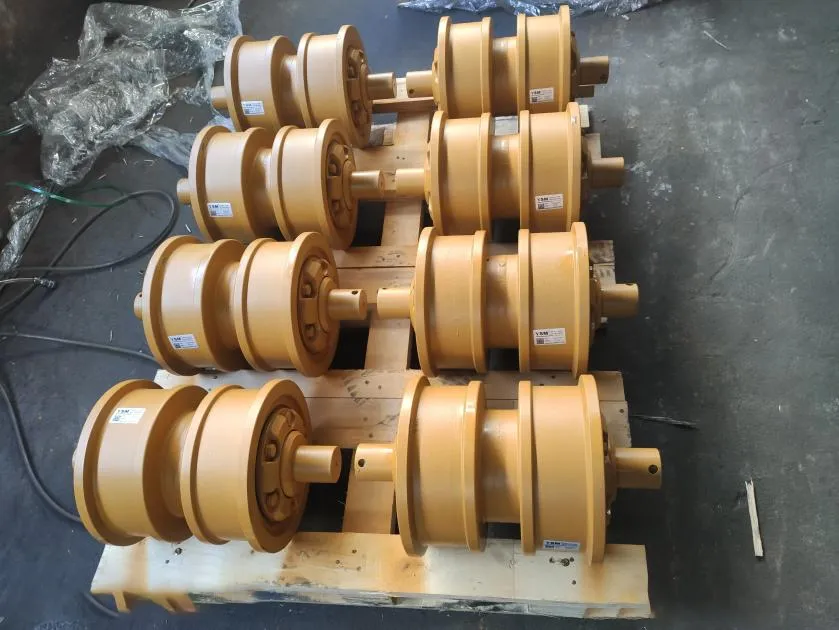
Possible parts may include a complete track chain or link assembly, track shoes, master link or master pin components, sprocket segments, bottom rollers, carrier rollers, front idlers and track hardware. The correct scope depends on inspection and the exact undercarriage group.
Send the equipment brand, complete model including suffix, serial number or product identification number, part number, chain markings, link count, pitch, shoe width, bolt pattern, clear side and top photographs, requested dimensions, left/right quantity, total quantity and destination country. If possible, include the sprocket segment number and measured condition of the mating components.
Do not assume that all machines sold under a familiar family name share one chain. Production range, track gauge, shoe arrangement, undercarriage option and previous conversion can change fitment. Final compatibility requires part-number and dimensional verification.
Frequently asked questions
Can I see a snaking track while it is still on the dozer?
Sometimes lateral waviness or repeated flange contact is visible, but track tension and the frame path can mask it. Confirm with a controlled inspection and, when justified, a workshop layout procedure.
Does a snaking chain always mean it must be replaced?
No. It means the chain and guidance system need measurement. The cause, severity, track design, link fit, remaining rail life and mating-component condition determine the decision.
Will tightening the track stop snaking?
It may change the visible path, but excessive tension accelerates load and does not restore worn fits or alignment. Set tension only to the exact specification after cleaning.
Will a pin-and-bushing turn fix the problem?
Not automatically. A turn repositions an external bushing contact sector on certain fixed-bushing designs. It does not repair link-bores, cracks, internal clearance or frame misalignment.
Can one bent shoe make the chain look snaky?
Yes. That is why technicians compare the link centerline and several joints rather than judging the outside shoe edge alone.
Should a new chain be installed on old sprocket segments?
Only after measurement shows the engagement will be acceptable for the specified system. Severely worn or mismatched sprockets can load a new chain incorrectly.
Technical references
- Caterpillar: Dozer Undercarriage Maintenance — current chain, bushing, sprocket, roller, cleaning and tension inspection guidance.
- Caterpillar: Maintaining Your Dozer Track Pins and Bushings — current fixed-bushing, rotating-bushing and turn concepts; its stated dimensions and hours were not generalized.
- Caterpillar: How to Check Dozer Track Tension — model- and configuration-specific measurement context.
- ITM: Undercarriage Wear & Care — component wear, system alignment and measurement reference.
- Komatsu: Undercarriage Procedure Manual — technical references to snaky-track interference and undercarriage wear analysis.
- ITR Pacific: When to Turn Pins and Bushings on Your Dozer Undercarriage — recent 2026 search-result evidence using the “snaking tracks” symptom; its simplified commercial thresholds were not adopted as universal limits.
Always give the operation and maintenance manual, service data, wear chart and safety instructions for the exact machine and chain priority over a general article.
Consult Our Undercarriage Parts Team
For bulldozer track chains, track shoes, sprocket segments, idlers, track rollers, carrier rollers and related track hardware, send the equipment brand, complete model and suffix, serial number/PIN, part number, clear photos, requested dimensions, quantity and destination country. Our team can check the information before a parts proposal is prepared.
Corporate Email: sales@china-ysm.com
WhatsApp: +86-18606961587
Final fitment, availability, pricing, delivery, warranty and supply scope require case-by-case confirmation. No universal interchangeability is implied.