
Bulldozer Undercarriage | Track Roller Maintenance
Bulldozer Track Roller Inspection: Wear, Leaks and Maintenance
Lower track rollers carry a bulldozer's weight while guiding the track chain along the roller frame. Because they work close to dirt, rock, moisture and impact loads, a small oil trace, a roller that does not rotate normally or an uneven wear pattern can be an early warning. The practical response is a structured inspection of the entire undercarriage, not replacing one roller by appearance alone.
What Do Bulldozer Track Rollers Do?
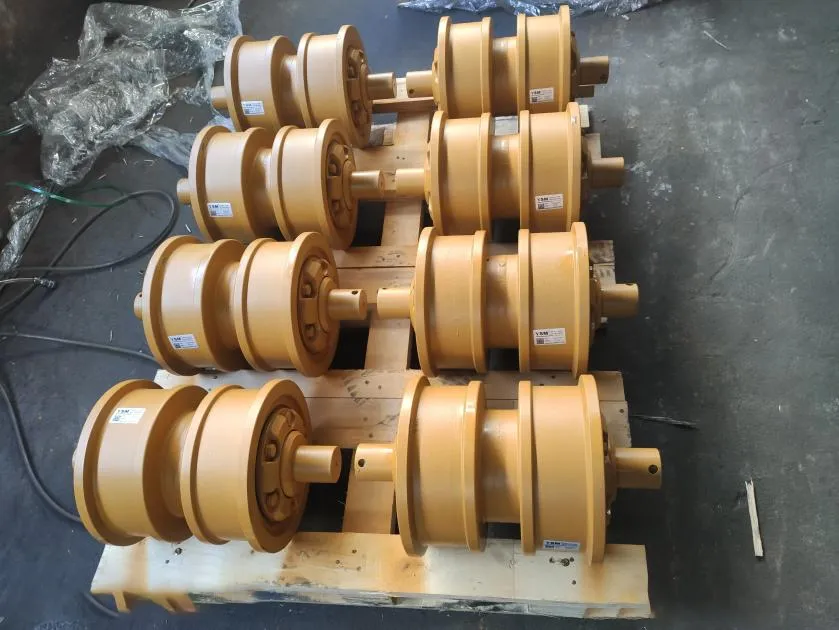
Track rollers run beneath the track chain and support the machine through the roller frame. Depending on the undercarriage design, a roller may have single or double flanges and may occupy a position with a different guiding role from its neighbor. The chain rail travels over the roller tread while the flanges help control lateral movement. Carrier rollers support the upper track run and should not be confused with the heavier lower rollers.
A roller is therefore part of a system that includes the track chain, shoes, front idler, sprocket segments, carrier rollers, guards, roller frame and track adjuster. A roller shell can wear faster because of abrasive material, but uneven flange contact can also reflect track alignment, incorrect adjustment, one-sided slope work, packed material or another component condition.
Prepare for Inspection Safely
Inspect after removing enough loose soil to see the roller bodies, seals, brackets and rail contact areas. Use safe cleaning methods that do not direct high-pressure water into seals or sensitive components. Record the hour meter, ground condition and any finding before washing away evidence.
Compare the same locations on the left and right track frames. This is more useful than judging one dirty roller in isolation. A dozer that has just worked in wet clay, sharp rock or high-impact dozing may need a more frequent check than a machine working on clean, level material.
Daily Bulldozer Track Roller Walk-Around
| Check point | What to look for | Why it matters |
|---|---|---|
| Roller shell and tread | Flat spots, cracks, chips, deep scoring, pitting, an unusual polished band or reduced tread profile. | The shell is the running surface for the chain rail; damage can accelerate rail and roller wear. |
| Flanges | Uneven wear, sharp edges, one-sided rubbing, cracks or contact marks on the chain. | Flange patterns can indicate guiding or alignment issues as well as normal service wear. |
| Seal and end-cap area | Fresh wetness, drips, oily dirt buildup or a new oil line on adjacent components. | A leak requires source identification before internal lubrication loss or contamination progresses. |
| Mounting and roller frame | Loose or missing hardware, cracked brackets, shifted guards and fresh metal-to-metal marks. | Structural movement changes roller position and may affect chain tracking. |
| Debris and packed material | Rock wedged beside a roller, hard clay in the frame, wire or scrap caught around the track. | Debris can stop rotation, add resistance and conceal damage or leaks. |
| Track chain contact | Abnormal rail polishing, side contact, stiff joints, damaged shoes and changed track sag. | Roller condition must be read together with the mating track system. |
Caterpillar's current dozer maintenance guidance advises keeping rollers tight and free of debris, while its D4 maintenance material includes checking the roller frame for cracks or leaks. Those checks are useful prompts, but the exact method and acceptance criteria still belong to the specific model manual.
Wear Patterns Are Clues, Not a Complete Diagnosis
| Observed pattern | Possible contributors | Next inspection step |
|---|---|---|
| One flange wears faster | Side loading, slope operation, guide or guard contact, alignment, chain condition or roller position. | Compare the whole track path and both sides; inspect guides, idler and chain rail before ordering parts. |
| Shell has a flat or scored band | Debris, restricted rotation, impact, abrasive ground or abnormal rail contact. | Remove debris, inspect chain rail and confirm whether the roller turns as the service procedure permits. |
| Several rollers show similar wear | Operating surface, track adjustment, chain wear, systematic alignment issue or extended debris packing. | Plan a measured undercarriage inspection rather than replacing only the most visible roller. |
| Only one roller has new damage | Local rock impact, seized component, loose mount or isolated defect. | Inspect the bracket, guard, rail and nearby parts for contact or impact evidence. |
| Uneven left-to-right wear | Repeated side-slope work, turning habits, different ground conditions or a mechanical issue. | Review operating records and inspect both final drives, idlers, frames and track adjustment. |
Leakage, Heat and Rotation: What to Check and What Not to Assume
Oil around a roller
Clean the area and identify whether the wetness is active, old residue or contamination carried from another location. Check the roller end area, adjacent final-drive and idler zones, and the ground beneath the machine. Do not call every dusty wet ring a failed seal, but do not ignore a fresh or progressing oil trace.
Heat or noise
After safe operation and shutdown, a non-contact thermometer can help compare like-for-like surfaces when used at the same target points. Direct sunlight, mud, paint and recent travel all affect readings. Do not touch a hot roller. A meaningful difference combined with squealing, grinding, leakage or changed travel response warrants qualified diagnosis.
Rotation and play
Do not lever, turn or lift a roller by improvised methods. If the manual permits a raised-track inspection, use the approved lifting, blocking and personnel-exclusion procedure. A roller that is visibly seized, loose, cracked or interfering with the track should not be treated as a routine observation.
Inspect the Complete Dozer Undercarriage Before Choosing Parts
Track rollers do not operate alone. Check lower and carrier rollers, track chain pitch and rail condition, shoes and bolts, front idlers, sprocket segments, guards, track adjustment, roller-frame structure and final-drive leakage. Komatsu and Caterpillar both emphasize adjustment, cleaning and whole-undercarriage inspection because wear at one point can change the loads at another.
Keep a simple record: machine hours, operating surface, side of machine, roller position counted from the front or rear, photos, temperature comparison if used, leakage state and measurement result. Trend information helps a maintenance team distinguish progressive system wear from one impact event.
Track Roller Replacement and Fitment Information
Do not select a bulldozer track roller from a photo or a general tonnage class. The correct roller can depend on brand, complete model and suffix, serial number or PIN, undercarriage arrangement, roller position, single/double-flange design, mounting features and dimensions. A similar-looking roller may not match the frame, chain or guard clearances.
For a quotation or fitment check, prepare the equipment brand, complete model and suffix, serial number/PIN, roller position, part number, clear photos of both sides, mounting dimensions, quantity, destination country and working condition. Include images of the chain rail, roller-frame bracket and any adjacent damage. Compatibility and availability must be confirmed before ordering.
Frequently Asked Questions
Can one worn bulldozer track roller damage the track chain?
It can change contact and loading, but the extent depends on the roller condition, operating time, chain wear, track adjustment and terrain. Inspect the complete system before deciding repair scope.
Does oil around the roller always mean the roller must be replaced?
Fresh oil needs prompt investigation, but the source should be confirmed. The model service information and component condition determine whether repair or replacement is required.
How often should rollers be inspected?
Use the operation and maintenance manual and increase checks when abrasive material, packing, shock loading, wet ground or unusual travel conditions are present. Do not apply a generic hour interval to every dozer.
Can I replace a single roller?
Sometimes a single component may be appropriate, but only after checking the remaining rollers, chain, idler, sprocket segments and alignment. Mixed wear levels can affect the result.
Technical References
- Caterpillar: D4 Undercarriage Maintenance - dozer track inspection, roller-frame leaks and manual-based service guidance.
- Caterpillar: Top 3 Dozer Maintenance Tips - roller debris, track tension and undercarriage walk-around context.
- Komatsu: Undercarriage Maintenance Tips - cleaning, adjustment, operating conditions and measurement context.
This article is a general educational guide. Wear limits, temperature interpretation, lifting, track adjustment, hardware and replacement procedures must come from the exact bulldozer operation and maintenance manual.
Ask Our Undercarriage Team About Bulldozer Track Rollers
We can check suitable supply options for bulldozer track rollers, carrier rollers, front idlers, sprocket segments, track chains, track shoes, track assemblies and related track fasteners.
Corporate Email: sales@china-ysm.com
WhatsApp: +86-18606961587
For a fitment check, send the equipment brand, complete model and suffix, serial number/PIN, part name, part number, clear photos, requested dimensions, quantity, destination country and working condition. Compatibility and availability must be confirmed before ordering.