
Model Guide | Large Excavator Undercarriage
Cat 336 Excavator Undercarriage Inspection and Parts Fitment Guide
A Cat 336 undercarriage should be inspected as a complete wear system, not as a collection of isolated parts. The machine name alone is not enough for ordering because the 336 family spans different generations, build numbers, configurations and markets. A useful inspection therefore combines visible wear clues with the full model suffix, serial or PIN, existing part numbers, measurements and jobsite conditions.
Why the Full Cat 336 Model Identity Matters
Current official Cat resources place the 336 in the large hydraulic excavator range and provide separate owner information for 336, 336 GC and related build groups. Earlier machines may carry suffixes such as D, D2, E or F, while regional and application packages can change the undercarriage arrangement. Cat owner guidance also notes that some instructions apply only to machines with particular build numbers.
This variation matters because two machines described casually as a "336" may not use the same chain, shoe pattern, roller arrangement, idler, sprocket or guard. A parts search should begin with the identification plate and serial number. The current Cat parts portal also asks users to add a serial number before narrowing parts that fit a 336 excavator.
| Identification item | Why it matters | What to capture |
|---|---|---|
| Complete model and suffix | Separates generations and configurations that share the 336 name | Exact text from the machine plate, not a shortened sales description |
| Serial number or PIN | Connects the machine to its build range and parts record | Clear plate photo plus typed number |
| Existing part number | Helps identify the current assembly, but may have updates or substitutions | All readable cast, stamped or tag numbers |
| Undercarriage configuration | Shoe width, guarding and application package can affect the required components | Full side photos and relevant measurements |
| Working condition | Rock, sand, clay, demolition debris and long travel produce different wear risks | Material, moisture, slope, travel pattern and attachment use |
Cat 336 Excavator Undercarriage Daily Walk-Around
- Review the previous shift. Ask about unusual travel noise, steering correction, vibration, track jumping, recent derailment, hard impacts or a change in travel resistance.
- Clean enough to inspect. Remove packed material from the track frames, roller pockets, guards and around the idler. Cleaning is part of diagnosis because debris can hide leaks and restrict rotation.
- Walk both sides in the same order. Start at the front idler, follow the lower run to the sprocket, inspect the upper run and then repeat on the opposite side. A fixed sequence makes comparison easier.
- Look for fresh evidence. Record new oil traces, polished contact marks, cracks, bent shoes, loose or missing fasteners, damaged guards and metal fragments before cleaning removes the clues.
- Observe from a safe position. If operational observation is necessary, establish an exclusion zone and use a trained operator. Note whether symptoms appear while travelling straight, turning or working on a slope.
- Record, do not guess. Photograph the whole undercarriage and close details with a scale reference. Trend measurements over time instead of assigning a wear percentage by appearance alone.
Component-by-Component Undercarriage Inspection
| Area | Inspection focus | Why the system comparison matters |
|---|---|---|
| Track chains, pins and bushings | Stiff joints, seal-area changes, cracks, uneven pitch growth, rail wear and pin retention | Chain condition changes sprocket engagement and roller contact |
| Track shoes and bolts | Bent or cracked shoes, worn grousers, elongated holes, loose bolts and mixed shoe types | Loose or mismatched shoes can distort loading and imitate chain noise |
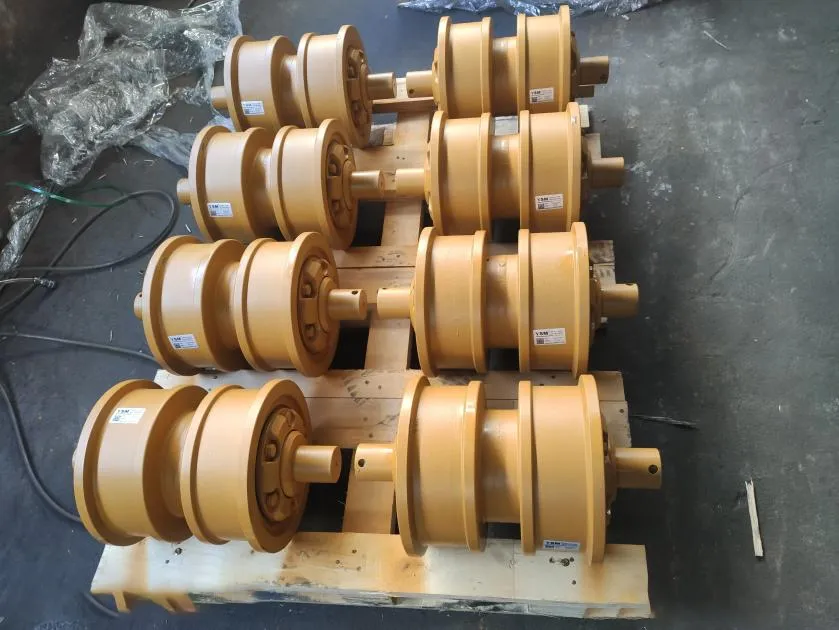
| Lower track rollers | Oil leakage, flat spots, seized rotation, flange wear, shell wear and mounting security | A restricted or leaking roller shifts load to neighbouring components |
| Carrier rollers | Leakage, free rotation, tread wear, flange contact and packed material | Upper-chain support affects slap, noise and chain path |
| Front idlers | Tread and flange wear, leakage, side clearance, guide contact and abnormal position | Idler position and guidance affect track retention and alignment |
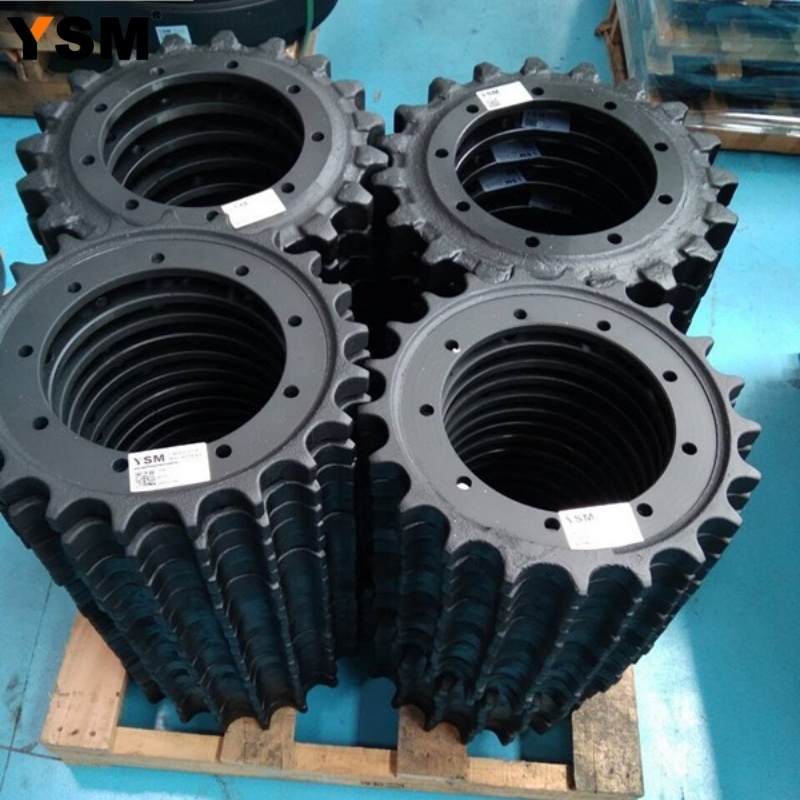
| Drive sprockets | Tooth profile, cracks, mounting security and one-sided bushing contact | Worn or mismatched sprockets can accelerate bushing wear |
| Track adjuster and recoil area | Grease leakage, loss of adjustment, damaged covers and abnormal idler movement | A tension symptom may come from leakage, wear, packing or damage |
| Track frames and guards | Cracks, bent guides, loose fasteners, fresh rubbing and trapped debris | Structural contact can create side wear even when individual parts are new |
Track tension is important, but no single sag dimension applies to every 336 variant or inspection method. Measure only under the conditions described in the correct manual. Packed mud may change the apparent tension, and releasing the adjustment valve exposes stored grease pressure.
Common Wear Patterns and Possible Causes
One side wears faster than the other
Unequal wear may reflect repeated one-direction turns, side-slope work, asymmetric loading, a restricted roller, idler or guard alignment, or different replacement histories. It does not prove that one component is defective. Compare operating practice, measurements and component dates on both sides.
Rail sides or roller flanges look polished
Fresh side polishing indicates lateral contact. Possible contributors include slope operation, turning habits, incorrect guidance, bent guards, frame damage, roller or idler condition and chain alignment. Check where the contact begins and whether it repeats around the complete chain path.
Sprocket teeth and bushings show abnormal contact
Tooth shape, bushing condition, chain pitch, track adjustment and replacement history all affect engagement. Installing a new chain against a badly worn sprocket, or mixing components that were not confirmed as a system, can produce poor contact even when the individual parts look similar.
The track becomes loose again after adjustment
Possible causes include grease leakage, adjuster or recoil damage, wear, trapped material later falling out, or a measurement made under different ground conditions. Do not keep adding grease without identifying why the setting changes.
Noise, heat or vibration appears during travel
Dry or stiff joints, debris, seized rollers, loose shoes, guard contact, sprocket engagement and travel-drive concerns can create overlapping symptoms. Compare when the signal occurs, whether it repeats once per chain rotation, and whether one complete track is hotter than the other.
Operating Conditions That Change Undercarriage Wear
- Rock and demolition debris: increase impact, shoe bending and the risk of material entering guards. Clean and inspect more often after high-impact work.
- Sand and abrasive soil: can accelerate external wear. Trend measurements rather than waiting for obvious structural damage.
- Wet clay and packed mud: add resistance and can change track tension. Remove packing before measurement and before it hardens around rollers.
- Long travel: creates sustained heat and wear. Plan machine positioning and transport to avoid unnecessary tracked travel.
- Frequent counter-rotation: increases lateral and contact loading. Use smooth, wider turns when the work allows.
- Side slopes: shift load toward flanges and rail sides. Alternate approach direction where safe and inspect for asymmetric contact.
The correct inspection frequency depends on utilization and severity. Daily observation should be supplemented by documented measurements at intervals appropriate to the site and the correct machine manual.
Repair and Replacement Planning for a Cat 336 Undercarriage
Do not base replacement on one photograph or one worn component. Record chain pitch or other approved wear measurements, roller and idler dimensions, sprocket condition, shoe and hardware condition, leakage, alignment clues and the remaining service objective. A machine planned for short low-impact work may have a different decision point from one returning to demolition or quarry duty.
Replacement scope should also consider matched wear. A new component may contact an old mating surface differently. The solution may involve one failed part, a side-specific group or a broader undercarriage set, but the choice must come from measurements, parts compatibility and a qualified inspection rather than a universal rule.
Keep removed part numbers and installation records. After service, confirm track adjustment by the correct manual, inspect fasteners through the approved follow-up procedure and monitor early contact patterns. Do not assume installation completes fitment verification.
Cat 336 Undercarriage Parts Fitment Checklist
For track rollers, carrier rollers, idlers, sprockets, track chains, track shoes, track assemblies, adjuster-related parts or track fasteners, provide the information below before a quotation is treated as a fitment match:
- equipment brand, complete model and every suffix shown on the plate;
- serial number or PIN and, when applicable, build number;
- part name, quantity and all existing part numbers;
- clear full-machine, left-side, right-side and close-detail photographs;
- requested dimensions measured with the agreed method;
- track-chain link count, shoe width and bolt pattern when relevant;
- destination country, working material, moisture, slope and impact level;
- whether parts were previously replaced or the undercarriage was converted.
A part that resembles a 336 component or appears in an undated online list is not automatically compatible. Serial-specific parts records and physical confirmation take priority over appearance.
Frequently Asked Questions
Are all Cat 336 undercarriage parts interchangeable?
No. The 336 name covers multiple generations, suffixes, build ranges and configurations. Confirm the serial number, existing part number, dimensions and component system before ordering.
What should be checked every day?
Check cleanliness, leaks, cracks, loose or missing hardware, track condition, visible roller and idler condition, sprocket contact, guards and any new noise or tracking change. Follow the exact manual for the complete pre-start schedule.
Can track tension be set from a value found online?
No universal value is safe. Use the correct operation and maintenance manual, ground condition and measurement method for the exact machine.
Should a chain and sprocket always be replaced together?
Not automatically. Their wear and engagement must be measured together, and replacement scope should be selected from the actual condition and service objective.
Can photos alone confirm a track roller or idler?
Photos help, but final confirmation normally also needs the full model, serial, part number and requested dimensions. Mounting and internal design differences may not be visible.
Technical References
- Caterpillar: Discover More About Your 336/340 Excavator - pre-shift inspection scope, undercarriage checks and build-number limitation.
- Cat Parts Store: 336 Excavator Parts - serial-number-based parts narrowing and undercarriage category.
- Caterpillar: How to Maintain Steel Tracks - cleaning, daily visual checks, track tension and manual-specific values.
- Caterpillar: Large Excavator Track Options - 336-395 large excavator range and application-based track selection context.
This article provides general inspection and purchasing guidance. Exact configuration, adjustment, wear limits, removal, installation and torque procedures must come from the correct serial-specific operation, maintenance and service information.
Ask About Undercarriage Parts for Your Cat 336 Configuration
We can check suitable supply options for track rollers, carrier rollers, idlers, sprockets, track chains, track shoes, track assemblies and related track fasteners after reviewing the exact machine and component information.
Corporate Email: sales@china-ysm.com
WhatsApp: +86-18606961587
For a fitment check, send the equipment brand, complete model and suffix, serial number or PIN, part name, part number, clear photos, requested dimensions, quantity, destination country and working condition. Compatibility and availability must be confirmed before ordering.