
Seasonal crawler maintenance and frozen-material control
Cold Weather Excavator Undercarriage Maintenance: Snow and Frozen-Mud Guide
Snow, wet soil and clay can pack around an excavator undercarriage during the shift and freeze after shutdown. The resulting solid mass may restrict rollers, interfere with the idler or sprocket, change apparent track sag, damage guards, and overload the chain when the machine moves again. Winter maintenance should therefore focus on cleaning, inspection, correct parking, and model-specific checks rather than simply adding more tension.
1. Why snow and frozen mud change undercarriage conditions
The crawler system is designed to move as the chain articulates around the sprocket, lower rollers, front idler, and carrier rollers. Wet material can enter the open spaces around these components. As temperature falls, the packed mixture may harden and stop a roller from turning, hold the idler in an abnormal position, or prevent the chain from seating correctly on the sprocket.
Frozen packing can also make a normal track appear unusually tight because the material occupies clearance inside the track frame. Adding grease to the adjuster without first cleaning and rechecking may create excessive tension after the ice melts. The reverse can also occur: a worn chain may look acceptable while ice temporarily supports the upper or lower track run.
Cold-weather effects do not replace ordinary wear. Seal leakage, worn bushings, loose shoe hardware, damaged guards, bent mounts, and incorrect alignment still require inspection. Ice may hide these conditions or make their symptoms more severe.
2. Prepare the excavator before sustained freezing weather
Use the operation and maintenance manual for the exact model, serial number, installed undercarriage, and expected temperature range. The manual controls approved fluids, warm-up procedures, track-sag method, inspection access, and safety precautions. Do not transfer a lubricant grade or track-sag value from another machine.
| Preparation area | What to check | Why it matters |
|---|---|---|
| Drainage and cleaning access | Blocked holes, damaged covers, bent guards, and areas that trap material | Water and mud held inside the frame can freeze around moving components |
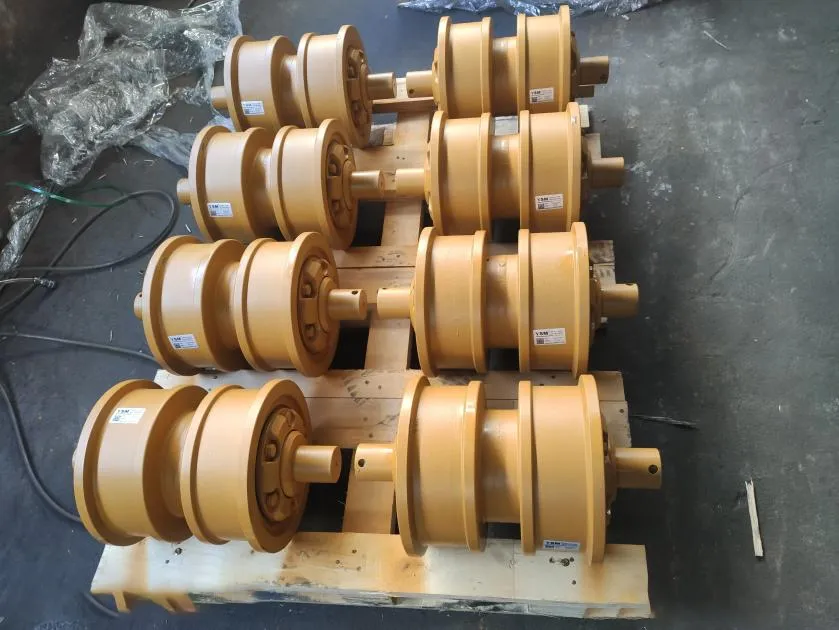
| Rollers and idler | Active leakage, flat spots, restricted rotation, play, and damaged flanges | A marginal component may seize more readily when contaminated or frozen |
| Track chain | Stiff joints, seal loss, pin movement, rail wear, and pitch condition | Cold packing increases load on joints that already articulate poorly |
| Shoes and hardware | Loose bolts, missing nuts, cracks, bent plates, and packed holes | Snow can conceal loose or damaged hardware during a quick walk-around |
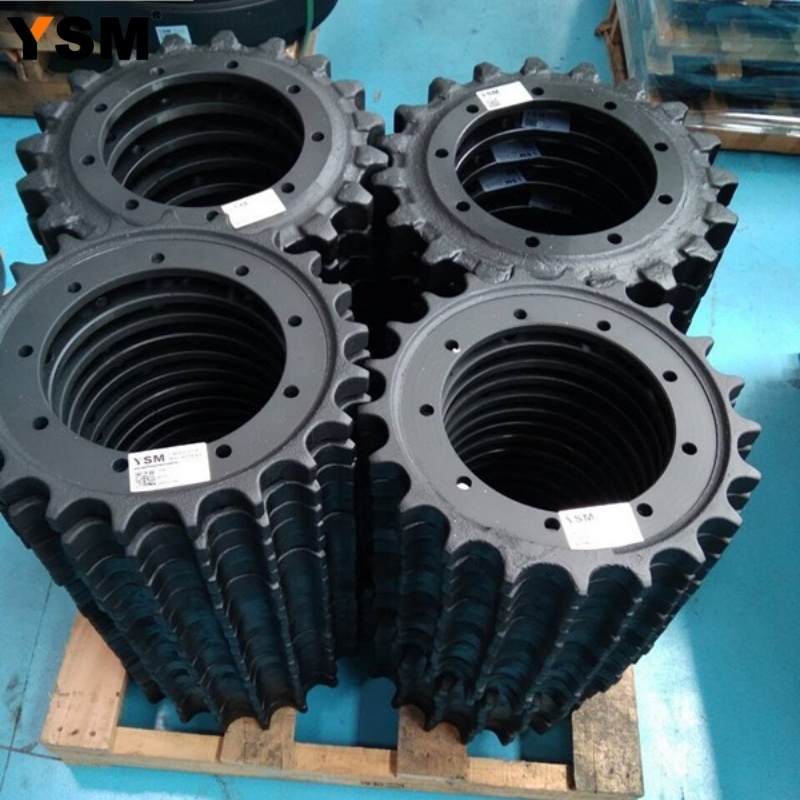
| Sprocket and guards | Tooth profile, cracks, fasteners, guide clearance, and polished contact | Frozen debris can interfere with engagement or push against guards |
Photograph both crawler sides when clean and record current wear measurements. A clean baseline helps the maintenance team distinguish new winter damage from existing wear.
3. Cold weather excavator undercarriage daily checklist
Before startup
- Walk around both sides and check for a track frozen to the ground.
- Look for solid packed material around the sprocket, idler, rollers, carrier rollers, guards, and frame openings.
- Check for fresh oil or grease paths that remain visible against snow.
- Inspect track shoes, bolts, links, pins, and guards for missing or displaced parts.
- Confirm that no person, tool, cable, or object is inside the travel path.
During initial movement
Follow the manual's cold-start and warm-up procedure. Move only after the undercarriage is clear. Use a safe observation position and listen for scraping, impact, chain climb, or a roller that drags instead of turning. Stop immediately if the machine resists travel, one track behaves differently, the chain leaves its normal path, or packed ice contacts a moving component.
During the shift
Reinspect after working in wet snow, slush, or freezing mud. Conditions can change quickly as warm components melt snow and the water later refreezes. Compare both sides for abnormal packing and temperature differences. Keep drainage areas open where the manual permits cleaning.
Before shutdown
Cleaning before the machine cools is usually easier than removing a frozen mass the next morning. Park on firm, drained ground where meltwater will not collect beneath the tracks. Lower the attachment, apply parking controls, stop the engine, and isolate the machine before close cleaning.
4. Clean the undercarriage before packed material freezes
Use the cleaning method approved for the machine and jobsite. Remove snow, clay, and stones from the sprocket pockets, roller areas, idler guides, carrier-roller path, guards, and frame ledges. Work from outside the travel path and maintain stable footing.
- Do not place hands or feet between the track chain and frame.
- Do not rely on the bucket or blade as the only support for a raised machine.
- Do not strike seals, hoses, fittings, or thin guards with sharp tools.
- Do not apply an uncontrolled flame to thaw the undercarriage.
- Do not direct damaging heat or high pressure at seals, electrical parts, or labels.
If approved heated-water cleaning is available, manage runoff so it does not refreeze into a new hazard. Some sites use a warm service area or controlled thawing process. The correct choice depends on the machine, temperature, water management, environmental rules, and manufacturer instructions.
After cleaning, inspect for damage that was hidden by the packed material. Check whether every roller turns normally, the chain seats correctly, the idler guides are clear, and the sprocket pockets contain no trapped objects.
5. Winter symptoms and the next safe check
| Observed symptom | Possible contributors | Next action |
|---|---|---|
| Track appears too tight after snow work | Frozen packing, wrong measurement condition, over-adjustment, or chain condition | Clean completely, position as the manual states, and measure again |
| One track will not move freely | Frozen ground contact, packed sprocket, seized roller, final-drive issue, or obstruction | Stop; do not force travel; isolate and inspect the complete side |
| Scraping or repeated impact | Ice against a guard, chain mis-seating, loose hardware, bent component, or wear | Stop and locate the contact before continued operation |
| Carrier roller or lower roller drags | Frozen material, internal seizure, seal loss, or damaged mount | Clean, compare rotation and temperature, then obtain qualified inspection |
| Fresh grease near the adjuster | Normal service residue, damaged fitting, valve leakage, seal problem, or pressure issue | Clean, monitor, and follow the manual; do not dismantle stored-energy parts |
Do not assume cold weather is the only cause. If the symptom remains after complete cleaning and controlled warming, investigate the chain, rollers, idler, sprocket, adjuster, guards, frame, and travel drive as a system.
6. Information needed when winter damage requires parts
- machine brand, complete model, suffix, serial number or PIN, and market;
- part name, installed side and position, quantity, and readable part number;
- photos before and after cleaning, including the surrounding track frame;
- track-shoe width, link count, roller sequence, and sprocket type;
- agreed mounting, overall, offset, and wear measurements;
- observed symptom, temperature, snow or soil condition, and event history;
- previous repairs, working application, and destination country.
A replacement roller or chain cannot correct a bent guard, blocked drainage path, damaged frame, or operating practice that repeatedly allows material to freeze around the track. Confirm the root condition before defining the repair scope.
Frequently Asked Questions
Should an excavator track be loosened for winter?
Do not make a seasonal adjustment from a generic rule. Clean the undercarriage and use the exact model's specified measurement condition and value.
Can an excavator drive through frozen mud to break it loose?
No general recommendation supports forcing a restricted track. The load can damage chains, rollers, guards, idlers, sprockets, or the travel system. Isolate and clear the obstruction safely.
Why does the track look tighter in the morning?
Water and packed soil may have frozen inside the frame. Clean and remeasure before changing the adjuster. Chain wear and adjuster condition may also contribute.
Is snow enough to clean the undercarriage?
No. Snow can hide mud, stones, leakage, and loose hardware. A deliberate inspection and cleaning routine is still required.
Technical references
Check Excavator Undercarriage Parts After Winter Damage
Send the complete machine identification, clear cleaned-part photos, markings, counts, and agreed measurements for a model-specific review. We can check suitable supply options for requested items such as:
- track rollers and carrier rollers;
- front idlers and sprockets;
- track chains, track shoes, adjusters, guards, and related fasteners.
Corporate Email: sales@china-ysm.com
WhatsApp: +86-18606961587
Compatibility and availability must be confirmed from the complete model, serial number, part number, clear photos, requested dimensions, quantity, destination country, and working conditions before ordering.