
Desert applications | Crawler dozer undercarriage
Desert Dozer Undercarriage Maintenance in Sand and Dust
Fine sand enters gaps that larger debris cannot reach and continuously moves across track shoes, chains, rollers, idlers and sprockets. Desert maintenance is therefore less about removing one large obstruction and more about controlling abrasive contamination, checking tension in the real working condition, measuring wear consistently and matching the undercarriage configuration to low-impact but high-abrasion work.
How Desert Sand Changes Dozer Undercarriage Wear
Sand is not one uniform material. Particle size, angularity, moisture, salt content and contamination with gravel all affect abrasion. Dry dune sand may flow through an open frame, while damp sand can pack tightly around sprocket roots and idler supports. Wind can carry fine particles into upper surfaces even when the machine is parked.
Dozer track components slide and roll under high load. Abrasive particles between contacting surfaces can accelerate external wear on bushings, sprocket teeth, rails, roller treads and idler guides. Packed sand can also change apparent track tension. These mechanisms often occur without a dramatic impact mark, so trend measurements matter more than one quick visual estimate.
High ambient temperature adds an inspection challenge. A warm pin end, roller or final-drive area may reflect sunlight and normal operation as well as friction. Use controlled comparison, safe measurement tools and the OEM temperature guidance rather than touching components or assuming heat proves one specific failure.
Controlled Sand-Cleaning Routine
Select a cleaning area with stable footing, dust control and good lighting. Photograph unusual packing or leakage before cleaning. After isolation, start at the top of the track frame and work outward so removed material does not fall deeper into the undercarriage.
- Clear accessible loose sand: use a soft brush, shovel or approved vacuum method appropriate to the site.
- Check carrier rollers: remove material that could prevent rotation or force the upper chain to slide.
- Clean idler and sprocket pockets: work from outside pinch points and avoid disturbing seals.
- Inspect guards and drains: confirm that sand can leave the frame and that added protection has not blocked cleanout paths.
- Reinspect after cleaning: look for oil films, fresh polished areas, cracks, loose hardware and abnormal wear previously hidden by dust.
Compressed air can create an inhalation and visibility hazard and may force grit into protected areas. If an approved air-cleaning method is used, follow the site procedure, pressure limit, PPE and component exclusions. Water washing may create wet packing or corrosion concerns; use it only where the machine manual and environmental plan allow.
Desert Dozer Undercarriage Component Checks
| Component | What to inspect | Why the finding matters |
|---|---|---|
| Track shoes and bolts | Grouser wear, thin or cracked plates, loose bolts and polished mating areas | Abrasion, turning load and hardware movement can combine |
| Links, pins and bushings | Rail height, external bushing wear, stiff or dry joints, pitch change and seal clues | Sand can accelerate external wear, while internal condition still requires proper measurement |
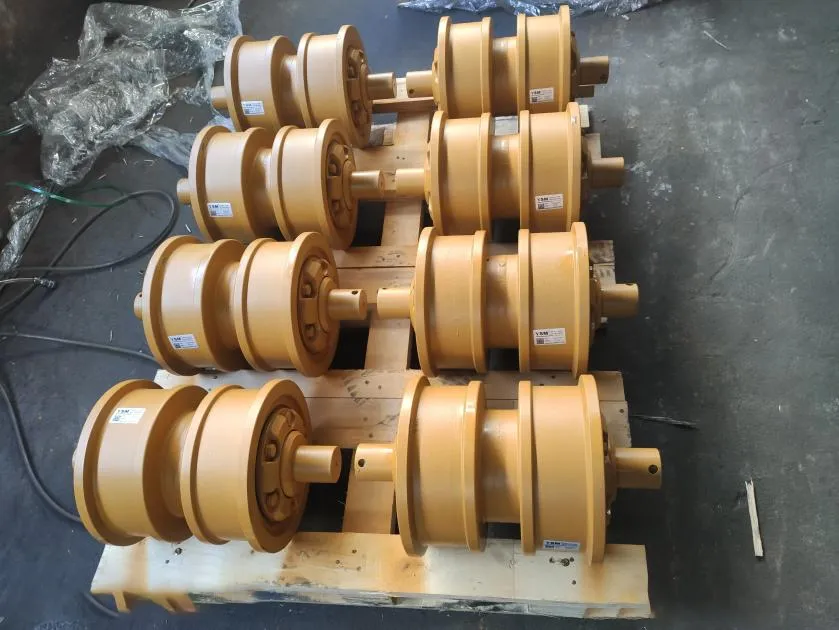
| Lower rollers | Oil leakage, tread wear, flange shape, free condition and sand packed behind guards | Leaking or blocked rollers change load distribution across the remaining rollers |
| Carrier rollers | Accumulation on the frame, leakage and upper-chain sliding marks | Sand can stop rotation or conceal a seal problem |
| Front idler | Tread and guide wear, leakage, ridging and restricted recoil movement | Guidance, alignment, tension and abrasive wear interact |
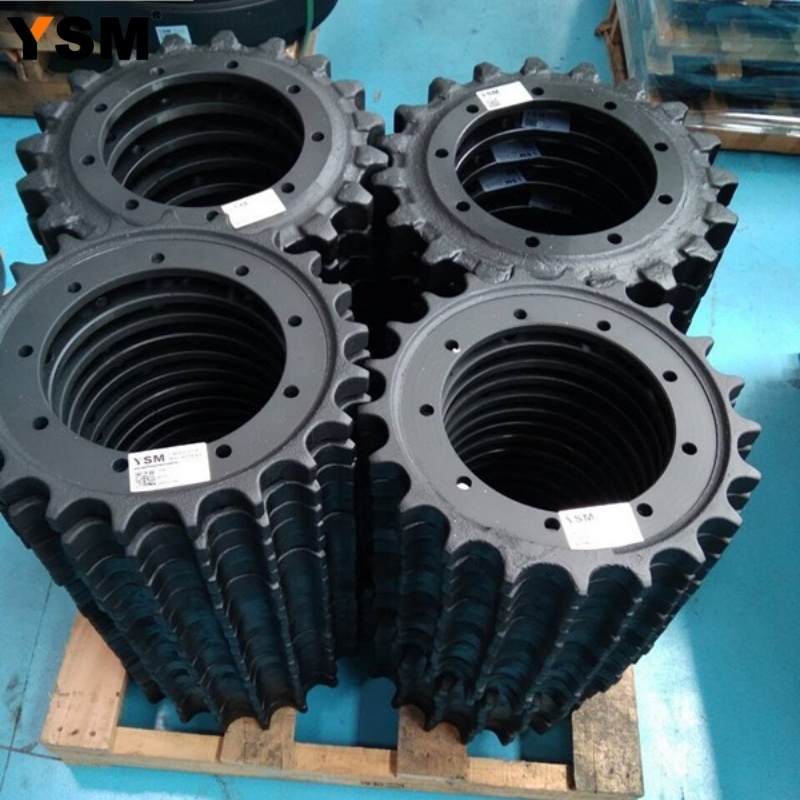
| Sprocket and segments | Tooth profile, packed roots, cracks, loose hardware and asymmetric engagement | Chain pitch and bushing wear must be assessed with the sprocket |
| Frames and guards | Blocked cleanout paths, cracked welds, worn guides, loose plates and trapped sand | Protection that retains abrasive material may create a secondary wear source |
Compare the same locations on both sides. A smooth polished area may be normal contact or abnormal side loading depending on location and width. Record it, measure connected parts and review operating conditions before diagnosing.
Track Tension in Loose and Packed Sand
Loose granular material generally requires room to pass through the track system. Packed damp sand can tighten the track and increase load on pins, bushings, rollers, idlers and sprockets. Measuring while sand fills the frame can lead to an incorrect adjustment.
Prepare the machine by the exact manual procedure, including any specified travel direction and measurement position. Clean the required area and use the stated reference points. Never copy a sag dimension from another dozer. Track design, roller arrangement, shoe type and working condition change the correct value.
The adjuster contains stored grease pressure. If tension does not respond normally after cleaning, investigate recoil movement, adjuster leakage, chain wear, idler position and measurement error. Do not force movement or release grease with an improvised tool.
Abrasion Undercarriage and Track Shoe Selection
Manufacturers offer different undercarriage arrangements for impact, general duty and abrasive environments. Sand work may favor designs intended to manage external bushing and sprocket wear, but the correct choice depends on particle type, moisture, machine size, travel speed, expected ownership and other applications performed by the same dozer.
Do not assume that the heaviest or most expensive arrangement is automatically best. A configuration optimized for severe rock impact may not address the same wear mechanism as low-impact sand. Some desert packages also include additional seals, bottom guarding and cleanout access outside the undercarriage; those features must be identified separately.
Shoe width should provide required flotation without adding unnecessary leverage and steering resistance. Very wide shoes can increase side loading during turns, while shoes that are too narrow may sink and increase track spin. Use approved options for the exact machine and ground condition.
Desert Operating Habits That Reduce Avoidable Wear
Limit high-speed nonproductive travel, especially in reverse. Use gradual turns and alternate turning direction rather than pivoting the same way all shift. Avoid track spin; spinning moves abrasive sand rapidly through the contact areas without productive machine movement.
Plan routes to avoid repeated climbing of steep loose dunes when a more stable path exists. Keep the blade load balanced and avoid side loading the track on a dune face. If one track repeatedly sinks, correct the route or support condition rather than steering harder.
Inspect after a change from dry sand to damp or salty material. Packing behavior may change within one shift. Stop when the track begins to bind, a roller appears not to rotate, the chain engages the sprocket abnormally or severe heat, noise or steering change develops.
Wear Measurement and Replacement Planning
Record machine hours, site zone, sand type, moisture, travel distance, average turning pattern, cleaning completed and unusual heat or leakage. Use consistent left- and right-side photographs after cleaning.
A qualified inspection may measure link pitch, rail height, bushing diameter, roller and idler treads, grouser height and sprocket profile. Use the exact tool, component reference point and service data for the installed undercarriage. Trend the results instead of presenting one universal wear percentage.
Plan replacements as a matched system. A new chain may not engage correctly with severely worn sprockets. New rollers cannot correct a bent frame or poor alignment. Repeated rapid wear may require a different undercarriage configuration, shoe option, cleaning plan or operating route rather than only another identical component.
Desert Dozer Undercarriage Parts Fitment Checklist
For rollers, idlers, sprocket segments, chains, shoes, bolts or guards, provide:
- brand, complete model and every suffix;
- serial number or PIN and clear nameplate photograph;
- standard, abrasion, desert, low-ground-pressure or other configuration;
- part name, quantity and readable part number;
- overview, mounting and wear photographs after cleaning;
- requested dimensions and measurement method;
- shoe width, link count, track gauge and undercarriage type;
- sand condition, application and destination country.
Model names alone do not confirm fitment. Serial breaks, gauge, shoes, roller arrangement and special desert or abrasion packages can change the required parts.
Frequently Asked Questions
Should desert dozer tracks run looser?
Use only the exact machine's working-condition specification. Clean packed sand and follow the manual's measurement procedure before adjustment.
Can compressed air clean the entire undercarriage?
Only under an approved dust-control procedure. Air can spread silica-containing dust and force grit into protected areas. Use the site's specified method and exclusions.
Does fine sand damage sealed rollers?
Seals are designed for contamination control, but leakage, abrasion and damage remain possible. Inspect cleaned seal areas and use machine-specific service decisions.
Is a wide shoe always best in dunes?
No. Flotation must be balanced against steering resistance, side loading and machine stability. Use approved options for the actual sand and application.
Should chains and sprockets be replaced together?
Not as an automatic rule, but their wear and engagement must be evaluated together. A qualified inspection determines the appropriate matched repair scope.
Technical References
- Caterpillar: Steel Tracks for Medium Dozers - abrasion undercarriage and application selection.
- Caterpillar: D4 Undercarriage Maintenance - cleaning, inspection, wear checks and manual boundary.
- Caterpillar: D8 Desert Configuration - fine-particle sealing and cleanout context.
- Komatsu: Do Not Overlook the Undercarriage - undercarriage management context.
This general article does not replace the exact machine manual, desert site safety plan, environmental controls or qualified inspection.
Ask About Dozer Undercarriage Parts for Desert Work
We can check suitable supply options for track rollers, carrier rollers, front idlers, sprocket segments, track chains, track shoes, bolts and related parts after reviewing the exact dozer and sand application.
Corporate Email: sales@china-ysm.com
WhatsApp: +86-18606961587
For a fitment check, send the equipment brand, complete model and suffix, serial number or PIN, part name, part number, clear photos, requested dimensions, quantity, destination country and working condition. Compatibility and availability must be confirmed before ordering.