
Troubleshooting Guide | Crawler Dozer
Dozer Carrier Roller Not Turning: Causes, Flat Spots and Repair
A dozer carrier roller that is not turning can make the upper track chain slide across a stationary tread instead of rolling over it. Debris packing may be the cause, but oil loss, internal seizure, a damaged tread, misalignment or incorrect track condition can create similar evidence. Stop and inspect before a flat spot or damaged flange transfers wear into the chain links.
What a Dozer Carrier Roller Does
A carrier roller, also called an upper roller or top roller, supports the return section of the track chain between the front idler and rear sprocket. Not every dozer configuration uses the same number or style. Some undercarriages support the upper run differently, so machine identification must come before part selection or track-tension measurement.
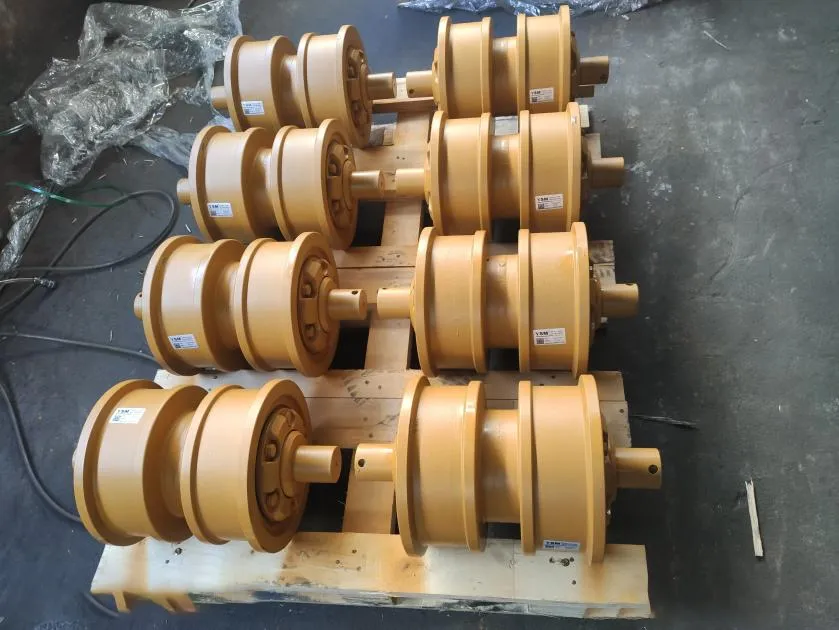
The carrier roller shell turns around a shaft or internal bearing and bushing arrangement while sealed lubricant protects the working surfaces. The link rails contact the roller tread, and the roller flanges help control the chain path. A mounting support or pedestal holds the assembly on the track frame.
When the roller turns normally, contact moves around the full tread. If it stops, the chain may slide across one fixed area. The result can be a polished band or a flat spot on the roller and concentrated wear on the link rail. This is why a carrier roller that looks like a small supporting component can affect a much larger track assembly.
Signs a Dozer Carrier Roller May Be Seized
A flat spot on the tread
A distinct straight or flattened area on an otherwise round tread is strong evidence that the roller has spent time sliding rather than rotating. Dirt can create an optical line, so clean and inspect the complete circumference in a qualified unloaded setup before confirming the condition.
A narrow polished drag band
Bright metal concentrated on one section can show repeated chain contact. Uniform polish around the complete tread may be normal contact, while one fixed shiny patch suggests restricted rotation. Compare the opposite side and record the chain position above the roller.
Oil wetness near the seal
A damp ring or dark wet trail at the seal area can indicate lubricant loss, but wash water, grease from another component and fresh mud can look similar. Clean, dry and recheck. Continued leakage together with heat, noise or rough movement increases the need for service.
Grinding, scraping or rhythmic impact
A stationary roller can produce scraping as the chain moves over it. A flat spot may create a repeating impact if the roller turns intermittently. Noise is not proof of carrier-roller failure because dry joints, guards, sprocket engagement and other rollers can sound similar.
Localized link-rail wear
The upper link surface may show a concentrated polished or worn area above the problem roller. Inspect several links and both machine sides. A track that runs off-center can also create localized flange and rail contact.
Debris tightly packed around the roller
Mud, clay or frozen material between the roller, support and frame can physically restrict rotation. Current OEM guidance specifically identifies frame debris as a condition that can stop a carrier roller and make the track pass over a stationary surface.
Why a Dozer Carrier Roller Stops Turning
External packing or frozen material
This is one of the first conditions to check because it can sometimes be corrected without component removal. Material may pack below the roller shell or between the support and track frame. In freezing weather, wet debris can become a rigid block. Remove accessible material from outside with the machine fully stopped.
Lubricant loss after seal damage
A failed or damaged sealing interface can allow oil to escape and contamination to enter. Internal surfaces may overheat and wear until rotation becomes rough or stops. Adding external grease is not a universal repair because many carrier rollers are sealed assemblies with model-specific construction.
Internal bearing, bushing or shaft seizure
Internal damage can lock the roller even after external packing is removed. Confirmation normally requires unloading or removing the assembly and following a service procedure. Do not use a long bar against the flange or apply heat to force movement.
Out-of-round or previously damaged tread
A tread that is already distorted may rotate unevenly and create changing contact load. Cracks, unapproved weld buildup or severe impact can alter geometry. Repairability depends on the exact roller material and manufacturer instructions.
Alignment or support damage
A bent bracket, loose mounting, frame damage or incorrect alignment with the idler and sprocket can push the chain against a flange. Side loading may not fully seize the roller at first, but it can accelerate flange, tread and link wear.
Incorrect track tension or operating conditions
A track that is too tight or too loose changes loads through the carrier roller and upper run. Packed material, wide shoes, slope work, frequent reversing and high-speed travel can further affect wear. Use only the model-specific tension method; no universal sag value applies.
Safe Carrier-Roller Inspection Sequence
- Identify the machine. Record brand, complete model and suffix, serial number or PIN, track type and whether the configuration uses one or more carrier rollers.
- Park and isolate. Use stable level ground, lower attachments, stop the engine and prevent unexpected travel.
- Photograph before cleaning. Record packed material, oil wetness, upper-track position and differences between machine sides.
- Remove accessible debris. Work from outside with a long-handled tool. Do not enter the space between the upper chain and frame.
- Inspect the visible tread. Look for a flat area, isolated polish, scoring, cracks, displaced metal and irregular contact.
- Check seals and mounting. Look for oil traces, loose bolts, bracket cracks, shifted supports and rubbing marks.
- Inspect the chain above it. Check link rails, joints, seals and side contact for localized wear or damage.
- Review the complete track path. Inspect tension, idler alignment, sprocket engagement, guards and adjacent rollers.
- Arrange an unloaded check. Qualified personnel should support and unload the track according to the exact service procedure before confirming free rotation, clearance or internal condition.
- Measure and record. Use the specified wear tool and reference points for tread and flange measurements.
Temperature can support a diagnosis, but touching a recently operated roller is unsafe and a single temperature does not confirm the cause. Use approved non-contact measurement and compare components under the same conditions if the service plan requires it.
How a Stationary Carrier Roller Affects the Track Chain
A rotating roller spreads contact around its circumference. A seized roller concentrates sliding on one section. Abrasive material between the chain rail and tread can act like grinding media, removing material from both surfaces.
The roller may develop a flat spot, while the link rail above it develops localized polish, scoring or material loss. If the chain runs to one side, the roller flange and link edge can wear together. Continued operation may also increase noise, vibration and heat in the upper return run.
Damage is not limited to the roller. Incorrect tension, restricted articulation or alignment problems can transfer load toward the idler, sprocket, guides and adjacent rollers. Replacing only the carrier roller without correcting the cause may expose the new part to the same pattern.
Conversely, a polished roller does not automatically mean the chain must be replaced. Measure the roller and chain separately, inspect joint and rail condition and compare both with the applicable service criteria. The repair decision should come from the system condition, not the cost of one component alone.
Carrier-Roller Symptom and Next-Check Table
| Observed clue | Possible contributors | Next safe check |
|---|---|---|
| Roller surrounded by hard packing | Mud, clay, stone or frozen material restricting rotation | Remove accessible debris while parked, then inspect tread and seals |
| Oil wetness at one seal | Seal damage, internal wear or contamination from another source | Clean, dry, photograph and request an unloaded service inspection |
| One distinct flat on the tread | Roller seized or rotated only intermittently | Inspect link rail damage and confirm rotation only after safely unloading |
| Heavy wear on one flange | Chain misalignment, slope operation, bracket movement or tension problem | Check idler, sprocket, guides, mounting and complete track path |
| Rhythmic impact during travel | Flat-spotted roller, damaged joint, guard contact or sprocket issue | Stop, isolate and inspect all components that match the rhythm |
| Upper track runs unusually low or high | Track tension, worn roller, incorrect component or support problem | Use the exact manual measurement method and identify installed parts |
The table narrows the inspection path but does not confirm failure. More than one condition can occur at the same time.
Clean, Repair or Replace the Carrier Roller?
| Inspection result | Cleaning and monitoring may remain reasonable when | Service or replacement is more likely when |
|---|---|---|
| External debris | Packing is removed and the undamaged roller is confirmed free in an approved setup | Rotation remains restricted or packing has caused flat wear |
| Seal area | No continuing oil wetness appears after cleaning and recheck | Fresh leakage returns or internal contamination is suspected |
| Tread | Surface remains round and within the specified wear criteria | Flat spots, cracks, severe scoring or out-of-round geometry is present |
| Flanges | Wear is even and alignment remains acceptable | One-sided wear, thinning or chain-edge damage indicates abnormal guidance |
| Mounting | Support and fasteners remain secure and undamaged | Bracket, frame or mounting hardware is loose, bent or cracked |
| Track chain | Rails and joints remain serviceable under the applicable measurements | Localized rail loss, cracks, seal damage or articulation problems are found |
Many carrier rollers are sealed components and may be replaced as complete assemblies, but construction and repair options vary. Removal involves heavy track parts and stored loads. Use approved lifting, blocking, track-unloading and tightening procedures for the exact machine.
Common Carrier-Roller Troubleshooting Mistakes
- Trying to turn the loaded roller by hand. The chain-to-roller area is a crush point and track load prevents a meaningful check.
- Moving the dozer while someone watches nearby. No person should stand beside a moving track to confirm rotation.
- Calling every polished surface a flat spot. Clean, inspect the circumference and measure before deciding.
- Replacing the roller without cleaning the frame. The new component can be exposed to the same packing.
- Ignoring oil wetness. Loss of lubricant can progress toward internal seizure.
- Welding over a flat tread without an approved procedure. Geometry, hardness and balance may be changed.
- Using a universal wear diameter. Tread and flange limits depend on the exact roller and measuring method.
- Adjusting track tension to hide the symptom. Tension changes do not repair a seized or leaking component.
- Ordering by machine model alone. Serial range, mounting and undercarriage option can change the roller.
Dozer Carrier Roller Replacement Fitment Checklist
For a reliable carrier-roller review, provide:
- equipment brand, complete model and model suffix;
- serial number or PIN and market version;
- part name and readable part number from the old roller, when available;
- clear photos of the complete roller, both shaft ends, seal areas, flanges, tread, support and mounting;
- roller type and number of carrier rollers per side;
- overall width, tread diameter, tread width, flange dimensions and shaft-end dimensions;
- support height, mounting-hole count, hole spacing and base dimensions;
- track-chain pitch, link dimensions, shoe width and undercarriage option;
- quantity, destination country and working conditions;
- failure evidence, including debris packing, leakage, flat spots and related link wear.
Compatibility and availability must be confirmed before ordering. A carrier roller should not be assumed interchangeable from appearance, overall diameter or model family alone.
Frequently Asked Questions
Can mud stop a dozer carrier roller from turning?
Yes. Packed or frozen debris can restrict the roller. Remove accessible material safely, then inspect for flat wear, oil leakage and internal damage before returning to work.
Does a carrier-roller flat spot prove it seized?
A clear flat spot is strong evidence of sliding contact, but the cause may be external packing, internal seizure or damaged geometry. Confirm in a qualified unloaded inspection.
Can a leaking carrier roller be refilled with grease?
Not as a universal repair. Many rollers use sealed oil lubrication and model-specific construction. Follow the applicable service information.
Can the dozer keep working with one seized carrier roller?
Continued travel can drag the chain across the roller and accelerate roller, flange and link-rail wear. Stop and assess the condition.
Should both sides be checked?
Yes. Side-to-side comparison helps reveal differences in packing, alignment, slope operation, tension and previous replacement history.
Technical References
- Caterpillar: Dozer Undercarriage Maintenance - current carrier-roller, debris and complete undercarriage inspection guidance.
- Caterpillar: How to Maintain Steel Tracks - current guidance on debris, roller rotation, leaks and uneven wear.
- Caterpillar: How to Check Dozer Track Tension - current cleaning, carrier-roller and manual-specific tension context.
This independent educational guide is not affiliated with or endorsed by any machine manufacturer. Manufacturer manuals and qualified service data for the exact machine take priority.
Ask About Dozer Carrier Rollers and Matched Undercarriage Parts
We can check suitable supply options for carrier rollers, track rollers, idlers, sprockets or segments, track chains, pins and bushings, track shoes, adjuster components and related hardware after reviewing the exact machine and undercarriage.
Corporate Email: sales@china-ysm.com
WhatsApp: +86-18606961587
Send the equipment brand, complete model and suffix, serial number or PIN, part name, part number, clear photos, requested dimensions, quantity, destination country and working conditions. Compatibility and availability must be confirmed before ordering.