
Bulldozer Undercarriage | Frame Support and Uneven Wear
Dozer Equalizer Bar and Pivot Shaft Inspection: Uneven-Wear Clues
On many crawler dozers, an oscillating equalizer bar and pivot-shaft arrangement helps support and connect the tractor to the track frames while allowing controlled movement over uneven ground. Leaks, cracks, damaged pads, loose joints or abnormal frame position can affect stability and may contribute to uneven undercarriage wear, but they require model-specific inspection.
What Dozer Equalizer Bars and Pivot Shafts Do
Undercarriage layouts vary by dozer size and design. Komatsu specifications for several dozer families describe an oscillating equalizer bar with pivot shafts. In this general arrangement, the equalizer bar supports the front portions of the track frames and permits controlled side-to-side oscillation, while pivot-shaft areas support and locate the rear portions of the roller frames relative to the tractor.
Because these structures influence track-frame position, damage or wear may change the way rails contact roller flanges, idlers, guards and sprockets. However, a side-wear mark is not proof that the equalizer bar or pivot shaft is the cause. Track adjustment, debris, operating pattern, individual roller condition and earlier repairs must also be checked.
Equalizer-Bar and Pivot-Shaft Inspection Signals
| Observed condition | What it may indicate | Next check |
|---|---|---|
| Fresh oil or wet dirt near a pivot-shaft area | Seal leakage, overfill, contamination from another source or housing damage | Clean, identify the source and check the exact model's lubricant procedure |
| Crack in the equalizer bar, mounting area or roller frame | Impact, fatigue, overload, prior repair or structural damage | Stop operation and arrange approved structural inspection |
| Damaged or displaced pads/cushions | Wear, deterioration, incorrect assembly or abnormal movement | Compare both sides and use the service manual's measurement method |
| Shiny metal contact around a joint | Clearance change, missing pad, loose pin, frame shift or packed debris | Clean and photograph the full contact path |
| Visible left/right roller-frame position difference | Ground condition, loading, joint wear, frame damage or suspension movement | Recheck on firm level ground and arrange professional alignment inspection |
| Loose, missing or damaged hardware | Vibration, prior service issue, impact or joint movement | Do not continue until the correct retention and mounting are verified |
A Safe Ground-Level Inspection Sequence
- Record the complaint. Note whether instability, pulling, noise or uneven wear occurs on slopes, during turns, under load or continuously.
- Clean the area. Caterpillar guidance calls for removing debris around the equalizer-bar ends, pivot shaft, roller frames, idlers and rollers.
- Photograph the center and both ends. Include wide views showing their relationship to the roller frames.
- Look for leakage and cracks. Inspect clean surfaces, seals, weld areas, covers and adjacent frame structure.
- Compare hardware and pads. Check both sides for displaced parts, abnormal gaps, missing fasteners or metal-to-metal contact.
- Compare the complete tracks. Photograph rollers, idlers, sprockets, link sides and guards from matching angles.
- Check model-required fluids and lubrication. Use the exact manual; locations and procedures differ.
- Escalate movement checks. If play or alignment must be measured under changed load, use the approved service setup and qualified personnel.
Undercarriage Wear Patterns That May Be Related
| Wear pattern | Possible connection | What else to inspect |
|---|---|---|
| One-sided roller-flange polishing | Persistent lateral loading or track-frame path change | Idler guides, chain sides, guards, track adjustment and operating slopes |
| Different idler wear left versus right | Unequal frame position, debris, adjustment or component wear | Roller alignment, yoke/recoil area and both chain rails |
| Uneven sprocket tooth-flank contact | Chain path or bushing engagement difference | Chain wear, sprocket mounting, final drive and roller-frame condition |
| Guard rubbing or fresh link-side marks | Clearance change, bent guard or frame movement | Guard hardware, debris and structural condition |
| One track wears faster overall | Operating bias, ground conditions, alignment, powertrain or suspension issue | Travel test by qualified personnel and dated wear measurements |
| Repeated noise over uneven ground | Joint movement, loose component, pad/cushion condition or contact | Blade/ripper mounts, guards, rollers and frame structure |
A wear pattern should be trended, not judged from one photograph. Record machine hours, site material, turning direction, side-slope work and any recent impact or repair. The equalizer bar may be involved, but it should not become the default diagnosis for every uneven track.
Other Causes of Uneven Dozer Undercarriage Wear
Track adjustment and packing
Too much or too little model-specific track sag changes loading, while packed material can effectively tighten the system or restrict rollers. Clean first and use the exact operation and maintenance manual.
Worn or seized rollers and idlers
A single roller that does not rotate or a damaged idler can change contact along the rail. Inspect every component before assigning the pattern to the frame support system.
Operating direction and side slopes
Repeated turning one way, reverse travel, high-speed travel, track spin and work on slopes can create asymmetric wear. Compare the machine's actual duty cycle with the observed side.
Chain and sprocket mismatch
Mixed wear stages or incorrect parts may engage unevenly. Verify chain pitch, link count, rail profile, sprocket configuration and serial-range fitment.
Travel-drive or steering difference
If the dozer pulls during controlled straight travel, the cause may involve steering, brakes, transmission/powertrain or unequal resistance. This requires qualified machine-level testing.
Professional Measurement and Repair Boundaries
Model-specific equalizer-bar and pivot-shaft inspections may require unloading the structure, installing supports, measuring play with indicators, checking lubricant levels, removing covers or evaluating bushings and bores. These procedures vary substantially and can expose personnel to crush hazards and stored energy.
Do not lift a dozer with the blade for an informal movement test, place anyone beneath it, improvise cribbing, weld a structural crack or change shims without the exact service method. A qualified technician must identify approved lift points, support capacity, measurement position, tolerances and repair instructions.
Parts and Fitment Information After Diagnosis
Equalizer-bar or pivot-shaft repair is model-specific and may involve pins, bushings, seals, pads, hardware, machining or structural work that is outside a simple wear-parts order. Request the exact service parts through the correct model, suffix and serial/PIN documentation.
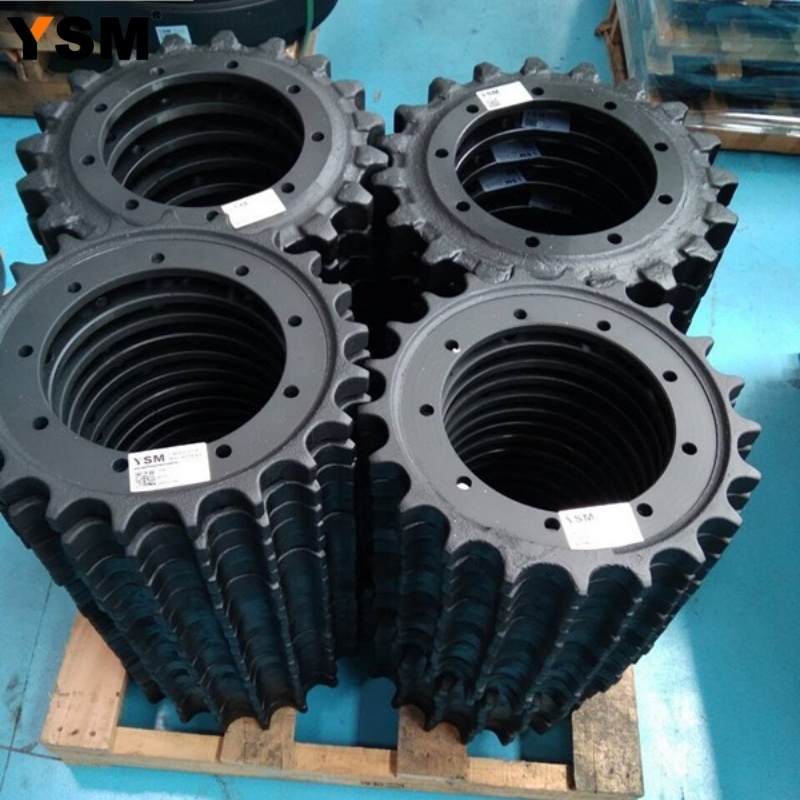
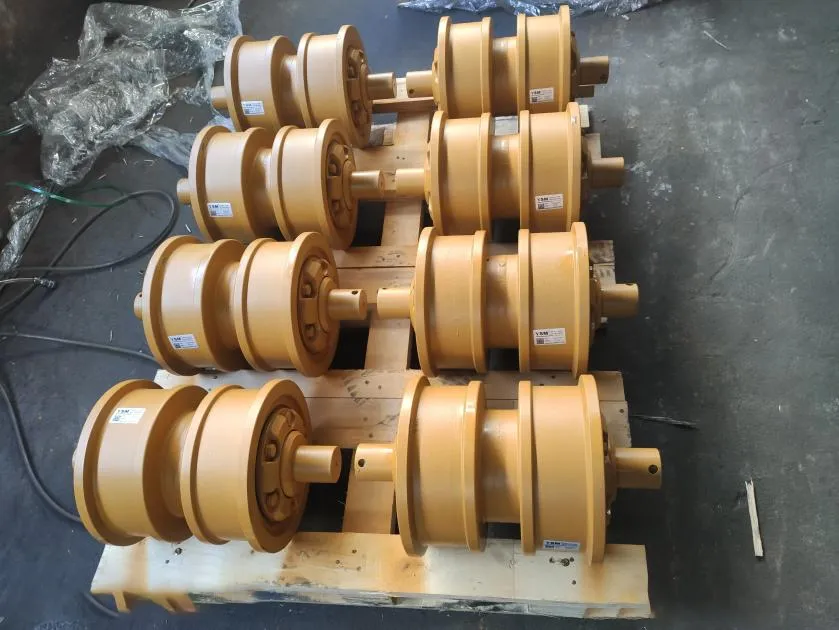
If related undercarriage parts are required, send complete left/right photographs and measured condition for the track chains, rollers, carrier rollers, idlers, sprockets or segments, shoes and hardware. Provide part numbers, requested dimensions, quantities, destination and working condition. Compatibility and availability must be confirmed before ordering.
Frequently Asked Questions
Can equalizer-bar wear cause one-sided track wear?
It may contribute by changing frame support or movement, but it is not the only cause. Track adjustment, rollers, idlers, guards, operating pattern and powertrain conditions must also be checked.
Is a small amount of oil around the pivot shaft normal?
Do not assume so. Clean the area, identify the source and compare it with the model's manual and service information.
Can equalizer-bar play be checked by lifting the dozer with the blade?
Only as part of an approved model-specific service procedure using rated supports, isolation and qualified personnel. It is not a safe general field test.
Should new track parts be ordered before structural diagnosis?
No when a frame, equalizer-bar or pivot-shaft problem is suspected. Correct the geometry and structural issue first, then confirm the compatible wear-parts scope.
Technical References
- Caterpillar: How to Check Dozer Track Tension — cleaning around equalizer-bar ends and pivot shaft, plus frame crack/leak checks.
- Caterpillar: D4 Undercarriage Maintenance — equalizer-bar pin, pivot-shaft and roller-frame inspection context.
- Caterpillar: Planned Dozer Maintenance — equalizer-bar end pins and model-specific pivot-shaft checks.
- Komatsu D155AXi-8 specifications — oscillating equalizer-bar and forward-mounted pivot-shaft layout example.
This is a general inspection guide. Exact lubrication, clearance, movement, lift/support, measurement and repair procedures must come from the correct dozer operation, maintenance and service documentation.
Ask Our Team About Related Dozer Undercarriage Parts
After structural and alignment concerns have been diagnosed, we can check suitable supply options for track rollers, carrier rollers, front idlers, sprockets or segments, track chains, track shoes, track assemblies and related track fasteners.
Corporate Email: sales@china-ysm.com
WhatsApp: +86-18606961587
For a fitment check, send the equipment brand, complete model and suffix, serial number/PIN, part name, part number, clear photos, requested dimensions, quantity, destination country and working condition. Compatibility and availability must be confirmed before ordering.