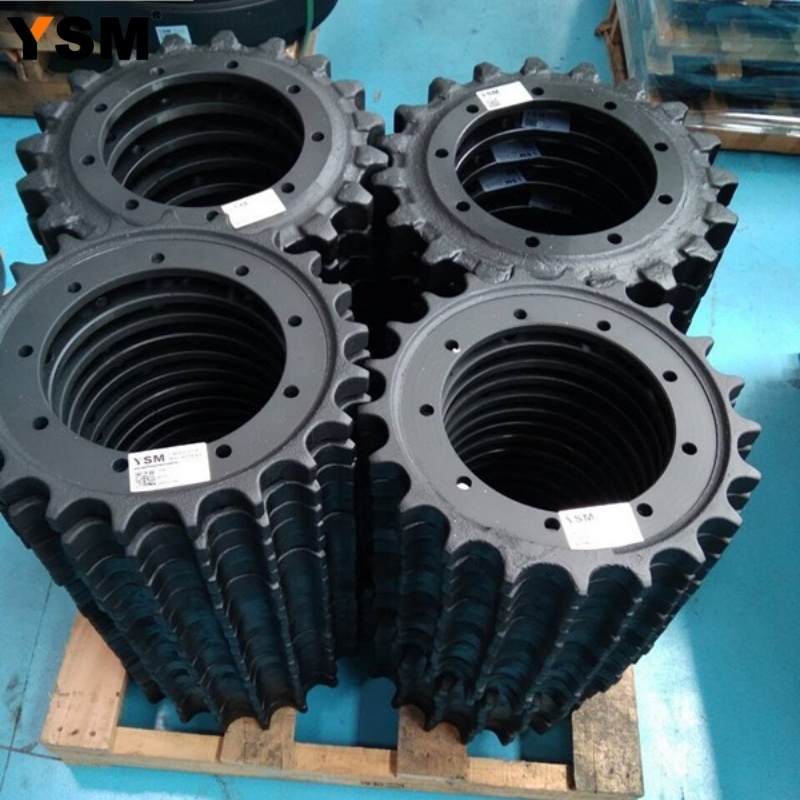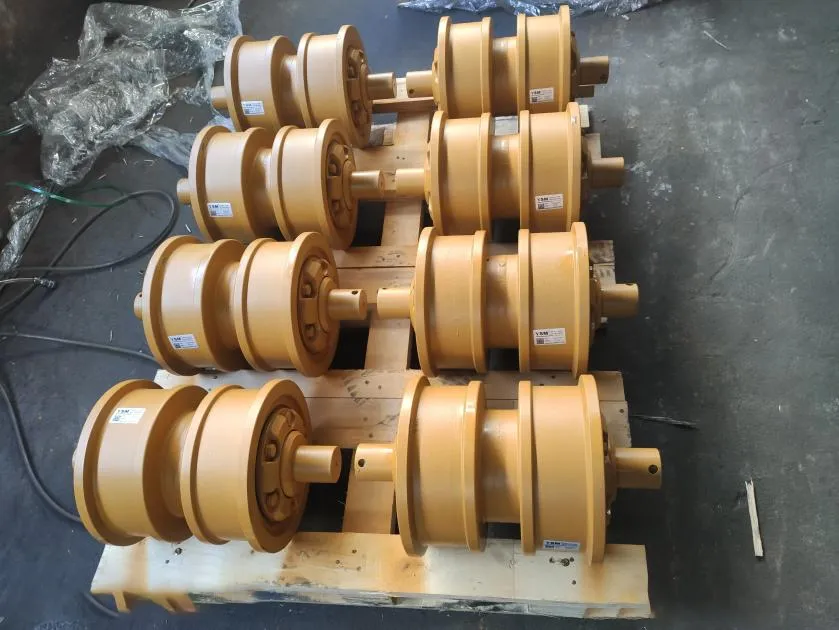

Bulldozer drive-end inspection
Dozer Sprocket Segment Wear: Chain-Match and Replacement Guide
A dozer sprocket or bolt-on segment group transfers final-drive torque into the track bushings. Hooked teeth, deformed pockets, cracked segments, loose hardware, or poor bushing contact are not isolated appearance problems: they can indicate a worn or mismatched chain, incorrect tension, packing, alignment, or severe operating loads.
1. How a dozer sprocket segment drives the track
On many medium and large conventional-drive dozers, several curved bolt-on segments form the sprocket ring around the final-drive hub. Their teeth enter the spaces between track bushings and transfer torque as the track wraps around the drive end. Other machines may use a one-piece sprocket or a different drive arrangement.
Tooth profile, pitch, segment radius, mounting-hole pattern, offset, hub interface, and bushing geometry must work as one system. Wear on the chain changes how the bushings enter and leave each pocket. A new segment group cannot restore correct engagement if pitch extension, bushing wear, hub damage, or misalignment remains outside specification.
2. Common signs of dozer sprocket segment wear
| Observed condition | What it may indicate | Next check |
|---|---|---|
| Teeth become pointed or hooked | Progressive wear and changed bushing engagement | Chain pitch, bushing diameter, direction of wear, and tooth profile |
| Metal mushrooms at pocket edges | Repeated impact or abnormal contact | Bushing contact, packing, chain tension, and system alignment |
| One segment wears faster | Loose hardware, joint movement, local damage, or hub runout | Segment seats, bolt holes, hub face, and adjacent segments |
| Cracks or missing tooth sections | Impact, fatigue, severe mismatch, or structural damage | Stop operation and inspect the complete drive end |
| Rhythmic clicking or climbing | Poor tooth-bushing engagement, slack, stiff joints, or packing | Observe only under approved conditions and inspect chain plus sprocket |
| Bolts loosen repeatedly | Dirty or damaged mating faces, stretched hardware, wrong torque procedure, or movement | Remove and inspect the joint using the service manual |
These signs are inspection clues. Noise or tooth appearance alone does not identify one confirmed cause.
3. Why do sprocket segments wear unevenly?
Chain pitch and bushing wear
As pins and bushings wear internally, chain pitch can increase. External bushing wear changes the contact surface. Both conditions alter the point at which the sprocket tooth carries load, increasing hooking, pocket wear, impact, or poor release.
Track tension and packed material
An over-tight track raises system load. Excess slack can allow impact, jumping, or rough engagement. Mud, stone, frozen material, and demolition debris can change effective tension or prevent clean entry into the pocket.
Operating direction and duty cycle
High-speed reverse travel, repeated direction changes, heavy pushing, ripping, side slopes, and abrasive ground affect which tooth and bushing surfaces carry load. Compare the observed pattern with the machine's actual work history.
Alignment and mounting condition
Hub damage, contaminated mating faces, incorrect segment seating, bent frame components, idler position, roller flange wear, or loose guards can change the track path. Correct the alignment or mounting cause before fitting new segments.
4. Safe sprocket and segment inspection workflow
Park on stable, level ground, lower the blade and ripper, apply parking controls, stop the engine, and isolate energy according to the exact manual. Keep personnel outside the travel path. Never work beneath unsupported equipment or between the track and sprocket.
- Clean the drive end. Remove packed material far enough to expose every tooth, segment joint, fastener, and accessible hub surface.
- Photograph the complete ring. Record both sides and mark segment positions so local wear can be compared.
- Inspect tooth profile and pockets. Look for hooking, pointing, mushrooming, chips, cracks, polished impact zones, and unequal contact.
- Check segment joints and hardware. Look for gaps, fretting, loose or missing bolts, elongated holes, damaged seats, and movement marks.
- Measure mating components. Use the OEM method for chain pitch, bushing diameter, sprocket profile, and wear limits.
- Compare the full undercarriage. Inspect rollers, idlers, carrier rollers, shoes, guides, tension, and alignment on both sides.
Do not grind tooth profiles, weld structural cracks, reuse questionable hardware, or improvise torque values. Repair procedures and reusability criteria vary by model and segment design.
5. Replace sprocket segments with the chain condition in mind
When a chain and sprocket wear together, their contact profiles adapt. Installing new segments against a heavily worn chain can produce concentrated contact and rapid damage. Installing a new chain on severely hooked or deformed segments can damage the bushings and create rough engagement.
This does not mean every minor isolated defect requires replacing an otherwise serviceable complete system. Measure first. A broken segment caused by a local impact may be a different repair decision from uniform tooth hooking caused by end-of-life chain wear.
Replacement planning questions
- Is chain pitch within the exact service limit?
- Are bushings reusable, turnable, or worn beyond the specified condition?
- Are all segment seats, hub threads, and mating faces serviceable?
- Does the track tension and alignment remain stable?
- Are both sides at similar or different wear stages?
- Will the machine continue in the same abrasive, impact, or high-reverse application?
Stop operation when
- a segment, tooth, hub, or mounting area is cracked;
- a tooth section or fastener is missing;
- segments move on the hub or bolts repeatedly loosen;
- the chain climbs, jumps, or may derail; or
- metal contact, smoke, or abnormal heat indicates severe distress.
6. Information needed to match dozer sprocket segments
Do not order from the base model or tooth count alone. Production series, final-drive hub, chain group, pitch, and segment mounting can change within a model family.
- brand, complete model, suffix, serial number, and application package;
- part number or readable markings from the old segment;
- number of segments, teeth per segment, and complete ring photos;
- mounting-hole count, center distances, hole diameter, offset, thickness, and radius from agreed points;
- chain part number, pitch, link count, and bushing measurements;
- hub-face, bolt, thread, and damage photos;
- working conditions, quantity, and destination country.
Frequently Asked Questions
What do hooked dozer sprocket teeth mean?
They show progressive profile wear and changed bushing engagement. Measure the chain and bushings before deciding whether the sprocket alone is the problem.
Can I replace only one damaged segment?
Possibly for verified local damage when the remaining ring, chain, hub, and hardware are within specification. Uniform system wear usually requires a broader plan.
Should new segments be installed on an old chain?
Only after the old chain is measured and confirmed suitable. A worn pitch or bushing profile can rapidly damage new segment teeth.
Why are sprocket segment bolts coming loose?
Possible causes include contaminated or damaged mating faces, stretched or incorrect hardware, wrong installation procedure, hub damage, or segment movement. Remove and diagnose the joint.
Technical references
Check Dozer Sprocket Segment and Chain Options
Send the complete machine identification, old segment and chain markings, photos, and agreed measurements for a model-specific review. We can check suitable supply options for requested items such as:
- bolt-on sprocket segments and sprockets;
- track chains, pins, bushings, and track assemblies;
- track rollers, carrier rollers, idlers, shoes, and related fasteners.
Corporate Email: sales@china-ysm.com
WhatsApp: +86-18606961587
Compatibility and availability must be confirmed from the complete model, serial number, part number, clear photos, requested dimensions, quantity, destination country, and working conditions before ordering.