
Maintenance decision guide | crawler dozer
Dozer Track Pin and Bushing Turn: Turn or Replace?
A pin-and-bushing turn can present a different wear surface to the sprocket on a serviceable conventional track chain, but it is not an automatic mid-life repair for every dozer. The decision depends on track type, internal pitch extension, external bushing wear, link condition, seals, press fits, sprocket profile, roller wear and the cost of qualified shop work. Measurements must come before the turn.
What a Dozer Pin-and-Bushing Turn Changes
In a conventional sealed and lubricated track chain, the bushings are pressed into the links and engage the sprocket in a fixed orientation. Forward travel and pushing can concentrate external wear on part of each bushing surface. Internal articulation also wears the pin-and-bushing joint and changes track pitch.
A qualified turn separates the chain with a track press, repositions eligible pins and bushings according to the specified method, restores the approved assembly orientation and reseals the joint where required. The goal is to present a less-worn working surface and correct joint geometry within service limits.
A turn does not add metal back to a thin bushing, repair a cracked link, restore a worn rail, straighten a bent shoe or make a badly extended chain new. It also does not automatically correct mismatched sprockets or seized rollers. The whole undercarriage must justify the work.
Caterpillar's current small-dozer guidance describes a 180-degree bushing rotation for an eligible SALT system. That is a product-specific example, not a universal angle or procedure for every manufacturer and chain design.
Confirm the Track-Chain Type Before Planning a Turn
Sealed and lubricated track
SALT systems retain lubricant around the internal joint with seals. The bushing is generally fixed in the link and has a defined sprocket-contact side. A turn may be part of the approved service strategy when wear and component condition remain within limits.
Dry or sealed track
Dry systems may use seals to limit dirt entry without a retained oil reservoir. Their refurbishment method and economic value can differ from lubricated chains. Confirm whether pins, bushings and seals are intended for reuse or replacement.
Rotating-bushing or abrasion system
Some abrasion-focused systems use bushings that rotate during operation and distribute external contact differently. A conventional fixed-bushing turn should not be assumed appropriate. Identify the product family and follow its dedicated service information.
Unknown or mixed chain
A used dozer may have an aftermarket chain, mixed shoe hardware or earlier repairs. Record link marks, master connection, seal style, pitch, link count and any part numbers. A machine model alone cannot prove the chain design.
Internal Pitch Wear Versus External Bushing Wear
External bushing wear occurs where the sprocket contacts the outside of the bushing. It can create a flat, reduced diameter or uneven contact band. The most-worn zone must be measured using the specified tool and orientation.
Internal wear occurs between the pin and bushing as the chain articulates. It increases the center-to-center distance between pins, commonly called pitch extension. Because small changes accumulate across many joints, measurement across the specified number of links is usually more useful than judging one joint.
The two wear modes must be considered together. A bushing may still have enough external wall thickness while internal pitch is already beyond the turn limit. Conversely, severe external wear may threaten the bushing even when pitch has not reached its maximum.
Seal loss, dry joints, overheating, cracking or shifted pins can remove a chain from the normal turn decision. Compare several joints and both sides of the machine. One damaged joint may indicate a local problem, while a consistent pattern may represent system wear.
Measurements Needed Before a Pin-and-Bushing Turn
- Track-chain pitch. Measure the specified span under the preparation and tension condition required by the wear chart.
- External bushing diameter or wear depth. Measure at the manufacturer-defined contact zone and orientation.
- Link rail height. Confirm there is enough rail material and a usable roller path to justify another service cycle.
- Link and boss condition. Check for cracks, elongated bores, damaged counterbores, distortion and loss of press fit.
- Pin position and joint end play. Look for shifted pins, abnormal movement and evidence of previous pressing.
- Seal and lubrication condition. Record leaking, dry, hot or stiff joints and identify whether a wet-turn procedure is available.
- Shoe and hardware condition. Inspect grouser height, bending, cracking, holes, bolts, nuts and link-pad seating faces.
Use calibrated tools and clean reference surfaces. Dirt, burrs, tool angle and inconsistent tension can change results. Record each location and do not average away a dangerous minimum wall or cracked component.
Wear percentages must come from the correct manufacturer chart. A percentage from another pitch, chain series or measuring method is not transferable.
Sprocket, Roller and Idler Condition Matters
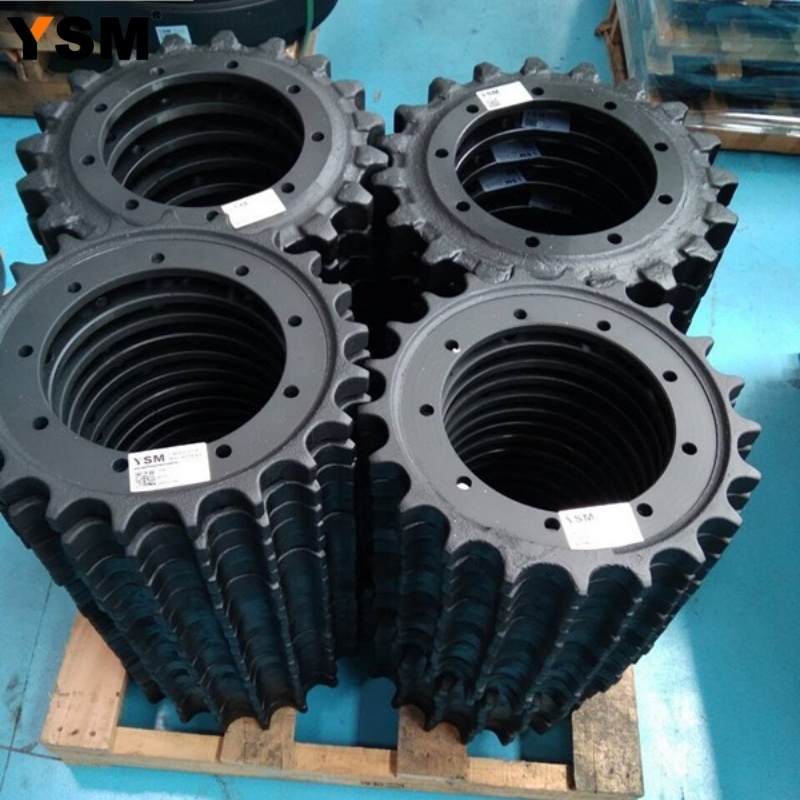
The sprocket and bushings are mating components. Inspect teeth around the circumference for hooking, sharpening, root wear, side polishing, cracks and packing. A newly presented bushing surface may contact a heavily worn tooth profile incorrectly, creating impact and rapid wear.
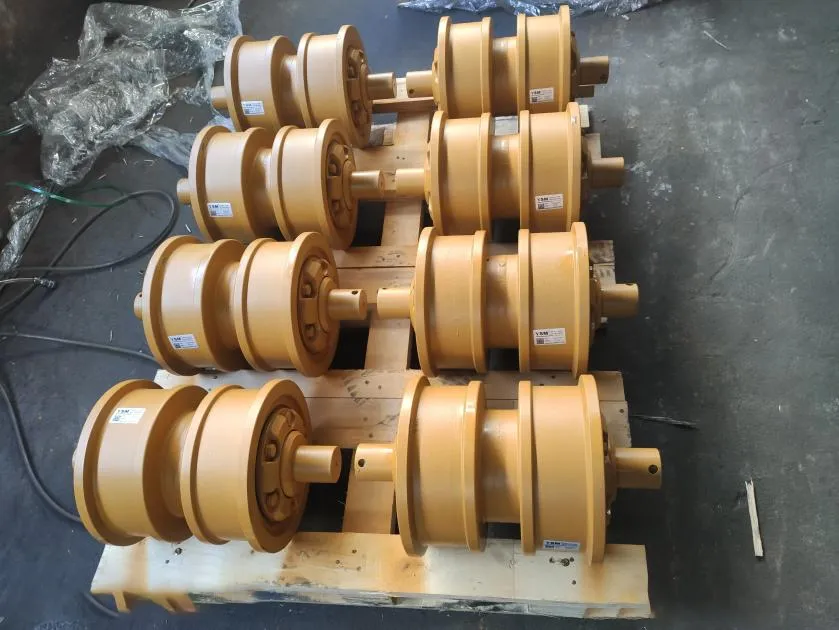
Inspect every lower and carrier roller for leakage, flat spots, tread wear, flange damage and restricted rotation. Link rails with usable height still need a compatible roller path. One seized roller can concentrate sliding wear and undermine the value of a turn.
Check front-idler tread, flanges, guides and position. Inspect the adjuster travel and confirm track tension by the exact manual. An idler near the end of its travel can be a clue to pitch extension, but it is not a measurement by itself.
Track shoes also influence load. Very wide shoes on firm, rocky ground can increase bending and side force. Repeated turning, reverse travel, slope work and material packing should be documented because the same chain may wear differently on another application.
Pin-and-Bushing Turn Versus Replacement
| Inspection result | Turn may remain practical when | Replacement or another repair is more likely when |
|---|---|---|
| External bushing wear | Wear is within the approved turn window and wall condition is sound | Wall is too thin, cracked, deeply pitted or beyond the chart limit |
| Internal pitch | Pitch extension remains within the turn criterion | Pitch is excessive or geometry cannot be restored by the approved process |
| Links and press fits | Rails, bosses, bores and counterbores are serviceable | Links are cracked, distorted or cannot retain the specified press fit |
| Seals and joints | The specified resealing or wet-turn process is available | Widespread dry, contaminated, seized or structurally damaged joints exist |
| Sprocket and rollers | Mating components can be matched within applicable limits | Severe profile mismatch or extensive roller and idler replacement changes the economics |
| Machine plan | Expected use justifies qualified pressing, parts and follow-up inspection | Downtime, application or remaining machine life makes another solution more practical |
The table supports a workshop decision; it does not replace a wear report. Price, labor, transport, parts availability and expected operating hours should be compared only after technical eligibility is confirmed.
What Qualified Track-Shop Work Includes
The shop should identify the chain, document measurements, mark component orientation and inspect the master connection. It should use a rated press, correct tooling and controlled handling so the chain does not fall or twist.
After separation, links, pins, bushings, seals, spacers and bores are inspected against the service criteria. Eligible components are repositioned or replaced according to the approved process. Lubricated joints require the specified seals, lubricant and assembly controls; simply pressing dirty parts together is not a wet turn.
Press-fit force, alignment, joint end play and chain articulation should be verified. The reassembled chain must be matched with appropriate sprocket and roller condition. Shoe installation requires clean seating faces, correct hardware and the specified tightening procedure.
After installation, set track tension by the machine manual, perform a controlled travel check and inspect for abnormal noise, heat, leakage, shifted pins and contact. Establish a new baseline and follow the specified initial recheck interval.
Mistakes That Can Destroy the Turn Window
- Waiting for a bushing to crack. Structural failure is not a timing indicator; it may mean the turn opportunity is already lost.
- Using hours alone. Soil, impact, travel and operator habits can produce very different wear at the same hours.
- Measuring only one bushing. Local impact and uneven wear can hide the condition of the rest of the chain.
- Ignoring pitch extension. A fresh external surface cannot correct excessive internal geometry.
- Keeping a badly worn sprocket automatically. Mismatched contact can damage the turned chain.
- Assuming every chain is turnable. Rotating-bushing and other systems may use a different service strategy.
- Using improvised pressing or heat. This can damage heat treatment, fits and seals and creates severe safety risk.
Track-Chain Parts and Quotation Checklist
For a reliable technical review, provide:
- equipment brand, complete model, suffix and serial number or PIN;
- track-chain manufacturer, series and readable part numbers where available;
- track type, pitch, link count, master-connection style and current adjuster position;
- shoe width, grouser type, bolt pattern and required quantity;
- measured pitch, external bushing wear, link rail height and the wear chart used;
- clear photographs of links, pins, bushings, seals, sprocket profile, rollers and idlers;
- history of any previous turn, link repair, dry joint or mixed component replacement;
- destination country and typical material, impact, travel, turning and slope conditions.
Compatibility and availability must be confirmed before ordering. Track pitch alone is not enough to identify pins, bushings, links, seals or a complete chain assembly.
Frequently Asked Questions
Does every dozer chain need a pin-and-bushing turn?
No. The chain type, wear measurements, link condition and manufacturer procedure must support a turn. Some systems use a different strategy.
Can a turn fix excessive track stretch?
Only within the approved wear window. Severe pitch extension, damaged fits or structural wear can make turning unsuitable.
Should sprockets be inspected during a turn?
Yes. Sprocket profile and bushing contact must be evaluated together, along with rollers and idlers.
Can machine hours determine the right turn time?
No. Use measurements and trend records. Hours do not capture differences in soil, impact, travel, turning and maintenance.
Technical References
- Caterpillar: Maintaining Your Dozer Track Pins and Bushings - current fixed-bushing, SALT and turn-process context.
- Caterpillar: How to Check Dozer Track Tension - cleaning, tension and manual-specific measurement guidance.
- Caterpillar: Dozer Undercarriage 101 - system selection, sealing and daily inspection context.
This independent educational guide is not affiliated with or endorsed by Caterpillar or any other machine manufacturer. Brand and model names belong to their respective owners. The accompanying image is an AI-generated component illustration, not an inventory photograph. Always use the service information and wear chart for the exact chain.
Ask About Dozer Track Chains, Pins and Bushings
We can check suitable supply options for track chains, pins, bushings, seals, track shoes, sprockets or segments, track rollers, carrier rollers, idlers and related hardware after reviewing the exact machine and undercarriage.
Corporate Email: sales@china-ysm.com
WhatsApp: +86-18606961587
Send the equipment brand, complete model and suffix, serial number or PIN, part name, part number, clear photos, requested dimensions, quantity, destination country and working conditions. Compatibility and availability must be confirmed before ordering.