
Bulldozer Undercarriage | Wear Measurement and Procurement
Dozer Undercarriage Replacement Planning: Measure, Match and Schedule
A dozer undercarriage wears as an interacting system, but its parts do not always reach the same condition at the same time. The correct replacement plan therefore begins with measured wear and operating records—not a rule that every repair must be a single part or a complete set. Chain, sprocket, roller, idler, shoe and frame condition must be reviewed together.
Why Dozer Undercarriage Parts Work and Wear as a System
The sprocket drives through the bushings, the link rails move over the rollers and idler, the shoes transfer load to the ground, and guards and the frame control the travel path. A change in one area can shift load to another. For example, a seized roller can concentrate rail wear, while a chain and sprocket with incompatible wear patterns may engage poorly.
Caterpillar describes undercarriage selection in terms of material, impact and working hours, while current dozer maintenance guidance emphasizes inspection, measurement and planning. Komatsu similarly recommends tracking precise wear measurements so decisions about pins, bushings, rollers and sprockets can be based on condition rather than run-to-failure assumptions.
“Works as a system” does not mean every component must always be replaced together. It means the effect on mating parts must be reviewed before approving a limited repair.
Build a Reliable Wear-Measurement Baseline
- Confirm machine identity. Record brand, complete model and suffix, serial/PIN, undercarriage type and known prior modifications.
- Record working conditions. Note material abrasiveness, impact, moisture, side slopes, reverse travel, turning pattern and daily hours.
- Clean both sides. Measurements taken over packed debris or hidden edges are unreliable.
- Use repeatable locations. Photograph and measure the same points using the OEM or qualified inspection method.
- Compare left and right. Unequal patterns may reveal operating bias, localized damage or an alignment concern.
- Keep dates and machine hours. A single reading shows condition; repeated readings show wear rate.
Do not use one universal wear percentage, diameter or track-sag value. New dimensions, allowable limits and measurement methods vary by model, undercarriage design and component family.
Undercarriage Replacement Data by Component
| Component | Condition evidence to collect | Mating parts to review |
|---|---|---|
| Track chains, pins and bushings | Approved link-spacing or pitch measurements, rail wear, bushing external wear, dry joints, cracks and master-joint condition | Sprocket teeth, rollers, idler, shoes and hardware |
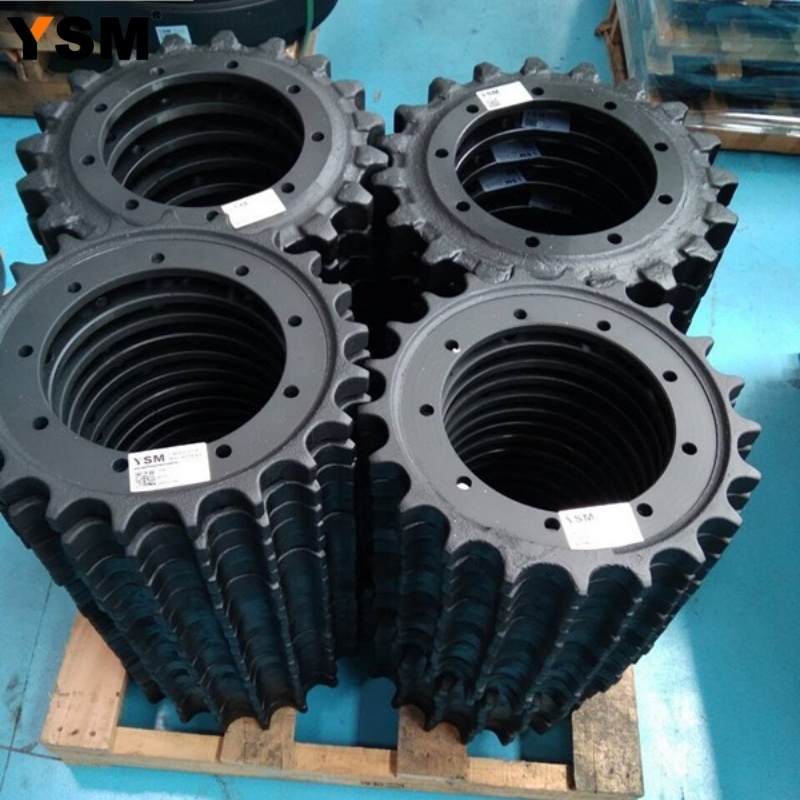
| Sprocket or segments | Tooth profile, pocket wear, one-sided contact, cracks, bolt condition and part reference | Bushing condition, chain pitch progression and final-drive mounting |
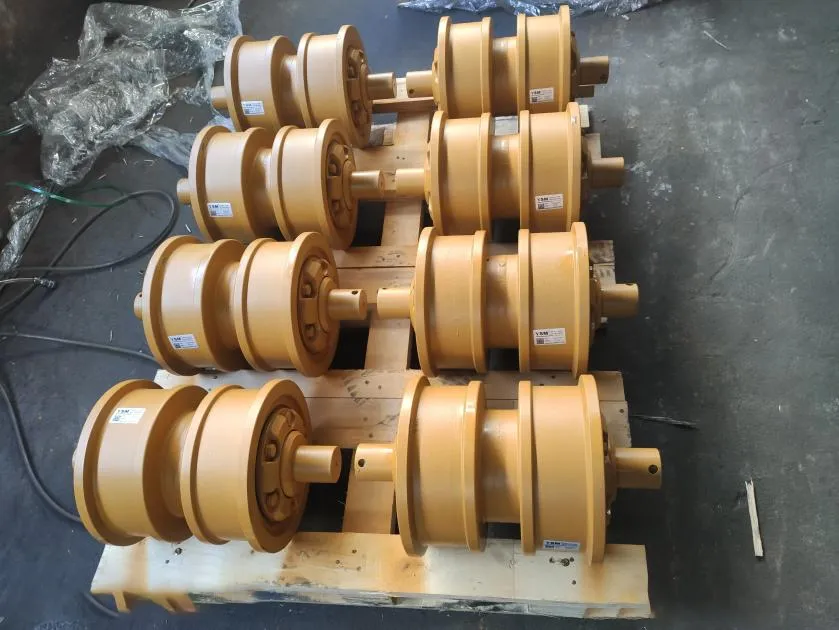
| Track rollers | Tread/flange measurements, shell condition, leakage, rotation, mounting and wear pattern | Link rails, guards, frame alignment and adjacent rollers |
| Carrier rollers | Tread/flange condition, leakage, rotation, upper-chain contact and frame packing | Upper chain path, mounting bracket and track adjustment |
| Front idler | Tread/flange wear, leakage, ridging, guide contact, yoke and recoil-area condition | Chain rails, front rollers, guides and track adjustment |
| Track shoes and bolts | Grouser and plate wear, bending, cracks, hole damage, missing hardware and shoe width | Links, bolt pattern, ground condition and machine clearance |
| Guards and frame | Cracks, deformation, loose hardware, shiny contact, abnormal gaps and debris packing | Complete chain path and the components showing side wear |
A visual check is useful for finding defects, but wear-life decisions should use the approved tools and references. A photograph of a hooked tooth or thin flange is not enough to establish a remaining-life percentage.
Choose the Repair Scope: Isolated, Staged or Matched
Isolated component replacement
This may be appropriate when damage is local—for example, an impact-damaged shoe or a leaking roller—and the rest of the system remains within compatible condition. The root cause, mounting and mating surfaces still need inspection. Replacing the visible item without correcting a bent guard or frame contact can repeat the failure.
Staged replacement plan
A fleet may schedule different components over planned service windows when wear measurements show usable remaining condition and the combinations remain compatible. Staging requires reliable records, consistent inspections and a clear risk trigger; it is not simply delaying every part until failure.
Matched component replacement
A broader package may be suitable when the chain, bushings and sprocket have developed a shared wear pattern, when multiple rollers or the idler are near applicable limits, or when mixed old and new geometry would create abnormal contact. The scope may involve one side or both sides depending on measurements, configuration and operating needs.
Structural or machine-level repair
Frame cracks, recoil-system concerns, final-drive mounting damage, repeated derailment or severe alignment problems are not solved by ordering wear parts alone. These conditions require qualified structural or drive-system diagnosis before a replacement package is selected.
Avoid New-and-Worn Undercarriage Mismatches
| Planned change | Compatibility questions | Risk if ignored |
|---|---|---|
| New track chain | Does pitch, link count, rail profile and master-joint design match? What is the sprocket condition? | Poor engagement, abnormal contact or inability to install |
| New sprocket/segments | Is the chain/bushing wear compatible? Are tooth count, bolt pattern and mounting correct? | Accelerated tooth or bushing wear and mounting mismatch |
| New roller or idler | Does flange/tread geometry match the chain path and mounting? Are adjacent parts aligned? | Side loading, rail contact or installation failure |
| Different shoe width | Is the width approved for model, clearance, flotation, impact and application? | Higher structural loading, clearance problems or poor site performance |
| Mixed component source | Are part references, drawings, dimensions and system interfaces confirmed? | Similar-looking parts may not share the required geometry |
Do not assume that “same model” guarantees the same undercarriage. Serial ranges, market versions, standard versus low-ground-pressure arrangements and previous repairs can change the installed configuration.
Schedule Parts, Labour and Downtime Before Failure
Trend measured condition against planned projects, transport windows and qualified service capacity. Caterpillar's current undercarriage-management material describes replacing wear components based on monitored condition and planning rather than waiting for a breakdown. Komatsu documentation likewise connects periodic measurement with forecasting replacement and scheduled downtime.
A practical planning record should contain:
- machine identification, hours and site assignment;
- dated measurements and photographs for each major component;
- OEM new and service-limit references used by the inspector;
- observed defects, leakage, heat, noise and operating complaints;
- expected project window and acceptable downtime;
- parts scope, hardware, lifting/press requirements and responsible technician;
- post-installation checks and the next measurement date.
Do not promise a fixed remaining life from a single measurement. Wear rate can change when the machine moves from fine soil to rock, wet abrasive material, heavy side slopes or a different operating pattern.
Dozer Undercarriage Procurement and Fitment Checklist
- Brand, complete model and suffix, serial/PIN and destination country.
- Undercarriage type, shoe configuration and any known previous conversion.
- Requested component names, positions, part numbers and quantities.
- Serial plate, full left/right side views and close photographs of every measured part.
- Approved dimensions, wear data and units, with the measurement points identified.
- Chain link count and pitch reference; sprocket tooth count and mounting; roller/idler profiles and mounting dimensions.
- Working material, impact, moisture, slopes, travel pattern and replacement objective.
- Required hardware, packing, destination and planned installation window.
Compatibility and availability must be confirmed from the complete machine and installed-system evidence before ordering. If numbers and measurements disagree, stop the inquiry and resolve the configuration rather than selecting the closest-looking part.
Conditions That Should Not Wait for the Planned Window
Track adjustment, recoil disassembly, heavy component removal, pressing, heating and structural repair must follow the exact service procedure. Planning parts supply does not authorize an improvised field repair.
Frequently Asked Questions
Must every worn dozer undercarriage part be replaced at the same time?
No. The correct scope depends on measured condition, compatibility, damage and operating needs. However, every replacement decision should review the mating system.
Can a new sprocket be installed with an old track chain?
Only after a qualified compatibility and wear assessment. Chain/bushing condition and tooth engagement must be reviewed; appearance alone is insufficient.
Can photographs determine remaining undercarriage life?
Photographs help document patterns and defects but cannot establish precise remaining life without correct measurements, new dimensions, service limits and operating context.
What information is most important for a replacement quotation?
Complete model and suffix, serial/PIN, part numbers, clear photos, requested dimensions, component quantities, destination and working condition are the minimum starting set.
Technical References
- Caterpillar: Dozer Undercarriage Maintenance and Management — current inspection, measurement and operating guidance.
- Caterpillar: Managing Undercarriage Wear — condition monitoring and planned replacement context.
- Caterpillar: Dozer Undercarriage 101 — material, impact, hours and system selection.
- Komatsu: Undercarriage Maintenance Tips — measured wear, operating conditions and planned component decisions.
This article is a general planning guide, not a repair manual. Exact wear limits, measurement points, replacement combinations, torque, track adjustment and service procedures must come from the correct machine documentation and qualified inspection.
Ask Our Team About a Matched Dozer Undercarriage Parts Plan
We can check suitable supply options for track rollers, carrier rollers, front idlers, sprockets or segments, track chains, track shoes, track assemblies and related track fasteners after reviewing the measured system condition.
Corporate Email: sales@china-ysm.com
WhatsApp: +86-18606961587
For a fitment check, send the equipment brand, complete model and suffix, serial number/PIN, part name, part number, clear photos, requested dimensions, quantity, destination country and working condition. Compatibility and availability must be confirmed before ordering.