
-
-
ApplicationOur products consist of undercarriage parts for bulldozer and excavator such as Track link,Track roller,Carrier roller,Sprocket,ldler,Track shoe,Cutting edge,End bit,Tooth Bucket,Track pin,Track bush, Engine parts,Track boit&nuts.U-bolt,Centre bolt,Wheel bolt and other related parts.

-
About UsFujian Yongsheng Machinery Parts Co., Ltd. is located in Quanzhou City, Fujian Province, which is one of the most developed regions of China Machinery Manufacturing.The company was established in 2003, after approximately 10years' effort, and now it is one of the leading construction machinery parts auto parts manufacturers in CHINA.
-
BlogSuppliers who pass Quality ManagementSystem Certification, and have onsitematerials or finished products inspected,as certified by independent third parties.
Excavator Bucket Guide: Materials, Design & Durability for Heavy Equipment Operations
Complete excavator bucket guide covering materials, bucket teeth types, durability comparison, OEM vs aftermarket analysis, and cost optimization for heavy equipment operators and procurement managers.
Jul 07,2026
Excavator Bucket Guide: Materials, Design & Durability for Heavy Equipment Operations
Excavator buckets are the primary digging tool on any excavation equipment. Whether you're working on urban construction, quarry operations, or infrastructure projects, understanding bucket design, materials, and maintenance is critical to minimizing downtime and optimizing your total cost of ownership. This comprehensive guide covers everything procurement managers and equipment operators need to know about selecting, maintaining, and upgrading excavator buckets.
Understanding Excavator Bucket Fundamentals
An excavator bucket performs multiple functions simultaneously: scooping, carrying, and depositing material. The bucket's effectiveness depends on three key components:
- Main Body (Bucket Shell): The steel structure that holds and carries material; typically made from high-strength structural steel.
- Bucket Teeth: Individual wear parts that penetrate and break up hard materials; attached to the tooth adapters.
- Side Plates & Cutting Edges: Reinforced sections that protect the bucket from lateral wear and abrasion.
- Tooth Adapters: Connection points that hold bucket teeth and distribute forces evenly.
The bucket's performance is directly influenced by material composition, tooth design, and manufacturing precision. A quality bucket can last 2-3 years under normal conditions, while poor-quality alternatives may fail in 6-12 months, resulting in higher replacement costs and unplanned downtime.
Bucket Teeth Materials: The Foundation of Durability
Bucket teeth are the most critical wear component. They experience constant impact, abrasion, and bending forces. Material selection determines how long teeth will last in your specific application.
| Teeth Type | Material Composition | Hardness (HRC) | Best For | Typical Lifespan |
|---|---|---|---|---|
| Standard Cast Teeth | Chrome-Molybdenum Steel (Cr-Mo) | 42-48 | General digging, soil & gravel | 300-600 hours |
| Forged High-Carbon Teeth | 40Mn2, 50Mn (Low-alloy steel) | 48-52 | Hard rock, concrete, clay | 600-1000 hours |
| Boron-Enhanced Teeth | 25MnB, 35MnB (Boron-alloyed steel) | 50-55 | Quarry & mining (extreme wear) | 1000-1500 hours |
| Composite/Tungsten Teeth | Tungsten carbide inserts | 58-62 | Ultra-hard minerals, abrasive soils | 1500+ hours |
Note: Actual lifespan varies based on soil type, bucket size, machine hours per day, and operator technique.
Manufacturing Methods: Forging vs. Casting
The way bucket teeth are manufactured significantly affects their performance and durability. Two primary methods dominate the industry:
Cast Bucket Teeth
Process: Molten steel is poured into molds and cooled. The resulting structure contains a uniform grain pattern but may have microscopic porosity and internal voids.
- ✓ Lower initial cost (15-25% cheaper than forged)
- ✓ Faster production cycles
- ✓ Consistent wear patterns in uniform soil
- ✗ More prone to sudden fracture under impact
- ✗ Lower hardness after heat treatment
- ✗ Not ideal for rock or highly abrasive materials
Forged Bucket Teeth
Process: Steel is heated to 1000-1200°C, then hammered and shaped under extreme pressure. This process aligns the grain structure, eliminating internal voids and increasing density.
- ✓ Superior impact resistance (30-40% higher than cast)
- ✓ Higher hardness and wear resistance
- ✓ Proven durability in rock and quarry operations
- ✓ Better toughness (less brittle under shock loads)
- ✗ Higher cost (25-40% premium)
- ✗ Slightly longer lead times
Bucket Material Specifications: Shell & Frame
While teeth capture most attention, the bucket body itself must also withstand enormous stresses. The main shell and frame determine overall structural integrity.
| Component | Standard Material | Heavy-Duty Alternative | Typical Thickness |
|---|---|---|---|
| Main Shell | ASTM A36 (Low-carbon steel) | AR400 or A514 (Abrasion-resistant) | 10-16mm |
| Bottom Plate | A36 with reinforcement | AR450 or HARDOX 450 | 12-20mm |
| Side Plates | A36 | AR400 (High-wear zones) | 8-12mm |
| Tooth Adapters | 40Mn2 (Forged) | 35MnB (Boron-enhanced) | Modular design |
AR400 & AR450 Advantage: Abrasion-resistant (AR) steel plates are hardened to 400-450 HV, providing superior resistance to scratching, scoring, and erosion. They cost 20-30% more than standard steel but extend bucket life by 50-70% in quarry and mining applications.
Standard vs. Heavy-Duty Bucket Comparison
| Specification | Standard Bucket | Heavy-Duty Bucket | Impact on Operations |
|---|---|---|---|
| Shell Material | ASTM A36 (low-carbon) | AR400 (abrasion-resistant) | +50-70% longer shell life |
| Tooth Material | Cast Cr-Mo (42-48 HRC) | Forged 50Mn or 35MnB (50-55 HRC) | +40-60% longer teeth life |
| Bottom Plate Thickness | 10-12mm | 14-20mm | Better impact absorption, less warping |
| Tooth Adapter Design | Pinned connection (standard) | Welded + pinned (reinforced) | Reduced tooth loss, faster tool changes |
| Weight | Light (easier to handle) | +15-25% heavier | Reduced operating speed, more impact force |
| Cost | $2,000-5,000 | $4,500-8,000 | Higher upfront cost, lower total cost of ownership |
Identifying Bucket Wear & Failure Patterns
Early identification of wear patterns helps you schedule maintenance and plan replacements before catastrophic failure occurs.
Common Wear Indicators
1. Uneven Tooth Wear: Teeth on one side are shorter than the other. This indicates bucket misalignment or uneven load distribution. Solution: Realign the bucket or inspect the boom for deformation.
2. Tooth Breakage or Chipping: Teeth are fractured or have sharp edges missing. Common in hard rock operations. Solution: Replace teeth immediately; fragments can damage excavator hydraulics.
3. Root Cracking (Adapter Damage): Cracks visible where the tooth connects to the adapter. This indicates impact overload. Solution: Replace teeth and adapters; continued use risks catastrophic adapter failure.
4. Shell Warping or Denting: The bucket body deforms, reducing digging efficiency and load capacity. Solution: Repair via welding or replace the bucket if damage is extensive.
5. Side Plate Erosion: Visible scoring and thinning of the sides. Caused by material abrasion during digging. Solution: Side plates can be built up via welding (500-800 hours lifespan); plan replacement after 3-4 rebuilds.
Bucket Replacement Cost Analysis: Repair vs. Replace
A critical decision for maintenance managers is whether to repair a damaged bucket or replace it entirely.
| Scenario | Repair Cost | New Bucket Cost | Recommendation |
|---|---|---|---|
| Worn Teeth Only (50% of teeth life remaining) | $300-500 (tooth replacement) | $2,000-5,000 (new bucket) | Repair; ROI within 2-4 weeks |
| Minor Shell Cracking (<200mm) | $400-800 (welding + reinforcement) | $2,500-6,000 | Repair if shell is <5 years old |
| Extensive Shell Damage (>500mm cracks or warping) | $1,500-2,500 (structural repair) | $3,000-7,000 | Replace; structural integrity compromised |
| Adapter/Root Cracking | $600-1,200 (welding + reinforcement) | $2,500-6,000 | Repair once; replace if cracks recur |
| End-of-Life (multiple damage types) | $2,000-3,500 (comprehensive repair) | $3,500-8,000 | Replace; buckets typically cost-effective after 2-3 years |
Cost-Per-Hour (CPH) Formula: Divide the bucket's total cost by expected operational hours. Example: A $4,000 heavy-duty bucket lasting 2,000 hours = $2.00 CPH. Compare this against repair costs and downtime losses to make the optimal decision.
OEM vs. Aftermarket Buckets: Quality Trade-offs
Procurement managers often face the choice between original equipment manufacturer (OEM) buckets and quality aftermarket alternatives.
OEM Buckets (Caterpillar, Komatsu, Hitachi, Volvo, Hyundai)
- ✓ Guaranteed fit and compatibility with specific machine models
- ✓ Superior material specs (often AR400 shell, premium tooth materials)
- ✓ Backed by manufacturer warranty (12-24 months typical)
- ✓ Consistent quality across all units
- ✗ 40-60% higher cost than quality aftermarket
- ✗ Longer lead times (2-4 weeks for custom specs)
- ✗ Limited flexibility for custom modifications
OEM Price Range (typical): $4,500-8,500 for standard excavators (Cat 320, Komatsu PC200, etc.)
Quality Aftermarket Buckets
- ✓ 30-45% cost savings vs. OEM
- ✓ Often use equivalent or superior materials (AR400 / forged teeth)
- ✓ Shorter lead times (7-14 days)
- ✓ Flexibility for custom tooth configurations and sizes
- ✗ Quality varies significantly between manufacturers
- ✗ No manufacturer warranty; rely on supplier reputation
- ✗ Occasional fit issues (frame geometry may differ slightly)
Quality Aftermarket Price Range: $2,500-5,500 (equivalent specs to OEM)
Low-Quality "Economy" Buckets
- ✗ Soft steel (A36 shell, cast Cr-Mo teeth)
- ✗ Poor weld quality; prone to cracking
- ✗ Teeth wear out in 200-400 hours
- ✗ Shell may warp after 6-12 months of use
- ✓ Lowest cost ($1,500-2,500)
- ✗ Highest total cost of ownership (frequent replacements)
The Value Proposition: A quality aftermarket bucket ($3,500-5,000) with OEM-equivalent materials offers the best balance of cost and durability. Avoid ultra-cheap buckets that sacrifice hardness, weld quality, and material composition.
Multi-Brand Compatibility & Adaptation
Not all excavators accept the same bucket design. However, quality aftermarket manufacturers offer solution-specific buckets for major brands:
| Excavator Brand/Model | Bucket Pin Size | Standard Bucket Capacity | Compatibility Notes |
|---|---|---|---|
| Caterpillar 320 | 40-50mm pins | 0.8-1.2 m³ | Industry standard; most aftermarket buckets fit directly |
| Komatsu PC200 | 45-50mm pins | 0.8-1.0 m³ | Frame geometry similar to Cat; adapters available |
| Hitachi ZX330 | 50mm pins | 1.2-1.5 m³ | Slightly different frame; custom fabrication recommended |
| Volvo EC480 | 50mm pins | 1.8-2.2 m³ | Larger frame; sourcing may be challenging |
| Hyundai R480 | 45mm pins | 1.5-1.8 m³ | Compact frame; limited aftermarket availability |
Adapter Solutions: If an exact-fit bucket is unavailable, professional fabrication shops can create adapters to bridge pin geometry differences. This typically costs $300-800 and adds 2-3 weeks to your project timeline.
Preventive Maintenance Best Practices
Maintenance Checklist
- Daily Inspection (before shift): Visually check for loose teeth, cracks, or unusual wear patterns. Tighten all tooth pins and adapters.
- Weekly Inspection: Remove and inspect all teeth. Look for micro-cracks at the root and root scoring.
- Monthly Assessment: Measure tooth heights with a straight edge. Replace any teeth 50% worn or showing damage.
- Quarterly Deep Dive: Inspect the bucket shell for warping or crack initiation. Check all welds for stress cracks.
- Operator Training: Train operators to avoid striking hard rock or using the bucket to break frozen ground. This single factor can extend bucket life by 30%.
YSM Factory Solutions: Premium Buckets for Global Operations
YSM Factory specializes in excavator bucket manufacturing for demanding B2B applications. Our product lineup includes:
Standard Digging Buckets
Perfect for general excavation, earthmoving, and site clearing. Features AR400 shell with forged 50Mn teeth, optimized for cost-per-hour efficiency in standard soil and gravel operations.
Heavy-Duty Rock Buckets
Engineered for quarry, mining, and hard rock environments. Our heavy-duty buckets use 35MnB boron-alloyed teeth (50-55 HRC hardness) with reinforced AR450 steel shell, delivering 50-70% longer service life compared to standard buckets.
Custom Fabrication Services
We offer ODM and OEM partnerships for companies needing tailored bucket designs. Custom frame geometries, tooth configurations, and material specifications are available for large-scale procurement.
Tooth Replacement Kits
Pre-assembled tooth sets compatible with major brands (Cat, Komatsu, Hitachi, Volvo, Hyundai). Quick-change modular design minimizes downtime—replacements take 15-20 minutes vs. 45-60 minutes with traditional methods.
Quality Assurance: All YSM buckets undergo pressure testing and dimensional verification before shipping. Our materials are certified ISO 9001:2015, and every product includes a detailed inspection report.
Conclusion: Making the Right Bucket Investment
Choosing the right excavator bucket requires balancing initial cost against total cost of ownership, accounting for operational hours, material types, and maintenance frequency. Here's the decision framework:
- Light Construction/General Digging: Standard bucket with cast Cr-Mo teeth. Cost-effective for <1500 hours/year in standard soil.
- Heavy Construction/Mixed Materials: Heavy-duty bucket with forged 50Mn teeth. Ideal for 1500-3000 hours/year with occasional hard rock exposure.
- Mining/Quarry Operations: Premium heavy-duty bucket with 35MnB boron-enhanced teeth and AR450 shell. Designed for 3000+ hours/year in extreme wear environments.
- Cost-Conscious Procurement: Choose quality aftermarket buckets (not ultra-cheap economy models) from reputable manufacturers. Expect 70-80% of OEM performance at 50-60% of OEM cost.
Invest in quality. Lower your costs. Maximize your uptime.
Contact Our Technical Team
For a free application assessment, sample request, or technical consultation:
Email: sales@china-ysm.com
Phone: +86-18606961587
We're committed to helping you optimize your bucket component selection and reduce operational costs.
Related Posts
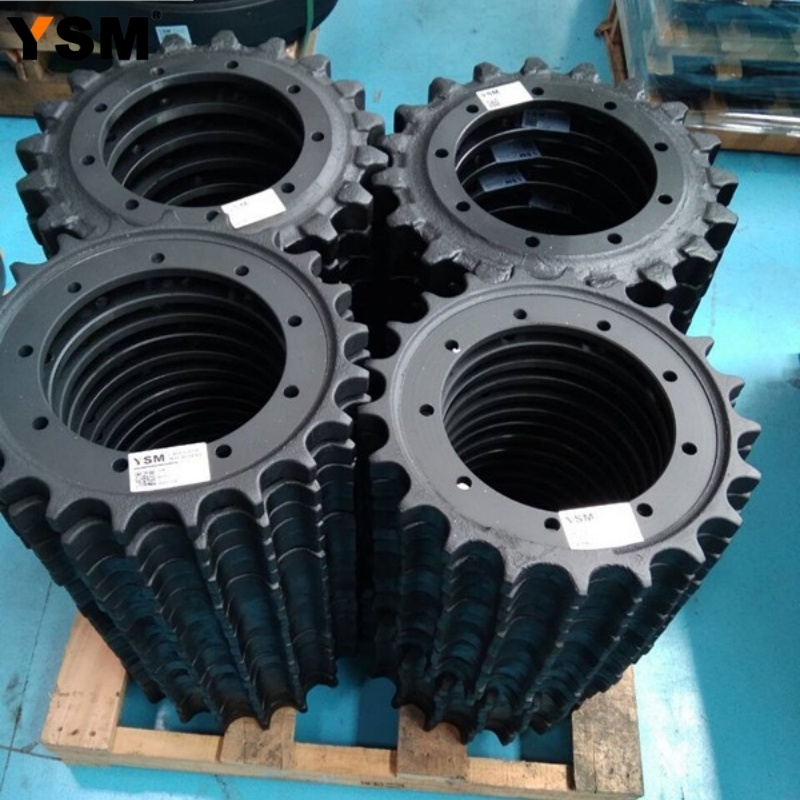
How Should The Supporting Wheels Be Selected To Avoid Stepping On Thunder?
High-quality support wheels mainly depend on the performance of its steel. The material of the roller body is generally 50Mn, 40Mn2, (MN: synonymous with the element of manganese).
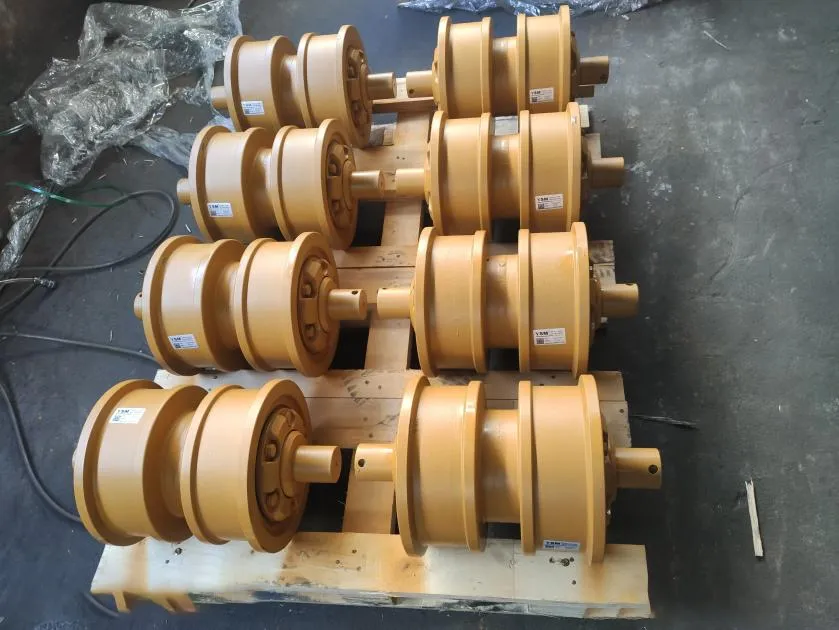
Carrier Wheels Are Suitable For Various Models At Home And Abroad
Sprocket wheels are mainly used in various crawler bulldozers, excavators, pavers, milling machines, rotary drilling rigs or other crawler machinery equipment at home and abroad.
Contact Us
E-mail :
sales@china-ysm.com
Phone/WhatsApp:
+86-18606961587
Address:
No.8 Binjiang Street, Binjiang Industrial Zone, Xiamei Town, Nan An City, Quanzhou City, Fujian Province, China
Request Quote
Andy Shi
No.8 Binjiang Street, Binjiang Industrial Zone, Xiamei Town, Nan An City, Quanzhou City, Fujian Province, China


Request Quote