-
-
ApplicationOur products consist of undercarriage parts for bulldozer and excavator such as Track link,Track roller,Carrier roller,Sprocket,ldler,Track shoe,Cutting edge,End bit,Tooth Bucket,Track pin,Track bush, Engine parts,Track boit&nuts.U-bolt,Centre bolt,Wheel bolt and other related parts.

-
About UsFujian Yongsheng Machinery Parts Co., Ltd. is located in Quanzhou City, Fujian Province, which is one of the most developed regions of China Machinery Manufacturing.The company was established in 2003, after approximately 10years' effort, and now it is one of the leading construction machinery parts auto parts manufacturers in CHINA.
-
BlogSuppliers who pass Quality ManagementSystem Certification, and have onsitematerials or finished products inspected,as certified by independent third parties.
Excavator Bucket Teeth Types Guide: Application Matrix & Design Selection Standards
Expert guide on excavator bucket teeth types. Learn about rock chisel, tiger teeth, penetrator, and dirt profiles, including application selection and wear optimization.
Jul 13,2026
Excavator Bucket Teeth Types Guide: Application Matrix & Design Selection Standards
Bucket teeth are the tip of the spear for any earthmoving machine. Acting as the primary point of impact, they dictate the equipment's penetration capability, hydraulic breakout force efficiency, and fuel consumption rate. However, using a generic tooth style across all geological conditions accelerates wear and drives up operating costs. Sourcing the right geometry is essential for successful asset management. This comprehensive excavator bucket teeth types guide reviews the core tooth designs, application parameters, and material rules to help procurement managers optimize field performance.
The Principle of Application Matching
Every excavator bucket tip design balances two conflicting characteristics: penetration capability and wear life. A broad, thick tooth carries massive wear volume but suffers high penetration resistance in dense ground. Conversely, a sharp, narrow tooth cuts through hard clay effortlessly but has less wear material, shortening its service life. Sourcing engineers must map ground strata accurately against specific geometric shapes to balance wear life with production output.

1. The Core Bucket Teeth Profiles & Engineering Uses
Modern ground engaging tools (GET) factories utilize five primary structural shapes to target distinct soil, rock, and material handling applications:
Standard Long / General Purpose Profile
The standard long tooth features a symmetrical, baseline wedge shape. It provides a reliable starting point for general utility applications, balancing structural wear volume with good utility cutting edges.
- Best For: Loose soil, sand, soft gravel, and common construction excavation.
- Advantage: Symmetrical design allows for point rotation to extend service life; highly affordable baseline procurement tier.
Rock Chisel Profile
Engineered with a reinforced, heavy-duty broad face and massive material backing. The rock chisel profile features extra wear-metal layers along the bottom floor to withstand sliding friction across hard stone floors.
- Best For: Shot rock quarries, fragmented slate, tough concrete demolition, and heavy gravel deposits.
- Advantage: Exceptional resistance to high-impact fractures; maximizes wear life in harsh abrasive strata.
Tiger / Single Tiger Profile
Designed as a highly sharp, single-pointed spike profile. The tiger tooth sacrifices overall wear volume to achieve maximum penetration capability, focusing the machine's entire breakout force onto a single sharp point.
- Best For: Frost layers, tightly packed shale, cemented sandstone, and hard pan clay.
- Advantage: Enables medium excavators to fracture dense ground without slipping, reducing hydraulic system stress.
Twin Tiger Profile
Features dual sharp points branching from a single adapter cavity. The twin tiger profile balances excellent penetration with tooth path clearing, keeping the corner areas of the bucket edge clean during tough trenching.
- Best For: Hard rock trenching, tight corner framing, and high-impact frost fracturing.
- Advantage: Ideal for bucket corners combined with single tiger center tips to achieve maximum penetration across the full bucket profile.
Flared / Dirt Profile
Features an ultra-broad, flat spade geometry that mimics a hand shovel. The flared tooth prioritizes high-volume scooping and floor-leveling capabilities over penetration performance.
- Best For: Soft mud clearing, topsoil stripping, coal handling, and clean ditch ditching.
- Advantage: Leaves a perfectly smooth, clean trench floor, minimizing secondary manual cleanup labor.
| Tooth Profile Model | Penetration Rating | Wear Material Volume | Primary Ground Layer Application | Recommended System Position |
|---|---|---|---|---|
| Standard Long (GD) | Moderate | Standard Value | Common soil, loose clay, soft sand | Full bucket layout (Center & Corners) |
| Rock Chisel (RC) | Moderate | Maximum / High Tier | Quarry stone, blasted granite, demolition | Full heavy duty bucket layout |
| Tiger Sharp (WT) | Extreme | Low Tier | Frozen ground, layered shale, hard clay | Symmetrically placed across center line |
| Twin Tiger (WTL) | High | Low - Moderate | Trenching, deep foundations, rock strata | Exclusively on Left/Right bucket corners |
| Flared Spade (FD) | Low | Moderate (Broad) | Peat, sand dredging, fine ditch leveling | Full bucket layout for clean floor stripping |
2. Sourcing Tech: Cast vs. Forged Wear Parts
When looking to buy rock chisel excavator teeth wholesale, evaluating the manufacturing technology is just as critical as selecting the profile shape. The manufacturing process directly affects structural reliability under high shock loads.
Cast Wear Components
Molten steel alloys—frequently enhanced with chrome-molybdenum elements—are poured into complex sand molds[cite: 1]. This enables high design flexibility, producing complex self-sharpening profiles at a cost-effective investment tier.
Forged Wear Components
Solid steel alloy bars are heated and compressed under extreme hydraulic tonnage[cite: 1]. This process refines the internal grain boundaries, eliminating structural defects and micro-voids[cite: 1]. Forged tips deliver superior fracture toughness, making them the standard choice for high-impact mining and severe-duty quarry applications.
Understanding Self-Sharpening Profiles
Premium bucket tips feature specialized geometric channels along their top and bottom faces. As the tooth wears down against abrasive rock, the outer layers wear away faster than the dense central core. This controlled wear pattern keeps the tip sharp throughout its service life, preserving penetration capability and avoiding the blunt profiles that increase fuel consumption.
3. Cross-Brand System Matching Framework
Aftermarket ground engaging tools must match original factory adapter specifications perfectly. Quality factories engineer direct drop-in replacement systems for major equipment lines:
- **Cat J-Series System (e.g., J300, J350, J400, J460):** The industry standard for side-pinned adapters. Known for high cross-compatibility and secure fitment during heavy rocking motions.
- **Komatsu Horizontal System (e.g., PC200, PC300, PC400):** Utilizes flat horizontal pin paths, providing a secure, high-integrity locking assembly favored in deep structural excavation.
- **Esco Super V System:** Features a unique twist-on helical design with a vertical locking pin, providing excellent retention stability in severe-duty mining and high-torque environments.
Pro-Maintenance Rule: Protect the Adapters
Never run bucket teeth past their maximum wear limits. Operating with completely blunted or hollowed-out tips allows abrasive material to scour the adapter nose. Repairing or replacing worn bucket adapters requires extensive structural welding labor, far exceeding the simple cost of timely tooth replacements.
Conclusion: Lower Sourcing Costs via Informed Selection
Optimizing undercarriage and wear parts lifecycles requires moving away from generic, single-style procurement. Matching your bucket teeth profiles directly to ground conditions ensures maximum penetration and optimal wear life. Sourcing certified aftermarket tips from an ISO 9001:2015 factory allows fleet managers to secure high-hardness chemistry (**48-52 HRC** surface metrics) at a sustainable investment tier, protecting production schedules and operational budgets.
Consult Our Ground Engaging Tool Engineers
For custom profile development, specific cross-brand compatibility verification, or container-level wholesale quotations:
Corporate Email: sales@china-ysm.com
Technical Support / WhatsApp: +86-18606961587
We supply precision-engineered wear parts designed to lower your fleet's long-term operating costs.
PREVIOUS:
Related Posts
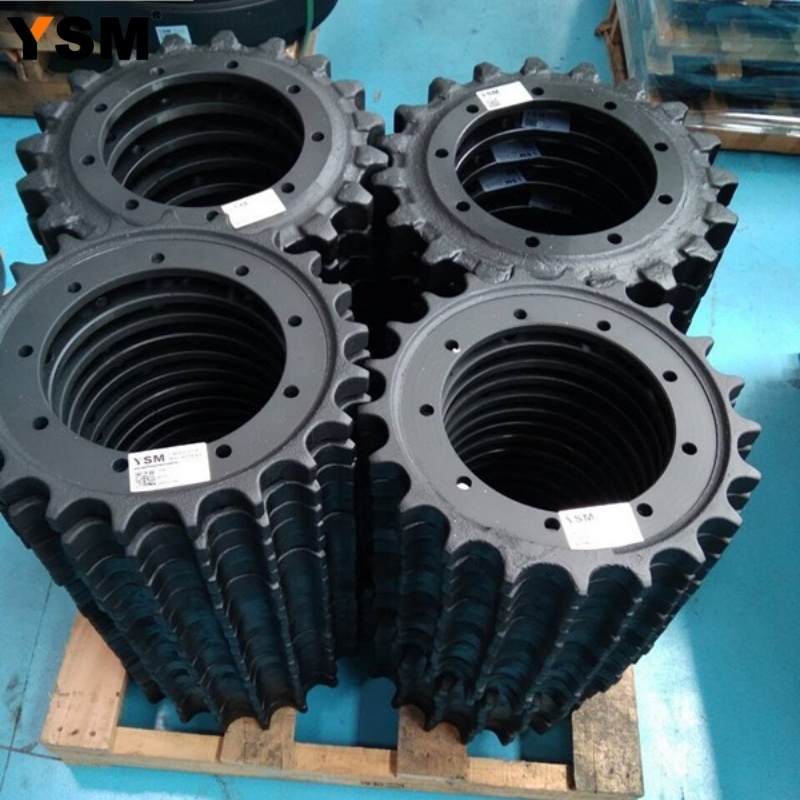
How Should The Supporting Wheels Be Selected To Avoid Stepping On Thunder?
High-quality support wheels mainly depend on the performance of its steel. The material of the roller body is generally 50Mn, 40Mn2, (MN: synonymous with the element of manganese).
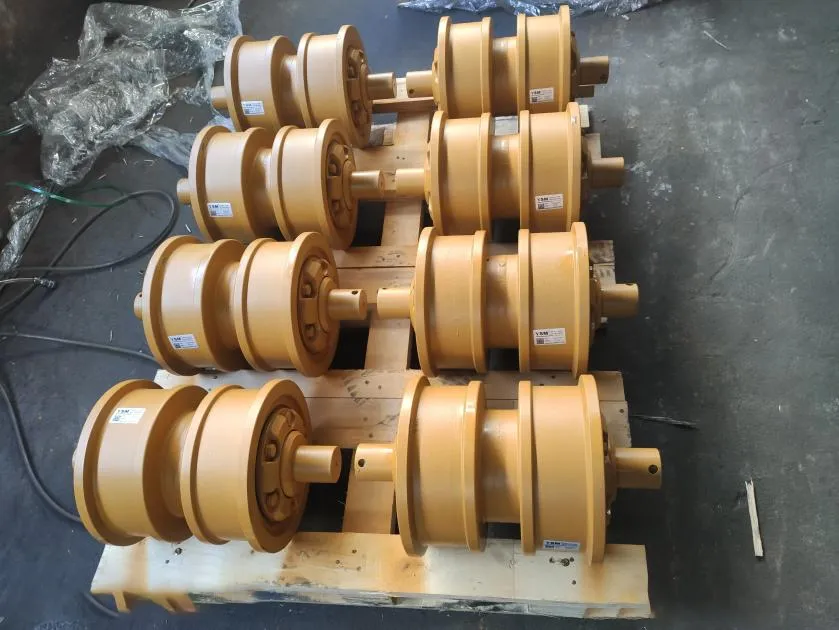
Carrier Wheels Are Suitable For Various Models At Home And Abroad
Sprocket wheels are mainly used in various crawler bulldozers, excavators, pavers, milling machines, rotary drilling rigs or other crawler machinery equipment at home and abroad.
Contact Us
E-mail :
sales@china-ysm.com
Phone/WhatsApp:
+86-18606961587
Address:
No.8 Binjiang Street, Binjiang Industrial Zone, Xiamei Town, Nan An City, Quanzhou City, Fujian Province, China
Request Quote
Andy Shi
No.8 Binjiang Street, Binjiang Industrial Zone, Xiamei Town, Nan An City, Quanzhou City, Fujian Province, China


Request Quote