
Excavator Undercarriage | Inspection Guide
Excavator Sprocket Wear Signs: Inspection and Replacement Planning Guide
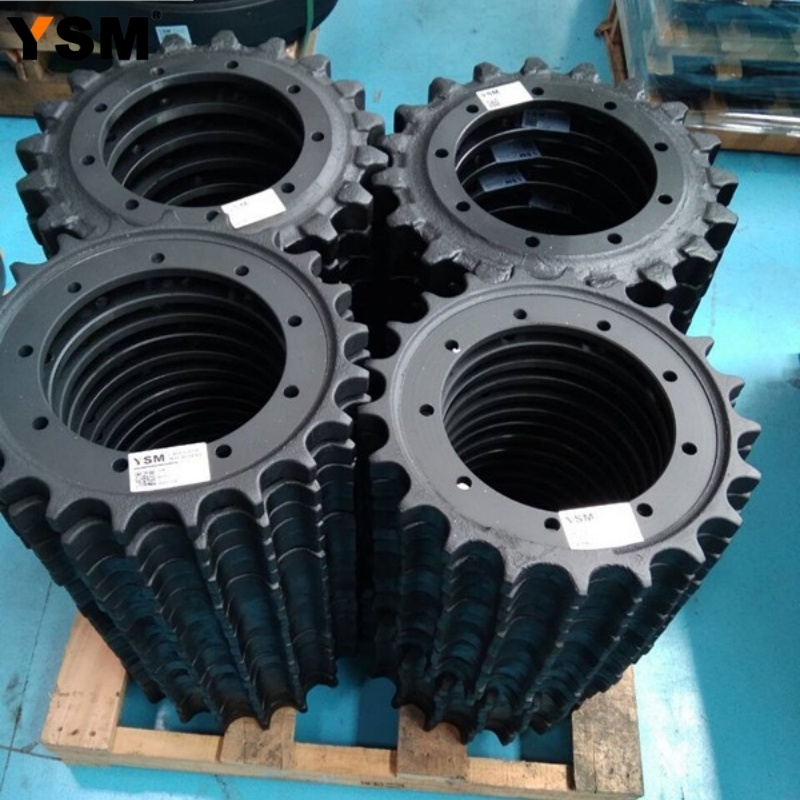
The excavator drive sprocket works directly with the track-chain bushings. Tooth wear, chain pitch, track tension and the condition of mating undercarriage parts should be assessed together before deciding what to replace.
What Does an Excavator Sprocket Do?
The drive sprocket transfers travel-drive torque into the track chain. Its teeth engage the track-chain bushings and move the track around the undercarriage. Because that engagement is repeated under load, sprocket wear is closely connected with chain pitch and bushing condition.
Komatsu technical information explains that link pitch and sprocket pitch match when new, while wear can gradually increase link pitch and alter the working tooth surface. As the two become increasingly mismatched, abnormal wear can develop at both the sprocket and bushings.
Safety Before Inspecting a Drive Sprocket
- Park on stable, level ground.
- Lower the attachment and isolate the machine.
- Keep clear of the track and travel-drive area.
- Remove packed material only after the machine is secured.
- Never place hands between the sprocket and track chain.
- Follow the OEM procedure before lifting or removing track components.
Common Excavator Sprocket Wear Signs
| Wear Sign | What to Look For | What It May Indicate |
|---|---|---|
| Thin or pointed tooth profile | Narrow, sharp, hooked or asymmetric teeth | Progressive tooth-surface wear; verify with OEM criteria |
| Uneven tooth wear | One side or section differs from the rest | Possible alignment, chain or operating-pattern issue |
| Cracks, chips or broken teeth | Visible fractures, missing material or impact damage | Prompt service evaluation |
| Side wear or spalling | Unusual side contact or damaged tooth surfaces | Chain path, loading or component damage |
| Abnormal engagement | Bushing does not seat/release smoothly, track jumps | Chain pitch, sprocket, tension or debris |
| Clicking or impact | Rhythmic noise near the sprocket | Chain wear, hardware, debris or tension |
Why the Track Chain and Sprocket Should Be Inspected Together
The sprocket repeatedly contacts the bushings. Pin and bushing wear can increase effective chain pitch, while the sprocket tooth surface also wears. As these geometries change, engagement becomes less ideal.
What Can Cause Accelerated Sprocket Wear?
| Possible Factor | What to Inspect | Why It Matters |
|---|---|---|
| Incorrect track tension | Model-specific sag/adjustment procedure | Changes loading and engagement |
| Worn track chain | Pitch, bushings, links and joints | Pitch mismatch can increase abnormal contact |
| Packed material | Mud, clay, stones and demolition debris | Adds abrasion and can interfere with movement |
| High-stress operation | Reversing, aggressive turning, track spinning | Changes wear rate and load direction |
| Alignment/component condition | Idlers, rollers, guards, frame and rails | Can create uneven tooth contact |
How to Inspect Excavator Sprocket Wear
| Step | Inspection Action | What to Record |
|---|---|---|
| 1 | Identify the machine | Brand, full model, suffix, serial number/PIN, track configuration |
| 2 | Clean the sprocket area | Expose teeth and bushing contact surfaces |
| 3 | Photograph the complete sprocket | Full circumference, multiple tooth groups and chain engagement |
| 4 | Inspect tooth condition | Profile loss, asymmetry, cracks, chips, side wear and spalling |
| 5 | Inspect the track chain | Bushing condition, link wear, damaged joints and pitch |
| 6 | Verify track tension | Use the exact OEM method |
| 7 | Observe engagement where safe | Note jumping, grinding or repeated impact |
Sprocket Wear Signs and What to Check Next
| Inspection Sign | Other Areas to Check | Recommended Approach |
|---|---|---|
| Sharp/thin tooth profile | Track bushings and chain pitch | Compare with correct wear criteria |
| One-sided tooth wear | Alignment, idler and rollers | Inspect the complete chain path |
| Cracked or broken tooth | Chain damage and impact history | Arrange service inspection |
| Clicking near sprocket | Chain pitch, hardware, debris and tension | Identify the repeating contact point |
| Track jumps during engagement | Sprocket, chain, sag and adjuster | Stop repeated testing if severe |
| New sprocket wears rapidly | Existing chain wear and alignment | Measure mating components |
Should a New Sprocket Be Installed With an Old Track Chain?
It depends on measured condition. Before mixing new and used components, measure the mating parts and confirm they can engage correctly. Consider chain pitch, bushing condition, sprocket profile, idlers, rollers, track tension and operating environment.
Final Parts Inquiry Checklist
- Machine brand, complete model and model suffix.
- Serial number or PIN.
- Existing sprocket part number, if available.
- Number of teeth where required.
- Mounting configuration and bolt-hole information where relevant.
- Track-chain pitch.
- Clear front and side photographs.
- Requested dimensions, quantity and destination country.
Compatibility and availability must be confirmed from the complete model, serial number, part number, clear photos, and requested dimensions before ordering.
Frequently Asked Questions
What are common excavator sprocket wear signs?
Typical inspection signals include thin or asymmetric teeth, cracks, broken areas, side wear, abnormal track-chain engagement, repeated clicking and unusual contact marks.
Can I determine sprocket life from tooth shape alone?
No. Visual appearance is useful for screening, but replacement decisions should use the correct OEM wear measurement or profile criteria for the exact machine.
Why can a new sprocket wear quickly?
Inspect the existing track chain, pitch, bushings, tension, alignment and rollers. A new component working with a heavily worn mating system can develop abnormal contact.
Should sprockets and track chains always be replaced together?
Not automatically. Measure both and use the applicable service criteria. The important point is to avoid installing parts that will engage poorly because the mating component is excessively worn.
Does track tension affect sprocket wear?
Yes. Incorrect tension changes undercarriage loading and chain-to-sprocket engagement, so tension should be verified during a sprocket-wear investigation.
Technical References
- Caterpillar - What to Know About Excavator Undercarriage Maintenance
- Komatsu - Sprocket: Track Link and Sprocket Pitch Relationship
- Volvo CE - How to Inspect Your Machine’s Undercarriage
- Volvo CE - Used Equipment Inspection: Sprocket and Bushing Wear
- Komatsu - Undercarriage Maintenance Tips
Use the exact OEM manual or service documentation as the final authority for model-specific procedures, measurements, wear limits and safety requirements.
Ask Our Undercarriage Team About Excavator Sprockets
YSM can help check sprockets, track chains, track rollers, carrier rollers, front idlers, track shoes and related undercarriage fitment for many mainstream crawler excavator applications.
Corporate Email: sales@china-ysm.com
WhatsApp: +86-18606961587
Compatibility and availability must be confirmed from the complete model, serial number, part number, clear photos, and requested dimensions before ordering.