
Repair planning | Excavator undercarriage
Excavator Track Chain and Sprocket Pitch Mismatch: Inspection and Repair Planning
An excavator track chain and drive sprocket wear together every time a sprocket tooth pushes against a chain bushing. As pins and bushings wear, effective chain pitch can increase. Sprocket tooth contact also changes. Installing a fresh component against a heavily worn mating component may create concentrated contact, rapid polishing, noise or poor engagement. The decision should come from measurements and wear patterns, not appearance alone.
What Excavator Track-Chain and Sprocket Pitch Mean
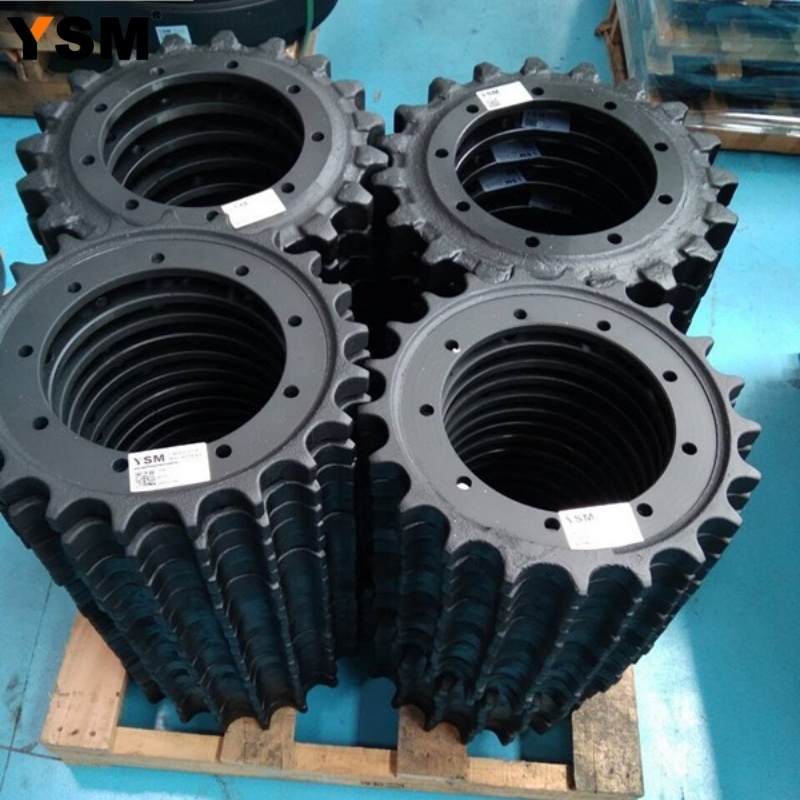
Track-chain pitch is the center-to-center distance between adjacent track pins. The drive sprocket has a corresponding pitch along its tooth pattern. On a correctly matched new system, the sprocket teeth enter and leave the spaces between bushings with the intended contact pattern.
Internal wear between pins and bushings can increase the effective pitch of the chain assembly. This is often called pitch extension or chain elongation, although the steel links themselves are not simply stretching like an elastic band. At the same time, contact with bushing outer surfaces changes the sprocket tooth flanks.
Because the parts develop related wear profiles, a fresh sprocket and a mature chain may no longer share the same contact geometry. The reverse is also possible: a new chain may seat poorly on heavily worn or hooked teeth. The effect depends on measured wear, not merely whether one component looks newer.
How a Matched Undercarriage System Becomes Mismatched
Internal pin-and-bushing wear changes chain pitch
Every articulation moves the pin and bushing surfaces relative to each other. Lubricated and sealed designs slow internal wear, but damaged seals, abrasive contamination, incorrect tension and long travel can accelerate it. As clearance develops across many joints, the average chain pitch changes.
Sprocket teeth develop a working contact profile
The sprocket transfers travel force through the bushings. Tooth flanks can polish, thin, hook or become asymmetric according to travel direction, chain condition and operating practice. One sharp-looking edge is an inspection clue, not a complete wear measurement.
Partial replacement resets only one side of the interface
Replacing a damaged sprocket may be necessary, but the remaining chain still carries its accumulated pitch and bushing wear. Replacing a chain while keeping a mature sprocket creates the opposite combination. A qualified repair plan checks whether the retained component can work with the new one within the applicable limits.
Other undercarriage parts influence engagement
Track tension, stiff joints, idler position, roller wear, frame alignment and packed debris can change how the chain approaches the sprocket. Apparent pitch mismatch should not be diagnosed before these contributors are checked.
Possible Symptoms of Chain and Sprocket Pitch Mismatch
- bushings ride unusually high on the sprocket instead of seating progressively;
- fresh polished spots appear on limited areas of new teeth or older bushings;
- engagement produces repeatable clicking, clunking or vibration during travel;
- tooth contact is concentrated on one flank or near a tip;
- a recently installed chain or sprocket develops rapid visible contact change;
- the chain climbs, skips or fails to release smoothly from the sprocket;
- one side differs strongly from the other under comparable conditions.
These signs are not unique to pitch mismatch. Incorrect tension, mud packing, a stiff joint, loose shoe hardware, final-drive movement, damaged teeth or misalignment can produce similar noise and contact patterns. Record where and when the symptom occurs before selecting parts.
Safe Inspection Sequence Before Ordering Parts
- Record the as-found condition. Photograph both sprockets, chain runs and any fresh contact marks before cleaning.
- Clean the undercarriage. Remove material from sprocket pockets, bushings, links, idlers, rollers and the track frame.
- Inspect each tooth. Look for cracks, chips, hooking, side wear and unequal profiles around the circumference.
- Inspect bushings and joints. Note external bushing wear, dry-joint clues, stiff articulation and seal-area contamination.
- Compare both sides. Use the same light, reference points and sequence.
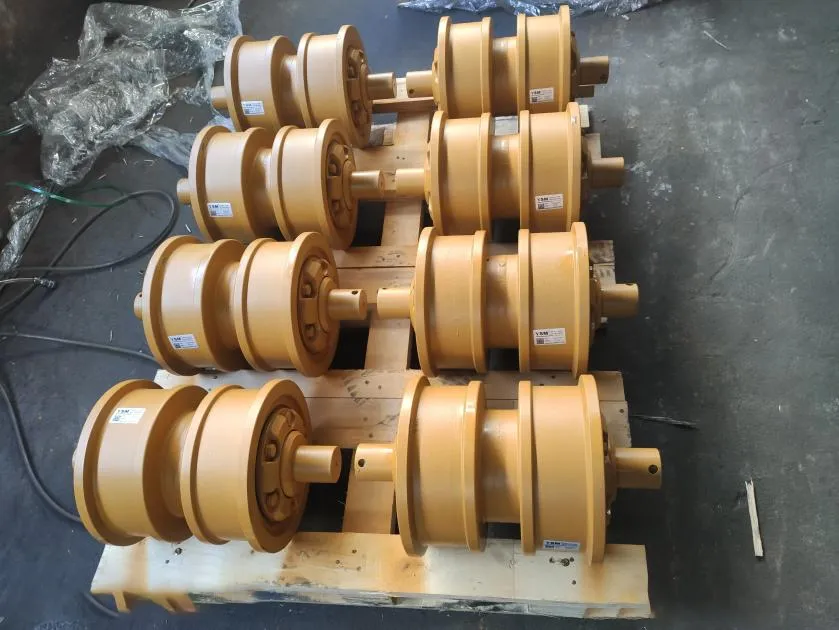
- Check connected components. Inspect rollers, carrier rollers, idlers, guides, shoes, hardware and frame contact.
- Measure track tension correctly. Prepare and position the machine exactly as specified for its design and working condition.
- Measure wear. Use the correct wear chart, tools and reference surfaces for the exact component group.
Do not use controlled travel as a close-observation method. If operating observation is required, the observer must remain in a designated safe location outside the machine path, and the machine must be isolated again before anyone approaches.
Measurements That Matter
Average chain-pitch measurement is commonly taken across several joints to reduce the influence of one position. The exact number of links, loading direction, measuring points and calculation must come from the correct service information. Do not substitute a generic online dimension.
Bushing outside diameter and wear orientation help show how the sprocket has contacted the chain. Link rail height, roller tread wear, idler wear and sprocket profile may also be included in a complete undercarriage survey. Measurements should be taken after cleaning with suitable calibrated tools.
Keep the original readings rather than recording only a percentage. A reliable entry includes machine hours, side of machine, measurement method, component part number, working condition and reference chart. This makes later trend comparisons possible.
| Measurement or clue | What it helps evaluate | Important limitation |
|---|---|---|
| Average chain pitch | Accumulated internal pin-and-bushing wear | Method and wear limits vary by chain design |
| Bushing outside diameter | External drive-side contact and possible turning options | Measure in the specified orientation |
| Sprocket tooth profile | Contact shape, asymmetry, hooking, cracks and damage | Visual sharpness alone is not a wear percentage |
| Track tension | Whether excess or insufficient tension affects engagement | Ground condition and preparation matter |
| Stiff-joint locations | Whether one joint disrupts approach to the sprocket | A cold visual check may miss intermittent behavior |
| Left-to-right comparison | Operating, alignment or repair-history differences | Both sides must be measured consistently |
When Partial Undercarriage Replacement Needs Extra Review
A single damaged part may need immediate replacement, but emergency necessity and long-term wear compatibility are different questions. Before retaining an older chain or sprocket, document its measurements and confirm the repair path with the correct machine guidance.
Extra review is especially important when one component failed unusually early, one side has a different repair history, the chain has dry joints, sprocket teeth show concentrated wear, the track has jumped, or a new component changes noise and contact immediately.
It is also incorrect to declare that every chain-and-sprocket repair always requires every roller and idler. Those components interact, but replacement decisions should follow measured condition, compatible wear life, damage and economic planning. A system inspection is required even when only selected parts are replaced.
If a chain is renewed on only one side, compare left and right travel behavior, shoe configuration, tension, component height and overall wear. Different wear levels do not automatically prove unsafe travel, but they require evaluation rather than assumption.
Excavator Chain-and-Sprocket Repair-Planning Matrix
| Finding | Possible interpretation | Planning response |
|---|---|---|
| Fresh sprocket, chain within measured limits | Partial repair may be serviceable | Confirm contact, tension and inspection interval |
| Fresh sprocket, chain pitch near or beyond limit | High mismatch risk | Evaluate chain replacement before heavy operation |
| Fresh chain, teeth heavily hooked or damaged | New bushings may contact worn flanks poorly | Evaluate sprocket renewal with the chain installation |
| Noise after repair but measurements acceptable | Tension, stiff joint, debris, hardware or alignment may contribute | Stop and inspect rather than assuming normal bedding-in |
| Unequal wear left to right | Operating pattern, alignment or different repair history | Measure both groups and correct the underlying condition |
| Chain climbs or jumps the sprocket | Severe wear, tension, damage or alignment issue | Remove from operation for qualified inspection |
Track Chain and Drive Sprocket Fitment Checklist
Pitch compatibility begins with identification. Before requesting a track chain, sprocket, segment group or related parts, provide:
- equipment brand, complete model and model suffix;
- serial number or PIN and a clear nameplate photograph;
- part name, quantity and readable part number where available;
- clear chain-link, bushing, sprocket and mounting photographs;
- requested dimensions and the measurement method;
- chain pitch, link count, shoe width and bolt pattern where requested;
- sprocket type, tooth count, mounting-hole pattern and key dimensions;
- recent repair history, destination country and working conditions.
Machines with similar model names can use different chains, sprockets, gauges or serial-break components. Compatibility and availability must be confirmed before ordering.
Frequently Asked Questions
Can I install a new excavator sprocket on an old track chain?
Possibly, but only after measuring the retained chain and confirming compatible limits and contact. A heavily worn chain can load a new sprocket abnormally.
Does a pointed sprocket tooth prove the sprocket is worn out?
It is a wear clue, not a complete decision. Inspect the whole profile for hooking, thinning, cracks and asymmetric contact, then compare measurements with the correct wear standard.
Why does a new chain make noise on an old sprocket?
Pitch and contact-profile mismatch is one possibility. Incorrect tension, stiff joints, debris, alignment and damaged hardware can also cause noise. Stop and inspect rather than assuming the sound is normal.
Can tightening the track fix pitch mismatch?
No. Tension changes chain position but does not reverse internal pin-and-bushing wear. Excess tension can add load. Use only the machine-specific adjustment procedure.
Should both sides of an excavator undercarriage be replaced together?
Not automatically. Compare measured wear, component compatibility, repair history and operating effect. A qualified plan may replace selected groups, but both sides still require inspection.
Technical References
- Komatsu: Sprocket - explains link-pitch extension, sprocket-pitch change and abnormal contact wear.
- Caterpillar: Undercarriage for Excavators - treats excavator undercarriage as an interacting wear system.
- Caterpillar: Excavator Undercarriage Maintenance - component inspection, operating condition and model-specific tension guidance.
This educational article does not replace the Operation and Maintenance Manual, service manual, wear chart, site risk assessment or qualified inspection for the exact machine.
Ask About Excavator Track Chains, Sprockets and Related Parts
We can check suitable supply options for track chains, drive sprockets, segment groups, track rollers, carrier rollers, front idlers, track shoes, bolts and related undercarriage parts after reviewing the exact machine and measured condition.
Corporate Email: sales@china-ysm.com
WhatsApp: +86-18606961587
For a fitment check, send the equipment brand, complete model and suffix, serial number or PIN, part name, part number, clear photos, requested dimensions, quantity, destination country and working condition. Compatibility and availability must be confirmed before ordering.