
Crawler drive engagement and matched-wear inspection
Excavator Track Chain and Sprocket Wear: Inspection and Replacement Planning
The drive sprocket transfers travel torque into the track chain through repeated contact with the bushings. As internal pin-and-bushing wear changes chain pitch, the bushings no longer enter every tooth at the same ideal position. Tooth wear can then change the contact again. That is why a track chain and sprocket should be inspected as a mating system, even when only one component looks obviously worn.
1. Why track-chain and sprocket wear must be checked together
Each sprocket tooth engages a track bushing to pull the crawler chain around the undercarriage. The geometry depends on chain pitch, bushing diameter and wear surface, sprocket tooth profile, alignment, track tension, and how freely each joint articulates. Dirt and rock packing can further change the contact.
Internal wear between pins and bushings gradually increases the effective distance between joints. This is commonly described as pitch elongation, even though the steel link plates themselves have not simply stretched like elastic material. When the chain pitch changes, the bushings enter and leave the sprocket at different contact points. Local sliding and impact may increase, accelerating wear on both surfaces.
A new component cannot restore the geometry of a severely worn mating component. However, it is also unsafe to declare that every chain and sprocket must always be replaced together without measurements. The correct scope depends on manufacturer limits, wear stage, component condition, service history, and whether the existing parts can engage within specification.
2. Inspect the excavator track chain before judging the sprocket
Park on stable ground, lower the attachment, apply parking controls, stop the engine, and isolate the machine according to the exact manual. Clean enough material away to see the rails, pins, bushings, seals, master connection, and sprocket engagement area.
Measure pitch using the specified span
Follow the manufacturer's method for positioning and loading the chain. Measure across the stated number of pin centers or equivalent reference points, avoiding the master joint if the procedure requires it. A longer measurement span reduces the effect of small reading errors. Compare the result only with data for the exact chain and measurement method.
Inspect bushings and joints
Look for flattened or uneven bushing wear, cracks, missing material, seal loss, dry joints, shifted pins, and links that do not articulate consistently. External bushing appearance provides useful clues but does not replace pitch measurement. A chain can have internal wear even when one visible bushing surface looks acceptable.
Inspect rails and side wear
Record rail height, roller-path wear, side polishing, gouging, and differences between left and right chains. Side wear may point toward roller-flange contact, idler guidance, guards, shoe width, slope work, repeated turning, or frame alignment rather than the sprocket alone.
3. Inspect excavator sprocket wear and engagement
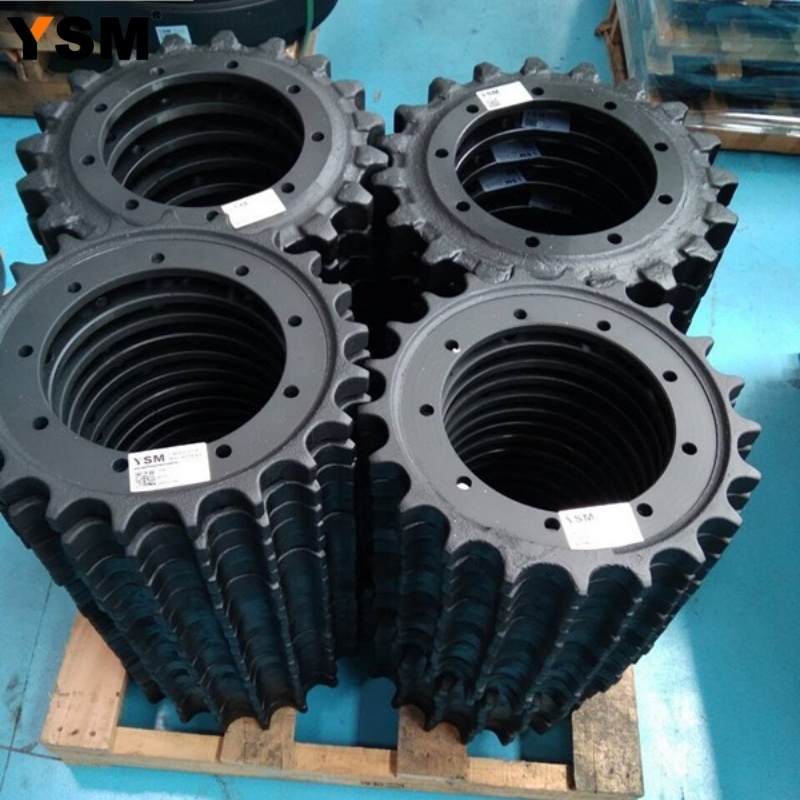
Clean the sprocket so the tooth flanks, roots, tips, mounting hardware, and hub or segment joints are visible. Compare several teeth around the full circumference; one photograph may miss local damage.
| Condition | What it may indicate | What to check next |
|---|---|---|
| Teeth appear pointed or hooked | Progressive drive-flank wear, pitch mismatch, abrasive material, or travel pattern | Chain pitch, bushing contact, tension, packing, and both sides |
| Polishing is concentrated on one tooth flank | Directional loading, reverse travel pattern, alignment, or chain wear | Operating history, tooth profile, chain measurements, and frame alignment |
| Bushing climbs or impacts the tooth | Pitch wear, damaged tooth, stiff joint, excessive slack, packing, or wrong component | Stop travel and inspect the complete engagement path |
| One segment differs from the others | Mixed wear, loose hardware, previous partial repair, crack, or mounting movement | Full segment set, fasteners, mounting face, and manufacturer procedure |
| Cracked, broken, or loose tooth area | Impact, fatigue, loose mounting, foreign material, or advanced wear | Stop operation and obtain qualified structural and mounting inspection |
Visual tooth shape is an important screening tool, but the correct wear limit and inspection gauge vary by manufacturer and sprocket design. Do not use a generic percentage or compare a used tooth only with an internet photograph.
4. Engagement symptoms do not prove one cause
| Observed symptom | Possible contributors | Diagnostic direction |
|---|---|---|
| Rhythmic impact during travel | Pitch mismatch, stiff joint, damaged tooth, packed material, or roller problem | Mark the cycle, clean, inspect every joint and tooth, and compare roller rotation |
| Chain jumps or climbs the sprocket | Excessive slack, worn pitch, tooth wear, obstruction, alignment, or damaged adjuster | Stop operation; inspect tension system and full undercarriage |
| New sprocket wears rapidly | Worn chain, wrong pitch or tooth profile, tension, packing, alignment, or poor mounting | Verify chain measurements, part identity, mounting face, and engagement pattern |
| New chain shows localized bushing marks | Worn or mismatched sprocket, debris, stiff joint, alignment, or excessive tension | Compare both sides and document tooth-to-bushing contact |
| One crawler side is much worse | Travel direction, slope work, turning pattern, unequal tension, frame, or component mismatch | Compare complete measurements and operating history side by side |
Noise, vibration, chain climb, and polished contact are signals to inspect. They are not a reliable basis for naming one failed part without measurement.
5. Decide whether to replace the chain, sprocket, or a matched set
Start with the manufacturer's wear limits and the machine's remaining work plan. Record chain pitch, bushing condition, tooth profile, roller and idler wear, track tension, adjuster position, shoe condition, and alignment. Then consider how the components will engage after the repair.
When a combined replacement deserves strong consideration
- the chain is beyond its specified pitch or bushing limit and sprocket teeth show advanced matching wear;
- a new chain would engage a visibly hooked, damaged, or out-of-profile sprocket;
- a new sprocket would run with a chain that has large pitch elongation, stiff joints, or severe bushing wear;
- the current combination jumps, impacts, or cannot maintain stable engagement after other causes are corrected;
- the fitted chain or sprocket identity is uncertain or the pitch and tooth design do not match.
When one-component replacement still requires evidence
Impact damage, a cracked component, loose segment hardware, or an early isolated defect may require one part before its mating component reaches the wear limit. In that case, document the serviceable component's measurements and confirm that the replacement matches its geometry. Monitor engagement after installation according to the manual.
Do not mix individual sprocket segments with visibly different wear stages unless the manufacturer specifically permits the repair. Unequal tooth profiles can distribute load inconsistently.
6. Fitment data for track chains and sprockets
- machine brand, complete model, suffix, serial number or PIN, market, and application;
- chain type, installed link count, shoe width, grouser type, and master connection;
- measured pitch span and the exact reference points used;
- bushing outside diameter and link or rail measurements where specified;
- sprocket type: full rim, bolt-on segments, or another configuration;
- tooth count, bolt count, bolt-circle or mounting dimensions, center bore, and offset;
- readable part numbers, casting marks, and clear photos of both component sides;
- photos showing bushing-to-tooth engagement, wear pattern, and surrounding rollers;
- working conditions, observed symptom, previous repairs, required quantity, and destination country.
A model name alone is not sufficient. Serial ranges, crawler-frame options, chain types, and previous conversions can change the fitted parts. Dimensions must be taken from agreed reference points and checked against the correct catalog.
Frequently Asked Questions
Must every new excavator track chain receive a new sprocket?
Not as an unsupported universal rule. The sprocket must be measured and assessed against the new chain. Advanced tooth wear or mismatch makes reuse a poor choice, while a serviceable sprocket still requires documented confirmation.
Can a new sprocket fix a chain that keeps jumping?
Not necessarily. Chain pitch, tension, adjuster condition, stiff joints, packing, guides, rollers, idler, alignment, and tooth condition all require inspection.
Does a pointed sprocket tooth prove the chain is worn out?
No. It is a strong inspection signal, but chain pitch and bushing measurements must confirm chain condition.
Can track-chain pitch be measured across one link?
Use the manufacturer-specified multi-link span and loading condition. A short measurement can magnify reading error and may not represent average internal wear.
Technical references
- Hitachi Construction Machinery: undercarriage components, cleaning, tension, and wear
- Hitachi Construction Machinery: undercarriage parts and sprocket-link interaction
- Caterpillar: chain, sprocket, hardware, and tension inspection principles
- Camso: warning about combining new and worn drive-system parts
Check Track Chain and Sprocket Fitment Together
Send the complete machine identification, chain and sprocket photos, part markings, counts, wear measurements, and engagement condition for a model-specific review. We can check suitable supply options for requested items such as:
- track chains and track groups;
- full sprockets and segment groups;
- track shoes, rollers, idlers, adjusters, and related fasteners.
Corporate Email: sales@china-ysm.com
WhatsApp: +86-18606961587
Compatibility and availability must be confirmed from the complete model, serial number, part number, clear photos, requested dimensions, quantity, destination country, and working conditions before ordering.