
Excavator de-tracking troubleshooting
Excavator Track Keeps Coming Off: Causes and Inspection Guide
A track that repeatedly comes off is not repaired simply by putting it back on. De-tracking can result from incorrect model-specific tension, packed material, worn or damaged guiding parts, an adjuster that does not hold, frame misalignment, unsuitable operating technique, or an incorrect replacement track. The event pattern should guide a safe system inspection.
1. When does the excavator track come off?
The same symptom can have different causes. Record travel direction, speed, turn type, surface, slope, attachment load, temperature, material packing, and whether the failure began after adjustment or parts replacement. Compare the problem side with the opposite side before changing anything.
| Failure pattern | First checks | Possible contributors |
|---|---|---|
| Comes off during a sharp turn | Tension, side loading, debris, guides, and operating surface | Excess slack, reduced guidance, or strong lateral force |
| Same side repeatedly de-tracks | Idler position, adjuster holding, rollers, sprocket, lugs, chain, and frame | Side-specific wear, leakage, damage, wrong part, or alignment fault |
| Jumps at the drive sprocket | Sprocket engagement, chain pitch or rubber lugs, and tension | Wear, slack, damaged lugs, or specification mismatch |
| Problem appears in mud or rubble | Packing around rollers, idler, sprocket, and guides | Temporary tension change or a hard object lifting the track |
| Tension changes soon after adjustment | Repeat the exact measurement and record idler position | Adjuster, valve, seal, recoil assembly, or internal track condition |
| Problem starts after track replacement | Part number, pitch, width, link or lug count, direction, and mating wear | Fitment error, installation issue, or unresolved system wear |
2. Check track tension with the exact machine procedure
Loose tracks can derail or allow drive lugs to index and jump. Excessive tension can overload the track, rollers, idler, adjuster, and drive system. The correct position, measurement point, sag range, and preparation vary between steel-track excavators, rubber-track mini excavators, and different undercarriage designs.
Clean the track first and position the machine exactly as the operation and maintenance manual requires. Record both sides using the same method. If the reading changes quickly after a controlled check, stop and have the tensioner and related components inspected.
Track adjusters and recoil systems contain stored energy. Do not loosen valves, remove fittings, release grease, dismantle springs, or lift the machine without the serial-specific procedure, approved support, and trained personnel.
3. Inspect every part that guides or drives the track
Track rollers and carrier rollers
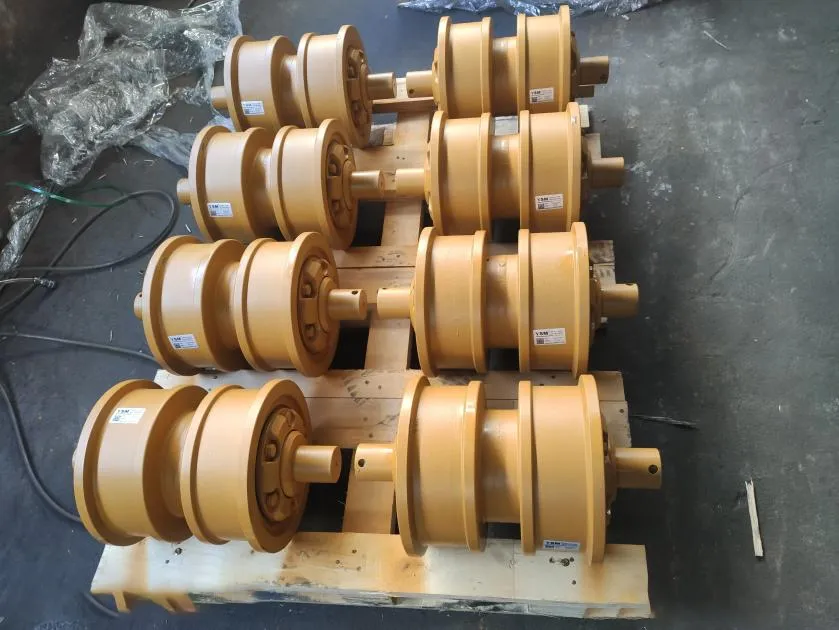
Look for leakage, seizure, flat spots, looseness, broken flanges, uneven heights, and missing mounting hardware. One failed roller can reduce guidance and create a local path for the track to walk sideways.
Front idler, yoke, and guides
Inspect the idler tread and flanges, side play, alignment in the frame, guide wear, impact damage, and unusual left-right position. A tilted idler or worn guide arrangement can allow the track to move laterally even when static sag appears correct.
Sprocket and track engagement
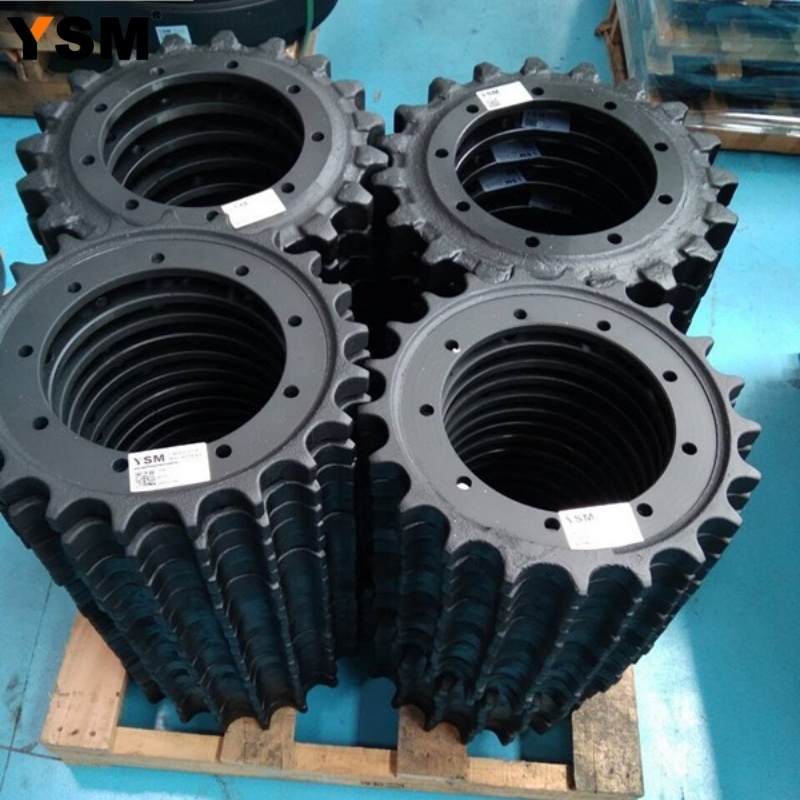
Check for hooked, pointed, broken, or unevenly worn sprocket teeth, damaged bolt-on segments, packed material, and poor contact with bushings or rubber drive lugs. Rough engagement can be caused by wear on either mating component.
Chain, shoes, rubber track, and guards
On steel tracks, inspect link pitch, stiff joints, rails, guides, shoes, and bolts. On rubber tracks, inspect drive lugs, steel cords, cuts, missing rubber, and internal damage. Confirm that guards and guides are present, straight, and correct for the application.
Adjuster, recoil assembly, and frame
Look for fresh grease, damage, corrosion, abnormal idler position, cracked welds, distorted mounting surfaces, and inconsistent measurements. A frame or adjuster fault is not corrected by fitting a tighter track.
4. Jobsite conditions and operation can force a track sideways
Slopes, curbs, trenches, demolition debris, rocks, roots, frozen packing, and repeated pivot turns can create high lateral loads. Traveling with one track unsupported, turning sharply on uneven ground, or crossing obstacles at an unfavorable angle increases de-tracking risk, especially when guidance parts are already worn.
This does not mean every derailment is operator error. Mechanical condition, fitment, and jobsite forces interact. Record the maneuver and surface so the inspection team can reproduce the decision path without repeating an unsafe event.
Practical prevention
- clean packed material before it hardens or freezes;
- check tension with the manual method as conditions change;
- avoid unnecessary high-speed travel and aggressive counter-rotation;
- approach curbs, rocks, and trenches using the machine maker's operating guidance;
- inspect after any impact or derailment before returning to work;
- track repeated failures by side, location, and operating event.
5. Confirm replacement-track fitment before installation
A track that looks similar may differ in pitch, width, link count, lug shape, internal guide geometry, direction, carcass design, or approved tension method. For steel undercarriages, check chain, sprocket, idler, roller, shoe, and guide compatibility. For rubber tracks, confirm the exact machine variant and drive-lug system.
Installing a new track on worn, seized, misaligned, or damaged running gear can cause rapid wear or another derailment. Measure the mating system and correct the cause before treating the replacement track as the complete repair.
- complete model, suffix, serial number, and market;
- steel or rubber track and application;
- part number, pitch, width, link or lug count, and direction markings;
- photos of both sides, idler, sprocket, rollers, guides, and frame;
- tension measurements using the specified method;
- failure history, working surface, quantity, and destination country.
6. When should the machine stop operating?
Stop after a derailment until the machine is stable and the damage is assessed. Do not continue when the track is climbing or jumping, a roller or idler is seized or broken, a sprocket tooth or drive lug is damaged, the frame or guide is cracked, the adjuster will not hold, critical hardware is missing, or another derailment is possible.
Track recovery is a heavy-component and stored-energy task. Use the exact manufacturer procedure and qualified service support. An article cannot replace the machine's recovery instructions or a site-specific lifting plan.
Frequently Asked Questions
Why does the same side keep throwing the track?
A repeat failure on one side points toward a side-specific difference such as adjuster loss, idler play, roller damage, sprocket or lug wear, incorrect track fitment, or frame alignment. Compare measured data from both sides.
Can the track come off even when tension looks correct?
Yes. A static check can miss packing, alignment faults, damaged guides, a leaking adjuster, internal track damage, or side loading during operation.
Should I tighten the track more to stop de-tracking?
No. Use only the model-specific specification. Excess tension can increase load and accelerate wear without correcting the real cause.
Can one seized roller cause a track to come off?
It can contribute by changing support and guidance, but inspect the complete system before identifying one confirmed cause.
Technical references
Check Excavator Track-System Replacement Options
Send the complete machine identification, failure pattern, photos, part markings, and measurements for a model-specific review. We can check suitable supply options for requested items such as:
- track chains, track shoes, and track assemblies;
- track rollers, carrier rollers, front idlers, and sprockets;
- track adjusters, guides, bolts, and related undercarriage parts.
Corporate Email: sales@china-ysm.com
WhatsApp: +86-18606961587
Compatibility and availability must be confirmed from the complete model, serial number, part number, clear photos, requested dimensions, quantity, destination country, and working conditions before ordering.