
Excavator bottom roller troubleshooting
Excavator Track Roller Leakage: Inspection and Replacement Guide
A damp seal area does not always prove that an excavator track roller has failed. The useful question is whether the roller shows a light, stable oil film or continuing lubricant loss combined with heat, rough rotation, flat spots, play, or abnormal track contact. Clean first, document the condition, and inspect the complete undercarriage before ordering a replacement.
1. What an excavator track roller does
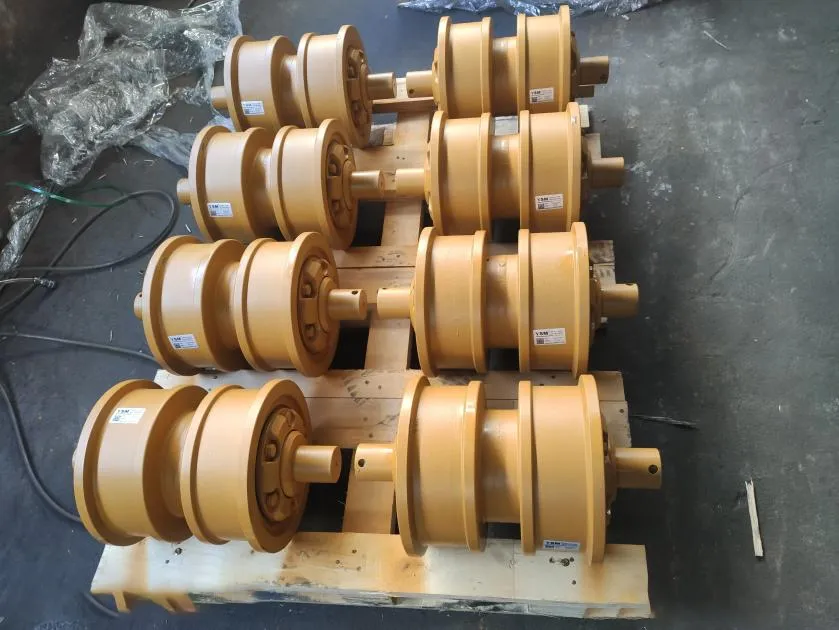
The track roller, also called a bottom roller or lower roller, is mounted below the track frame. Its running surfaces carry the machine through the track links, while its flanges help guide the lower track run. This is different from a carrier roller, which supports the upper return section of the chain.
Track rollers work as a set. Their load changes with digging direction, travel, turning, side slopes, attachments, track-shoe width, packed material, and the condition of the chain, idler, sprocket, guards, and frame. A new roller cannot correct a bent mounting surface, incorrect tension, or badly worn mating components.
2. Is the track roller leaking or only sweating?
Floating-ring seals operate with a thin lubricant film at the sealing faces. Technical service literature distinguishes light oil traces that bind with dust and dry from leakage that remains wet and continues to form oil. The inspection must be based on a cleaned surface and change over time, not one dirty photograph.
| Observed condition | What it may indicate | Recommended response |
|---|---|---|
| Thin, dirt-bound film that does not spread | Possible normal seal sweating | Clean, photograph, and monitor against the exact service guidance |
| Seal area stays wet after cleaning | Continuing lubricant loss is possible | Arrange closer inspection and compare temperature and rotation |
| Fresh drops or oil on the shoes | Active leakage | Remove the machine from demanding work and obtain qualified service assessment |
| Leakage plus heat, noise, wobble, or seizure | Internal wear or lubricant loss may be advanced | Stop operation and inspect the roller and mating system |
Do not refill, dismantle, pressure-test, or release track tension without the correct procedure, tooling, and trained personnel. Roller construction and repairability vary.
3. Safe excavator track roller inspection
Park on firm, level ground, lower the attachment, apply parking controls, stop the engine, isolate energy, and follow the exact operation and maintenance manual. Keep everyone out of the travel path. Never crawl beneath a raised machine that is not supported by approved equipment and procedures.
Clean and map every roller position
Remove enough packed material to expose the roller shells, end areas, fasteners, and mounting faces. Number the positions from front to rear on both sides. Record which position is wet, hot, noisy, damaged, or wearing differently.
Inspect the shell, tread, and flanges
Look for flat spots, scoring, cracks, chipped flanges, sharp edges, unequal flange contact, and a running surface that differs from adjacent rollers. Use the OEM measurement locations and limits; there is no universal roller diameter or flange limit.
Compare rotation, heat, and sound
When safe procedures allow observation during slow travel, confirm that each roller rotates rather than slides. After shutdown, use an appropriate temperature method and compare equivalent positions. One unusually hot roller is a warning signal, but heat alone does not identify the root cause.
Check fasteners and the mounting area
Missing or repeatedly loose hardware, fretting, distorted brackets, impact marks, or a damaged frame can change roller alignment. Correct the mounting problem before installing another roller.
4. Read track roller wear as a system
| Wear pattern | Possible contributors | Next checks |
|---|---|---|
| One roller has a polished flat | Restricted rotation or internal seizure | Seal condition, temperature, rotation, chain contact, and lubrication loss |
| Inner flange wears faster | Side load, guide contact, alignment, slope work, or repeated turning | Opposite flange, chain rails, guards, idler position, and frame |
| Several rollers wear unevenly | Track tension, worn chain rail, packing, shoe leverage, or frame geometry | Complete left-right undercarriage measurement |
| New roller sits higher than the set | Remaining rollers or link rails may be heavily worn | Measured system condition before isolated replacement |
| Rhythmic vibration during travel | Flat roller, damaged shoe, stiff joint, debris, or sprocket engagement | Inspect by position; do not diagnose from sound alone |
These patterns narrow the inspection; they do not prove a single cause. Record the operating surface, slope exposure, turning habits, shoe width, and recent repairs.
5. When should a track roller be replaced?
Replacement becomes a priority when the shell or mounting structure is cracked, the roller is seized, active lubricant loss continues, side play or rough rotation is outside the service limit, the running surface has a flat spot, or the tread and flange measurements reach the model-specific limit.
Before choosing an isolated roller replacement, measure the chain rails and pitch, remaining rollers, carrier rollers, front idler, sprocket teeth, track shoes, guards, and tension. If the system is near a common wear limit, replacing only one part can create uneven contact and repeated downtime. The repair scope should follow measured condition, not a fixed rule that every roller must always be replaced together.
Stop operation when
- a roller shell, flange, bracket, frame, or mounting point is cracked;
- a roller is seized and the chain is sliding across it;
- fresh oil drops, smoke, or abnormal heat appear;
- critical fasteners are missing or repeatedly loose; or
- the track is mis-tracking or derailment is possible.
6. Information needed to match an excavator track roller
Similar-looking rollers can differ in body length, flange form, shaft or bracket design, hole spacing, offsets, and installed position. Do not order from the base model name or one overall photo alone.
- machine brand, complete model, suffix, serial number, and destination market;
- roller position and quantity required;
- readable casting or part number;
- clear photos of both ends, mounting brackets, body profile, and installed location;
- hole count, center distances, overall length, body and flange dimensions from agreed points;
- track-shoe width, roller count, and photos of the complete undercarriage;
- observed symptom, working conditions, and destination country.
Frequently Asked Questions
Is every oily track roller leaking?
No. A small, stable oil trace can be seal sweating. Clean the area and judge whether it remains wet, grows, drips, or appears with heat, noise, play, or poor rotation.
Can a seized roller damage the track chain?
Yes. A non-rotating roller can slide against the link rail, producing a flat spot and abnormal local contact. Inspect both the roller and the chain.
Should one leaking roller or the complete set be replaced?
The answer depends on measured condition. Impact damage may affect one roller, while age, chain wear, tension, or alignment may affect the set. Measure before deciding.
Are track rollers and carrier rollers interchangeable?
No. They have different locations, loads, profiles, mounts, and dimensions. Confirm the correct part type and position.
Technical references
Check Excavator Track Roller Replacement Options
Send the machine identification, roller position, part markings, photos, and agreed measurements for a model-specific review. We can check suitable supply options for requested undercarriage items such as:
- track rollers and carrier rollers;
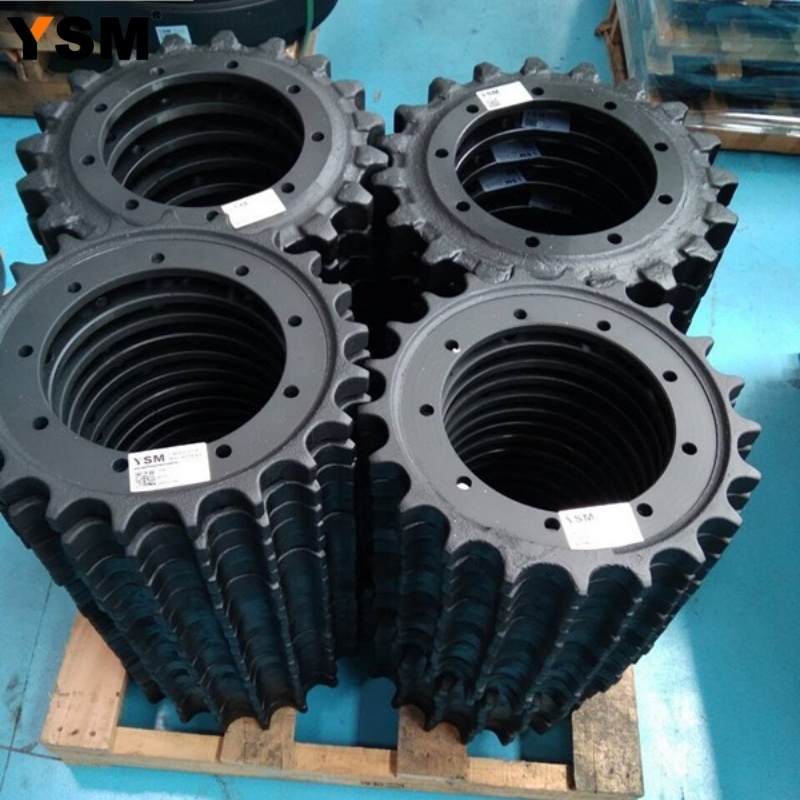
- front idlers and sprockets;
- track chains, track shoes, and related fasteners.
Corporate Email: sales@china-ysm.com
WhatsApp: +86-18606961587
Compatibility and availability must be confirmed from the complete model, serial number, part number, clear photos, requested dimensions, quantity, destination country, and working conditions before ordering.