
Excavator Track Roller Oil Leak: Causes, Inspection and Replacement
An oily ring around a bottom roller seal can be an early warning, but a wet roller is not automatically a failed roller. Clean the area, identify the fluid source, compare it with nearby rollers, and look for heat, rough rotation, flat spots, flange wear, or abnormal noise before deciding what to replace.
What a Track Roller Does
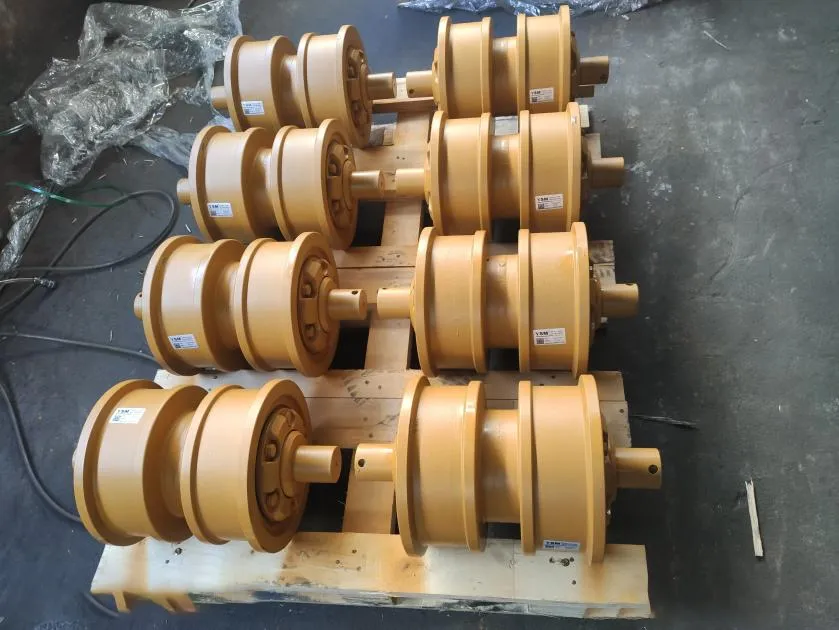
Track rollers, also called bottom rollers, carry machine weight and provide a running surface for the track chain rails. A typical assembly includes a hardened roller shell, one or more flanges, a shaft, bushings or bearings, seals, internal lubricant, and mounting brackets. The exact construction varies by excavator model and roller position.
The seal has two jobs: retain the roller's lubricant and keep abrasive mud, water, and grit away from internal surfaces. Once lubricant escapes or contamination enters, internal wear and temperature can rise. That does not mean every stain is urgent failure, but it does mean the roller deserves a controlled inspection.
How to Confirm an Excavator Track Roller Oil Leak
- Record the starting condition. Photograph the roller, seal area, mounting brackets, and nearby frame before cleaning.
- Clean and dry the suspected area. Remove loose material without directing high-pressure water into the seal. A clean surface makes fresh fluid easier to locate.
- Check the fluid path from above. Oil from a travel motor, final drive, hose, or another component can run down the frame and collect on a roller.
- Observe after a short controlled operation. If site rules and machine condition allow, operate according to the manual, park safely, and look for a fresh ring or trail at the roller seal.
- Compare similar rollers. Note differences in temperature, sound, rotation marks, and shell profile. Use approved measuring tools rather than touch to compare hot components.
Common Leak Paths and Contributing Conditions
Seal-face damage or contamination
Fine sand, wire, plant fiber, frozen material, or packed mud around the seal can damage a sealing surface. A fresh wet ring at one end of the roller after cleaning is a useful clue. The roller still needs inspection for shaft movement and internal damage.
Impact or distorted mounting
Rock impact can damage the shell or bracket. Loose, damaged, or unevenly seated mounting hardware can alter roller alignment and increase side loading. Hardware condition and tightening requirements must be checked against the service information for the specific machine.
Internal wear and heat
Loss of lubricant, worn bushings or bearings, and contamination can produce heat and rough movement. A roller that skids instead of turning may develop a flat spot. Continuing to travel can then affect the chain rail and adjacent rollers.
Undercarriage alignment and operating conditions
Incorrect track tension, debris packing, a worn chain rail, damaged guards, frequent side loading, and repeated work on slopes can change how the chain contacts the roller. These conditions may not be the original cause of a seal leak, but they can accelerate wear and should be assessed with the roller.
Symptoms and Practical Next Checks
| Observation | Possible meaning | Next check |
|---|---|---|
| Fresh oily ring at one seal | Seal leakage or fluid arriving from another source | Clean, dry, inspect above the roller, then recheck after controlled operation |
| Wet seal plus unusual heat | Lubricant loss, contamination, or internal friction | Limit operation and arrange a qualified inspection |
| Flat polished area on shell | Roller may be sliding instead of rotating | Check rotation, debris packing, shell profile, and chain contact |
| One flange polished heavily | Persistent side contact or possible alignment issue | Inspect chain rail position, guards, roller mounting, and frame condition |
| Oil on several components | Leak may originate above or forward of the roller | Trace the highest fresh wet point before ordering parts |
| Knocking or grinding during travel | Could involve roller, chain joint, guard, idler, or sprocket | Stop and inspect the complete undercarriage rather than assuming one cause |
Inspection Checklist for a Suspected Leaking Bottom Roller
Record the machine hours, working material, slope exposure, recent impacts, and whether the symptom appears on one side or both. A pattern across several rollers often points to a system condition rather than several unrelated seal failures.
Can a Leaking Track Roller Be Repaired?
The answer depends on roller design, damage, available service procedures, and local rebuilding capability. Some assemblies may be serviceable using specified seals, lubricant, tooling, cleanliness controls, and wear limits. Other designs are replaced as assemblies. Simply adding oil, welding a sealed roller, or installing an unspecified seal can create safety and reliability problems.
Replacement is commonly considered when leakage is accompanied by seizure, rough rotation, excessive movement, a deep flat spot, severe flange wear, cracked mounting features, or dimensions outside the manufacturer's service limits. The decision should also consider the condition of the mating chain rails and the remaining undercarriage.
Check the Whole Undercarriage Before Fitting a New Roller
- Measure track sag or tension using the exact method and condition stated in the machine manual.
- Remove packed material that can stop a roller or increase track tension.
- Inspect chain links, pins, bushings, rail height, and stiff joints.
- Look for worn sprocket teeth, idler flange contact, damaged guides, and bent guards.
- Confirm roller mounting surfaces are clean and undamaged.
- Compare wear across left and right sides and from front to rear.
A new roller installed into a misaligned, over-tight, or heavily worn system may develop the same symptom early. The objective is not only to replace the wet component, but also to remove the condition that caused abnormal loading.
Fitment Information Needed for a Replacement Track Roller
Visual similarity is not enough. Excavators with similar operating weights may use different shaft, bracket, flange, or mounting dimensions. Model suffixes and production changes can also affect fitment. Provide:
- Machine brand, complete model, model suffix, serial number or PIN, and a clear nameplate photo.
- Part name and visible part number from the old roller, parts book, or service record.
- Photos of the complete roller, both ends, mounting brackets, seal area, and installation position.
- Overall length, shell diameter, tread widths, flange diameters, shaft dimensions, and mounting-hole spacing.
- Single-flange or double-flange configuration and its position on the frame.
- Required quantity, destination country, typical ground conditions, and any related chain or guard damage.
Frequently Asked Questions
Is a small amount of oil around the roller seal normal?
A stain may be residue or fluid from another source, but a fresh recurring wet ring should be investigated. Clean and monitor it, then check temperature, rotation, noise, shell profile, and movement according to safe service procedures.
Can I keep operating with a leaking track roller?
There is no universal safe operating period. Severity depends on lubricant loss, internal condition, load, travel, terrain, and the machine design. Heat, noise, seizure, looseness, or rapid leakage calls for prompt professional assessment.
Does a leaking roller mean the track is too tight?
Not necessarily. Incorrect tension can increase loads, but seal damage, contamination, impact, alignment, and internal wear are also possible. Check tension using the manufacturer's method and inspect the system.
Should all rollers be replaced at the same time?
Not automatically. Compare measured wear and condition across the set. Mixed component condition can affect load distribution, so the decision should be based on measurements, operating plans, and service guidance.
Reference Sources
- Caterpillar: How to Maintain Cat Steel Tracks
- Caterpillar: What to Know About Excavator Undercarriage Maintenance
- Caterpillar: Your Six-Step Excavator Maintenance Checklist
Technical limits, inspection intervals, lifting procedures, torque values, and replacement criteria must come from the operation, maintenance, and service information for the specific machine.
Consult Our Undercarriage Service Engineers
For track roller fitment checks, related undercarriage parts, batch supply inquiries, or factory-direct wholesale discussions:
Corporate Email: sales@china-ysm.com
WhatsApp: +86-18606961587
Send the complete machine model, serial number or PIN, part number if available, photos, key dimensions, quantity, destination country, and working conditions. Final fitment, price, availability, delivery, and warranty terms require case-by-case confirmation.