
Urban jobsites | Excavator undercarriage
Excavator Undercarriage Maintenance on Concrete and Asphalt
Concrete and asphalt provide firm support, but they also create high traction and little relief when a steel-track excavator turns. Sharp steering, counter-rotation and unsuitable shoes can increase side loading while also damaging the finished surface. A practical urban-site plan combines approved track mats, controlled travel, daily component inspection and machine-specific wear measurement.
Why Hard Surfaces Change Excavator Undercarriage Loading
On soil, a grouser can penetrate and the ground can deform as the machine steers. Concrete and asphalt provide less release. When one track slows or stops while the other moves, the shoes scrub across the surface and lateral force travels through the shoes, bolts, links, guides, roller flanges and frame.
The effect depends on machine weight, track design, shoe width, grouser configuration, pavement condition and operator input. A smooth protective mat may reduce direct pavement damage but can change traction and transition height. A rough mat may provide more grip while still transferring steering load into the undercarriage. There is no single mat, shoe or turning method for every site.
Hard-surface work often includes frequent short moves, confined steering and transitions between pavement, steel plates, mats and excavated soil. These transitions can introduce impact at shoe edges and shift debris into the track. Record the actual route and maneuver pattern instead of treating all urban work as the same application.
Plan the Route and Protective Track-Mat System
Before unloading, confirm pavement bearing capacity, underground structures, slab edges, utilities, drainage covers and overhead clearance. The route should be approved by the responsible site engineer. Keep pedestrians and live traffic separated from the machine and mats.
- Select mats or plates rated for the machine and intended surface.
- Provide full support under the track rather than a narrow edge under one shoe.
- Secure adjoining mats against spreading, rocking or creating a pinch point.
- Keep mud, aggregate and metal fragments off the travel path.
- Provide gradual transitions where mat height changes.
- Plan turning areas large enough for gradual multi-point turns.
Inspect mats throughout the shift. A displaced mat can place one track on a raised edge and introduce twisting load. Stop before repositioning any mat; no person should enter near the tracks while the machine is capable of movement.
Daily Hard-Surface Undercarriage Inspection
Inspect before the first move and after the machine returns to its parking area. Compare both sides in the same sequence. Photograph the shoes and rollers before cleaning if fresh marks could help identify a turning or transition problem.
- Check every visible shoe for cracks, bent corners and unusual edge polishing.
- Inspect shoe bolts and master-joint hardware for looseness or movement.
- Look for stiff joints, seal-area contamination and irregular link pitch.
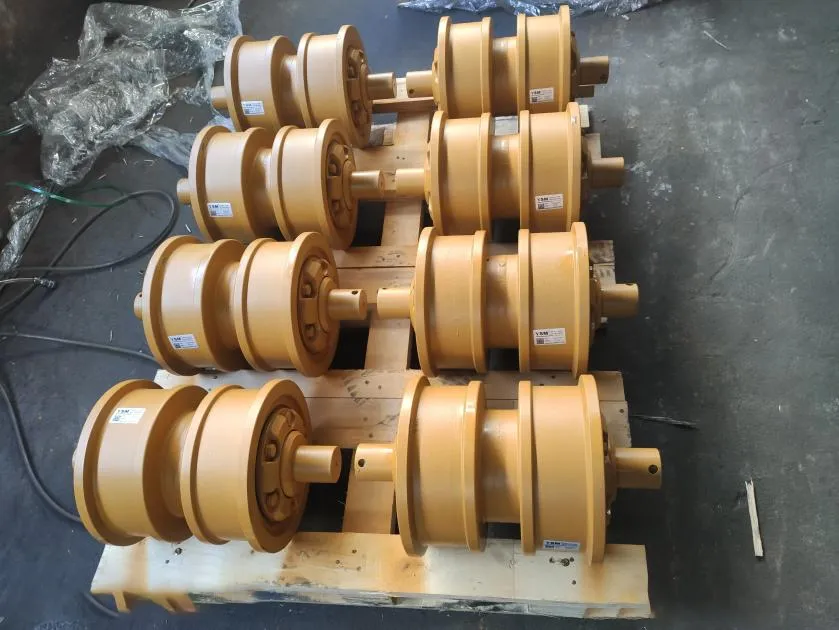
- Check roller and idler seals for leakage and flange surfaces for bright contact bands.
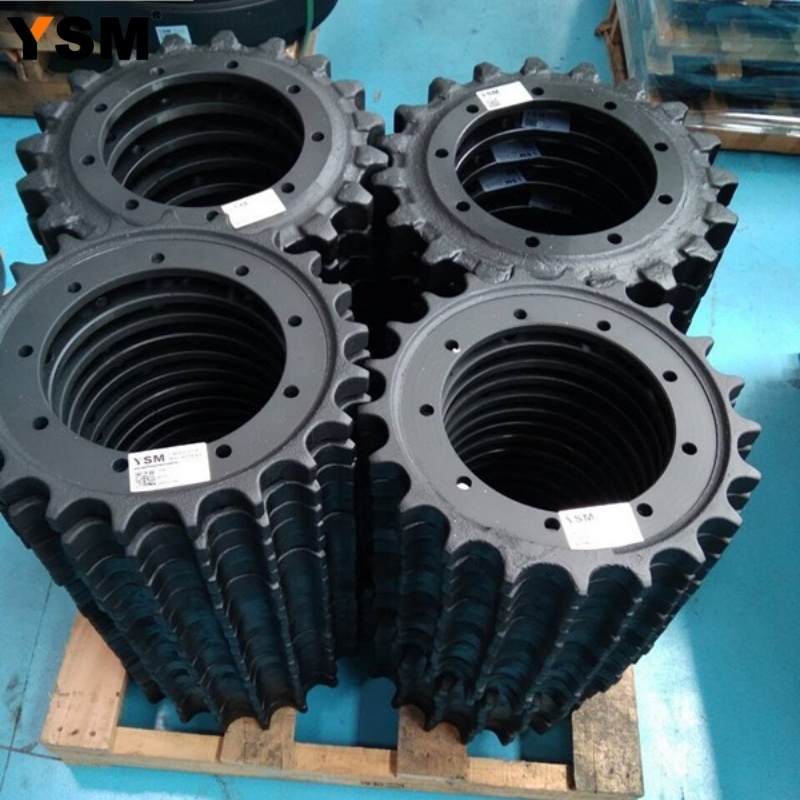
- Inspect the sprocket for cracks, damaged hardware and uneven tooth engagement.
- Check guards and guides for fresh contact, bending or missing fasteners.
- Remove pavement aggregate, wire and compacted soil before measuring tension.
A shiny contact mark is evidence of recent contact, not proof that the contacted part caused the problem. Check shoe width, tension, alignment, mat condition, route and turning behavior before selecting a replacement part.
Hard-Surface Component Wear Clues
| Area | What to inspect | Possible contributors |
|---|---|---|
| Track shoes and bolts | Edge rounding, cracks, bent plates, loose bolts and uneven grouser contact | Sharp turns, mat edges, shoe width, hardware condition or repeated transitions |
| Links, pins and bushings | Rail wear, pitch change, stiff joints, external bushing wear and seal clues | High traction, tension, sprocket engagement, contamination or accumulated wear |
| Lower rollers | Flange contact, oil leakage, shell wear and left-to-right differences | Side loading, alignment, shoe movement, frame position or roller wear |
| Carrier rollers | Leakage, upper-chain sliding marks and debris on the frame | Blocked rotation, tension or upper-chain movement |
| Front idler | Guide wear, ridging, leakage and abnormal side contact | Steering load, alignment, recoil movement or wear progression |
| Sprocket | Tooth profile, cracks, looseness and asymmetric engagement | Chain pitch, bushing condition, travel direction and tension |
| Guards and frame | Fresh polishing, bent guards, cracked welds and insecure fasteners | Side load, debris, misalignment or direct impact at transitions |
Turning and Travel Habits on Pavement
Use gradual or three-point turns where the route allows. Keep both tracks moving rather than holding one side stationary. Avoid counter-rotation, track spin and abrupt joystick inputs. A loaded bucket or attachment can change weight distribution, so lower and secure the load according to the manual before travel.
Limit nonproductive travel and use a transport method for distances that exceed the site's approved tracked route. Keep speed appropriate to mat stability and surface transitions. Approach height changes squarely when the engineered plan requires it, with a spotter positioned outside the machine path.
If the excavator begins pulling to one side, produces severe chain slap or repeatedly contacts one roller flange, stop and inspect. Do not compensate by applying more travel power or changing tension without measurements.
Track Shoes, Grousers and Surface Protection
Wide shoes are designed primarily for flotation on softer ground. On strong underfoot conditions, extra width can increase leverage when a shoe edge grips or crosses a mat joint. Narrower approved shoes may reduce bending load, but the correct choice also depends on stability, machine configuration and the work performed.
Triple-grouser shoes are common on excavators and generally provide more contact points than aggressive single-grouser designs. Bolt-on pads, rubber road liners or other surface-protection options may be available for specific machines. Do not improvise attachments or mix incompatible shoes across one track group.
Surface protection is not the same as undercarriage protection. A rubber pad can reduce marking while still transmitting lateral load during a pivot turn. Inspect mounting hardware and pad condition as well as the steel components beneath.
Wear Measurement and Repair Planning
Record machine hours, route length, surface type, mat system, turning area, number of relocations and unusual transitions. Keep comparable photographs of both sides. Mark any new shoe, bolt, roller or guard and the reason it was installed.
A qualified inspection may measure link pitch, rail height, bushing diameter, roller and idler treads, grouser height and sprocket profile. Use the exact component reference points and OEM limits. Do not calculate remaining life from an unrelated wear chart.
Repair planning should address the system. A new roller will not correct an unstable mat route. New shoes will not solve severe chain-pitch and sprocket mismatch. Investigate the operating pattern, alignment, guard position and connected component wear.
Urban Excavator Undercarriage Parts Fitment Checklist
For rollers, idlers, sprockets, chains, shoes, bolts or guards, provide:
- equipment brand, complete model and suffix;
- serial number or PIN and a clear nameplate photograph;
- part name, quantity and readable part number;
- overview, mounting and wear photographs after cleaning;
- requested dimensions and measurement method;
- shoe width, grouser type, link count and track gauge where relevant;
- installed pads, liners, guards or other options;
- working surface and destination country.
Machines in the same model family may use different shoe widths, gauges, serial-break components or aftermarket surface-protection systems. Compatibility and availability must be confirmed before ordering.
Frequently Asked Questions
Can a steel-track excavator travel directly on asphalt?
Only when the responsible site authority and machine procedure allow it. Protective mats are commonly used to reduce surface damage, but route capacity, mat rating and traffic control still require engineering review.
Do rubber pads eliminate undercarriage wear?
No. They may protect the surface, but sharp turns can still transmit lateral force through shoes, links, rollers and guides.
Should track tension be changed for concrete?
Use only the exact model's measurement method and working-condition specification. Clean the track first and never copy a generic sag value.
Why are roller flanges shiny after urban work?
Shiny bands show contact. Possible contributors include turning load, alignment, shoe movement, tension, guards and component wear. Measure before diagnosing.
Are wider shoes better for protecting pavement?
Not automatically. Wider shoes spread static load but can increase leverage and scrubbing during turns. Use approved shoe and surface-protection options.
Technical References
- Caterpillar: Excavator Undercarriage Maintenance - shoe width, operating condition and component checks.
- Bobcat: Tips to Extend Undercarriage Life - hard surfaces, wider turns, shoe selection and inspection.
- Caterpillar: Undercarriage Cost Management - gradual and multi-point turning on concrete or asphalt; apply only where relevant to the exact machine.
This general article does not replace the machine manual, engineered travel plan, pavement assessment or qualified inspection.
Ask About Excavator Undercarriage Parts for Hard-Surface Work
We can check suitable supply options for track rollers, carrier rollers, front idlers, sprockets, track chains, track shoes, bolts and related parts after reviewing the exact machine and application.
Corporate Email: sales@china-ysm.com
WhatsApp: +86-18606961587
For a fitment check, send the equipment brand, complete model and suffix, serial number or PIN, part name, part number, clear photos, requested dimensions, quantity, destination country and working condition. Compatibility and availability must be confirmed before ordering.