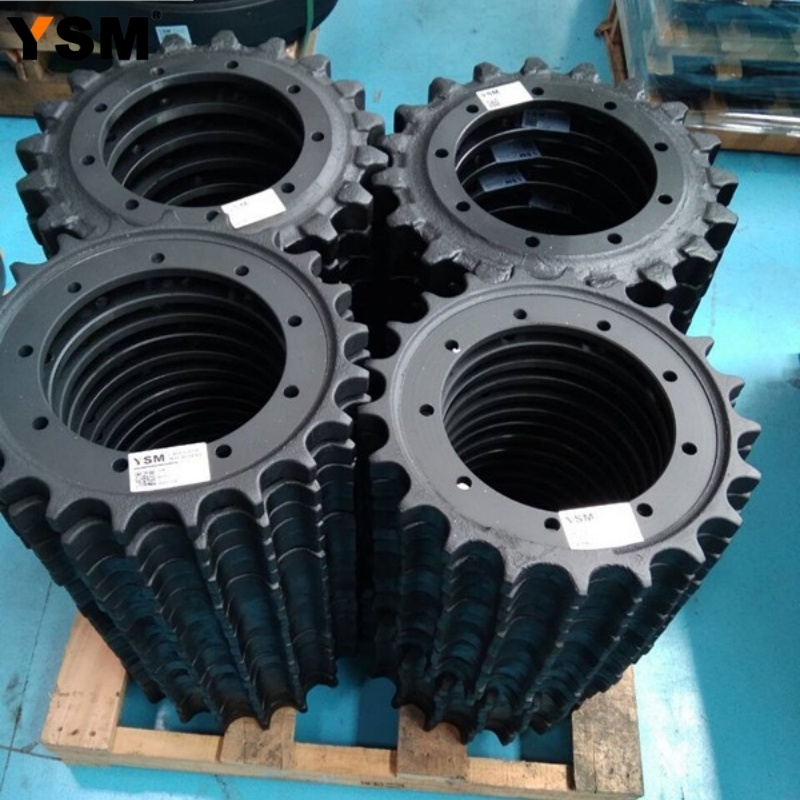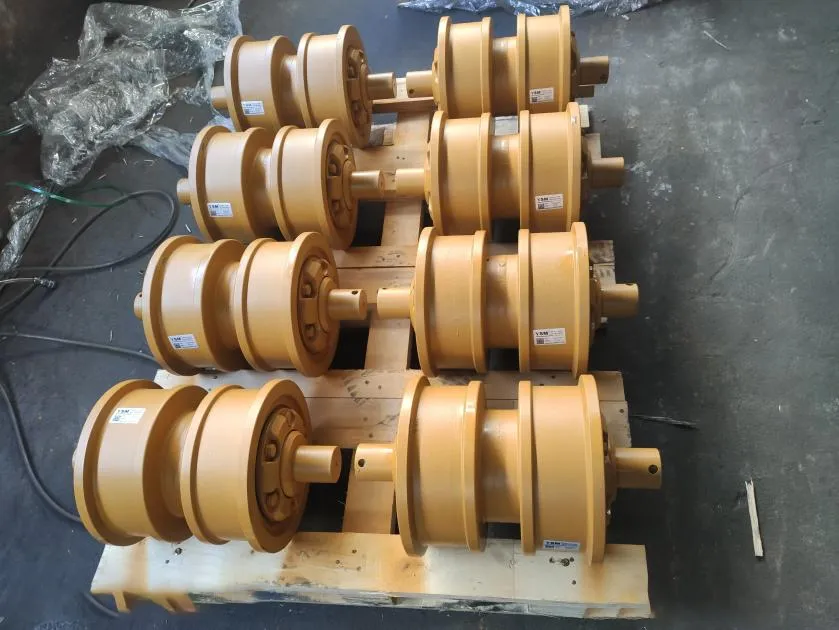

New 23-tonne crawler excavator maintenance and fitment
Hyundai HX230 Undercarriage Inspection and Parts Guide
Hyundai Construction Equipment Europe launched the HX230 in April 2026 as a new 23-tonne crawler excavator for the European market. Its current product page lists an operating-weight range of 23,390 to 25,990 kg. Because it is a new platform and configurations can vary, buyers should not assume that components from an older HX220 or a related model automatically fit the HX230.
1. Why the Hyundai HX230 requires model-specific identification
Hyundai describes the HX230 as part of its Next Generation crawler-excavator range. The official launch information identifies a Hyundai DX05 Stage V engine, full electrohydraulic controls, and a redesigned platform. This matters to parts research because a familiar 23-tonne size class does not prove that the track frame, roller mounting, link assembly, shoe group, idler, sprocket, or adjuster matches the earlier machine it replaces or sits beside.
Use the full machine designation, serial number or PIN, manufacturing plate, destination market, and application package. Check whether the machine has optional shoes, guards, attachments, or a special working arrangement. Photograph both crawler frames even if the problem appears on only one side.
This independent educational guide is not affiliated with or endorsed by Hyundai. The brand and model are used only to identify equipment and explain inspection requirements.
2. HX230 details to record before selecting undercarriage parts
| Detail | Why it matters | What to capture |
|---|---|---|
| Complete model and serial number | Separates the new HX230 from older or related model families | Clear plate photo and full typed identity |
| Market and machine configuration | Standard and optional equipment may vary by region and application | Country, dealer build information, and installed options |
| Shoe type and width | Affects flotation, leverage, bolt pattern, and application | Overall width, grouser profile, hole pattern, and markings |
| Roller and carrier-roller sequence | Confirms the actual track-frame arrangement | Count, flange type, installed order, and both sides |
| Link assembly and master connection | Defines pitch, link profile, seals, shoes, and sprocket engagement | Counts, pitch span, connection type, and visible numbers |
| Mounting and offset dimensions | Similar-looking parts can use different brackets or positions | Agreed measurement diagram and square-on photos |
Hyundai's current undercarriage-parts page lists chains and shoes, rollers and idlers, and sprockets as interacting component groups. That system view is useful for inspection, but fitment still requires the exact serial range and installed evidence.
3. Hyundai HX230 undercarriage inspection checklist
Park on firm, level ground, lower the attachment, apply the required controls, stop the engine, and isolate stored energy according to the correct manual. Clean enough material away to expose the wear surfaces, seals, fasteners, guides, and drainage paths.
Track chain, pins, bushings, links, and shoes
Check for dry or stiff joints, oil loss, shifted pins, cracked links, abnormal side wear, rail-height differences, shoe bending, grouser wear, loose hardware, elongated bolt holes, and a damaged master connection. Measure pitch over the span and by the procedure specified for the installed chain. Do not use a universal wear percentage.
Lower rollers and carrier rollers
Inspect every installed position for active leakage, fresh oil paths, shell cracks, flat spots, restricted rotation, mounting movement, abnormal heat, and flange contact. Record single- or double-flange arrangement and the complete sequence. Compare front, middle, rear, left, and right conditions rather than replacing the first wet roller without checking the system.
Front idler and track adjuster
Inspect idler tread and flanges, guide contact, side clearance, frame position, bearing or seal leakage, and damage from packed material. Check the adjuster area for grease, contamination, damaged fittings, and a tension setting that changes after the correct procedure. Stored grease pressure and recoil springs require qualified service methods.
Sprocket and final-drive area
Look for abnormal tooth profile, cracking, loose fasteners, packed debris, and rough chain engagement. Compare both sides and inspect the chain pitch at the same time. A new sprocket cannot correct a badly elongated chain, and a new chain should not be paired with an unmeasured worn sprocket.
Track frame, guards, and mounting faces
Check welds, brackets, roller mounts, guides, guards, hardware, and bright contact marks. A bent guard or damaged mounting surface can force the chain sideways and create wear that looks like a roller or idler problem.
4. Use HX230 wear patterns to plan the next check
| Pattern | Possible contributors | Next checks |
|---|---|---|
| One crawler side wears faster | Turning direction, slope work, unequal packing, tension difference, alignment, or local component condition | Compare both sides and operating history under the same conditions |
| Heavy roller-flange contact | Side loading, chain guidance, idler position, guard contact, or frame issue | Rails, rollers, idler guides, mounts, and track frame |
| Upper chain rub or vibration | Carrier-roller wear or seizure, chain wear, tension, packing, or damaged mount | Every carrier roller, chain pitch, contact marks, and sag method |
| Rough sprocket engagement | Pitch wear, tooth wear, stiff joints, debris, or mismatched components | Measure chain and sprocket as a mating system |
| Track tension changes after adjustment | Grease leakage, valve or seal issue, packing, worn chain, or adjuster damage | Repeat the exact manual method and obtain qualified inspection |
| Repeated loose shoe hardware | Damaged holes, wrong hardware, contaminated faces, shoe application, or severe load | Shoe-to-link joint, bolt specification, and working conditions |
These observations narrow the investigation but do not confirm one cause. Support the repair decision with measurements, service history, working conditions, and the serial-specific manual.
5. HX230 maintenance priorities
- Clean before inspection. Remove packed material that can hide leakage, prevent rollers from turning, or change effective track tension.
- Measure both sides consistently. Record chain pitch, rail height, roller and idler wear, sprocket profile, shoe condition, and adjuster position.
- Use the exact tension method. Machine position, ground material, installed chain, and measuring points affect the result.
- Review operating habits. Repeated counter-rotation, unnecessary reversing, constant turning in one direction, and side-slope work can create uneven wear.
- Use telematics as supporting evidence. Hyundai lists Hi-MATE and predictive machine monitoring for the HX230, but telematics does not replace physical measurement of wear components.
- Investigate sudden change. New noise, heat, leakage, vibration, tracking change, or hardware movement deserves inspection before continued heavy travel.
Maintenance intervals and service limits must come from the applicable HX230 operation and maintenance information. Do not transfer values from an HX220, HX210, or a generic 20-tonne excavator chart.
6. Information needed for Hyundai HX230 undercarriage parts
- complete model designation, serial number or PIN, market, and application package;
- part name, installed side and position, required quantity, and readable part number;
- track-link, shoe, lower-roller, and carrier-roller counts from the actual machine;
- shoe width, grouser type, plate thickness, bolt pattern, hole count, and travel direction;
- roller flange type, mounting holes, bolt centers, bracket or shaft details, and offsets;
- track pitch, link profile, master connection, pin and bushing details, and measured span;
- clear overall, end, mounting-face, wear-surface, and installed-position photos;
- failure symptom, previous repairs, ground conditions, quantity, and destination country.
For new-model inquiries, do not rely on an older cross-reference without evidence. Confirm whether any shared part is valid for the exact HX230 serial range and configuration.
Frequently Asked Questions
Is the Hyundai HX230 the same machine as the HX220A L?
No assumption should be made. Hyundai presents the HX230 as a new 2026 Next Generation platform. Verify the complete model, serial data, catalog, and installed dimensions.
Can HX220 track rollers fit an HX230?
Only if serial-specific parts information and physical mounting data confirm it. Similar operating weight or appearance is not sufficient.
How many rollers does an HX230 have?
Count the installed machine and confirm the current serial-specific catalog. Do not copy the roller count from an older HX220 specification into an HX230 purchase order.
Should chains and sprockets be replaced together?
Measure both as a mating system. Replacement scope depends on pitch wear, tooth profile, engagement, remaining limits, application, and service guidance.
Technical references
Check Hyundai HX230 Undercarriage Replacement Options
Send the complete machine identity, serial plate, installed-part photos, markings, counts, and agreed measurements for a model-specific review. We can check suitable supply options for requested items such as:
- track rollers and carrier rollers;
- front idlers and sprockets;
- track chains, track shoes, adjuster-related items, and fasteners.
Corporate Email: sales@china-ysm.com
WhatsApp: +86-18606961587
Compatibility and availability must be confirmed from the complete model, serial number, part number, clear photos, requested dimensions, quantity, destination country, and working conditions before ordering.