
Model Guide | Mid-Size Dozer Undercarriage
Komatsu D65 Dozer Undercarriage Inspection and Parts Fitment Guide
A Komatsu D65 undercarriage cannot be identified accurately from the base model alone. Current D65-18 materials include EX, PX, WX and intelligent machine-control variants, with differences in track geometry, shoe width, ground contact and application. Inspection should therefore document both wear condition and the exact machine identity before replacement parts are selected.
Why D65 EX, PX, WX and i Variants Must Be Separated
Komatsu currently lists multiple D65-18 configurations. Official North American specifications show D65EX-18, D65EXi-18, D65PX-18, D65PXi-18 and D65WX-18 models. The "i" identifies intelligent machine-control configurations, while EX, PX and WX versions are designed around different application and ground-pressure needs.
The D65PX-18 page describes a long-track, low-ground-pressure arrangement. The official D65 family brochure lists different standard shoe widths and track-on-ground dimensions across variants. These are not minor labels: track frames, shoes, guards and other system details can affect part selection.
| Variant information | Inspection or fitment relevance | Required evidence |
|---|---|---|
| EX versus PX versus WX | Application, shoe width, gauge and ground-contact arrangements may differ | Complete suffix, serial plate and full side photographs |
| Standard versus intelligent model | The base undercarriage may look similar, but the full machine build still controls the parts record | Exact EX or EXi, PX or PXi designation and serial number |
| PLUS versus another track system | Rotating-bushing PLUS components are a system and should not be mixed by appearance | Track-group identification, part numbers and detailed component photos |
| Blade or application package | Machine configuration and operating conditions change loading and guarding needs | Blade type, rear equipment, application and working material |
| Previous undercarriage conversion | Installed parts may no longer match a base-model assumption | Service history, current part numbers and measurements |
Komatsu D65 Dozer Undercarriage Daily Walk-Around
- Read the shift report. Note hard steering, pulling, vibration, unusual noise, track jumping, severe impacts and any recent adjustment or repair.
- Clean the track frames. Remove packed soil and debris from roller guards, sprocket pockets, idler areas and the top of each frame. Cleaning reveals leaks and prevents packed material from restricting components.
- Compare left and right sides. Use the same inspection order and lighting. Unequal wear is often more informative than the appearance of one isolated component.
- Inspect before moving. Record loose or missing hardware, cracks, displaced pins, broken shoes, leakage, bent guards and fresh rub marks.
- Observe operation safely. If a trained operator moves the dozer, keep personnel outside the travel path and pinch zones. Note whether the signal occurs in forward, reverse, turns or on a slope.
- Trend measurements. Use the approved measurement locations and tools. Keep date, hours and job conditions with every inspection record.
D65 Undercarriage Component Inspection Table
| Component or area | Look for | System connection |
|---|---|---|
| Track links, pins and bushings | Cracks, stiff joints, retention changes, seal-area leakage, rail wear and abnormal bushing contact | Engages the sprocket and runs on rollers and idlers |
| Single-grouser shoes and hardware | Bent or cracked shoes, grouser wear, loose bolts, elongated holes and mixed widths | Shoe selection changes flotation, penetration and structural loading |
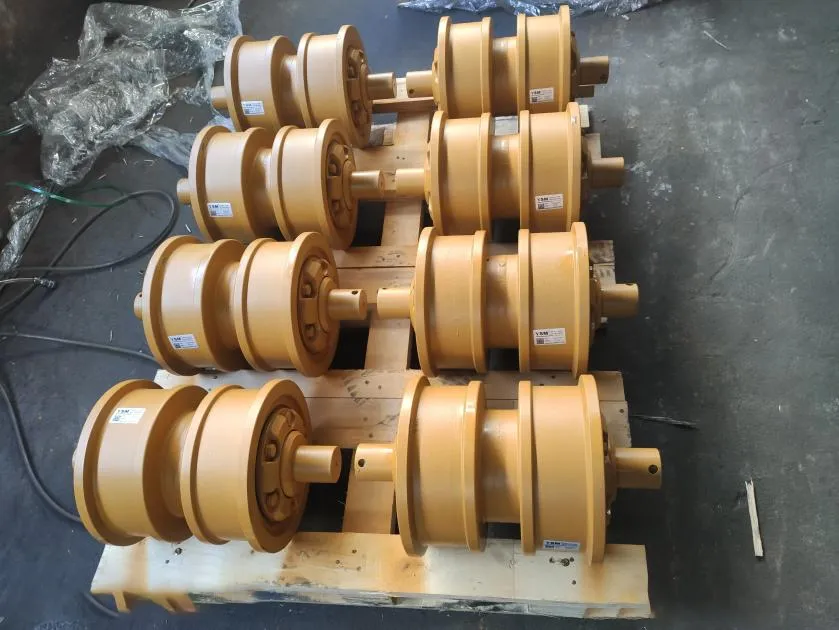
| Lower track rollers | Oil loss, shell and flange wear, seized rotation, flat areas, mounting and debris | Uneven roller support can change rail and flange contact |
| Carrier rollers | Leakage, rotation, tread wear, flange contact and packed material | Controls upper-chain support and movement |
| Front idlers | Tread wear, flange wear, leakage, side clearance, alignment and abnormal position | Guides the chain and moves with the tension system |
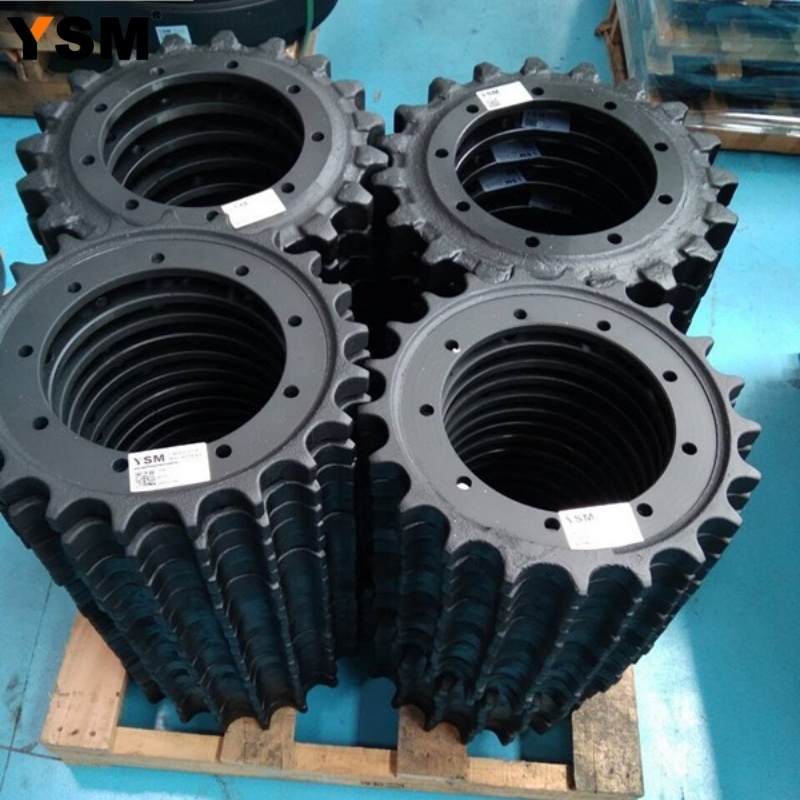
| Sprocket segments | Tooth profile, cracks, loose or damaged hardware and uneven bushing contact | Segment wear must be evaluated with chain condition |
| Track adjuster and recoil system | Grease leakage, damaged covers, loss of setting and restricted movement | Apparent tension problems may reflect damage, packing or wear |
| Track frames and guards | Cracks, bent guides, loose fasteners, polishing and packed debris | External contact can produce side wear or tracking symptoms |
| Equalizer bar and pivot support area | Visible leakage, cracks, abnormal position, damaged mounting and unusual movement | Frame support concerns can contribute to uneven undercarriage loading |
A daily visual check does not replace professional wear measurement. Komatsu specifies roller, shoe and track details for individual versions, and the correct manual controls track adjustment. Never apply one internet sag figure or one wear limit to every D65.
PLUS and Standard Undercarriage Questions
Komatsu describes PLUS as a Parallel Link Undercarriage System with rotating bushings for mid-size dozers including the D65. Official system literature also states that PLUS components differ from standard-system components. When a machine has been converted or rebuilt, the installed track system must be identified directly rather than inferred from the hood decal.
For a conversion from standard undercarriage to PLUS, Komatsu literature lists a coordinated group that can include track link assemblies, shoes, shoe hardware, sprocket segments, rollers, carrier rollers and guards. This illustrates why ordering one look-alike component without confirming the surrounding system can create a mismatch.
Identification points to record
- part numbers on the track group, rollers, idler or segments where readable;
- clear photographs of the bushing and sprocket engagement area;
- shoe width, bolt pattern, link count and agreed dimensional references;
- service records for any previous track-system conversion;
- whether left and right sides were replaced at different times.
Do not identify a rotating-bushing system by a distant photo alone. Dirt, wear and guards can hide the features needed for confirmation.
D65 Wear Patterns and Likely Contributors
Uneven wear between left and right sides
Frequent turning in one direction, slope work, asymmetric blade loading, restricted rollers, frame alignment, different shoe configurations or a split replacement history may contribute. Review operations and measure both sides before blaming a single roller or track group.
Heavy flange and rail-side contact
Lateral loading may come from slopes, turning technique, idler or roller condition, bent guides, frame damage or debris. Fresh polishing shows contact but not its root cause. Trace the contact along the entire track path.
Rapid sprocket segment and bushing wear
Track-system type, bushing condition, tooth profile, track adjustment, pitch wear and forward-reverse duty all affect engagement. Mixing a new segment set with an unidentified or heavily worn chain may not restore correct contact.
Track will not hold adjustment
Check for visible grease loss, adjuster or recoil damage, packing, measurement inconsistency and chain wear. Repeatedly adding grease without identifying the change can overload the system and expose personnel to stored pressure.
Noise or vibration changes in reverse
Dozers often experience different contact and loading in reverse. Chain joints, sprocket engagement, roller condition, guards, loose shoes and powertrain concerns can overlap. Record direction, speed, load and whether the symptom repeats at a fixed point in the chain cycle.
Service and Replacement Planning
Begin with a measured undercarriage report rather than a general request for a "D65 track set." Record link and bushing condition, roller and idler measurements, segment profile, shoe and bolt condition, leakage, track-frame contact and application. The objective is to understand remaining system life and matched wear.
Operating conditions affect the plan. Wide shoes may provide flotation in soft ground but can change loading when used in high-impact conditions. Abrasive material, moisture, long reverse travel, sharp turns and slope work also change wear. Select the configuration for the actual job and the exact machine, not only for visual similarity or maximum shoe width.
After service, follow the approved adjustment and hardware procedures. Reinspect early contact patterns and record the fitted part numbers. A successful installation does not prove that all later parts listed under the same base model will interchange.
Komatsu D65 Undercarriage Parts Fitment Checklist
For track rollers, carrier rollers, idlers, sprocket segments, track chains, track shoes, track assemblies, adjuster-related parts or track fasteners, send:
- equipment brand and complete model, including EX, PX, WX, i and series suffixes;
- serial number or PIN and a clear identification-plate photograph;
- part name, quantity and every readable current part number;
- full left and right undercarriage photographs plus close details;
- track-system type if known, including any PLUS or conversion history;
- link count, shoe width, bolt pattern and requested dimensions when relevant;
- blade and rear-equipment configuration if it affects the application record;
- destination country, ground material, moisture, slope, impact and reverse-travel duty.
The same base name may cover multiple series and regional builds. Part-number cross-reference, serial-specific information and physical dimensions must agree before compatibility is confirmed.
Frequently Asked Questions
Are D65EX and D65PX undercarriage parts always the same?
No. Official specifications show configuration differences, including shoe and ground-contact arrangements. Confirm the complete suffix, serial number, part number and dimensions.
Does every D65 use the PLUS undercarriage?
Do not assume so. Identify the installed track system and any conversion history from part numbers, records, detailed photos and serial-specific information.
What causes one side of a dozer undercarriage to wear faster?
Turning patterns, slope work, blade loading, restricted components, alignment, debris and unequal replacement history are possible contributors. Measurements and operational records are needed to narrow the cause.
Can track tension be checked with a generic D65 value?
No. Use the correct manual, machine condition and measurement method. Values can vary by configuration and inspection conditions.
Should PLUS and standard components be mixed?
Not by appearance. Komatsu system literature describes redesigned PLUS components, so the complete installed system and approved parts relationship must be confirmed.
Technical References
- Komatsu: D65PX-18 - current model positioning, undercarriage specifications and variant context.
- Komatsu: D65PXi-18 - low-ground-pressure configuration and PLUS track information.
- Komatsu: D65-18 Family Brochure - EX, EXi, PX, PXi and WX specification differences.
- Komatsu: Undercarriage Systems - PLUS rotating-bushing design and system-component relationship.
- Komatsu: Undercarriage Maintenance Tips - track adjustment, cleaning, operating practice and wear measurement.
This article provides general inspection and purchasing guidance. Exact configuration, adjustment, wear limits, removal, installation and torque procedures must come from the correct serial-specific operation, maintenance and service information.
Ask About Undercarriage Parts for Your Komatsu D65 Configuration
We can check suitable supply options for track rollers, carrier rollers, idlers, sprocket segments, track chains, track shoes, track assemblies and related track fasteners after reviewing the exact machine and installed track system.
Corporate Email: sales@china-ysm.com
WhatsApp: +86-18606961587
For a fitment check, send the equipment brand, complete model and suffix, serial number or PIN, part name, part number, clear photos, requested dimensions, quantity, destination country and working condition. Compatibility and availability must be confirmed before ordering.