
Complete-machine guide | 20-ton class crawler excavator
Volvo EC220E Preventive Maintenance Checklist
Preventive maintenance on a Volvo EC220E is not a single oil-change task. A useful routine connects cooling airflow, fluid condition, hydraulic leakage, attachment settings, structural joints, electrical warnings and undercarriage wear. The checks below help an operator build a repeatable record while leaving service intervals, pressure tests and wear limits to the manual for the exact machine.
Confirm the Exact EC220E Before Maintenance
Start with the machine identification plate. Record the complete model, every suffix, serial number or PIN, production market, engine information and installed attachment. Volvo lists different EC220E undercarriage variants and shoe arrangements in its literature, so a model family name alone cannot identify filters, rollers, chains or hydraulic components.
Review the operation and maintenance manual for the serial range. Build a service record with machine hours, date, operator, jobsite, ambient temperature, fuel source, attachment and ground conditions. Record the part number and specification of every installed filter or fluid rather than relying on packaging color.
The EC220E is an active search candidate because current regional manufacturer pages, a current brochure and present model-specific parts results remain discoverable. That evidence supports an informational maintenance article, but it does not establish exact monthly search volume, fleet size or sales ranking.
EC220E Pre-Start Walk-Around
Walk the same route before every shift. Consistency makes a new leak, loose fastener or damaged guard easier to recognize.
- Look beneath the machine. Note fresh oil, coolant, fuel or grease before the source area is disturbed.
- Inspect access and guards. Check steps, handrails, mirrors, cameras, doors, latches, belly guards and counterweight for damage.
- Check visible fluid levels. Use the specified machine position, temperature and procedure; never assume that every sight glass is read under the same condition.
- Inspect hoses and wiring. Look for rubbing, crushed sections, exposed reinforcement, loose clamps, damaged connectors and contamination.
- Survey work equipment. Check pins, retainers, bucket teeth, cutting edges, quick coupler and attachment hoses.
- Compare both track groups. Record packing, shoe hardware, roller leakage, idler position and chain-to-sprocket contact.
- Review the cab before starting. Confirm controls are neutral, windows are clear and no maintenance tag prohibits operation.
Photograph unusual conditions before cleaning. A dated series of comparable images is more valuable than an isolated close-up with no position or machine-hours context.
Engine, Fuel, Air Intake and Filters
Inspect the engine compartment only after following the shutdown and cooling procedure. Look for fresh fluid at hose joints, filter bases, filler caps and drain points. Dust attached to a wet film can help trace a leak, but old service residue must be cleaned before the source is confirmed.
Drain a water separator only as specified. Repeated water or contamination may point to fuel storage, handling or tank-entry problems rather than a filter defect. Record where fuel was obtained and keep filling equipment clean.
Inspect the air-intake path, precleaner where fitted, restriction indicator and duct connections. A damaged duct after the filter can admit dust without creating the same external warning as a blocked element. Do not clean or reuse an element unless the correct procedure explicitly allows it.
Volvo highlights grouped filters and ground-level service access on the EC220E. Easy access improves the chance that checks are completed, but the correct filter and service interval still depend on serial number, market, oil specification and working conditions.
Cooling-Package Inspection and Cleaning
The manufacturer describes a single-layer arrangement with the radiator, charge-air cooler and hydraulic-oil cooler positioned side by side. This layout is intended to aid access and cleaning. Inspect the entire face of each core for dust, seeds, plastic, oily dirt and bent fins.
Before cleaning, identify the contamination. Dry dust, packed fiber and oily debris require different approved methods. Follow the airflow direction and pressure limits in the manual. Aggressive compressed air or high-pressure washing can fold fins, drive dirt deeper or wet electrical components.
Investigate repeated temperature warnings as a system. Possible contributors include blocked airflow, low or incorrect coolant, a loose cap, hose damage, fan-control faults, sensor issues, hydraulic heat load or an operating condition beyond the machine setup. Do not replace a radiator solely because the monitor displayed a high-temperature warning.
Hydraulic System and Attachment Settings
Inspect pumps, valves, cylinders, tubes, hoses and auxiliary couplers for leakage, rubbing, twisting and damaged supports. A fine hydraulic jet can penetrate skin; never use a hand to locate a leak. Use the approved inspection method and qualified service support.
Check cylinder rods for scoring, corrosion, impact and contamination at the wiper. Oil on a rod may be carryover from grease or earlier service, so clean and observe the point where fresh oil returns. Side loading, damaged pins and attachment geometry can contribute to seal wear.
The EC220E attachment management system can store settings for multiple attachments. Confirm that flow, pressure and response settings match the installed tool. A setting mismatch can create heat, slow response or harsh operation without proving that the pump has failed.
Hydraulic oil level and filter status must be checked under the specified conditions. Do not mix oils or top up from an unverified container. If contamination is suspected, sampling and laboratory analysis can provide stronger evidence than color alone.
Boom, Arm, Bucket and Swing-Area Checks
Clean and inspect high-stress areas around boom feet, cylinder mounts, arm joints, bucket linkage and attachment connections. Look for new cracks, paint lines, deformation, missing retainers and abnormal pin movement. Do not grind or weld a suspect structural area before it is evaluated under the correct repair procedure.
Grease points according to the manual and application. Wipe fittings before connecting the grease gun so dirt is not pushed into the joint. A joint that will not accept grease, expels contaminated grease or develops rapid clearance needs investigation rather than repeated pressure.
Inspect the swing bearing area and upper-to-lower frame interface from safe positions. Unusual knock, drift or movement can have several causes. Measurement, fastener checks and internal service work belong to qualified technicians.
EC220E Undercarriage Inspection
Volvo literature describes an X-shaped lower frame and greased, sealed track chains. One EC220EL specification lists eight bottom rollers and two top rollers per side, while other variants can differ. Confirm the exact machine rather than treating one published layout as universal.
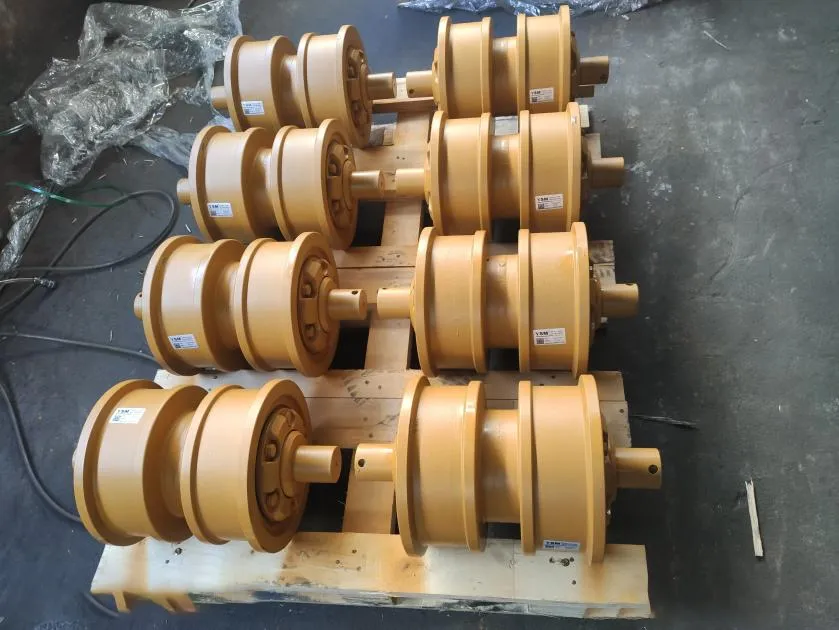
Before cleaning, record packed mud, stone, wire and fresh contact marks. After safe cleaning, inspect each lower and carrier roller for leakage, damaged flanges, flat spots and abnormal rail contact. Map roller positions from front to rear on both sides.
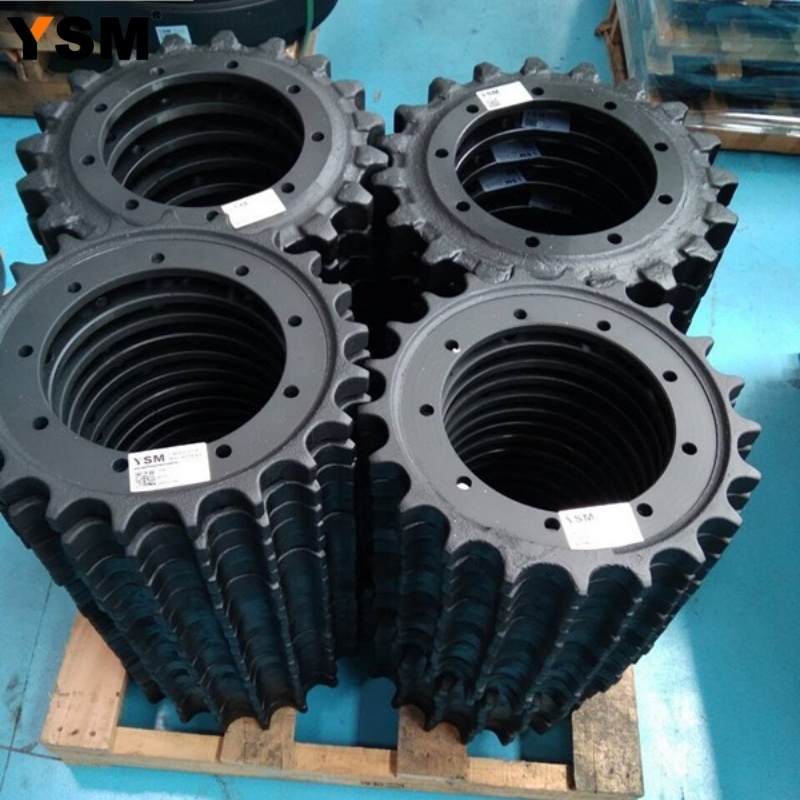
Inspect track links, pins, bushings, shoes, bolts, front idlers, guards and sprockets as one system. Hooked teeth, dry joints, loose shoes and polished flanges are inspection signals. Measure chain pitch, rail height and mating surfaces with the correct wear chart before deciding what to replace.
There is no universal track-sag value. Soil packing, machine position and measurement method change the result. Use the exact Volvo procedure for the serial range and installed track group. The grease adjuster and recoil spring contain stored energy and must not be dismantled during routine inspection.
Cab, Monitor, Electrical and Safety Checks
Inspect the seat belt, controls, emergency exit, horn, lights, wipers, mirrors, cameras and fire extinguisher where required. Clean windows and camera lenses. Confirm that travel and attachment alarms function as specified.
Volvo states that service alerts are shown on the color monitor. Record the exact message, time, machine hours, operating mode and conditions. Do not clear a recurring code without preserving the information. A warning identifies a circuit or condition to investigate; it does not always name the failed part.
Check battery terminals and accessible harness sections only after isolation procedures. Corrosion, loose grounds, rubbed insulation and water entry can create intermittent faults. Use the appropriate diagnostic information before replacing a controller or sensor.
Warning Signs and the Correct Next Check
| Observed symptom | Possible contributors | Next safe step |
|---|---|---|
| Coolant or oil temperature warning | Blocked cores, fluid condition, fan control, sensor or heavy load | Stop as instructed, record conditions and inspect the complete cooling system |
| Hydraulic response becomes slow | Attachment setting, temperature, oil level, restriction, leakage or control fault | Verify settings and visible condition before professional pressure testing |
| One track side wears faster | Slope work, turning pattern, packing, guidance or geometry | Compare operating history and complete measurements on both sides |
| Repeated monitor code | Connector, wiring, sensor, supply or component condition | Preserve the exact code and use serial-specific diagnostic information |
| Fresh oil near a cylinder | Service residue, hose fitting, rod seal, tube or nearby source | Clean safely and trace the highest fresh wet point |
| New structural paint line | Surface scratch, joint movement, crack or deformation | Stop loading the area and request qualified inspection |
EC220E Parts Identification Checklist
For a reliable parts review, provide:
- equipment brand, complete model and every suffix;
- serial number or PIN and identification-plate photograph;
- part name, readable part number and required quantity;
- overall, mounting, hose-port and damaged-area photographs as relevant;
- requested dimensions with clearly marked measuring points;
- installed attachment and any non-standard modification;
- destination country and working conditions;
- for undercarriage parts, shoe width, chain pitch, link count, roller position and master-connection details.
Compatibility and availability must be confirmed before ordering. Do not assume EC220E variants or earlier EC220 generations share the same components.
Frequently Asked Questions
Does the EC220E have ground-level service access?
Volvo describes grouped filters and side-door access intended to simplify routine checks. The safe access method still comes from the exact machine manual.
How should the EC220E cooling cores be cleaned?
Identify the debris, isolate the machine and follow the manual's airflow direction, cleaning method and pressure limits. One aggressive method is not safe for every contaminant.
Are all EC220E undercarriages identical?
No. Literature lists different variants, shoe arrangements and roller layouts. Confirm the suffix, serial number and installed components.
Can a warning code identify the failed part?
Not by itself. Preserve the exact code and operating conditions, then follow serial-specific diagnostic tests.
Technical References
- Volvo Construction Equipment: EC220E - current model page, grouped filters, cooling layout, service alerts and attachment-management context.
- Volvo Construction Equipment: EC220E Brochure - undercarriage variants, chain, roller and shoe specifications.
- Volvo Construction Equipment: EC220E Product Brochure - lower-frame and heavy-duty-undercarriage context.
- Komatsu: Do Not Overlook the Undercarriage - general inspection and operating-practice guidance.
This independent educational guide is not affiliated with or endorsed by Volvo Construction Equipment. Volvo and model names are trademarks of their respective owner. The accompanying image is an AI-generated size-class illustration, not an official product or inventory photograph. Always use the manuals and safety procedures for the exact machine.
Ask About EC220E Maintenance Parts
Our main supply focus is undercarriage parts, including track rollers, carrier rollers, front idlers, sprockets, track chains, track shoes, track assemblies and related hardware. Suitable ancillary filters, seals or other service items can be checked separately where available after exact identification.
Corporate Email: sales@china-ysm.com
WhatsApp: +86-18606961587
Send the equipment brand, complete model and suffix, serial number or PIN, part name, part number, clear photos, requested dimensions, quantity, destination country and working conditions. Compatibility and availability must be confirmed before ordering.