-
-
ApplicationOur products consist of undercarriage parts for bulldozer and excavator such as Track link,Track roller,Carrier roller,Sprocket,ldler,Track shoe,Cutting edge,End bit,Tooth Bucket,Track pin,Track bush, Engine parts,Track boit&nuts.U-bolt,Centre bolt,Wheel bolt and other related parts.

-
About UsFujian Yongsheng Machinery Parts Co., Ltd. is located in Quanzhou City, Fujian Province, which is one of the most developed regions of China Machinery Manufacturing.The company was established in 2003, after approximately 10years' effort, and now it is one of the leading construction machinery parts auto parts manufacturers in CHINA.
-
BlogSuppliers who pass Quality ManagementSystem Certification, and have onsitematerials or finished products inspected,as certified by independent third parties.
The Steel Teeth of Heavy Machinery: A Deep Dive into Bulldozer Cutting Edge 7D1158
Maximize your dozer's efficiency with the industry-standard Cutting Edge 7D1158. Learn about heat-treated boron steel, double bevel designs, and when to replace wear parts.
Jul 01,2026
On any construction, mining, or large-scale earthmoving site, the bulldozer is the ultimate trailblazer. It pushes through tons of rock, packed earth, and abrasive debris without breaking a sweat. But have you ever wondered which component bears the literal brunt of this punishing, high-friction work?
The answer lies in the ground-engaging tools bolted to the bottom of the blade. As shown in the neatly stacked rows of golden steel plates in image_c8451c.png, these are Bulldozer Cutting Edges, and this specific model happens to be one of the most legendary workhorses in the industry: Part Number 7D1158.
In this article, we will explore the science behind this critical wear part and explain why choosing a high-quality cutting edge can drastically lower your operating costs.
What is a Bulldozer Cutting Edge and Why Does It Matter?
A cutting edge is a replaceable segment of high-strength steel bolted directly onto the moldboard (the main blade) of a bulldozer. Think of it as the "teeth" or the "disposable razor blade" of the machine.
🛠️ The Core Functions of a Cutting Edge:
-
Penetration and Scraping: It provides a sharp, heavy profile capable of cutting into hard soils and shearing away roots or rocks.
-
Moldboard Protection: It acts as a sacrificial barrier. By wearing away over time, it prevents the incredibly expensive, main structural blade from taking direct damage.
-
Optimizing Fuel Efficiency: A straight, clean cutting edge minimizes rolling resistance, allowing the bulldozer to push more material while burning less fuel.
Why the 7D1158 Model is an Industry Legend
Looking closely at image_c8451c.png, you can see the precision manufacturing of the Cutting Edge 7D1158 produced by YSM. Primarily designed to fit mainstream medium-to-large bulldozers (such as the Caterpillar D7 series), the 7D1158 design is highly celebrated for two engineering features:
🔄 1. Reversible Double Bevel Flat (DBF) Design
If you observe the profile of the plates in the image, you will notice they feature a sloped bevel on both the top and bottom edges. This means when the bottom edge eventually wears down to its limit, the operator doesn't throw the part away. They simply unbolt it, flip it 180 degrees, and bolt it back on. This simple genius doubles the service life of a single part!
🕳️ 2. Precision Countersunk Bolt Holes
The aligned holes running along the center of the plates are precisely square and countersunk. This allows plow bolts to sit completely flush with the metal surface. If the bolts protruded, rocks would instantly shear the bolt heads off, causing the blade to fall off during operation.
The Metallurgy Behind Premium Cutting Edges
Not all steel plates are created equal. A cheap, low-grade cutting edge will bend, chip, or crack within days under heavy impact. The premium quality seen in image_c8451c.png relies on strict material science:
Heat-Treated Boron Steel vs. Carbon Steel
-
Heat-Treated Boron Steel (Premium): This is the gold standard for severe, rocky environments. Infused with trace amounts of boron and subjected to rigorous through-hardening (quenching and tempering), it achieves a rock-hard rating of 46–52 HRC. It offers incredible wear resistance alongside the elasticity needed to absorb heavy shocks without cracking.
-
High Carbon Steel (Standard): A cost-effective solution with a hardness around 28–32 HRC. It performs exceptionally well in softer, non-abrasive soils, sand, or agricultural applications.
Perfect Flatness and Fitment
The pristine, flat stacking seen in image_c8451c.png highlights exceptional factory shape control. If a cutting edge leaves the factory warped or twisted, mounting it forces internal structural stress into the metal, making it highly susceptible to snapping under stress.
🚨 Warning Signs: When Should You Replace Your 7D1158 Cutting Edge?
Waiting too long to replace your wear parts is a massive financial trap. Keep an eye out for these three critical indicators:
-
Wear Reaching the Bolt Holes: If the metal has eroded to the point where the wear line is eating into the bolt holes, stop operating immediately. Continuing will permanently warp or erode the moldboard base, costing thousands to repair.
-
Severe Cracking or Deep Chipping: Small micro-fissures from rock impacts can quickly expand into clean breaks, leaving a section of your blade completely exposed.
-
Surging Fuel Costs / Loss of Push Power: If the dozer feels sluggish or the tracks are spinning excessively without moving dirt, your edge has dulled completely and is acting as an anchor rather than a knife.
PREVIOUS:
Related Posts
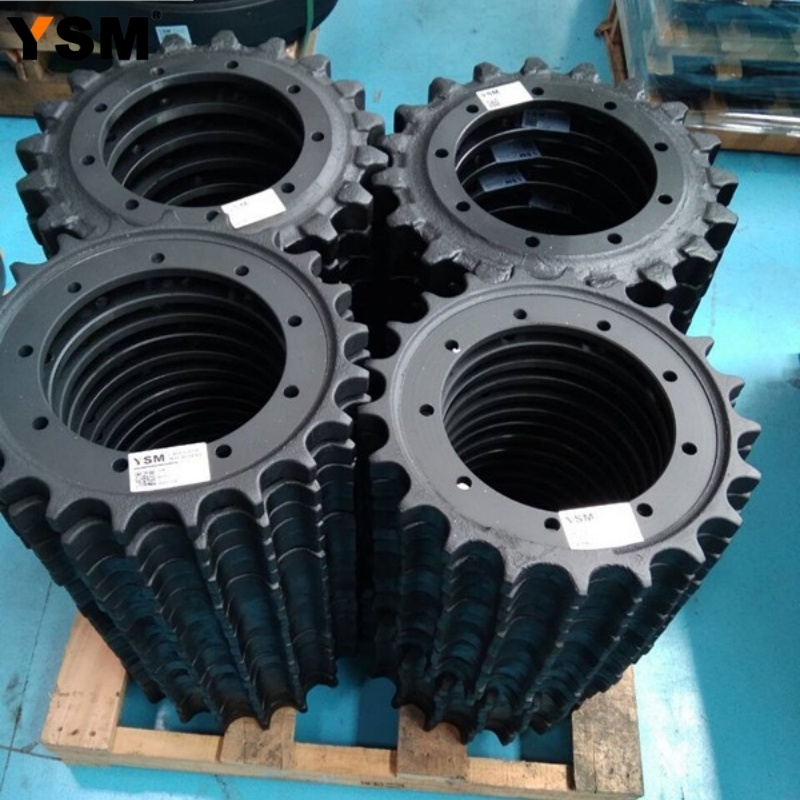
How Should The Supporting Wheels Be Selected To Avoid Stepping On Thunder?
High-quality support wheels mainly depend on the performance of its steel. The material of the roller body is generally 50Mn, 40Mn2, (MN: synonymous with the element of manganese).
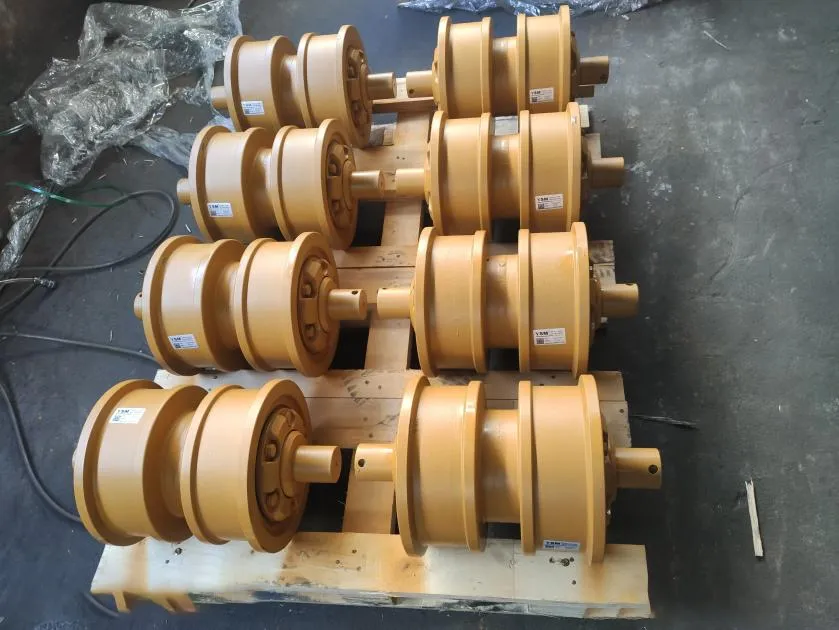
Carrier Wheels Are Suitable For Various Models At Home And Abroad
Sprocket wheels are mainly used in various crawler bulldozers, excavators, pavers, milling machines, rotary drilling rigs or other crawler machinery equipment at home and abroad.
Contact Us
E-mail :
sales@china-ysm.com
Phone/WhatsApp:
+86-18606961587
Address:
No.8 Binjiang Street, Binjiang Industrial Zone, Xiamei Town, Nan An City, Quanzhou City, Fujian Province, China
Request Quote
Andy Shi
No.8 Binjiang Street, Binjiang Industrial Zone, Xiamei Town, Nan An City, Quanzhou City, Fujian Province, China


Request Quote