-
-
ApplicationOur products consist of undercarriage parts for bulldozer and excavator such as Track link,Track roller,Carrier roller,Sprocket,ldler,Track shoe,Cutting edge,End bit,Tooth Bucket,Track pin,Track bush, Engine parts,Track boit&nuts.U-bolt,Centre bolt,Wheel bolt and other related parts.

-
About UsFujian Yongsheng Machinery Parts Co., Ltd. is located in Quanzhou City, Fujian Province, which is one of the most developed regions of China Machinery Manufacturing.The company was established in 2003, after approximately 10years' effort, and now it is one of the leading construction machinery parts auto parts manufacturers in CHINA.
-
BlogSuppliers who pass Quality ManagementSystem Certification, and have onsitematerials or finished products inspected,as certified by independent third parties.
Unsung Heroes of the Undercarriage: A Deep Dive into Track Bolts and Nuts
Unsung Heroes of the Undercarriage: A Deep Dive into Track Bolts and Nuts
Jul 01,2026
When observing heavy-duty construction equipment like excavators or bulldozers crawling across rugged terrain, it is easy to marvel at the massive tracks and powerful hydraulic arms. However, the true strength of these machines lies in the smallest components holding them together.
As highlighted in the product image from YSM, Track Bolts and Nuts (noted as "Track Bolt & Net" in some regional terminology) are the vital fasteners keeping the entire undercarriage system intact.
In this article, we will break down what these crucial fasteners do, why their engineering matters, and how investing in premium components can save your business thousands of dollars in maintenance.
What Are Track Bolts and Nuts?
The undercarriage of a tracked vehicle is a complex system of moving parts. The track chain is made up of track links, which are protected by heavy steel plates known as track shoes.
The primary job of track bolts and nuts is to clamp the track shoes securely to the track links. Because these machines operate under immense weight and extreme torque, these fasteners must provide an incredible amount of clamping force to ensure the track assembly behaves as a single, cohesive unit.
The Core Pillars of Premium Fasteners
Not all fasteners are created equal. When sourcing parts for heavy machinery, relying on bargain-bin components often leads to catastrophic failure. Premium brands like YSM build their engineering around three strict pillars:
1. High Accuracy
In the world of heavy machinery, a fraction of a millimeter can mean the difference between seamless operation and a broken track. High accuracy means the bolts and nuts are manufactured to exact dimensional tolerances.
-
Perfect Thread Engagement: Precise threading ensures that the nut locks onto the bolt flawlessly, distributing the tension evenly across the threads.
-
Perfect Fitment: Accurately shaped bolt heads seat perfectly into the track link counterbores, preventing the bolt from spinning or loosening under vibrational stress.
2. High Quality
Track fasteners face an incredibly hostile environment. They are subjected to immense pulling forces, heavy impacts from rocks, and constant exposure to mud, water, and abrasive debris. High quality material sourcing and manufacturing are non-negotiable:
-
Advanced Alloy Steel: Premium bolts are typically forged from high-grade alloy steel (such as Grade 10.9 or 12.9).
-
Rigorous Heat Treatment: Through precise quenching and tempering processes, these fasteners achieve a perfect balance of deep hardness (to resist wear) and core ductility (to absorb shocks without snapping).
3. Long Service Life
Ultimately, high accuracy and high quality yield one major economic benefit: a long service life. In the construction, mining, and earthmoving industries, the most expensive part of a repair is rarely the price of the spare part—it is the cost of downtime.
Choosing durable fasteners ensures that your machinery stays in the field earning revenue longer, reducing the frequency of track teardowns and labor-intensive maintenance cycles.
The Hidden Risks of Substandard Fasteners
Attempting to cut costs on undercarriage fasteners is a high-risk gamble. Cheap or low-grade bolts often suffer from the following issues:
-
Bolt Shearing: Brittle metal can snap instantly under sudden shock loads, causing track shoes to detach mid-operation.
-
Thread Elongation: Under continuous tension, low-quality steel stretches. Once a bolt stretches, clamping force drops, leading to loose track shoes that rapidly damage the track links.
-
Accelerated Undercarriage Wear: If a single shoe becomes loose, it alters the alignment of the entire track group, accelerating wear on expensive components like sprockets, idlers, and rollers.
Best Practices for Installing and Maintaining Track Bolts
To maximize the long service life promised by high-quality components, follow these essential maintenance tips:
-
Always Use a Torque Wrench: Never estimate tightness with an impact wrench. Track bolts require specific torque values followed by a specific "turn-of-the-nut" angle to achieve the proper structural stretch.
-
Clean Connecting Surfaces: Before installing new bolts, ensure the mating surfaces between the track shoe and the track link are completely free of rust, dirt, and paint scale.
-
Routine Visual Inspections: During daily walkarounds, check for missing bolts or signs of shiny metal, which indicate a loose, shifting track shoe.
Related Posts
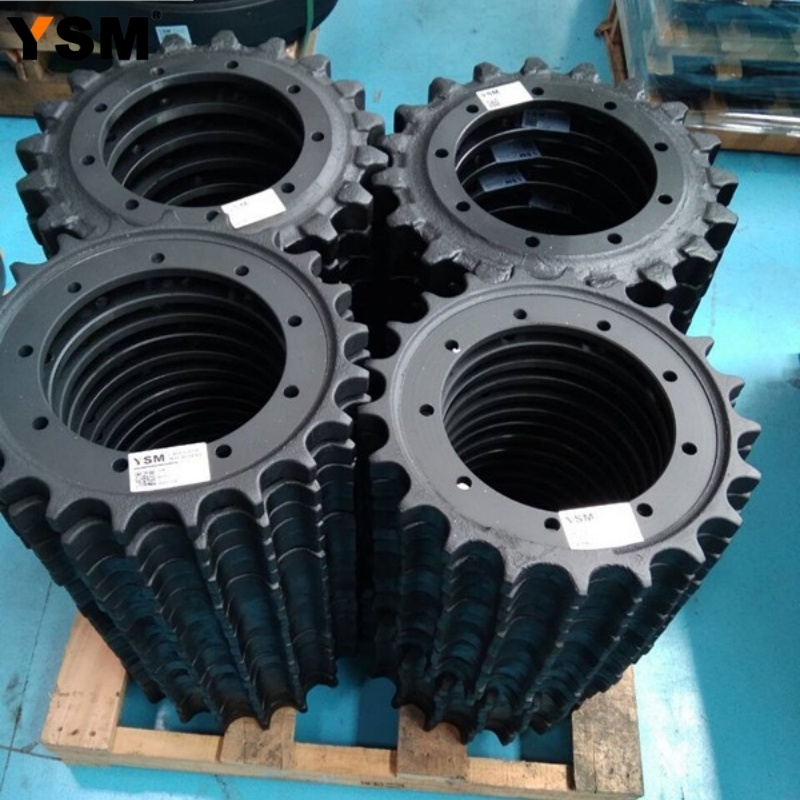
How Should The Supporting Wheels Be Selected To Avoid Stepping On Thunder?
High-quality support wheels mainly depend on the performance of its steel. The material of the roller body is generally 50Mn, 40Mn2, (MN: synonymous with the element of manganese).
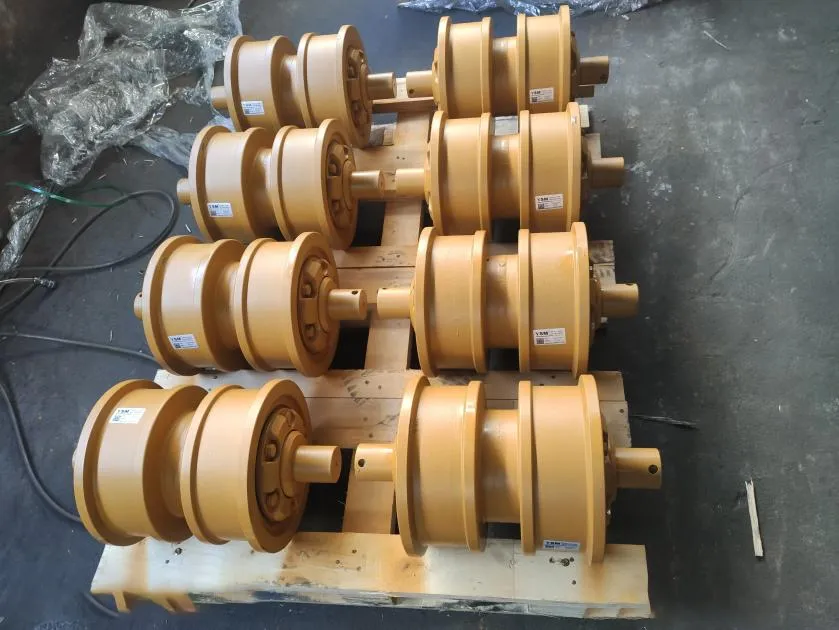
Carrier Wheels Are Suitable For Various Models At Home And Abroad
Sprocket wheels are mainly used in various crawler bulldozers, excavators, pavers, milling machines, rotary drilling rigs or other crawler machinery equipment at home and abroad.
Contact Us
E-mail :
sales@china-ysm.com
Phone/WhatsApp:
+86-18606961587
Address:
No.8 Binjiang Street, Binjiang Industrial Zone, Xiamei Town, Nan An City, Quanzhou City, Fujian Province, China
Request Quote
Andy Shi
No.8 Binjiang Street, Binjiang Industrial Zone, Xiamei Town, Nan An City, Quanzhou City, Fujian Province, China


Request Quote