-
-
ApplicationOur products consist of undercarriage parts for bulldozer and excavator such as Track link,Track roller,Carrier roller,Sprocket,ldler,Track shoe,Cutting edge,End bit,Tooth Bucket,Track pin,Track bush, Engine parts,Track boit&nuts.U-bolt,Centre bolt,Wheel bolt and other related parts.

-
About UsFujian Yongsheng Machinery Parts Co., Ltd. is located in Quanzhou City, Fujian Province, which is one of the most developed regions of China Machinery Manufacturing.The company was established in 2003, after approximately 10years' effort, and now it is one of the leading construction machinery parts auto parts manufacturers in CHINA.
-
BlogSuppliers who pass Quality ManagementSystem Certification, and have onsitematerials or finished products inspected,as certified by independent third parties.
Heavy Equipment Idler Yoke Guide: Track Guide Frame Diagnosis & Replacement Standards
Professional guide on crawler excavator and bulldozer track guide frames (idler yokes). Learn about wear patterns, alignment diagnosis, forging standards, and replacement criteria.
Jul 09,2026
Heavy Equipment Idler Yoke Guide: Track Guide Frame Diagnosis & Replacement Standards
In crawler heavy equipment, structural alignment dictates the wear velocity of the entire chassis. Often overlooked compared to track rollers or chains, the heavy equipment idler yoke assembly (internally known in heavy industries as the track guide frame or "Qianqiu" frame) plays a pivotal role. This critical structure holds the front idler wheel and links directly into the high-tension track recoil spring mechanism. When a guide frame warps or its slider blocks degrade, it forces the entire track loop out of parallel alignment, rapidly destroying links, sprockets, and rollers. This specialized guide covers engineering structures, wear indicators, and procurement frameworks for fleet asset optimization.
The Engineering Role of the Track Guide Frame & Idler Yoke
The idler yoke assembly serves a dual purpose within the crawler undercarriage framework. First, it acts as a dynamic slider, moving back and forth within the track roller frame channels to manage real-time track tension via the grease adjuster cylinder. Second, it serves as a primary shock absorber. When a bulldozer strikes a massive boulder or an excavator travels over uneven quarry floors, the severe front impact force is channeled through the idler wheel, into the yoke frame, and dissipated safely by the large recoil spring.
Because it acts as a structural bridge for high-tonnage kinetic impacts, any material weakness, weld compromise, or wear allowance bypass will directly translate into catastrophic track derailments and unplanned machine downtime.
1. Metallurgy and Manufacturing: Forged vs. Cast Yokes
When procurement managers look to source heavy duty components or buy undercarriage parts wholesale factory options, understanding the metallurgical layout of the idler yoke frame is essential. Heavy-duty construction demands distinct manufacturing tiers:
Cast Carbon Steel Idler Yokes
Process: Molten carbon structural steel is poured into precision matrix molds. This technique allows for complex unified geometries and integrated reinforcement ribs.
- ✓ Economical structural investment tier
- ✓ Excellent for standard excavators operating in civil earthmoving and sand clay soils
- ✗ Susceptible to micro-cracking under heavy, repetitive shock impacts
Forged Alloy Steel Idler Yoke Assemblies
Process: High-grade structural alloys are heated and subjected to extreme hydraulic forge compaction, completely realigning the steel grain structure along high-stress coordinates.
- ✓ Exceptional yield strength and superior fracture toughness
- ✓ Required for heavy mining bulldozers undergoing continuous rock pioneering
- ✗ Higher initial capital tier with specialized fabrication cycles
| Undercarriage Component | Primary Material Specification | Hardness Boundaries (HRC) | Primary Manufacturing Method | Stress Application Zone |
|---|---|---|---|---|
| Yoke Main Frame | Q355B / 40Mn2 Structural Alloy | 28 - 35 HRC (Core Toughness) | Precision Casting / Forging Heavy Duty | Shock transfer & recoil spring bracing |
| Yoke Slider Blocks | High-Manganese Wear Steel | 45 - 52 HRC (Surface Hardened) | Induction Hardening Steel Plate | Friction contact with roller frame rails |
| Idler Center Shaft | 50Mn / 40Cr Alloy Steel | 52 - 58 HRC (Case Deep Hardened) | Forging + Quenching Processes | Rotational load distribution |
2. Wear Patterns and Structural Defect Diagnosis
Executing a reliable idler yoke alignment diagnosis requires a clear understanding of the environmental forces acting on the excavator track guide frame. Operators should watch for three distinct structural wear signatures:
Slider Plate Thinning & Guide Clearance Play
As the bulldozer travels, the slider blocks welded to the sides of the yoke slide within the track roller frame guide channels. Abrasive rock dust and mud enter these unlubricated tracks, acting as sandpaper. Once the side clearances wear past factory tolerances, the front idler begins to wobble horizontally, inducing severe tracking misalignment.
Structural Twist and Warp Deformation
High-speed side impacts—common when a bulldozer uses its blade corner to pop out deep tree roots or heavy rocks—create an asymmetric bending moment. This force twists the arms of the idler yoke. A warped guide frame holds the idler wheel at a permanent skew, causing immediate, severe wear to the inner track link rails.
Technical Troubleshooting: Checking Guide Frame Alignment
If you notice the front idler face rubbing heavily against one side of the track frame rock guards, do not simply replace the idler. Measure the distance from the rear spring base to both front yoke ears. An un-parallel variance exceeding 2mm indicates a structurally twisted guide frame that must be straightened or replaced immediately.
3. Procurement Strategy: Repair vs. Full Replacement Criteria
Asset managers must utilize strict undercarriage alignment troubleshooting logs to determine whether to execute a field weld rebuild or pursue a complete aftermarket component replacement.
| Diagnosed Structural Condition | Repair Operational Feasibility | Associated Investment Tier | Strategic Field Action |
|---|---|---|---|
| Worn Side Slider Plates Only (Frame structure is true) | Weld removal and replacement of manganese slider blocks | Minimal | Highly recommended; restores tight tracking tolerances quickly. |
| Minor Surface Fracture Cracks on Weld Seams | V-groove grinding followed by professional structural welding | Moderate | Permissible under certified structural welding protocols. |
| Asymmetric Arm Twist / Structural Warping | Hydraulic straightening (Low reliability) | High | Replace completely. Correcting structural memory in high-load steel is unpredictable. |
| Elongated Pin Eye Holes (From severe shaft loose play) | Boring out and sleeving oversized holes | Moderate | Feasible if precision machining facilities are available. |
Multi-Brand Drop-In Compatibility Framework
Premium aftermarket track guide frame factory designs focus on offering structural dimensional matches for major global crawler machine chassis types:
- Caterpillar Series (e.g., CAT 320, D6R, D6T): Built to seamlessly interface with factory recoil spring housings. Features heavy-duty reinforced slider ears to handle high-tonnage track tensioning.
- Komatsu Series (e.g., PC200, PC300, D65): Features precise mounting geometry for guide plates, minimizing friction against track frame channels.
- Shantui Bulldozer Series (e.g., SD16, SD22, SD32): Engineered specifically for high-stress pushing operations. These shantui bulldozer undercarriage components utilize heavy-forged structural loops to withstand severe impact forces.
Comprehensive Undercarriage Inspection Checklist
Incorporate these regular checkpoints to protect your heavy equipment idler yoke assembly and maximize its working lifecycle:
- Every 50 Operating Hours (Weekly): Complete a visual check of the track roller frame slider paths. Clear away packed clay or debris that could lock the slider mechanism.
- Every 250 Operating Hours (Monthly): Inspect the structural weld joints linking the yoke arms to the rear cross tube. Look for signs of paint flaking or hairline cracks, which indicate structural fatigue.
- Every 1000 Operating Hours (Bi-Annually): Measure the total side clearance play between the guide pads and the track frame rails. Adjust or weld new wear pads if the clearance exceeds factory limits.
Conclusion: Strategic Structural Management
Maximizing crawler tracking durability requires managing the tracking guide assemblies as closely as you manage wear on track shoes or bottom rollers. Sourcing high-strength, precision-machined idler yokes from an ISO 9001:2015 certified aftermarket partner provides a dependable solution. This ensures your machine frames stay perfectly aligned, maximizing track component life and lowering your long-term hourly operating costs.
Consult Our Undercarriage Sourcing Engineers
For custom dimensional cross-referencing, heavy mining component quotes, or wholesale container procurement inquiries:
Corporate Email: sales@china-ysm.com
Technical Support / WhatsApp Line: +86 18016757808
We supply precision-engineered track components built to lower your fleet's long-term cost-per-hour.
PREVIOUS:
Related Posts
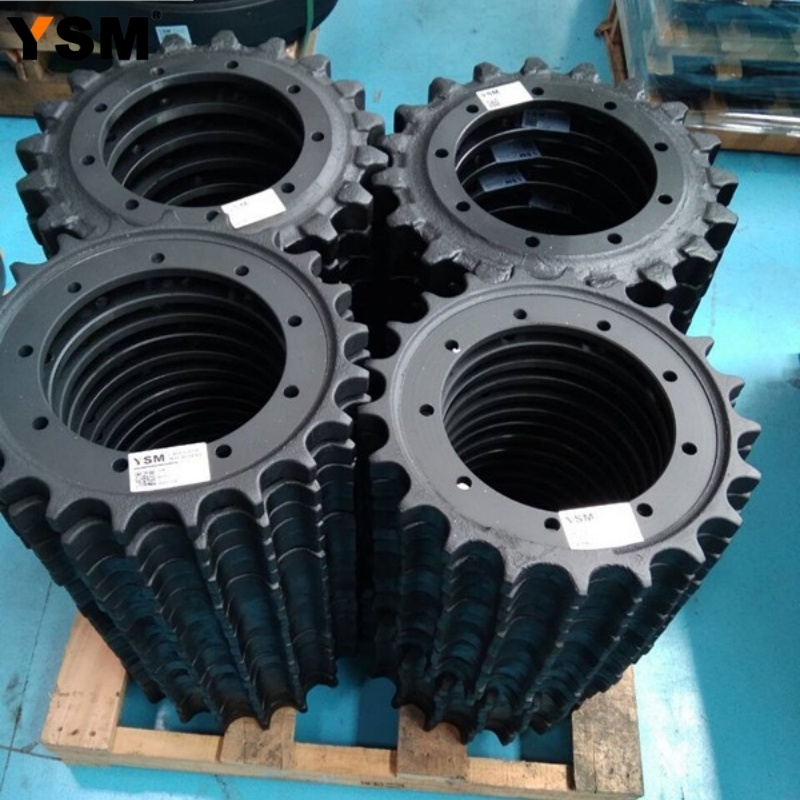
How Should The Supporting Wheels Be Selected To Avoid Stepping On Thunder?
High-quality support wheels mainly depend on the performance of its steel. The material of the roller body is generally 50Mn, 40Mn2, (MN: synonymous with the element of manganese).
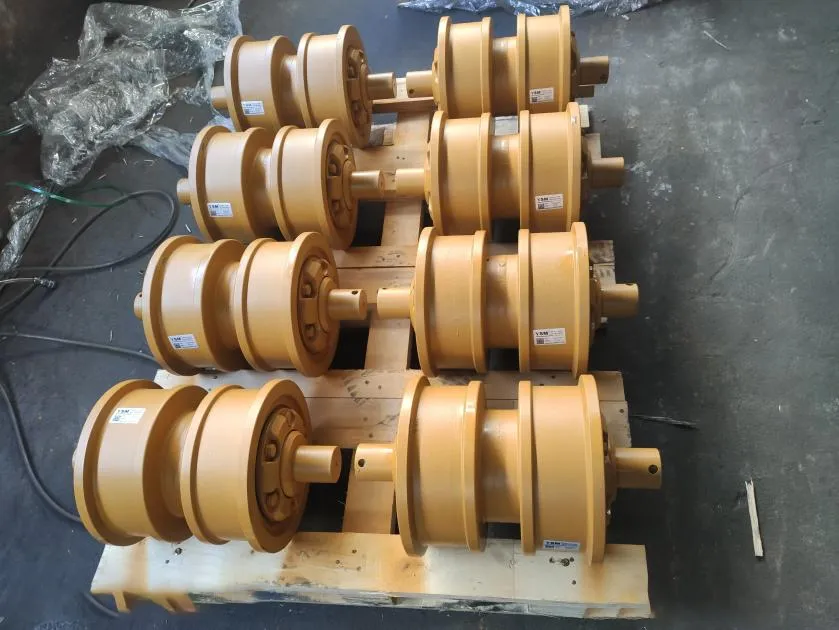
Carrier Wheels Are Suitable For Various Models At Home And Abroad
Sprocket wheels are mainly used in various crawler bulldozers, excavators, pavers, milling machines, rotary drilling rigs or other crawler machinery equipment at home and abroad.
Contact Us
E-mail :
sales@china-ysm.com
Phone/WhatsApp:
+86-18606961587
Address:
No.8 Binjiang Street, Binjiang Industrial Zone, Xiamei Town, Nan An City, Quanzhou City, Fujian Province, China
Request Quote
Andy Shi
No.8 Binjiang Street, Binjiang Industrial Zone, Xiamei Town, Nan An City, Quanzhou City, Fujian Province, China


Request Quote