-
-
ApplicationOur products consist of undercarriage parts for bulldozer and excavator such as Track link,Track roller,Carrier roller,Sprocket,ldler,Track shoe,Cutting edge,End bit,Tooth Bucket,Track pin,Track bush, Engine parts,Track boit&nuts.U-bolt,Centre bolt,Wheel bolt and other related parts.

-
About UsFujian Yongsheng Machinery Parts Co., Ltd. is located in Quanzhou City, Fujian Province, which is one of the most developed regions of China Machinery Manufacturing.The company was established in 2003, after approximately 10years' effort, and now it is one of the leading construction machinery parts auto parts manufacturers in CHINA.
-
BlogSuppliers who pass Quality ManagementSystem Certification, and have onsitematerials or finished products inspected,as certified by independent third parties.
Bulldozer Track Group Wear Guide: Diagnosis, SALT Tech & Replacement Criteria
Expert guide on bulldozer track group wear analysis. Learn about track link assembly degradation, SALT technology, pin & bushing turning criteria, and replacement indicators.
Jul 09,2026
Bulldozer Track Group Wear Guide: Diagnosis, SALT Tech & Replacement Criteria
A bulldozer’s track group is the absolute foundation of its tractive power. Unlike excavators that primarily remain stationary while digging, a bulldozer is constantly in motion, transferring massive torque into ground pushing force. This continuous directional shifting under high loads makes the track link assembly highly susceptible to friction and impact. Managing your undercarriage requires clear insight into track wear mechanics. This comprehensive bulldozer track group wear guide breaks down essential wear indicators, metallurgical criteria, and replacement strategies to secure your uptime.
Anatomy of a Bulldozer Track Link Assembly
A complete track group (or track chain assembly) consists of left and right track links, track pins, bushings, polyurethane sealing groups, and track shoes. In high-horsepower crawler dozers, these parts work as an interdependent system. Minor seal failures quickly lead to structural track destruction, making proactive diagnosis essential for cost optimization.

1. Primary Wear Patterns and Diagnostic Indicators
Tracking tractor track group failure symptoms early helps save adjacent components from premature failure. Fleet mechanics should monitor three main areas during inspections:
Crawler Undercarriage Link Rail Wear
The link rail is the continuous steel track that rides directly against the bottom roller treads. Constant friction gradually reduces the overall height of the link. When link rail wear exceeds service limits, the roller flanges begin striking the pin bosses, creating severe clattering noises and causing irreversible structural damage to the chain framework.
Internal vs. External Bushing Wear
Bushings experience wear on both their inner and outer diameters. External wear is caused by the physical scrubbing action of the drive sprocket teeth. Internal wear, occurring between the inner pin and the outer bushing wall, thins out the metal and increases the distance between individual pins. This elongation is known as track stretch.
| Undercarriage Component | Primary Wear Pattern | Diagnostic Inspection Method | Replacement Indicator Threshold |
|---|---|---|---|
| Track Link Rails | Height Reduction / Rail Mushrooming | Measure rail depth with a depth gauge | 30% to 35% Profile Loss |
| Pins & Bushings | Internal Pitch Growth (Track Stretch) | Execute 4-section link pitch measurement | >4% Elongation over factory spec |
| Bushing Outer Wall | Sprocket Scuffing / Flat Spots | Caliper measurement of external diameter | Forward/Reverse walls worn to limits |
| Track Shoes / Pads | Grouser Bar Height Reduction | Measure grouser height from pad base | 70% Height loss (loss of traction) |
2. Advanced Sourcing Tech: SALT vs. Grease Track Groups
Selecting the right lubrication technology is critical when planning a bulldozer track link assembly replacement. Heavy-duty applications generally rely on two distinct track designs:
Sealed and Lubricated Tracks (SALT)
SALT chains represent the gold standard for bulldozer operations. The internal pin contains a synthetic oil reservoir that continuously coats the internal pin-and-bushing contact zone. Specialized dual-cone mirror seals keep the oil locked inside while completely blocking sand, grit, and moisture.
- ✓ Virtually eliminates internal pin and bushing friction
- ✓ Drastically delays track link pitch elongation
- ✓ Lowers total operating cost-per-hour in high-abrasion soil
- ✗ Requires a higher initial procurement investment
Greased / Sealed Track Groups
Greased chains utilize heavy-duty grease packed during initial assembly, backed by standard polyurethane lip seals. While effective for light-duty applications, they lack an active oil reservoir.
- ✓ Lower initial procurement tier
- ✓ Excellent for intermittent operations or light grading
- ✗ Accelerated internal wear under continuous, high-speed travel
- ✗ High risk of "dry joints" if a single seal fails
3. Undercarriage Hardness and Metallurgical Standards
Heavy-duty earthmoving requires premium steel alloys capable of surviving structural stress. Premium aftermarket chains must match precise undercarriage hardness requirements HRC to ensure long-term durability.
| Component Group | Material Composition | Surface Hardness Boundary | Induction Hardening Depth |
|---|---|---|---|
| Track Links | 35MnB Boron Steel (Forged) | 50 - 55 HRC | 8mm - 12mm |
| Track Pins | 20CrMnTi Alloy (Carburized) | 56 - 62 HRC | 3mm - 5mm |
| Track Bushings | 20Mn / 40Cr Steel | 55 - 60 HRC | 4mm - 6mm |
| Heavy Duty Track Shoes | 25MnB Boron Steel | 48 - 52 HRC | Through-Hardened |
4. Cost Management: Repair vs. Full Replacement Criteria
When dealing with worn track chains, fleet managers must evaluate whether to rebuild the existing chain using a track pin press repair vs replacement framework or source a completely new track group.
Understanding Pin and Bushing Turning Criteria
If your track link pitch elongation measurement indicates the chain is approaching its service limit, but the link rails still have significant height remaining, you can perform a pin and bushing turn. A hydraulic track press removes the pins and bushings, rotates them 180 degrees to expose the unworn sides, and presses them back into the links.
This procedure eliminates track stretch and restores internal clearances for a moderate labor investment, delaying a full replacement and maximizing the lifecycle of your existing links.
| Undercarriage Wear Scenario | Repair Strategy | Investment Tier | Procurement Recommendation |
|---|---|---|---|
| Internal Pitch Elongation Only (Links >60% remaining) | Pin & Bushing Turning | Moderate | Highly cost-effective; extends chain life by up to 50%. |
| Dry Joints / Heavy Under-Seal Leak | Individual Section Pressing | Minimal | Isolate and replace damaged pins/seals immediately. |
| Link Rails and Bushings Both Worn Out | Not Recommended | Extreme | Replace with a new track group assembly; rebuilding is not viable. |
| Bent or Cracked Track Shoe Plates | Individual Pad Replacement | Minimal | Replace individual damaged pads to prevent track frame binding. |
Cross-Brand Compatibility Framework
Premium aftermarket track groups are engineered to serve as direct drop-in replacements for major global heavy equipment lines, matching exact pitch and bolt-hole alignments:
- CAT D6 Series (e.g., D6R, D6T, D6N): Utilizes a 203mm track pitch standard. Requires high-integrity SALT link configurations to handle differential steering forces.
- Komatsu D65 Series: Matches 203mm pitch configurations. Demands rigid Komatsu D65 track shoe wear limits tracking on link rail height clearances.
- Shantui SD16 / SD22 / SD32: Ranges from 203mm to 228mm pitches. Requires deep-induction forged link rails to withstand heavy pioneering and earth-pushing environments.
Pro-Maintenance Tip: Tracking Track Tension
Always check track tension in your actual working environment. Mud and debris packing inside the track frame tightens the chain automatically. A track chain adjusted too tight on a clean concrete floor will experience extreme tension in heavy mud, accelerating pin, bushing, and sprocket wear by up to 50%.
Conclusion: Lower Your Cost-Per-Hour with Certified Aftermarket Tracks
Optimizing undercarriage lifespans depends on choosing the correct material specifications for your specific working environments. Sourcing from an ISO 9001:2015 certified aftermarket factory allows fleet operations to secure OEM-grade boron steel metallurgy and dual-cone mirror sealing systems at a sustainable investment tier, maximizing machine uptime and profitability.
Consult Our Technical Track Engineers
For custom track group cross-referencing, custom track shoe width selection, or wholesale container quotations:
Corporate Email: sales@china-ysm.com
WhatsApp / Technical Line: +86 18016757808
We provide heavy-duty track link solutions designed to minimize your fleet's long-term cost-per-hour.
Related Posts
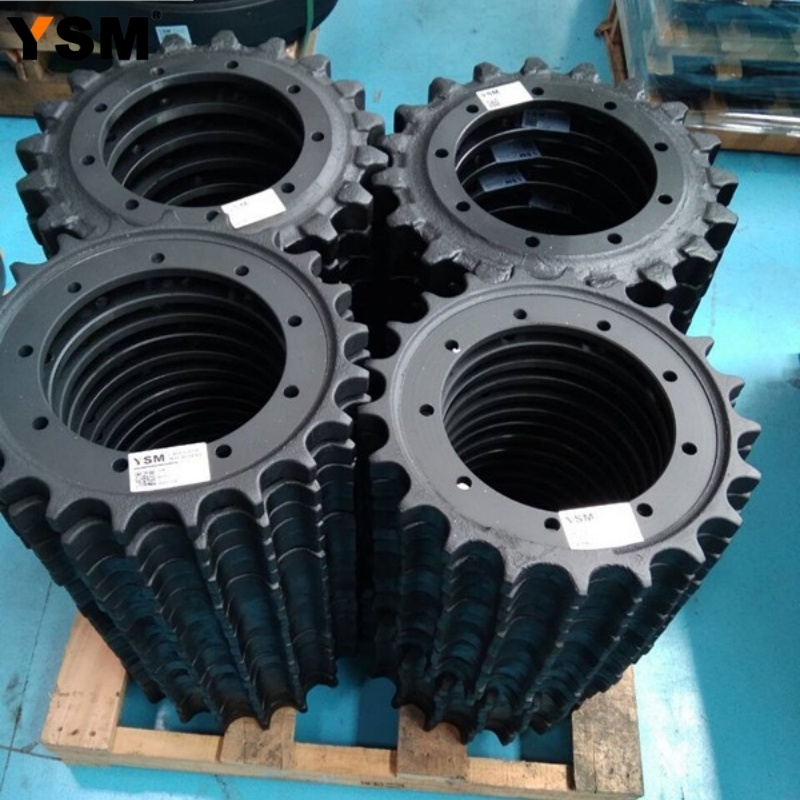
How Should The Supporting Wheels Be Selected To Avoid Stepping On Thunder?
High-quality support wheels mainly depend on the performance of its steel. The material of the roller body is generally 50Mn, 40Mn2, (MN: synonymous with the element of manganese).
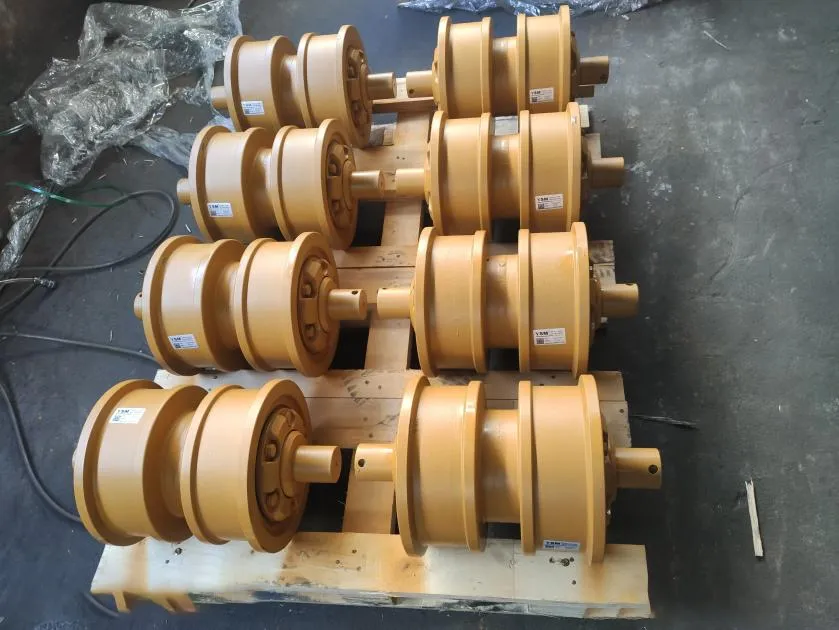
Carrier Wheels Are Suitable For Various Models At Home And Abroad
Sprocket wheels are mainly used in various crawler bulldozers, excavators, pavers, milling machines, rotary drilling rigs or other crawler machinery equipment at home and abroad.
Contact Us
E-mail :
sales@china-ysm.com
Phone/WhatsApp:
+86-18606961587
Address:
No.8 Binjiang Street, Binjiang Industrial Zone, Xiamei Town, Nan An City, Quanzhou City, Fujian Province, China
Request Quote
Andy Shi
No.8 Binjiang Street, Binjiang Industrial Zone, Xiamei Town, Nan An City, Quanzhou City, Fujian Province, China


Request Quote