
-
-
ApplicationOur products consist of undercarriage parts for bulldozer and excavator such as Track link,Track roller,Carrier roller,Sprocket,ldler,Track shoe,Cutting edge,End bit,Tooth Bucket,Track pin,Track bush, Engine parts,Track boit&nuts.U-bolt,Centre bolt,Wheel bolt and other related parts.

-
About UsFujian Yongsheng Machinery Parts Co., Ltd. is located in Quanzhou City, Fujian Province, which is one of the most developed regions of China Machinery Manufacturing.The company was established in 2003, after approximately 10years' effort, and now it is one of the leading construction machinery parts auto parts manufacturers in CHINA.
-
BlogSuppliers who pass Quality ManagementSystem Certification, and have onsitematerials or finished products inspected,as certified by independent third parties.
Excavator Bucket Pin, Bushing & Tooth Pin Guide: Wear Analysis & Material Standards
Technical guide on excavator bucket pin bushings and bucket teeth pins. Learn about wear limits, pin hole ovality, carburizing heat treatment, and replacement criteria.
Jul 10,2026
Excavator Bucket Pin, Bushing & Tooth Pin Guide: Wear Analysis & Material Standards
In heavy earthmoving operations, small high-precision wear components dictate overall structural availability. While massive booms and heavy-duty bucket shells capture the most visual attention, the mechanical integrity of an excavator depends entirely on the hidden pivot joints: the bucket connection pins and bushings, alongside the wear resistant bucket teeth lock pins. These components absorb immense rotational friction and heavy impact forces under abrasive soil environments. This comprehensive excavator bucket linkage guide outlines essential wear indicators, metallurgical criteria, and strategic replacement factors to help operators achieve effective undercarriage and wear parts life extension.
The Structural Roles of Bucket Connection Groups vs. Tooth Pins
Heavy machinery utilize two distinct classes of pins to manage heavy workloads, each requiring unique engineering tolerances and material characteristics:
- Bucket Pins and Bushings: Form the primary pivot point connecting the excavator stick and H-link directly to the bucket ears. They handle constant low-speed rotation under maximum hydraulic load, demanding deep lubrication tracking and minimal clearance tolerances.
- Bucket Teeth Pins (Lock Pins/Retainers): Positioned on the cutting edge to secure individual bucket teeth onto their adapters. They do not rotate; instead, they face extreme shear forces and continuous high-frequency vibrations during rock fracturing.
Neglecting loose play or seal structural failures in these small areas quickly leads to expensive damage across main cylinder lines, stick ears, and adapter bases.

1. Metallurgy and Hardness Requirements: Forged vs. Carburized
When selecting parts from an aftermarket bucket pins and bushings factory or planning to buy bucket tooth pins wholesale, understanding heat treatment processes is essential. Components must meet strict crawler excavator pin hardness requirements HRC to balance surface durability with core fracture resistance.
Carburized Induction Hardening
This process diffuses carbon into the surface layer of low-carbon alloy steels (like 20CrMnTi). The result is an ultra-hard exterior shell that resists abrasive scratching, backed by a resilient, shock-absorbing internal core.
Through-Hardening (Quenching & Tempering)
Utilized for medium-carbon alloy steels (like 40Cr or 42CrMo) to achieve uniform strength throughout the entire cross-section. This is highly suitable for main bucket pins handling severe bending and shear stress.
| Component Group | Primary Material Grade | Surface Hardness Range | Core Toughness Metric | Primary Engineering Target |
|---|---|---|---|---|
| Main Bucket Pins | 40Cr / 42CrMo Steel (Forged) | 52 - 58 HRC | High Elastic Limit | Resist bending & high shear stress |
| Bucket Bushings | 20CrMnTi Alloy (Carburized) | 58 - 63 HRC | Shock-Absorbing Core | Resist metal-to-metal friction scraping |
| Bucket Teeth Pins | 40Cr / Spring Steel Alloys | 48 - 54 HRC | High Fatigue Strength | Resist high vibration & displacement |
| Tooth Pin Retainers | Heavy Duty Synthetic Rubber / Steel Ring | N/A (Elastic Elastomer) | High Thermal Resistance | Absorb shock and lock pin in place |
2. Common Wear Patterns and Failure Diagnosis
Tracking heavy duty bucket bushing wear signs early prevents localized play from escalating into structural framework distortion.
Pin Hole Elongation and Bushing Crack Failures
When grease depletion allows abrasive dirt to infiltrate the main pivot joint, dry friction cuts deep grooves into the inner bushing wall. Once the bushing wall wears down to critical limits, it fractures under peak hydraulic loads. The exposed pin then grinds directly into the soft steel of the bucket ear, warping the round hole into an oval shape.
Bucket Tooth Pin Retainers Failure Troubleshooting
During heavy digging, teeth pins handle continuous vibration. Standard failure signatures include:
- Vertical Lock Failure: Top-pinned mechanisms can suffer from pin walking if fine rock dust packs tightly into the adapter pocket, backing the pin out.
- Horizontal Lock Shear: Side-pinned designs face heavy side abrasions. If the internal rubber core thins due to thermal decay, the steel ring collapses, allowing the lock pin to slide out sideways and causing tooth loss.
Technical Troubleshooting: Checking Pin Hole Clearance Play
Rest the bucket firmly on the ground and attempt to wiggle the arm connection sideways using a pry bar. A total clearance gap exceeding 2.5mm between the main pin and bushing indicates that the wear limits have been breached, requiring immediate component replacement to protect the bucket link assembly.
3. Strategic Sourcing: Repair vs. Full Replacement Criteria
Fleet asset managers must use clear excavator bucket pin replacement criteria to determine the most cost-effective maintenance path.
| Diagnosed Wear Condition | Repair Strategy Option | Associated Investment Tier | Strategic Field Action |
|---|---|---|---|
| Internal Bushing Wear Only (Pin remains smooth and true) | Press out worn bushings and insert new factory replacements | Minimal | Highly cost-effective; protects the pin asset from scoring. |
| Pin Scoring / Deep Surface Grooves (>1.5mm groove depth) | Not recommended to weld-fill or turn down on a lathe | Moderate | Replace pin completely; surface hardness cannot be restored by welding. |
| Bucket Ear Ovality Distortion (From un-bush grinding) | Line-bore the bucket ears, apply weld overlay, and machine back to round | High | Feasible only if the structural ear steel thickness remains sound. |
| Worn or Stretched Tooth Lock Pins | Discard and use a new pin-and-washer replacement set | Minimal | Never reuse old tooth pins; worn retainers lead to tooth loss. |
Cost Management Framework: While executing field line-boring can salvage an oval bucket ear, the specialized tooling labor and downtime costs often exceed the investment level of a new, high-grade replacement pin and bushing set. Sourcing precision-hardened parts from an aftermarket supplier ensures original factory tolerances are restored efficiently.
Multi-Brand Drop-In Compatibility Framework
Premium replacement pins, bushings, and locking devices are engineered to provide an exact dimensional match for major global earthmoving equipment platforms:
- Caterpillar Series (e.g., CAT 320, 323, 336): Designed to match exact factory pin diameters and specialized bucket lock mechanisms. Main link pins are carburized to handle high breakout forces.
- Komatsu Series (e.g., PC200, PC300): Precision-machined to ensure proper grease-groove alignment, facilitating smooth grease distribution through internal pathways.
- Bulldozer Stabilizer Links: For specialized applications, heavy-duty bulldozer bucket pin bushing maintenance tracks cross-compatibility parameters on equalizer bar pivots and blade tilt linkages to maintain proper blade leveling alignment.
Chassis Pin & Bushing Longevity Checklist
1. Strict Greasing Intervals: Inject heavy-duty molybdenum disulfide grease every 8 to 10 operating hours. In underwater or muddy conditions, grease the pivot joints every 4 hours to purge out trapped grit.
2. Seal Lip Inspections: Check the polyurethane dust seals at every grease interval. Damaged seals should be replaced immediately to prevent contaminants from reaching the inner bushing walls.
3. Retainer Bolt Verification: Regularly check the security of main pin keeper bolts. If a keeper bolt shears, the pin can shift out of center, causing asymmetrical structural loading and ear distortion.
Conclusion: Small Components, Significant Impact
Maximizing heavy equipment availability requires managing small connection components with the same diligence applied to major track frames or hydraulic pumps. Monitoring pin clearances, maintaining consistent greasing schedules, and replacing worn tooth lock pins proactively safeguards your attachment structures. Sourcing high-hardness, precision-machined joints from an ISO 9001:2015 certified aftermarket partner helps lower your long-term cost-per-hour while ensuring reliable machine performance across every challenging job site.
Consult Our Wear Parts Sourcing Engineers
For custom dimensional cross-referencing, heavy mining application specifications, or volume wholesale price quotations:
Corporate Email: sales@china-ysm.com
Technical Support / WhatsApp Line: +86-18606961587
We supply precision-machined heavy equipment wear parts designed to lower your long-term operating costs.
PREVIOUS:
Related Posts
How Should The Supporting Wheels Be Selected To Avoid Stepping On Thunder?
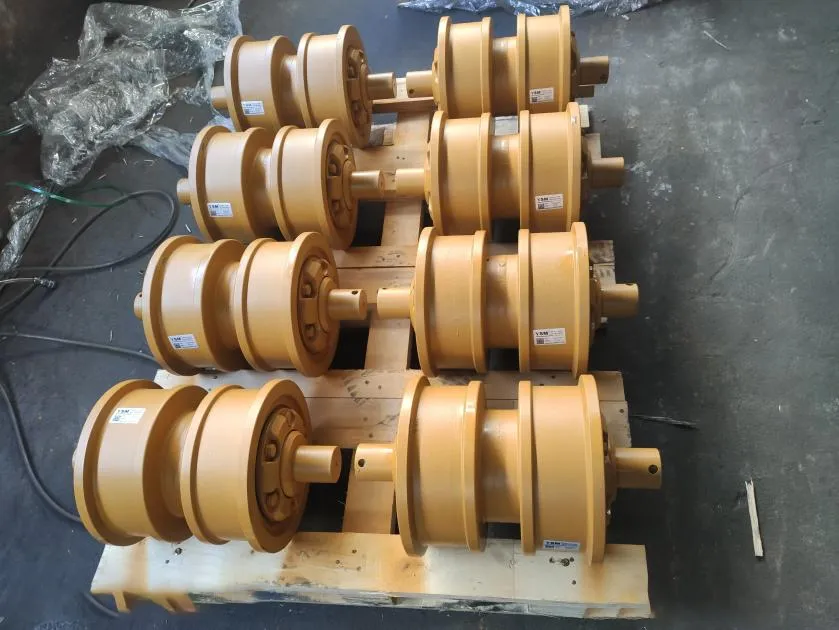
High-quality support wheels mainly depend on the performance of its steel. The material of the roller body is generally 50Mn, 40Mn2, (MN: synonymous with the element of manganese).
Carrier Wheels Are Suitable For Various Models At Home And Abroad
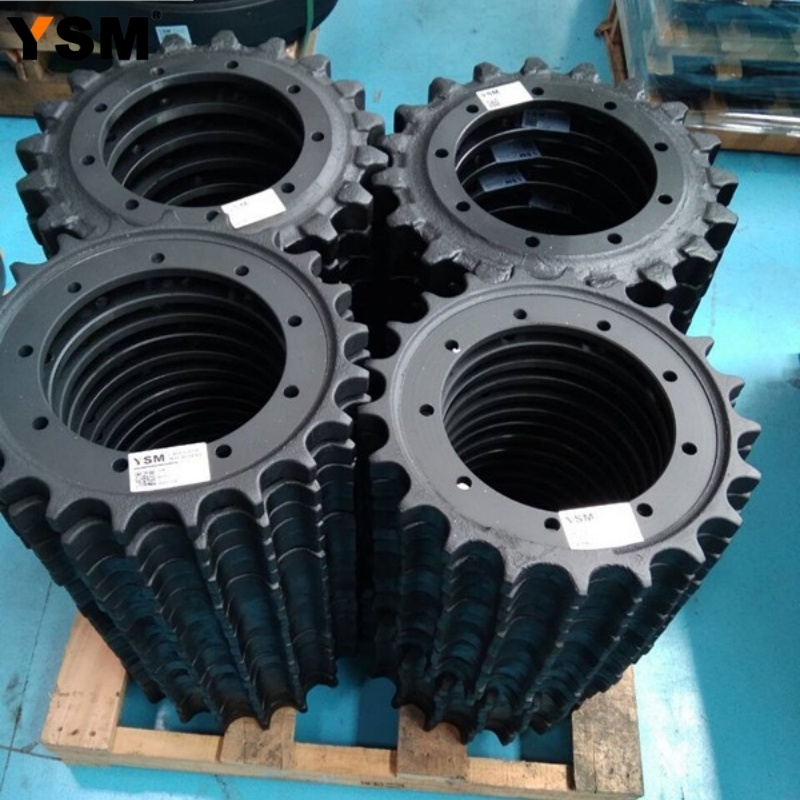
Sprocket wheels are mainly used in various crawler bulldozers, excavators, pavers, milling machines, rotary drilling rigs or other crawler machinery equipment at home and abroad.
Contact Us
E-mail :
sales@china-ysm.com
Phone/WhatsApp:
+86-18606961587
Address:
No.8 Binjiang Street, Binjiang Industrial Zone, Xiamei Town, Nan An City, Quanzhou City, Fujian Province, China
Request Quote
Andy Shi
No.8 Binjiang Street, Binjiang Industrial Zone, Xiamei Town, Nan An City, Quanzhou City, Fujian Province, China


Request Quote