-
-
ApplicationOur products consist of undercarriage parts for bulldozer and excavator such as Track link,Track roller,Carrier roller,Sprocket,ldler,Track shoe,Cutting edge,End bit,Tooth Bucket,Track pin,Track bush, Engine parts,Track boit&nuts.U-bolt,Centre bolt,Wheel bolt and other related parts.

-
About UsFujian Yongsheng Machinery Parts Co., Ltd. is located in Quanzhou City, Fujian Province, which is one of the most developed regions of China Machinery Manufacturing.The company was established in 2003, after approximately 10years' effort, and now it is one of the leading construction machinery parts auto parts manufacturers in CHINA.
-
BlogSuppliers who pass Quality ManagementSystem Certification, and have onsitematerials or finished products inspected,as certified by independent third parties.
Heavy Equipment Bucket Linkage Guide: H-Link & I-Link Wear Analysis & Replacement Standards
Professional guide on excavator bucket linkages, H-links, and I-links. Learn about common wear patterns, pin hole elongation, forging standards, and replacement criteria.
Jul 10,2026
Heavy Equipment Bucket Linkage Guide: H-Link & I-Link Wear Analysis & Replacement Standards
The bucket linkage assembly converts hydraulic cylinder power into raw breaking force. Positioned at the absolute tip of the machine's working arm, the bucket linkage handles continuous high-impact loading, torque twisting, and extreme material abrasion. For fleet managers and procurement professionals, monitoring these structural links is critical. This comprehensive excavator bucket linkage guide reviews structural architectures, material standards, wear patterns, and technical replacement parameters to optimize equipment performance.
Understanding Bucket Linkage Architecture
The working attachment system relies on two primary linkage groups to guide the bucket's rotational movement: the H-link (bucket linkage or tipping link) and the I-links (side links or bucket links). These parts are connected by precision pins and bushings that require close management to avoid excessive mechanical loose play.
- 高级H-Link (Tipping Link): A unified structural frame resembling the letter "H". It connects the bucket cylinder rod directly to the bucket and the side links, coordinating curling movements.
- I-Links (Side Links/Pair Links): Two parallel straight steel bars that anchor the H-link back to the excavator arm, creating a pivot geometry.
- 高级Pins & Bushings: Precision-ground wear surfaces that handle rotational friction. They require high surface hardness to block external dirt ingress.

1. Manufacturing Technologies: Forged vs. Cast vs. Fabricated
When selecting aftermarket solutions or looking to buy excavator H link wholesale configurations, understanding the manufacturing technology is essential. The structural strength of your linkage determines how well it tolerates severe twisting forces during heavy rock quarrying or trenching operations.
Cast Carbon Steel Linkages
Cast models provide good geometric uniformity and integrated structural ribs. They represent an affordable choice for general utility applications but can contain internal porosity voids that compromise reliability under heavy impact.
Fabricated / Welded Structural Plates
Constructed by welding thick high-strength steel plates (such as Q355B) together. Fabricated linkages offer exceptional repair flexibility and reliable load limits for medium to heavy excavators, provided the factory utilizes precise automated welding procedures.
Forged Alloy Steel Linkages
Solid steel billets are heated and compressed under extreme hydraulic tonnage. Forging aligns the internal metallic grain structure, providing maximum yield strength. Forged linkages are highly recommended for severe mining, demolition, and high-shock heavy environments.
| Linkage Component | Primary Material Specification | Surface Hardness (HRC) | Hardness Depth (mm) | Stress Profile Category |
|---|---|---|---|---|
| Heavy Duty H-Link Shell | Q355B Welded Plate / Forged 40Mn2 | 32 - 38 HRC (Core Core) | Through-Hardened Options | Torsional twisting & bending loads |
| Bucket Side Links (I-Links) | High-Tensile Carbon Steel Structural Plate | 30 - 36 HRC | Structural Quenching | Tensile pulling and compression stress |
| Linkage Bushings | 20CrMnTi Alloy (Carburized) | 56 - 62 HRC | 2.5mm - 4.0mm | Extreme rotational friction & scraping |
| Linkage Pins | 40Cr / 42CrMo Carbon Steel | 52 - 58 HRC | 4.0mm - 6.0mm | High shear strain & localized impact |
2. Common Wear Patterns and Failure Indicators
Tracking excavator linkage wear indicators allows operators to intercept wear before it causes major structural damage to the stick or bucket ears. During maintenance reviews, monitor these key bucket link assembly failure symptoms:
Pin Hole Elongation and Ovality
When bucket linkage pin and bushing wear is neglected, the internal bushing can wear through completely. This allows the hardened pin to grind directly against the soft structural steel inside the linkage ear. Over time, the round mounting holes deform into ovals, creating loose play that diminishes digging accuracy and causes severe impact rattling.
Structural Ear Cracking and Twist Warp
Striking buried utility lines or side-loading the bucket while swinging can twist the linkage assembly out of alignment. Look for flaking paint or hairline fractures along critical weld seams near the center tube structure of the H-link. A warped frame causes uneven side-loading, accelerating wear on cylinder seals and arm pins.
Technical Guide: Evaluating Linkage Side Play
Extend the excavator arm and hover the bucket slightly above the ground. Manually rock the bucket side-to-side. A total horizontal loose play movement exceeding 5mm at the linkage joints indicates that internal bushings are worn past safe thresholds, requiring immediate replacement.
3. Procurement Strategy: Repair vs. Full Replacement Criteria
Evaluating excavator H-link repair vs replacement options requires checking structural integrity against localized component wear limits.
| Diagnosed Wear Condition | Repair Strategy Option | Investment Tier | Procurement Recommendation |
|---|---|---|---|
| Internal Bushing Wear Only (Hole geometry remains round) | Press out worn bushings and insert new replacements | Minimal | Highly cost-effective; preserves the structural linkage shell. |
| Minor Pin Hole Elongation (<3mm out of round) | Bore out the ear holes, apply weld overlay, and precision line-bore back to factory spec | Moderate | Feasible if precision line-boring equipment is available on-site. |
| Severe Structural Cracking / Bent Frame Arms | Not Recommended (Structural integrity is compromised) | Extreme | Replace with a new aftermarket linkage to ensure safe field operations. |
| Worn Side Plate Tolerances on I-Links | Replace the pair of side link plates completely | Minimal | Replace as a matching pair to maintain balanced pivot geometry. |
Total Cost of Ownership Tip: While line-boring can extend the life of an elongated link ear, the labor and machining costs often approach the investment level of a new, certified aftermarket linkage assembly. Sourcing a new replacement from an aftermarket bucket links factory often provides a better return on investment and minimizes machine downtime.
Cross-Brand Compatibility Matrix
Premium replacement linkages are engineered to match original factory dimensions, ensuring perfect pin alignments and direct compatibility with major global excavator lines:
| Excavator Model Series | Standard Pin Diameter | Linkage Configuration Type | Compatibility Notes |
|---|---|---|---|
| Caterpillar 320 Series (320D/320E/320G) | 80mm | Reinforced Welded H-Link Group | Direct drop-in fitment; interfaces with standard OEM bucket ears. |
| Komatsu PC200 Series (PC200-7/-8) | 80mm | Heavy Duty Unified Cast / Fabricated | Matches factory grease path configurations for reliable lubrication. |
| Hitachi ZX200 / ZX210 Series | 80mm | Standard Structural Plate Profile | Features dust seal groove steps to block soil ingress. |
| Volvo EC210 / EC220 Series | 85mm | Heavy Duty Dual-Ear Tipping Link | Requires precision hardened pin sets due to high breakout forces. |
Crawler Linkage Maintenance Checklist
1. Daily Greasing Cycles: Apply premium lithium grease to linkage pins every 8 to 10 operating hours. High-abrasion soils can quickly strip away internal grease films.
2. Pin Retainer Inspections: Check all pin retainer bolts and lock rings weekly. Loose or missing clips can allow pins to drift out, causing sudden linkage failure.
3. Debris Removals: Clean out hard mud, rock fragments, and asphalt buildup around the H-link pivot pocket daily to prevent friction wear against the arm cylinder casting.
Conclusion: Protect Your Breakout Force
The efficiency of your machine’s digging cycles depends directly on the structural precision of its bucket linkages. Monitoring pin hole wear limits, maintaining proper greasing schedules, and avoiding severe side-loading helps maximize the life of your attachment components. Sourcing certified aftermarket linkages from an ISO 9001:2015 factory allows fleet managers to secure OEM-grade durability and precise fitment at a sustainable investment tier, protecting both machine uptime and operational budgets.
Consult Our Attachment Sourcing Engineers
For custom linkage dimensions, heavy mining application specifications, or volume wholesale price quotations:
Corporate Email: sales@china-ysm.com
WhatsApp / Technical Line: +86-18606961587
We supply precision-machined heavy equipment wear parts designed to lower your long-term operating costs.
Related Posts
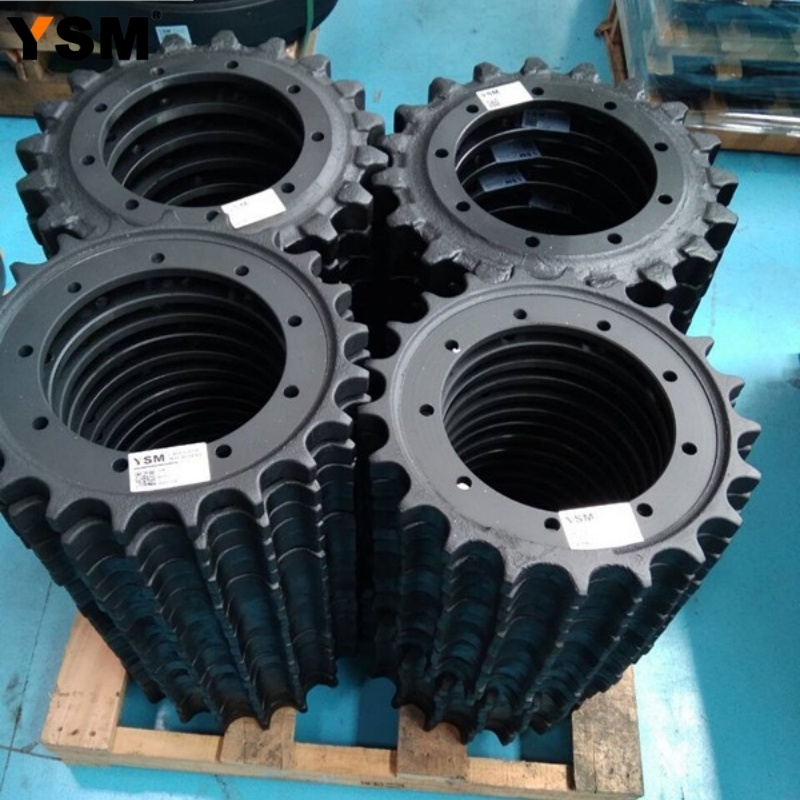
How Should The Supporting Wheels Be Selected To Avoid Stepping On Thunder?
High-quality support wheels mainly depend on the performance of its steel. The material of the roller body is generally 50Mn, 40Mn2, (MN: synonymous with the element of manganese).
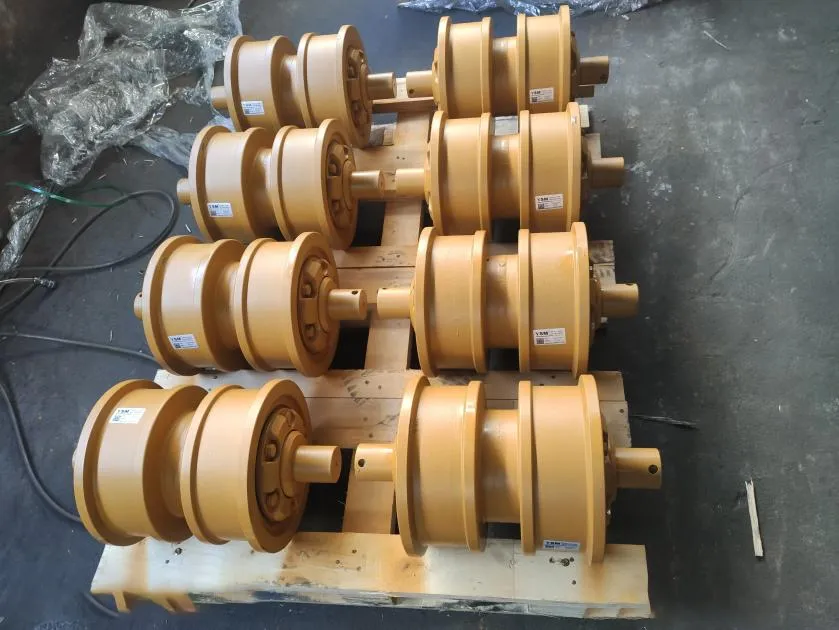
Carrier Wheels Are Suitable For Various Models At Home And Abroad
Sprocket wheels are mainly used in various crawler bulldozers, excavators, pavers, milling machines, rotary drilling rigs or other crawler machinery equipment at home and abroad.
Contact Us
E-mail :
sales@china-ysm.com
Phone/WhatsApp:
+86-18606961587
Address:
No.8 Binjiang Street, Binjiang Industrial Zone, Xiamei Town, Nan An City, Quanzhou City, Fujian Province, China
Request Quote
Andy Shi
No.8 Binjiang Street, Binjiang Industrial Zone, Xiamei Town, Nan An City, Quanzhou City, Fujian Province, China


Request Quote