
Excavator Undercarriage Troubleshooting
Why Does an Excavator Track Keep Coming Off? 8 Causes to Check
An excavator track that repeatedly comes off is usually a warning that tension, component guidance, wear, alignment, packed material or operating conditions need attention. Reinstalling the track may restore movement, but it does not identify why the derailment happened.
Quick answer
If an excavator track keeps coming off, first clean the undercarriage and verify track tension using the exact machine manual. Then inspect whether the adjuster holds tension, whether the idler and rollers guide the chain correctly, whether the sprocket and chain are worn as a system, and whether any guard or track-frame component is bent. The location and operating condition of each derailment can help narrow the inspection, but they do not confirm a failed part by themselves.
What the derailment pattern can tell you
Before cleaning everything, record where the track left its normal path, which direction the machine was travelling, whether it was turning, and what material was packed around the undercarriage. These observations make the later inspection more useful.
| Observed pattern | Inspection priorities | Important limitation |
|---|---|---|
| The track comes off near the front idler | Track tension, idler side movement, guide clearance, packed material and track-frame condition | The location alone does not prove the idler is defective |
| The chain climbs or skips at the sprocket | Sprocket tooth wear, bushing wear, chain pitch, tension and alignment | Replacing only the sprocket may not correct a badly worn chain-to-sprocket match |
| Tension drops again after adjustment | Grease leakage, adjuster valve, adjuster cylinder and overall track-chain wear | Slack does not automatically identify which adjuster component has failed |
| The problem occurs mainly while turning or crossing slopes | Track slack, side loading, uneven terrain, operating technique and component guidance | Operating conditions may expose an existing mechanical problem rather than be the only cause |
| The same side derails repeatedly | Compare left and right idlers, rollers, sprockets, guards, frames and tension retention | A side-to-side comparison is useful, but wear measurements are still required |
Eight reasons an excavator track keeps coming off
1. Track tension is outside the specified range
A track that is too loose has more freedom to move laterally and may lose guidance during a turn, while travelling across uneven ground or when debris enters the chain path. A track that is too tight is not a safer solution: it raises loads and can accelerate wear in the chain, sprocket, idler and rollers. The correct sag and measuring procedure vary by machine, track type, carrier-roller arrangement and ground condition, so use the exact model manual rather than a generic internet dimension.
2. Mud, stone, clay or frozen material is packed into the undercarriage
Material packed between the track chain, rollers, idler and frame can temporarily change track tension and push the chain away from its intended path. Mud may also harden or freeze after shutdown. Cleaning is therefore part of diagnosis, not merely cosmetic maintenance. Note the packed areas before removal because they may show where guidance is being disturbed.
3. The track adjuster does not hold its position
If the track is adjusted correctly but soon becomes loose again, inspect for visible grease escape and have the grease valve, adjuster cylinder, seals and recoil mechanism assessed. A heavily worn or elongated track chain can also require more adjustment travel. Do not keep pumping grease into an adjuster that will not hold or has reached its service limit.
4. The front idler has wear, damage or excessive side movement
The idler helps guide the track chain and works with the adjuster to maintain tension. Worn tread surfaces, damaged flanges, excessive clearance or an idler that sits out of line can reduce guidance. Inspect the yoke, side guides and mounting area as well as the idler itself; replacing a wheel without correcting the reason it is running off-centre can produce repeat wear.
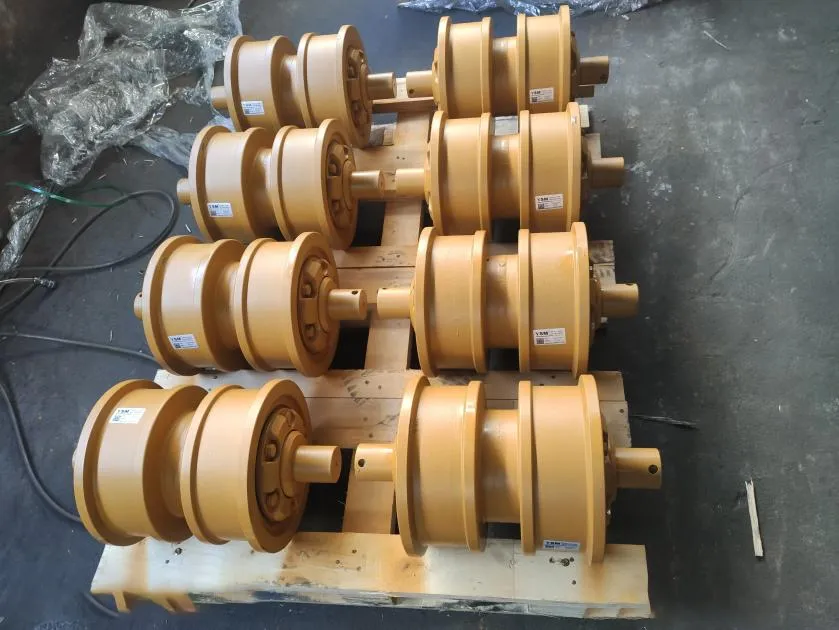
5. One or more track rollers no longer guide the chain correctly
Roller flange wear, a seized roller, oil leakage or damaged mounting can change how the chain rail is supported. Look for a roller that is not turning, abnormal heat after operation, flat wear, broken flanges or an unusual rail contact pattern. A visible leak is an inspection signal, but the roller should be measured and evaluated before a replacement decision.
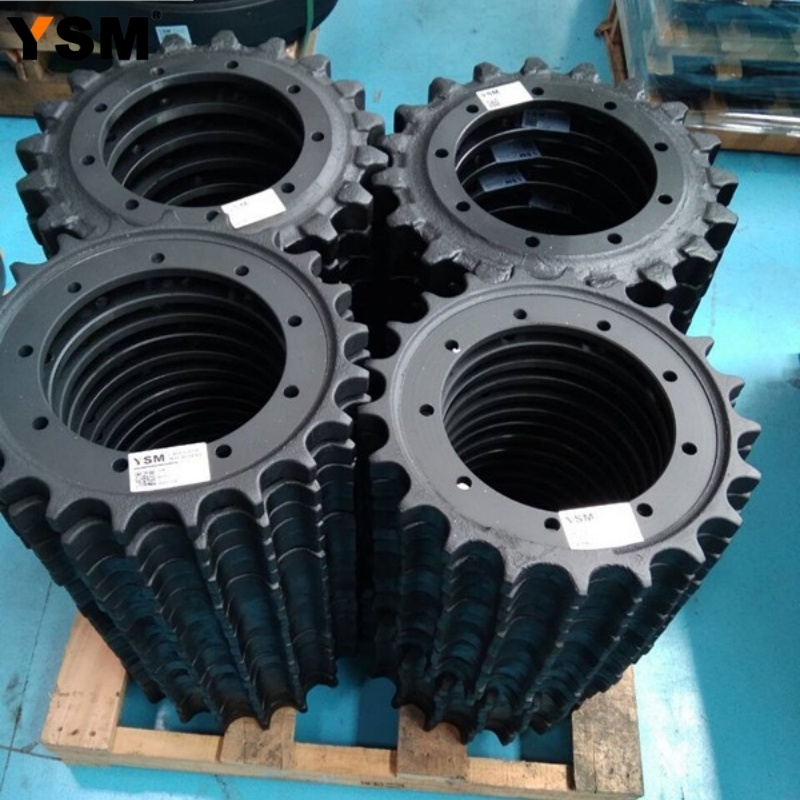
6. The sprocket and track chain no longer engage correctly
Sprocket teeth and track-chain bushings wear together. Hooked or sharply worn teeth, damaged bushings, dry joints or excessive pitch growth can allow poor engagement and chain climbing. Check the entire wear system instead of judging one component in isolation. Mixing a severely worn mating component with a new one can create abnormal contact and shorten service life.
7. A track guard, guide or track-frame area is bent or misaligned
Impact with rock or debris can damage guides, guards, roller mounts or the track frame. Loose hardware or previous repairs can also affect alignment. Compare both sides from consistent reference points and look for fresh contact marks, cracked welds, displaced guards or components that no longer share the same centreline. Structural inspection and correction require qualified personnel.
8. Turning technique and terrain create high side loads
Sharp pivot turns, turning with one side against an obstacle, travelling across steep side slopes or forcing the track through packed rock can increase lateral load. These conditions are especially likely to expose excess slack or worn guidance components. Smoother turns, planned travel paths and regular cleaning can reduce risk, but operating technique should not be used to explain away a mechanical fault.
A practical inspection order
- Record the event. Note the affected side, derailment location, travel direction, turn direction, slope and ground material.
- Clean the undercarriage safely. Remove packed material without directing high-pressure water at seals or creating unsafe access beneath the machine.
- Compare both sides. Look for different sag, component position, leaks, contact marks, missing hardware or abnormal wear.
- Measure track tension correctly. Position the machine and measure exactly as specified in its operation and maintenance manual.
- Confirm that tension remains stable. If it changes again, stop repeated adjustment and inspect the adjuster and chain condition.
- Follow the chain path. Inspect the idler, track rollers, carrier rollers, guards and sprocket for damage, leakage, seizure, side wear and misalignment.
- Measure the wear system. Check chain pitch, rail height, bushing condition, sprocket teeth and roller/idler wear with the correct tools and service limits.
- Review the operating pattern. Determine whether pivot turns, slope travel, packed material or repeated travel in one direction contributes to the event.
A professional undercarriage inspection is appropriate when the track has derailed more than once, measurements are unavailable, a structure appears bent or several mating components show advanced wear.
Common troubleshooting mistakes
- Making the track extra tight: excessive tension can increase component load and wear.
- Replacing the track without inspecting the guide path: a worn idler, roller, sprocket, guard or adjuster may damage the replacement.
- Assuming one internet sag value fits every excavator: steel and rubber tracks, carrier-roller layouts and measurement methods differ.
- Ignoring the opposite side: left-to-right comparison can reveal abnormal position or wear.
- Continuing work after repeated derailment: the machine may cause further damage to the chain, shoes, rollers, guards or frame.
- Releasing the grease valve casually: stored grease pressure and heavy components require the procedure and warnings in the machine manual.
How to reduce repeat derailments
- Clean mud, clay, stone and frozen material from the undercarriage as working conditions require.
- Check tension using the OEM procedure and adjust for the specified machine and ground condition.
- Inspect rollers, idlers, sprockets, track links, shoes and hardware during regular walk-arounds.
- Investigate grease loss or tension change instead of repeatedly adding grease.
- Avoid unnecessary sharp pivot turns, heavy side loading and long travel over damaging terrain.
- Record wear measurements so components can be planned and replaced as a matched system where necessary.
What to provide when requesting replacement undercarriage parts
Machine model names alone are often insufficient because different serial ranges and undercarriage configurations may use different parts. For a fitment check or quotation, prepare:
- equipment brand and complete model designation;
- serial number or a clear machine identification plate photo;
- required part name and part number, if available;
- clear photos of the complete undercarriage and the affected part;
- requested dimensions and measurement method;
- steel or rubber track configuration and shoe type;
- quantity, operating conditions and destination country.
Compatibility and availability must be confirmed from the complete model, serial number, part number, clear photos and requested dimensions before ordering.
Frequently Asked Questions
Can a loose track make an excavator track come off?
Yes. Excessive slack can reduce guidance and allow the chain to move laterally, particularly while turning or travelling over uneven ground. However, tension should be measured with the machine-specific procedure because worn idlers, rollers, sprockets, chains, guards or adjusters may also contribute.
Why does the track come off only on one side?
A one-sided problem may point to different tension retention, component wear, alignment, debris packing or previous damage on that side. Compare the two sides and measure the affected components rather than assuming both undercarriages have the same condition.
Should I tighten an excavator track as much as possible?
No. An overly tight track increases load and can accelerate wear. Set tension only to the range and measuring method in the exact operation and maintenance manual, considering the machine configuration and ground conditions.
Can a worn sprocket make a track jump?
Poor engagement between worn sprocket teeth and track-chain bushings can contribute to climbing or skipping. The sprocket, bushings, chain pitch and overall alignment should be inspected together before deciding which parts require replacement.
Is reinstalling the track a permanent repair?
No. Reinstallation restores the track to its path but does not correct loose tension, an adjuster problem, worn guidance components, poor chain-to-sprocket engagement, packed debris or structural misalignment.
Technical references
- Caterpillar: What to Know About Excavator Undercarriage Maintenance
- Caterpillar: How to Maintain Cat Steel Tracks
- Hitachi Construction Machinery UK: Undercarriage 101
- Hitachi Construction Machinery UK: Keeping on Track
- John Deere: 60 P-Tier Compact Excavator Undercarriage Overview
These references explain general maintenance principles. Always use the operation, maintenance and service information for the exact machine and serial range.
Consult Our Excavator Undercarriage Parts Team
If repeated derailment inspection identifies worn running gear, we can help check suitable replacement options for track chains, track shoes and bolts, track rollers, carrier rollers, front idlers, sprockets, segments and related undercarriage parts.
Corporate Email: sales@china-ysm.com
WhatsApp: +86-18606961587
Please send the machine brand, complete model, serial number or plate photo, part number, clear part photos, requested dimensions, quantity and destination country. Compatibility and availability must be confirmed before ordering.