
Complete-machine excavator maintenance
CASE CX210E-S Daily Maintenance: A Pre-Shift Checklist
CASE CX210E-S daily maintenance should follow a repeatable whole-machine route: ground and exterior, fluids and filters, cooling, hydraulics, crawler, attachments, then operator checks. Keep the exact E-S model and serial-specific manual in view. A pre-shift inspection is not a substitute for scheduled servicing or a complete diagnostic test.
1. Confirm the CX210E-S configuration
This guide uses the current CASE European CX210E-S product reference. The E-S suffix matters. Do not apply a CX210D, CX210E, or another market's service chart simply because the machine name or size is similar.
Record the PIN or serial number, operating hours, installed attachment, crawler configuration, and recent maintenance. Confirm that the operation and maintenance manual matches the actual machine. Attachments and previous repairs can change the inspection points that need attention.
This is independent educational content, not an OEM manual or an affiliation claim. It intentionally supplies no universal fluid quantity, service-hour interval, track sag, fastening torque, or wear limit.
2. Begin with the ground and external condition
Park on stable ground, lower the attachment, stop and isolate the machine as required before close inspection. Look at the ground for fresh fluid traces and the machine for changed stance, damage, unsecured covers, or material caught around moving areas.
Check steps, handholds, glass, mirrors, cameras, lights, and visible safety labels. Keep access surfaces clear. Do not climb on the crawler or reach behind a guard merely to complete a checklist entry.
For a leak trace, note the location, apparent freshness, and whether it follows recent cleaning or servicing. Record the observation separately from a diagnosis. If an area cannot be reached safely, mark it as not inspected and arrange appropriate access.
3. Check fluid, fuel and filter information
The European model page identifies external fuel and AdBlue gauges and fuel filtration with a water accumulation indicator. Check the actual machine's indications and follow its prescribed response. Do not ignore a repeated warning simply because the engine still starts.
Check engine oil, coolant, hydraulic fluid, and other specified levels only in the manual's required position and temperature conditions. Record unexplained changes. Do not open a hot pressurized system or repeatedly add fluid without reporting an ongoing loss.
Keep fill points clean and use the specified fluid and handling equipment. Treat fuel and AdBlue as separate systems; prevent cross-contamination. Do not decide a fluid is suitable by color or by what another excavator uses.
Use restriction indicators and scheduled-service information for filter decisions. A daily inspection is not a reason to open every filter housing, and a clear-looking filter exterior does not establish internal condition.
4. Inspect cooling airflow and hydraulic areas
CASE lists a protected radiator, oil-cooler and intercooler package. Check accessible screens and cooler areas for blockage, damage, or leakage using the specified access procedure. A protective screen does not eliminate the need for inspection.
Clean only by the approved method, keeping clear of fans, belts, hot surfaces, and stored energy. Do not use an improvised high-pressure jet that can damage fins or force debris into sensitive areas. An over-temperature warning requires the manual's response, not automatic continued operation after a quick wash.
The model reference also identifies hydraulic filter restriction information. Preserve the complete warning and operating context. Look at accessible hoses, routing, clamps, fittings and cylinders for chafing, damage and leakage, but never use a hand to search for pressurized fluid.
A warning does not identify a failed hydraulic pump, valve, or motor by itself. Qualified diagnosis may be needed before ordering a major component.
5. Check the crawler and travel area
The European reference lists steel triple-grouser shoes and a sealed link chain. Confirm what is installed rather than treating the website specification as proof that a used machine has never been modified.
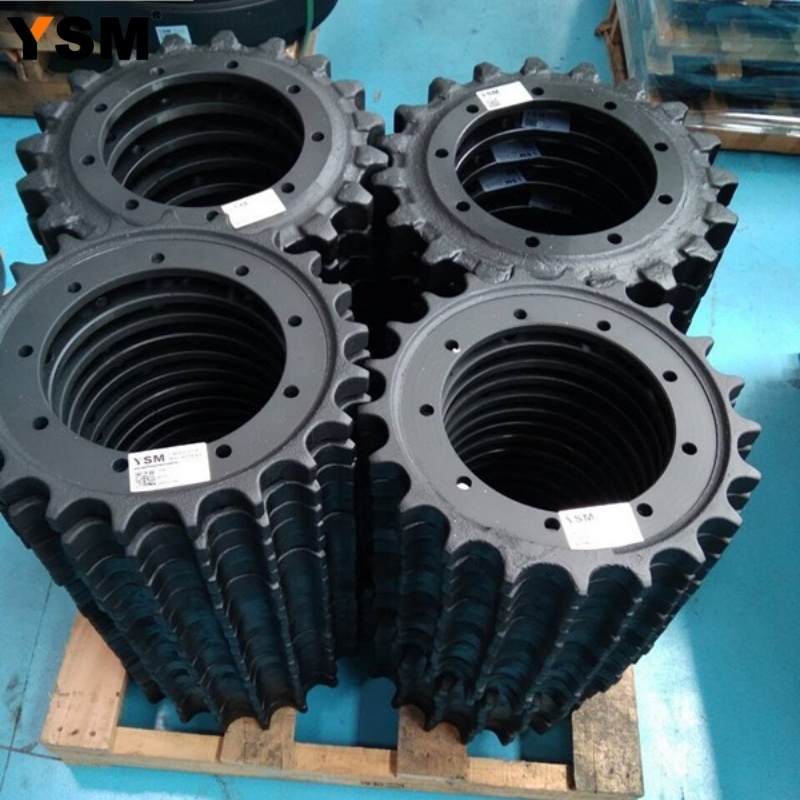
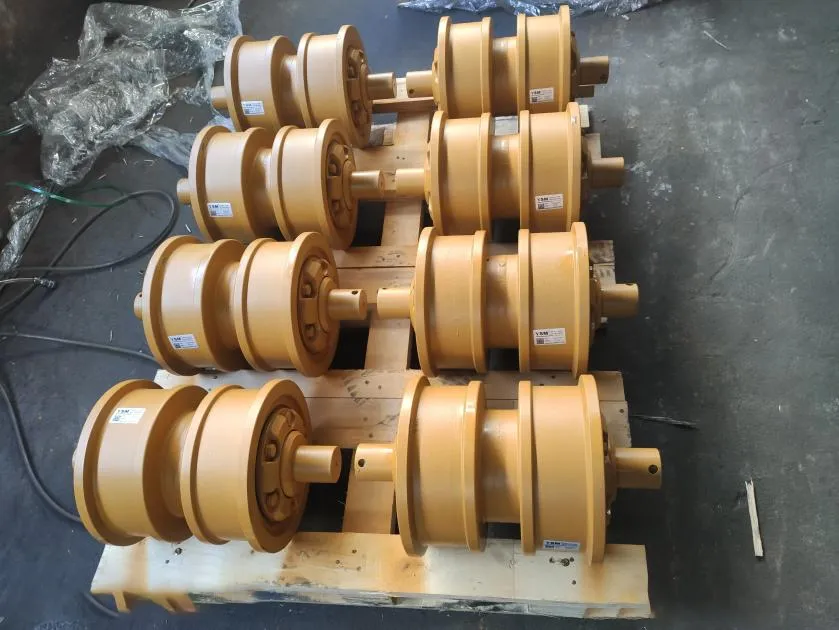
Clean enough material away to see the crawler condition. Record damaged or missing shoes and hardware, cracked links, shifted pins, roller leakage, damaged flanges, unusual idler or guard contact, and sprocket damage where safely visible.
Separate a walk-around observation from a measured inspection. Neither a loose-looking chain nor a polished roller surface supplies an exact wear percentage. Have adjustment or wear checked by the correct machine and component procedure when required.
Do not assume sealed construction means maintenance-free operation. It also does not mean every plug is a routine lubrication point. Keep crawler findings organized by side and position so they can be compared and followed up.
6. Include the boom, attachment and operator area
Inspect visible boom, arm, bucket, linkage, retainers and mounting areas for damage, abnormal movement, or missing hardware. Follow the exact lubrication chart for the machine and installed tool. Do not work beneath raised equipment without the approved support and isolation.
Where a quick coupler is fitted, use its own approved inspection and attachment-verification procedure. A photograph or the absence of a warning is not a complete retention check.
In the cab, inspect the seat belt, access and exit arrangements, cleanliness, visibility aids, and specified safety equipment. CASE's product reference identifies cameras, a travel alarm and on-board diagnostic information, but the actual manual governs their inspection.
After the parked checks, a qualified operator should carry out only the specified start-up, indicator, interlock and control checks. Never bypass a safety device to finish a shift or test a concern around other personnel.
7. Close the checklist with an action, not just a tick
| Record | Useful detail |
|---|---|
| Observation | Exact location, symptom, photograph, or complete warning |
| Context | Hours, cold or warm condition, work mode, attachment, recent service |
| Decision | Accepted under procedure, restricted, or awaiting assessment |
| Follow-up | Responsible person, required work and verification |
Keep the pre-shift record separate from completed scheduled maintenance. CASE describes planned maintenance and fluid-analysis support, but local availability and eligibility require direct confirmation. A telematics reminder or maintenance contract does not replace the operator's physical inspection.
For a replacement inquiry, include the full CX210E-S identity, serial number, part name and number, photographs, requested dimensions, quantity, destination and working conditions. Preserve the diagnosed requirement rather than turning every warning into a guessed parts list.
The aim is a consistent daily picture of the entire excavator: what is normal, what changed, and what needs attention before the machine returns to ordinary work.
Frequently Asked Questions
Is this the official CX210E-S service schedule?
No. It organizes pre-shift observations. Use the exact operation and maintenance manual for intervals, values and procedures.
Can I use CX210D or CX210E parts and service data automatically?
No. Retain the full E-S model, market and serial information and confirm the applicable catalog and manual.
Does a warning tell me which hydraulic component to replace?
Not alone. Record the complete warning and operating context and obtain appropriate diagnosis.
Does this article confirm replacement parts are available?
No. Compatibility, availability and supply scope must be reviewed from the specific machine and component evidence.
Technical references
Check Parts Requirements from Your CX210E-S Inspection
We are a China-based manufacturer and wholesale supplier focused on excavator and dozer undercarriage parts. Send the exact machine configuration and inspection findings so our team can check suitable supply options for:
- track rollers, carrier rollers, idlers, and sprockets;
- track chains, track shoes, complete track assemblies, bolts, and nuts;
- selected filters, seals, or other maintenance items only as separately checked sourcing requests, not claims of in-house manufacture;
Corporate Email: sales@china-ysm.com
WhatsApp: +86-18606961587
Compatibility and availability must be confirmed from the complete model, serial number, part number, clear photos, and requested dimensions before ordering. Include quantity, destination country, and working conditions.