
Coastal working conditions and crawler care
Excavator Saltwater Maintenance: Cleaning and Inspection Checks
Excavator saltwater maintenance begins by identifying what happened: coastal spray, salty mud on the crawler, or possible water entry into a component. Those are different situations. Clean and inspect external exposure using the exact manual, but do not treat a freshwater rinse as proof that an immersed or contaminated machine is ready to restart.
1. Separate spray, residue and possible ingress
Describe the exposure before choosing a maintenance response. Was the machine parked near sea spray? Were only the shoes and lower frame covered with salty material? Did water reach a housing, breather, electrical area, or an unknown level?
Record the location, date, duration if known, affected areas, and any unusual warnings or behavior. Use photographs taken from safe ground. If the water level or exposure history is uncertain, record that uncertainty rather than declaring the event minor.
Neither a steel crawler nor a sealed component means the excavator is suitable for marine work. Water limits, environmental restrictions, optional protection, and inspection requirements depend on the exact machine. Ask the OEM or qualified service provider before planning the job.
If water entry, flooding, electrical contamination, or unsafe ground conditions are suspected, stop the routine wash-and-return workflow. Obtain a qualified assessment before starting or moving the machine.
2. Remove salt residue without creating another problem
DEVELON's sea-shore maintenance guidance calls attention to salt removal and freshwater cleaning after corrosive exposure. Use the cleaning method specified for your machine, including the required shutdown, cooling, access, and isolation conditions.
Park in a designated suitable cleaning area, lower the attachment, and manage runoff under the site procedure. Do not wash from an unstable shore edge or stand within a crawler movement zone. Keep people clear of any equipment repositioning.
Do not assume more pressure is better. Protect seals, electrical equipment, breathers, cooling fins, and other sensitive areas according to the manual. Never use a jet to force debris through a seal or to compensate for blocked access.
A cleaning record should say what was reached and what remained inaccessible. A clean outer shoe does not establish that the inner track frame or guarded areas were fully checked.
3. Inspect the crawler after it is visible
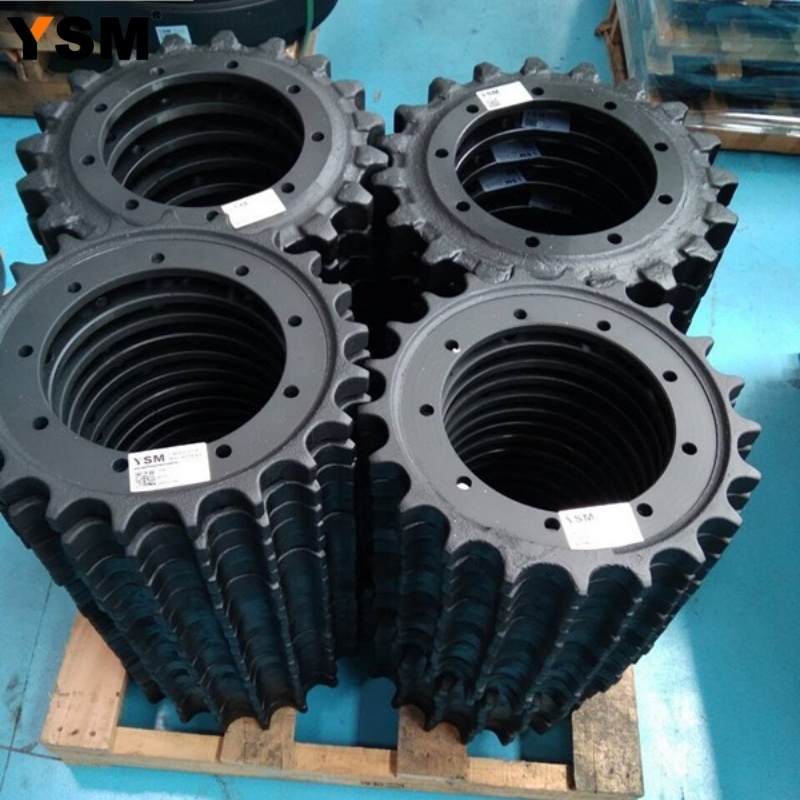
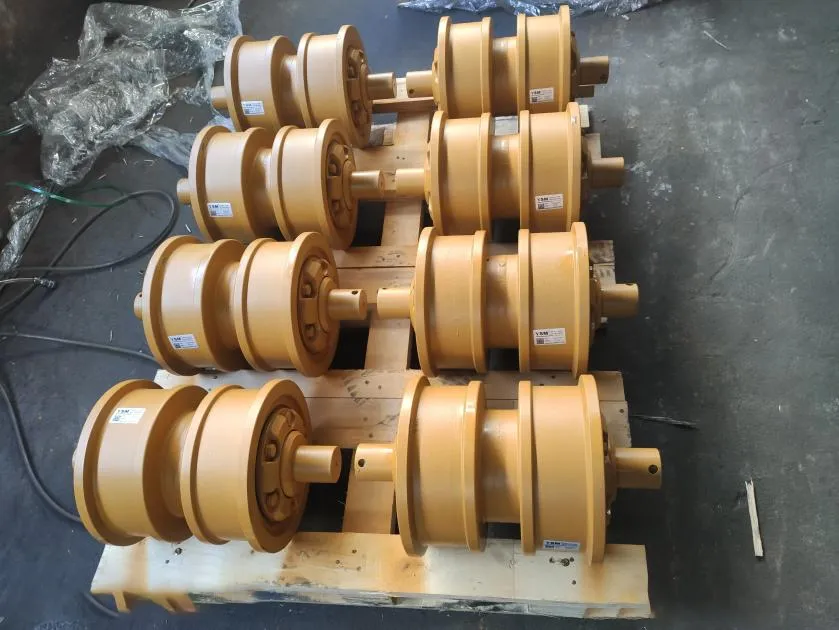
Once access and isolation are correct, record the condition of the track shoes, chains, rollers, idlers, sprockets, guards, and visible fasteners. Look for damaged or missing components, unusual contact, leakage, packed material, and coating damage.
Keep the description factual. A rusty streak near a roller does not prove the roller has failed internally. Equally, a clean exterior does not rule out a separate defect. Photograph both the close-up and the wider location so the service team can interpret the finding.
Pay attention to areas that were previously damaged or repaired. Compare current photographs with earlier records where available. Note new marks and changed conditions without assuming salt exposure caused every pre-existing wear feature.
Use model-specific methods for track adjustment and measured wear. Do not tighten tracks to an arbitrary dimension because the machine has been working near water, and do not remove a link to disguise a loose-track concern.
4. Look beyond the tracks
Sea-shore guidance also highlights electrical and cylinder areas. Include accessible panel seals, cable protection, exposed cylinder surfaces, hydraulic hose routing, and relevant enclosure condition in the walk-around. Report corrosion, damaged protection, or moisture indications for assessment.
Do not open electrical boxes or unplug connectors simply to look for salt. Such work can require specific isolation, contamination control, testing, and qualified personnel. Do not use exposed skin to locate a hydraulic leak.
Record damaged paint and protective coatings, but have the repair approach specified before applying a product. Random oil or coating application can contaminate walking surfaces, seals, sensors, and other areas that require different treatment.
A salt-residue task should therefore end with more than a crawler photograph. Include the machine areas that were actually exposed, not just the easiest parts to wash.
5. Review lubrication instead of inventing an interval
Follow the exact lubrication chart and the special-environment instructions for the installed machine. The referenced OEM manuals discuss additional attention to inspection and lubrication under salt exposure; that does not establish one shortened interval for every excavator.
Identify which points are serviceable and which assemblies are sealed. Do not treat every plug as a grease fitting or assume greasing an external joint removes water from a sealed roller or travel housing.
For suspected contaminated lubricant or fluid, ask qualified personnel what sampling, inspection, or service is needed. A level check alone is not proof that a lubricant is uncontaminated. Do not crack open a hot housing or remove a plug without the approved procedure.
Keep cleaning, lubrication, measured inspection, and any corrective work as separate completed tasks in the record. This prevents a signed wash ticket from being mistaken for a full maintenance release.
6. Use a follow-up record, not a blanket all-clear
| Observation | Useful follow-up information |
|---|---|
| External salt residue | Affected areas, approved cleaning completed, inaccessible areas |
| Corrosion or coating damage | Location, extent, comparison photos, assessment required |
| Leakage or component damage | Side and position, fresh or historical trace, service review |
| Possible water ingress | Exposure level, warnings, containment and qualified assessment |
The responsible service team should decide what is acceptable under the applicable procedure and what needs restriction or repair. Do not restart a suspected flooded machine just to see whether it still runs.
After approved cleaning or service, preserve the inspection date and decision. Repeated exposure also deserves a planned review of job suitability, protection, parking and maintenance arrangements.
7. Link confirmed findings to the right parts inquiry
Do not order an entire crawler simply because surface corrosion is visible. Base the requirement on the assessed defect, measured condition, and installed configuration. A damaged shoe, leaking roller, and contaminated housing are different repair questions.
Send the full model, PIN or serial number, part number when available, clear photographs, requested dimensions, quantity, destination, and working conditions. Include the exposure history so it is not lost between the operator, technician, and supplier.
The practical goal is a traceable decision: what was exposed, what was cleaned, what was checked, and what still needs attention. That is more useful than either ignoring salt residue or replacing parts based only on the appearance of rust.
Frequently Asked Questions
Does this guide permit an excavator to work in seawater?
No. Confirm suitability and all environmental and water-level restrictions for the exact machine before planning work.
Is freshwater washing enough after a machine has been immersed?
Do not assume so. Suspected ingress or flooding requires qualified assessment; external cleaning cannot verify internal condition.
Does surface rust prove a track roller needs replacement?
No. Record the location and condition and have the relevant component assessed. Appearance alone does not establish an internal failure.
Should every coastal excavator use the same greasing interval?
No. Follow its exact lubrication chart and special-environment instructions, with qualified review where exposure warrants it.
Technical references
Review Undercarriage Parts After a Coastal Inspection
We are a China-based manufacturer and wholesale supplier of excavator and dozer undercarriage parts. If a qualified inspection identifies a replacement requirement, send the machine and exposure details so our team can check suitable supply options for:
- track rollers, carrier rollers, and idlers;
- sprockets, track chains, and complete track assemblies;
- track shoes and related bolts and nuts;
Corporate Email: sales@china-ysm.com
WhatsApp: +86-18606961587
Compatibility and availability must be confirmed from the complete model, serial number, part number, clear photos, and requested dimensions before ordering. Include quantity, destination country, and working conditions.