
Dozer Troubleshooting | Track Chain and Sprocket
Dozer Track Chain Jumping on the Sprocket: Causes and Inspection
A dozer track chain that climbs, bangs or appears to jump at the drive sprocket is showing abnormal engagement. The symptom may come from excessive looseness, chain pitch wear, worn or mismatched sprocket segments, debris, stiff joints, alignment problems, a track adjuster that cannot hold its setting or operating conditions. Continuing to force the machine can damage several mating components and increase derailment risk.
Identify the Dozer Track-Chain Jumping Pattern
The word "jumping" can describe several different events. The chain may climb a sprocket tooth, bang as a bushing enters a pocket, shift sideways, slap a guard or momentarily lose stable engagement. Accurate notes help separate these patterns.
| Observed pattern | Possible contributors | Next inspection focus |
|---|---|---|
| Bang repeats once per chain cycle | One stiff or damaged joint, loose shoe, displaced pin or localized debris | Mark the event by photograph and inspect every joint safely |
| Bang repeats with sprocket rotation | Damaged segment, mounting concern, foreign material or tooth-profile problem | Inspect every segment and the full mounting pattern |
| Jump appears mainly in reverse | Loose track, wear pattern, packing, chain bunching or engagement change | Record direction, load and track adjustment under the same conditions |
| Chain shifts sideways before the noise | Guide, idler, roller-flange, frame or alignment concern | Trace polished side contact from idler to sprocket |
| Symptom began after new chain or segments | Mismatch, installation error, old mating-component wear or incorrect setting | Verify all part numbers, pitch, link count and installed system |
| Symptom changes after rain or cleaning | Material packing changed the effective track tension or engagement | Clean fully and remeasure by the manual |
Do not stand near the moving track to locate a sound. If operational observation is necessary, use trained personnel, an exclusion zone and the model-specific procedure. Remote video from a protected position may help, but it does not replace physical inspection after shutdown.
Safe Inspection Sequence
- Record the event. Note direction, speed, load, ground material, slope, weather and whether the symptom occurs continuously or at an interval.
- Photograph before cleaning. Capture the sprocket pockets, bushing contact, roller frame and any packed material or fresh metal marks.
- Clean both undercarriages. Remove soil from sprockets, idlers, rollers, carrier rollers, guards, frame ledges and adjustment areas.
- Inspect for immediate hazards. Look for broken links, displaced pins, loose segments, missing shoe bolts, cracked shoes, severe leakage and derailed alignment.
- Compare both sides. The opposite side provides a useful reference for tooth contact, chain position, wear and adjustment history.
- Measure only by the correct procedure. Track sag, chain wear and component limits depend on model, system design and measurement method.
How Track Tension and Packed Material Affect Engagement
A track that is too loose can move less predictably around the idler and sprocket and may increase derailment or jumping risk. A track that is too tight adds load to pins, bushings, sprockets, idlers, rollers and the powertrain. Tightening beyond specification is not a repair for worn engagement.
Cat guidance emphasizes that dozer track-tension dimensions differ for machines with and without carrier rollers and that the operation and maintenance manual controls the correct value. Ground condition also matters. Wet clay, mud, stone and waste can pack into the track system, changing the effective tension while the machine works.
Questions to answer before adjustment
- Was the undercarriage cleaned before measurement?
- Was the machine positioned exactly as the manual requires?
- Does the value differ between left and right sides?
- Does the track hold the setting after the approved equalizing movement?
- Is grease leaking from the valve, cylinder or adjuster area?
- Does the idler move normally within its guidance system?
If a track repeatedly becomes loose, do not keep adding grease without finding the cause. Leakage, adjuster damage, recoil-system concerns, chain wear or inconsistent packing may be involved. Releasing grease pressure also creates an injection hazard and must follow the manual.
Inspect the Track Chain and Sprocket as a Mating System
| Area | Inspection clues | Why it matters |
|---|---|---|
| Track bushings | Uneven contact, cracks, pitting, abnormal diameter wear, rotation or dry-joint evidence | Bushings transfer drive load from sprocket teeth into the chain |
| Link assembly | Pitch wear, stiff joints, rail-side wear, cracks, pin retention and mixed links | Joint spacing and articulation control how the chain enters the sprocket |
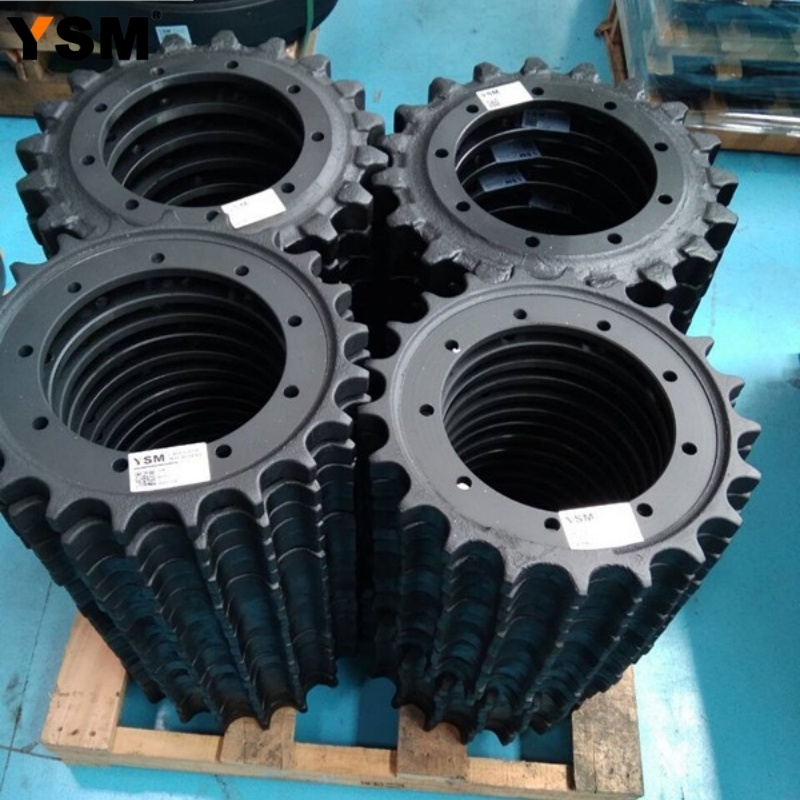
| Sprocket segments or rim | Hooked or sharp profile, mushrooming, chips, cracks, one-sided wear and loose mounting | Damaged or worn teeth cannot share load normally across the bushings |
| Shoe hardware | Loose bolts, elongated holes, cracked or bent shoes and mixed shoe types | Shoe movement can create a bang that resembles sprocket jumping |
| Replacement history | New chain on old segments, new segments on worn chain, mixed brands or one-side-only repair | Mating wear profiles may no longer match |
Visual tooth sharpness alone is not a complete wear measurement. Use the approved tools and locations for the exact system. A sprocket may look acceptable from one angle while showing uneven pocket contact, cracks or mounting problems elsewhere.
Why replacement history matters
Chain and sprocket wear develop together. If one component is replaced after the mating surface has changed substantially, the new and old profiles may contact poorly. This does not mean that every chain and sprocket must always be replaced together; it means the decision should be based on measured condition, compatibility and the remaining service objective.
Other Undercarriage Causes of Sprocket Jumping or Banging
Restricted or damaged rollers
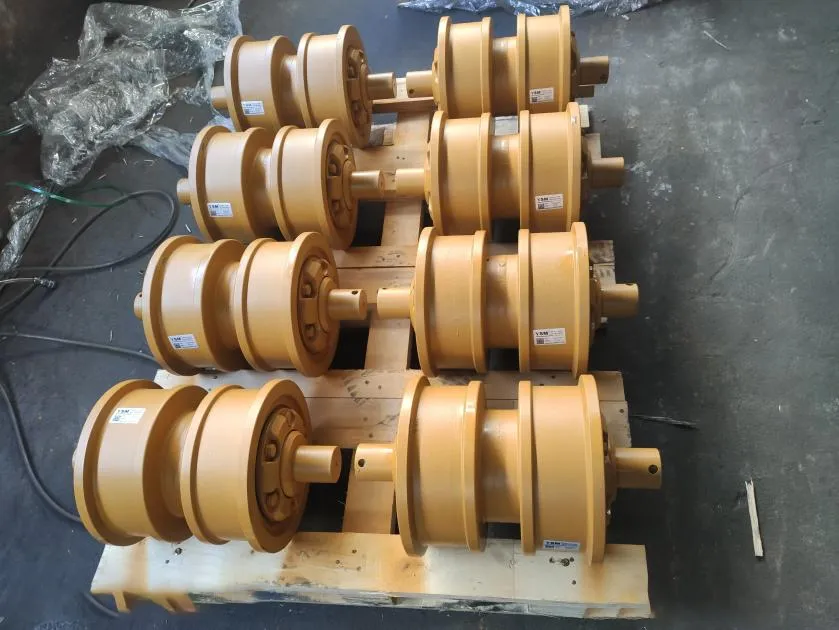
A seized lower roller, heavy packing or abnormal flange wear can change the chain path and add resistance. Inspect each roller for leakage, shell damage, rotation, mounting and debris. Carrier rollers also affect upper-chain support where fitted.
Idler and guide problems
The front idler guides the chain and responds to the tension system. Side clearance, guide-plate wear, abnormal position, leakage or damage can allow lateral movement that becomes visible later at the sprocket.
Bent guards or track-frame contact
Fresh polishing on link sides, roller flanges or guards shows lateral contact. Bent guides, structural damage, loose fasteners and trapped material can make the chain shift or bang even when tooth wear is not the primary issue.
Operating technique and ground conditions
High reverse duty, sharp turns, side slopes, rock impact and changing material packing alter the load path. Record where the machine works and when the symptom occurs. A repair that ignores the application may address the damaged part without addressing the recurring contributor.
Final-drive mounting or powertrain concerns
Loose or damaged sprocket mounting, final-drive movement or internal powertrain problems require qualified service. Do not open or disassemble the final drive based only on an external noise.
Repair and Replacement Planning
Begin with a documented undercarriage measurement report. Record chain pitch or other approved link measurements, bushing condition, sprocket profile, roller and idler dimensions, track adjustment, shoe hardware, frame contact, leakage and operating conditions. Compare both sides and review the repair history.
The replacement scope may be one damaged segment, a complete segment set, a chain assembly, a matched side group or a broader undercarriage plan. There is no universal answer. Cracks, loose mounting and structural damage require immediate action, while wear decisions depend on measurements and the intended remaining work.
After repair, set the track by the correct manual, verify all hardware through the approved follow-up procedure and monitor early engagement patterns. Do not assume that the absence of noise during one short test proves correct long-term fitment.
Repairs that should not be improvised
- welding cracked links, bushings or sprocket teeth without an approved repair procedure;
- grinding teeth to force engagement;
- overtightening the track to suppress movement;
- reusing damaged segment or shoe hardware;
- pressing chain joints without correct tooling and specifications;
- mixing unverified standard, rotating-bushing or converted system components.
Dozer Track Chain and Sprocket Fitment Checklist
Before selecting track chains, sprocket segments, rollers, idlers, shoes, adjuster-related parts or fasteners, provide:
- equipment brand, complete model and every suffix;
- serial number or PIN and a clear identification-plate photo;
- part name, quantity and all readable existing part numbers;
- full left and right undercarriage photographs;
- close photos of bushing-to-tooth engagement and segment mounting;
- track-chain link count, shoe width, bolt pattern and agreed pitch measurement;
- sprocket type, segment count or rim details and requested dimensions;
- track-system type and any conversion or replacement history;
- destination country, ground material, moisture, slope, impact and reverse-travel duty.
Similar tooth count or outside dimensions do not guarantee compatibility. Chain pitch, bushing geometry, link profile, mounting, system design and serial-specific parts information must agree before ordering.
Frequently Asked Questions
Can a loose dozer track make the chain jump on the sprocket?
Yes, excessive looseness can contribute to unstable engagement, but chain wear, sprocket condition, alignment, debris and the adjuster system must also be checked.
Should the track simply be tightened until the jumping stops?
No. Overtightening adds load and can accelerate wear or damage. Use the exact manual value and diagnose why engagement is abnormal.
Can new sprocket segments be installed on a worn chain?
The measured chain and sprocket condition must be evaluated together. Poorly matched wear profiles can create abnormal contact, so replacement scope is condition-specific.
Why does the chain jump mainly in reverse?
Direction changes chain loading and slack movement. Track adjustment, wear, packing, stiff joints and system alignment should be inspected before assigning one cause.
What should be sent for a sprocket-segment quotation?
Send the complete model, serial, existing part number, segment or rim type, mounting details, tooth or segment information, chain data, dimensions, photos, quantity and destination.
Technical References
- Caterpillar: How to Check Dozer Track Tension - cleaning, tension differences, carrier-roller configurations and manual-specific values.
- Caterpillar: Top Dozer Maintenance Tips - link, bushing, sprocket, idler, roller and packing inspection.
- Tigercat: Track Tensioning - loose/tight track effects, sprocket jumping context and ground-condition limits.
- Komatsu: Undercarriage Maintenance Tips - adjustment, cleaning, working conditions and measurement.
This article is a general diagnostic guide. Exact track adjustment, wear limits, lifting, pressing, removal, installation and torque procedures must come from the correct serial-specific operation and service information.
Ask About Dozer Track Chains, Sprockets and Related Parts
We can check suitable supply options for track chains, sprocket segments, track rollers, carrier rollers, idlers, track shoes, track assemblies, adjuster-related components and track fasteners after reviewing the exact machine and wear information.
Corporate Email: sales@china-ysm.com
WhatsApp: +86-18606961587
For a fitment check, send the equipment brand, complete model and suffix, serial number or PIN, part name, part number, clear photos, requested dimensions, quantity, destination country and working condition. Compatibility and availability must be confirmed before ordering.