
Troubleshooting | Excavator undercarriage
Excavator Carrier Roller Not Turning: Safe Checks and Causes
An excavator carrier roller, also called a top roller or upper roller, supports the upper run of the track chain. If it stops turning while the chain slides across its tread, a small obstruction can become a flat-spotted roller, a damaged seal area or accelerated chain wear. The right response is to confirm the symptom safely, clean the frame, check for leakage and then assess the connected undercarriage system.
What an Excavator Carrier Roller Does
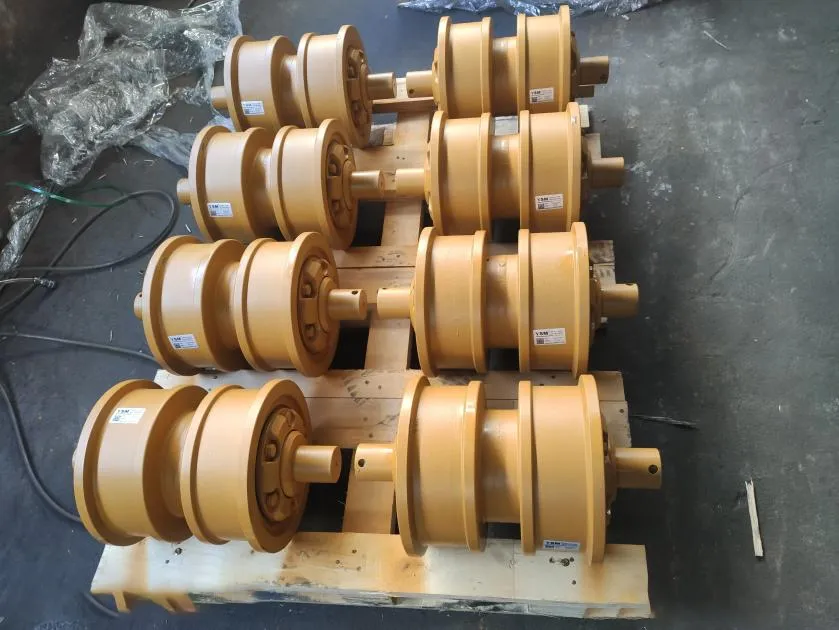
The carrier roller sits above the track frame and supports the return side of the track chain. It helps control the upper chain path between the front idler and drive sprocket. Depending on the machine design, there may be one or more carrier rollers on each side.
The component is different from a lower track roller. Lower rollers carry machine weight along the bottom run, while the carrier roller supports the upper run. Their shells, shafts, brackets and mounting dimensions are not interchangeable simply because the tread diameter looks similar.
The upper chain can lift away from a carrier roller in some static positions, especially when track sag, ground shape or machine geometry changes. A roller that does not move during one brief observation is therefore not automatically seized. Diagnosis requires repeatable contact and evidence that the chain is sliding rather than rolling over the tread.
How to Confirm That the Carrier Roller Is Not Turning
Start with a shutdown inspection. Clean enough material to expose the roller tread, end faces, mounting bracket and the chain surface that contacts the roller. Photograph both sides of the machine under similar conditions.
- Look for a single polished band or flat area on the roller tread.
- Check whether packed mud, stone, wire or frozen material physically blocks rotation.
- Inspect the seal area for oil, wet dust or a cleaned streak below the roller.
- Check the upper chain for sliding marks directly above the suspected roller.
- Compare the opposite-side carrier roller for contact pattern, contamination and leakage.
If the site procedure permits a rotation check, a qualified technician may apply a removable witness mark while the machine is isolated, then move the machine under controlled conditions and re-isolate it before inspecting the mark. No person should remain beside, above or inside the track envelope during movement. Follow the OEM procedure rather than improvising a test.
Why an Excavator Carrier Roller May Stop Turning
1. Packed debris on top of the track frame
Mud, clay, demolition fragments, vegetation and frozen material can wedge between the roller, bracket, frame and chain. The upper chain may then slide over the roller. Cleaning is the first check because it is visible, reversible and commonly affects track movement.
2. Seal leakage and loss of internal lubricant
A wet seal area or oily dust can indicate lubricant loss. Continued operation can damage the internal bearing or bushing surfaces until the shell becomes rough, tight or stationary. The absence of a visible leak does not prove that the internal assembly is healthy.
3. Internal seizure or mechanical damage
Corrosion, contamination, internal wear, shaft damage or impact can restrict rotation. A roller that binds after cleaning, has a pronounced flat spot or produces metal debris needs qualified evaluation. Many sealed rollers are serviced as assemblies; do not drill, heat or refill one unless the exact service procedure authorizes it.
4. Loose or distorted mounting
A loose bracket, damaged bolt, cracked mount or distorted frame can shift the roller away from its intended chain path. Tightening hardware without checking the mounting face and frame condition may conceal the cause.
5. Track tension, alignment or chain-condition effects
Incorrect tension, chain pitch wear, stiff joints, frame alignment and guard contact can change how the upper run loads the roller. These factors may not seize the internal roller directly, but they can create abnormal side contact, impact or sliding that accelerates failure.
Safe Carrier Roller Inspection Sequence
Use the same sequence on both sides so that differences are meaningful. Allow the undercarriage to cool before close work. Do not judge temperature by touching the roller; use the approved inspection method and instrument if temperature comparison is required.
- Secure the machine. Park level, lower the attachment, stop the engine and apply the specified isolation procedure.
- Record the as-found condition. Photograph packed material, chain position, leakage and fresh contact marks before cleaning.
- Clean carefully. Remove material with tools and methods permitted by the manual. Avoid directing high-pressure water at seals.
- Inspect the tread. Look for flat spots, scoring, chipping, side wear and one concentrated polished band.
- Inspect seals and end faces. Note wetness, oily dirt, heat discoloration, cracking or displacement.
- Check mounting integrity. Inspect bolts, bracket, frame and weld areas without assuming that a loose bolt is the only problem.
- Inspect connected parts. Check the upper chain, track tension, stiff joints, guards, idler, sprocket and lower rollers.
- Measure to the correct standard. Use the exact machine manual and component wear chart.
Diagnostic Clues Around a Non-Rotating Top Roller
| Observed clue | Possible contributors | Next check |
|---|---|---|
| Roller turns after cleaning | Packed mud, stone, wire or frozen debris | Inspect tread damage and improve cleaning frequency for the actual material |
| Wet seal area or oily dust | Seal damage or lubricant loss | Stop before internal damage progresses; assess the roller assembly |
| One flat, bright tread area | Chain sliding over a stationary roller | Confirm repeatable non-rotation and inspect the upper chain contact surface |
| Heavy flange wear on one side | Alignment, side loading, chain path, guard or mounting issue | Compare both sides and measure the full undercarriage geometry |
| Roller rotates roughly after isolation | Internal wear, corrosion, contamination or shaft damage | Follow the service manual; do not force or heat a sealed assembly |
| Chain alternately hits and leaves the roller | Tension, sag, stiff joints, frame position or worn chain | Clean first, then measure with the exact model procedure |
| Bracket movement or cracked paint line | Loose hardware, damaged mounting face or frame stress | Remove from service until mounting integrity is verified |
No single clue proves the full failure mode. A flat spot confirms sliding at that location, but the original cause may be debris, internal seizure, mounting movement or a combination of system conditions.
Should You Clean, Repair or Replace the Carrier Roller?
Cleaning may be sufficient only when the obstruction is removed, the roller then rotates normally, the seal is dry, the tread remains within the correct wear limit and the mount is sound. Record the event and increase inspection frequency if the same material continues to pack around the roller.
Replacement is commonly considered when the sealed assembly leaks, binds, has a damaging flat spot, exceeds wear limits or has structural damage. The exact decision depends on the roller design and service information. Some components are not intended for field rebuilding.
Do not replace the roller in isolation if the chain has severe pitch wear, stiff joints or abnormal rail contact. A new roller running under a worn or misaligned chain can develop the same pattern. Check the idler, sprocket, lower rollers, guards, tension system and track frame as one connected system.
Prevention: Cleaning, Operation and Records
Inspect the top of the track frame during each scheduled walk-around and at intervals suited to the material. Sticky clay, waste, demolition debris, vegetation and freezing conditions can require more frequent cleaning than dry granular soil.
- Remove packed material before it hardens or freezes around the roller.
- Check for leakage, loose mounting hardware and fresh sliding marks.
- Maintain track tension by the exact machine method and working condition.
- Avoid unnecessary high-speed travel, repeated one-direction turning and severe side loading.
- Record machine hours, site material, cleaning intervals and component changes.
- Measure both sides with the same tools, reference points and conditions.
Trend data is more useful than an isolated photograph. Comparable measurements can show whether the carrier roller is wearing with the rest of the undercarriage or failing unusually early.
Excavator Carrier Roller Fitment Checklist
A visual match is not enough. Carrier roller mounting, tread profile and serial-break details can change within one model family. For a fitment review, provide:
- equipment brand, complete model and model suffix;
- serial number or PIN and a clear nameplate photograph;
- part name, quantity and readable part number if available;
- overall, side, end, mounting and seal-area photographs;
- requested dimensions and the measurement method;
- mounting-hole spacing, tread width and diameter where requested;
- track-chain or link details if the chain contact pattern is abnormal;
- destination country and working conditions.
Compatibility and availability must be confirmed before ordering. Do not assume that rollers from two similar excavator models or production generations are interchangeable.
Frequently Asked Questions
Can I keep working if the excavator carrier roller is not turning?
Continued sliding can create a flat spot and accelerate chain or roller wear. Stop, clean and confirm the condition. If non-rotation continues or leakage and damage are present, request qualified service.
Does a carrier roller need to spin freely by hand?
Resistance varies with sealed design, lubricant, temperature and condition. Use the service manual and a qualified inspection. Do not use a generic free-spin test as the only acceptance standard.
Can tight track tension seize the carrier roller?
Incorrect tension changes undercarriage load and contact, but it does not prove an internal seizure. Clean the track and measure tension by the exact model procedure, then inspect the roller and connected components.
Why is the top roller worn flat on one side?
A localized flat suggests the chain slid across a roller that was not rotating normally. Debris, internal damage or mounting issues are possible. Side-biased wear also calls for alignment and chain-path checks.
Is a carrier roller the same as a track roller?
No. The carrier roller supports the upper chain run; lower track rollers carry the machine along the bottom run. Confirm the exact part name and mounting before ordering.
Technical References
- Caterpillar: What to Know About Excavator Undercarriage Maintenance - daily component, hardware and tension checks.
- Caterpillar: Dozer Undercarriage Maintenance - general carrier-roller debris and rotation mechanism; apply only with machine-specific excavator instructions.
- ITM: Undercarriage Wear and Care - upper-roller flat-spot troubleshooting and undercarriage wear patterns.
This educational article does not replace the machine Operation and Maintenance Manual, service manual, site risk assessment or qualified inspection.
Ask About Excavator Carrier Rollers and Related Undercarriage Parts
We can check suitable supply options for carrier rollers, track rollers, front idlers, sprockets, track chains, track shoes, bolts and related undercarriage parts after reviewing the exact machine and application.
Corporate Email: sales@china-ysm.com
WhatsApp: +86-18606961587
For a fitment check, send the equipment brand, complete model and suffix, serial number or PIN, part name, part number, clear photos, requested dimensions, quantity, destination country and working condition. Compatibility and availability must be confirmed before ordering.