
Excavator Undercarriage Parts Guide
Excavator Sprocket Wear: 6 Signs and Track Chain Matching Tips
A worn drive sprocket does more than change tooth shape. It can disturb engagement with the track chain, create abnormal noise and concentrate wear on bushings. This guide explains what to inspect before ordering a replacement.
Quick Answer
Common signs of excavator sprocket wear include pointed or asymmetric teeth, cracks or broken teeth, uneven polishing across the tooth face, poor seating between teeth and bushings, new travel noise, and repeated wear after a chain or sprocket replacement. These signs justify inspection, but replacement should be based on the correct wear gauge or service limit for the exact machine. The sprocket and track chain should always be evaluated together because their pitches and contact surfaces work as a matched wear system.
What Does an Excavator Drive Sprocket Do?
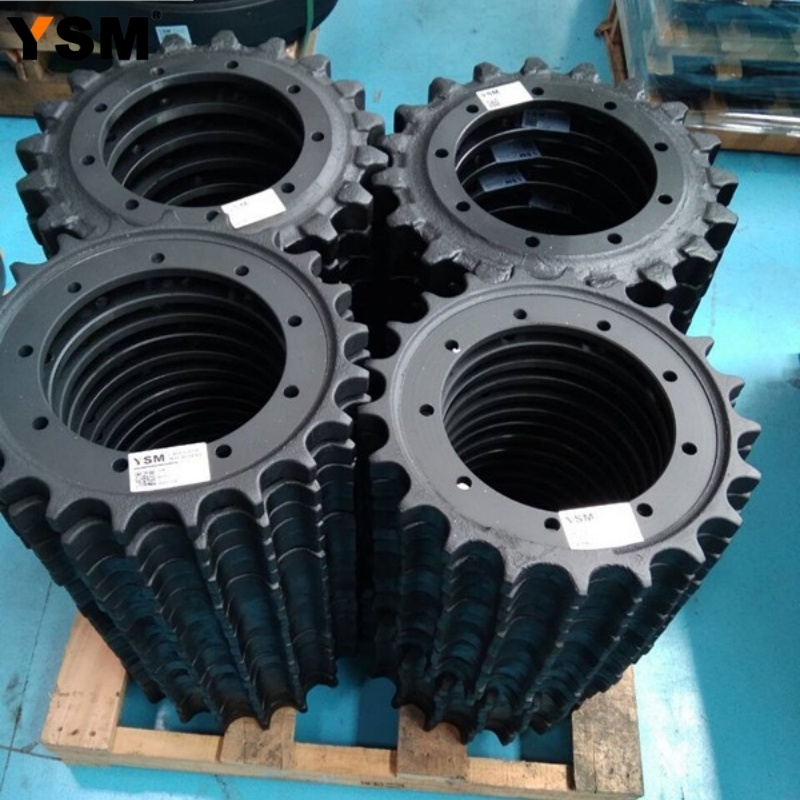
The final drive supplies rotating force, while the drive sprocket transfers that force into the track chain. Each sprocket tooth enters the space between track-chain bushings and pushes the chain around the undercarriage. Smooth travel depends on the tooth profile, chain pitch, alignment and track tension working together.
Many excavators use a complete sprocket ring bolted to the final-drive hub. Some heavier tracked machines use separately replaceable sprocket segments. These designs are not interchangeable simply because their outside diameters look similar. Mounting pattern, tooth count, tooth profile, chain pitch, offset and machine configuration must all be verified.
Safety Before Close Inspection
Park the excavator on firm, level ground where possible, lower the attachment, isolate the machine and follow the Operation and Maintenance Manual. Never reach between the sprocket and chain, release track-adjuster pressure, raise the machine or rotate the track unless qualified personnel are using an approved procedure. Stored grease pressure and heavy track components can cause serious injury.
6 Signs of Excavator Sprocket Wear
1. Tooth Profiles Look Pointed, Hooked or Asymmetric
A new sprocket has a consistent tooth form designed for its matching chain. As wear develops, the working flanks may lose material and the teeth can appear thinner, pointed or curved more strongly in one direction. Do not diagnose condition from the tooth tip alone: clean the sprocket, inspect both flanks and compare several teeth around the full circumference.
2. Cracks, Chips, Bent Teeth or Missing Material
Impact damage is different from gradual surface wear. Cracks at a tooth root, broken tooth sections, deformation or loose segment hardware require prompt qualified assessment. Continuing to travel can increase shock loading and damage the chain or mounting area.
3. Contact Marks Are Uneven Across the Tooth Width
The chain should engage the sprocket on a controlled running path. Heavy polishing on only one side, side-face gouging or unequal wear between the left and right sprockets may indicate alignment, guide, roller, tension or operating-condition issues. The wear mark is a clue; it does not identify one cause by itself.
4. Track Bushings Do Not Seat Smoothly Between the Teeth
Excessive gaps, climbing, binding or an inconsistent release point can occur when the sprocket profile and effective chain pitch no longer match. Internal pin-and-bushing wear increases chain pitch over time. The chain may then contact the tooth at a different point, accelerating wear on both parts.
5. New Clicking, Popping, Vibration or Jerky Travel Appears
Abnormal sound or movement during travel can be associated with poor sprocket engagement, but it can also come from a seized roller, incorrect track tension, packed debris, damaged links, final-drive problems or misalignment. Stop and inspect safely instead of treating noise as proof that the sprocket alone has failed.
6. A New Chain or Sprocket Develops Abnormal Wear Quickly
Early wear after replacement may indicate that a new part was installed against a heavily worn mating component. It can also result from incorrect fitment, tooth count, chain pitch, alignment, mounting condition or tension. Recheck the complete undercarriage and the part-identification data before blaming material quality.
Why Do Excavator Sprockets Wear Prematurely or Unevenly?
| Possible factor | How it affects engagement | What to check next |
|---|---|---|
| Track-chain pitch wear | Changes where bushings contact and release from the teeth | Measure multiple links using the correct chain procedure and wear chart |
| Track tension too tight or too loose | Changes load, impact and chain seating around the sprocket | Use the exact model's sag method under the specified conditions |
| Mud, stones or abrasive material | Packing can effectively tighten the track; abrasive particles increase surface wear | Clean the undercarriage and review the actual working environment |
| Frequent reverse travel or repeated directional habits | Can concentrate loaded contact on particular bushing and tooth surfaces | Review travel direction, distance, speed and turning pattern |
| Misalignment or worn guiding components | Moves the chain toward one side of the sprocket face | Compare roller flanges, idler guides, chain path and left/right wear |
| Mixed or incorrect components | Wrong pitch, offset, tooth form or wear condition prevents proper contact | Verify the complete model, serial number, part numbers and dimensions |
| Loose bolts or damaged mounting faces | Allows movement, uneven loading or segment displacement | Inspect hardware and mating surfaces using the correct service procedure |
How to Inspect Excavator Sprocket Teeth
- Record the machine identity. Note the complete model, serial number or PIN, hours and undercarriage configuration.
- Clean the inspection area. Remove mud and debris by an approved method so the tooth roots, flanks and mounting hardware are visible.
- Inspect more than one tooth. Look around the full circumference because local impact damage may not represent overall wear.
- Compare both sides. Different left/right patterns can reveal operating or alignment influences.
- Check the mating chain. Inspect bushings, links, pins, seals, track hardware and chain path. Measure pitch using the correct procedure.
- Use the specified gauge or limit. Final wear percentage and replacement timing require the correct OEM or verified supplier data for that sprocket.
- Record photos and measurements. Consistent records make changes in tooth profile and chain pitch easier to track.
Do not use a photograph alone to assign a precise percentage worn. Camera angle, dirt and tooth position can make the profile look more or less severe than it is.
Why Track Chain and Sprocket Matching Matters
The sprocket and chain do not need to be the same age in every valid repair, but they must remain geometrically compatible. A heavily worn chain has a different effective pitch from a new chain. A heavily worn sprocket has contact surfaces shaped by the chain that produced the wear. Mixing one severely worn part with one new part may cause concentrated contact, noise or accelerated bedding wear.
Before deciding whether to replace only the sprocket, only the chain or both, measure the relevant components and check:
- chain pitch and pin-and-bushing condition;
- sprocket tooth profile and wear limit;
- track tension and adjuster position;
- roller, carrier roller and idler wear;
- alignment and side-contact patterns;
- site conditions and recent operating history.
Replacement and Fitment Checks Before Ordering
“Looks similar” is not a reliable sprocket identification method. Two sprockets can have similar outside dimensions but different offsets, tooth counts, bolt patterns or profiles. Confirm fitment before ordering or installation.
Information to Send for Sprocket Matching
- machine brand and complete model, including suffix;
- serial number, PIN or clear nameplate photo;
- existing sprocket or segment part number, if available;
- clear front, side, tooth and mounting-face photos;
- tooth count, mounting-hole count and requested key dimensions;
- matching track-chain part number or measured pitch data;
- required quantity and destination country.
Hardware, tightening procedure and service limits must come from the correct service information. Grinding worn teeth into a new shape, welding tooth material without an approved repair specification or reusing damaged mounting hardware can introduce additional risk.
Maintenance Practices That Support More Even Wear
- Clean packed material before it changes track tension or hides damage.
- Check track sag using the model-specific method and specification.
- Inspect chains, rollers, idlers and sprockets as one system.
- Reduce unnecessary high-speed or long-distance travel where site planning allows.
- Avoid excessive reverse travel and repeated sharp turns where practical.
- Record measurements by machine hours and working condition, not only by calendar date.
Frequently Asked Questions
What is the difference between a final drive and a sprocket?
The final drive supplies reduced-speed, high-torque rotation. The sprocket is the toothed wear component attached to the output hub that engages the track chain. A travel problem can involve either component or another part of the undercarriage, so inspection should separate hydraulic or drive faults from tooth-and-chain wear.
Do pointed sprocket teeth always mean immediate replacement?
They are an important wear sign, but appearance alone does not establish the remaining service limit. Inspect for damage and poor engagement, then compare measurements with the correct gauge or wear data for the exact part.
Should excavator sprockets and track chains always be replaced together?
They should always be inspected together. Whether both require replacement depends on their measured wear, compatibility and the repair plan. Installing one new component against a severely worn mating component can create poor engagement and premature wear.
Can incorrect track tension damage a drive sprocket?
Incorrect tension changes the loads and impacts within the complete undercarriage and can contribute to chain and sprocket wear. Use the exact machine's method and specification rather than a universal sag value.
Can a worn sprocket cause an excavator track to come off?
Poor engagement can contribute to a derailment risk, but a thrown track can also involve tension, chain wear, idlers, rollers, guides, damage, debris or operating conditions. Inspect the complete system before assigning the cause.
Need an Excavator Sprocket or Matching Track Chain?
We are a China-based manufacturer and wholesale supplier of construction machinery undercarriage parts. We can check suitable sprockets, sprocket segments, track chains, track rollers, carrier rollers, idlers, track shoes, track groups and related fasteners for many mainstream excavator and bulldozer applications.
Compatibility and availability must be confirmed before ordering. Please send the complete machine model, serial number or PIN, part number, clear photos, requested dimensions, quantity and destination country.
Corporate Email: sales@china-ysm.com
WhatsApp: +86-18606961587
Technical References
- Caterpillar: What to Know About Excavator Undercarriage Maintenance
- Caterpillar: Your Six-Step Excavator Maintenance Checklist
- Hitachi Construction Machinery UK: Undercarriage 101
- Hitachi Construction Machinery UK: Keeping on Track
- Komatsu: Undercarriage Maintenance Tips
Brand names are used only to identify technical reference sources. This general educational article does not replace the Operation and Maintenance Manual, service information or inspection of a specific machine.