
Crawler Excavator Maintenance Guide
Excavator Undercarriage Inspection Checklist: 8 Areas to Check
A practical walk-around guide for checking track shoes, chains, rollers, idlers, sprockets, track tension and uneven wear before small problems spread through the complete running gear.
Quick Answer
A useful excavator undercarriage inspection has two levels. First, make a regular visual check for loose hardware, broken parts, leaks, packed debris and uneven wear. Second, arrange periodic measurements of the track chain, rollers, idlers and sprockets against the correct wear limits for the exact machine. Visual checks help find obvious defects; measurements and wear charts are needed to estimate remaining service life.
Why Inspect the Complete Excavator Undercarriage?
The undercarriage works as one system. Track shoes transfer the machine load to the ground. Track chains run over the rollers and idlers. Sprockets engage the chain and transmit travel force. The adjuster controls the position of the front idler and helps maintain the specified track sag.
Because these parts work together, one abnormal condition can affect several components. A seized roller may change the contact pattern on the chain. Incorrect track tension may increase load on the links, bushings, rollers, idler and sprocket. A worn chain running on a new sprocket may also produce poor engagement. For this reason, replacing the most visible worn part without checking the rest of the system can lead to repeat wear.
Ground conditions and operating habits matter as well. Abrasive sand, packed mud, rocks, long travel distances, frequent reversing, repeated sharp turns and slope work can produce different wear patterns. Inspection records should therefore include the machine hours and the conditions in which it has been working.
Safety Before Inspection
Park on firm, level ground where possible, lower the attachment, secure the machine and follow the shutdown, isolation and blocking instructions in the machine's Operation and Maintenance Manual. Do not enter a pinch point, work under an unsupported machine or rotate a raised track unless the task is performed by qualified personnel using an approved procedure.
How to Prepare for a Useful Inspection
- Identify the machine. Record the brand, complete model, serial number or PIN, hour-meter reading and track configuration.
- Clean the running gear. Remove packed mud, stones and other debris using an approved method. A clean surface makes cracks, leaks and missing hardware easier to see.
- Inspect both sides in the same order. A repeatable route makes it easier to compare the left and right track frames.
- Use consistent photos. Photograph the same components from similar angles and include a scale when recording wear.
- Note recent work. Record any new chains, rollers, sprockets or tension adjustments so that mixed wear conditions are not overlooked.
Excavator Undercarriage Inspection Checklist: 8 Areas
1. Track Shoes and Shoe Hardware
Check each accessible track shoe for bent or broken grousers, cracks around bolt holes, heavy edge wear and impact damage. Look for loose, missing or damaged bolts and nuts. A clean, bright movement mark around a fastener can be a warning that the joint has shifted.
Do not assume: The widest shoe is not automatically the best choice. Shoe width should match ground conditions, machine configuration and the manufacturer's application guidance.
2. Track Chain, Links, Pins and Bushings
Look for cracked or damaged links, seized joints, displaced seals, unusual side wear and visible separation between shoes and links. Check whether the chain sits consistently on the rollers and engages the sprocket evenly.
The phrase “stretched chain” usually describes increased track pitch caused by internal wear at pins and bushings; the steel links themselves have not simply stretched like an elastic band. Pitch growth must be measured using the correct method and compared with the appropriate wear data.
3. Track Rollers (Bottom Rollers)
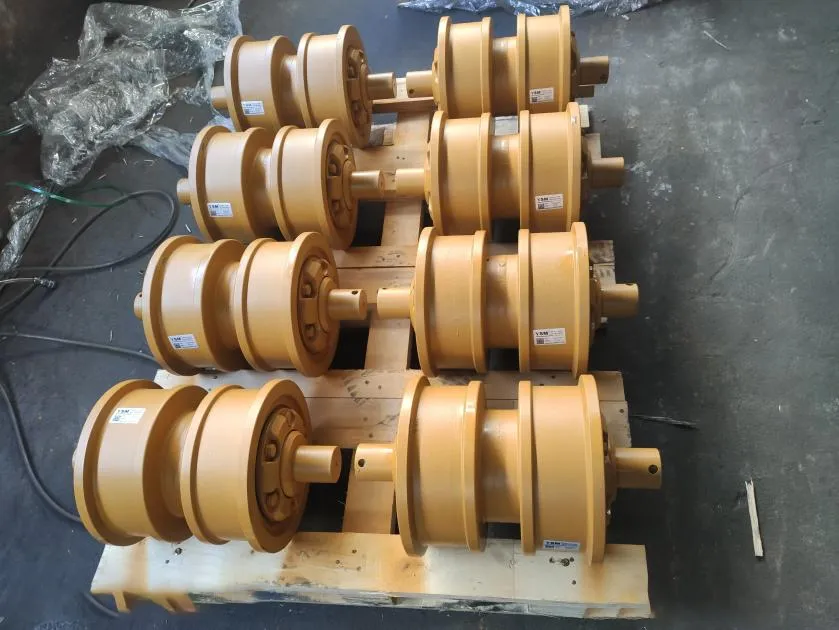
Inspect roller shells, treads and flanges for cracks, flat spots, stepped or uneven wear, and signs of contact outside the normal running path. Check around seals and end collars for oil leakage. A roller that does not rotate correctly, makes abnormal noise or develops unusual heat requires closer service inspection.
Do not judge all rollers from one sample. Front, center and rear positions may wear differently, so each roller should be checked and recorded separately during a detailed measurement.
4. Carrier Rollers (Top Rollers)
Check the carrier roller tread and flange, mounting area and seals. Look for leakage, cracks, loose hardware, an abnormal upper-chain path or evidence that the chain is rubbing the track frame. Packed debris around the upper run can hide damage and alter how the chain sits.
5. Front Idlers and Adjuster Area
Inspect idler treads and flanges for impact damage, uneven contact and leakage. Check that the idler travels squarely in its guides and that the left and right sides show a comparable position and wear pattern.
An idler positioned unusually far forward can be associated with pitch wear or an adjustment issue, but its position alone is not a complete diagnosis. Confirm chain measurements, track sag, adjuster condition and the correct configuration before deciding what to replace.
6. Sprockets or Segments
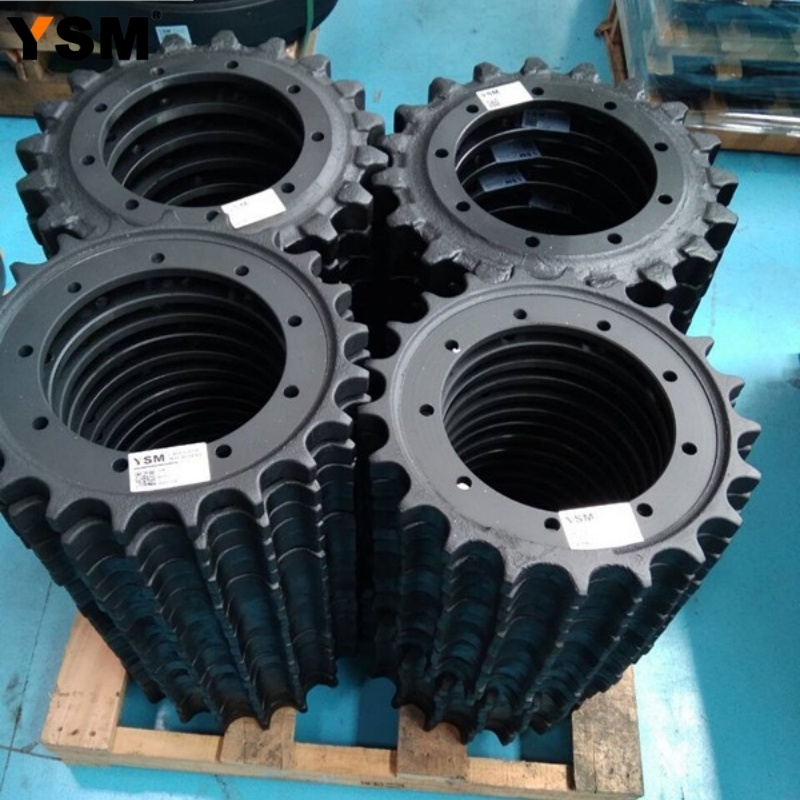
Look for cracked, bent, broken or heavily worn teeth, loose segment bolts and uneven contact marks. Teeth that have become noticeably pointed, hooked or asymmetric may indicate advanced wear or poor engagement, but the correct gauge or wear chart should be used for the final decision.
Inspect sprocket and chain wear together. Installing a new sprocket against a severely worn chain, or the reverse, can prevent the components from sharing load as intended.
7. Track Tension and Alignment
Check track sag using the method and specification for the exact model, track type and working condition. Both overly tight and overly loose tracks can accelerate wear or create operating problems. Mud and other packed material can effectively tighten the track while the machine is working.
Observe whether the chain runs centrally over the rollers and idler. Compare both sides for different sag, side contact or an uneven travel path. Never apply a universal sag value taken from another model.
8. Track Frame, Guards and Final-Drive Area
Inspect the track frame and accessible mounting areas for cracks, damaged welds, bent guards, missing fasteners and packed debris. Look around the final-drive and sprocket area for fresh leakage or impact damage. A leak source must be identified correctly; oil near a roller or final drive does not automatically prove which seal has failed.
What Common Wear Patterns May Indicate
A wear pattern is a clue, not a diagnosis. Confirm the complete machine condition before assigning a root cause.
| Observed condition | Possible contributing factors | Useful next check |
|---|---|---|
| One side wears faster | Frequent slope work, repeated turning in one direction, unequal tension, alignment problems or different ground contact | Compare left/right measurements, operating route, idler position, sag and travel behavior |
| Rapid wear on both sides | Abrasive material, excessive travel, incorrect tension, severe impact conditions or an unsuitable shoe/application match | Review site conditions, travel hours, cleaning routine, tension procedure and component selection |
| Roller flange or link side wear | Side loading, misalignment, worn guides, uneven terrain or excessive turning | Check chain path, idler guides, roller positions and side-to-side measurements |
| Noise, vibration or machine pulling | Seized or damaged roller, uneven tension, chain engagement problem, debris or a travel-system fault | Stop and inspect safely; check rollers, chain path, sprockets, final drives and travel performance |
| Loose or recurring shoe bolts | Dirty joint faces, damaged hardware, incorrect tightening procedure, shoe movement or impact loading | Inspect mating surfaces and holes; follow the correct hardware and tightening specification |
| New component develops fast wear | Mixed new/worn components, fitment error, misalignment, incorrect tension or an unresolved operating condition | Verify part numbers and dimensions, then inspect the full wear system rather than the new part alone |
When Visual Inspection Is Not Enough
A visual walk-around can identify broken parts, leaks and obvious uneven wear, but it cannot provide a reliable percentage-worn figure. A detailed undercarriage inspection may measure chain pitch, link height, roller tread diameter or depth, idler wear and sprocket condition using the method specified for that component.
Record the tool, measurement location, new dimension, service limit and data source. Wear limits vary by brand, model, undercarriage option and component supplier. Use the machine manual, the correct wear chart or verified supplier data; do not transfer a limit from a similar-looking machine.
How to Make Better Repair and Replacement Decisions
- Act on safety-critical defects. Broken parts, active leakage, loose hardware, seized components, derailment risk or structural damage require prompt qualified assessment.
- Use measurements for planned replacement. Hours and appearance alone cannot accurately determine remaining wear life.
- Check component compatibility. Chain, sprocket, roller and idler wear should be evaluated as a system before mixing new and heavily worn parts.
- Correct the cause. If tension, alignment, debris, shoe selection or operating pattern contributed to wear, address it before installing replacement parts.
- Keep a baseline. Repeated measurements under comparable conditions show whether wear is balanced and whether maintenance changes are working.
Frequently Asked Questions
How often should an excavator undercarriage be inspected?
Operators should include visible undercarriage condition in the regular walk-around required by the machine manual and site procedure. The interval for detailed measurements depends on the model, hours, application, ground conditions and previous wear trend. Follow the Operation and Maintenance Manual and the fleet's maintenance program.
Can track tension be checked with one universal sag measurement?
No. Measurement position, machine setup and allowable sag can vary by machine and track configuration. Use the exact model's procedure and specification, ideally under representative working conditions.
What causes one excavator track to wear faster than the other?
Possible factors include slope work, repeated turning in one direction, unequal tension, alignment issues, component damage and different loading or ground contact. Compare both sides and review the operating pattern before naming one cause.
Can I replace only the sprocket or only the track chain?
Sometimes an individual replacement is appropriate, but the mating component must be measured first. A new sprocket and a heavily worn chain may engage poorly, and a new chain can be affected by a severely worn sprocket. Fitment and wear compatibility should be confirmed for the complete system.
What information is needed to match replacement undercarriage parts?
Provide the machine brand, complete model, serial number or PIN, part name, existing part number if available, clear photos, key dimensions, required quantity and destination country. Similar model names or visual appearance alone are not enough to confirm fitment.
Need Undercarriage Parts for Your Excavator or Bulldozer?
We are a China-based manufacturer and wholesale supplier of construction machinery undercarriage parts. Relevant supply categories include track rollers, carrier rollers, front idlers, sprockets and segments, track chains, track shoes, track groups and related track fasteners for many mainstream excavator and bulldozer applications.
Fitment is checked case by case. Please send the machine details below before requesting a quotation.
- Machine brand, complete model and serial number or PIN
- Part name and part number, if available
- Clear product and nameplate photos
- Key dimensions, required quantity and destination country
Corporate Email: sales@china-ysm.com
WhatsApp: +86-18606961587
Technical References
- Caterpillar: What to Know About Excavator Undercarriage Maintenance
- Caterpillar: Your Six-Step Excavator Maintenance Checklist
- Hitachi Construction Machinery UK: Undercarriage 101
- Volvo Construction Equipment: How to Inspect Your Machine's Undercarriage
- Komatsu: Don't Overlook the Undercarriage
Brand names are referenced for technical education only. This article is general guidance and does not replace the Operation and Maintenance Manual, service information or a qualified inspection for a specific machine.