
Inspection Guide | Crawler Excavator
Excavator Sprocket Wear Signs: Hooked Teeth and Chain Matching
Excavator sprocket wear signs include teeth that become thin, pointed, hooked, unevenly polished, cracked or chipped. Noise, chain climb and rough travel add urgency, but they do not prove that the sprocket alone has failed. The sprocket, track-chain pitch, bushings, tension, rollers, idler, guides and mounting area must be evaluated as one wear system.
What the Excavator Drive Sprocket Does
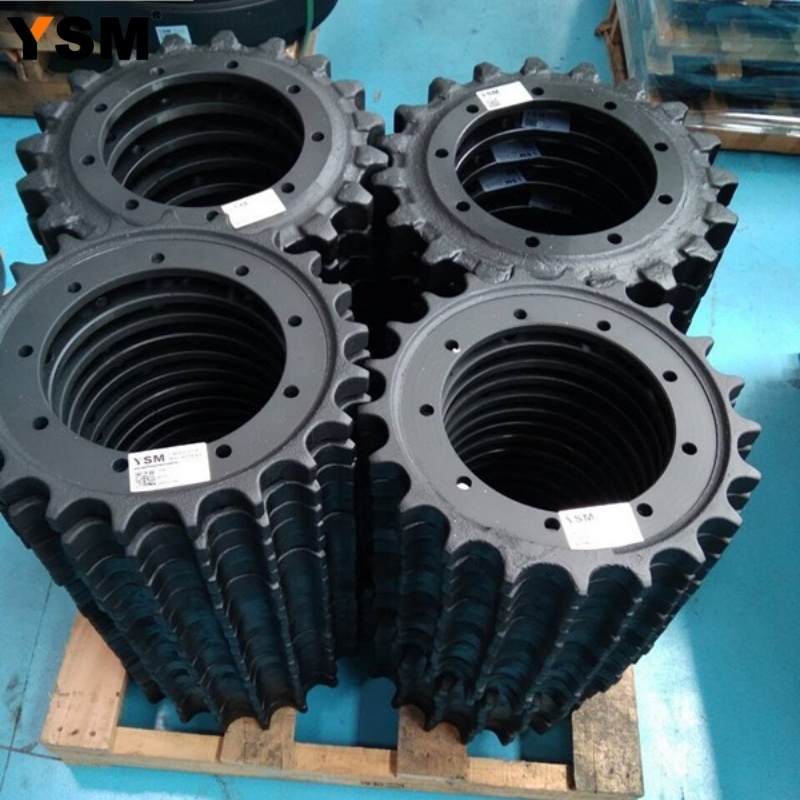
The drive sprocket is mounted at the final-drive end of a crawler excavator. Torque from the travel motor and final drive turns the sprocket, and each tooth engages the track-chain bushing to pull the chain around the undercarriage. The sprocket therefore does more than support weight: it transfers travel force through repeated metal contact.
Depending on the machine, the replaceable drive component may be a complete sprocket ring, a segmented group or another model-specific design. Tooth count, pitch geometry, center opening, mounting-hole arrangement, offset and hardware are not universal. Two components that look similar in a photograph may not engage the same chain or mount to the same final-drive hub.
A serviceable sprocket and compatible chain share load over controlled contact surfaces. As internal pin-and-bushing wear changes effective chain pitch, or as the tooth flank loses material, contact can move higher on the tooth. The resulting profile is an important clue, but inspection must include the chain and alignment rather than relying on one visible tooth.
Excavator Sprocket Wear Signs You Can Inspect
Thin, pointed or hooked teeth
A worn drive flank may become concave while the tip looks narrow or swept in one direction. This is often described as a hooked or shark-fin profile. Inspect several teeth because lighting, packed soil and one polished contact spot can distort the appearance. A hook is a reason to measure and compare, not a universal replacement gauge by itself.
Uneven wear around the circumference
One group of teeth may look more polished or thinner than another. Possible contributors include irregular chain pitch, contamination, incorrect fitment, mounting runout or a chain that does not articulate evenly. Rotate or reposition the machine only through an approved procedure so the full circumference can be examined without entering a pinch zone.
One-sided tooth contact
If the inner or outer face carries a much stronger contact band, inspect the track frame, guides, roller flanges, idler position and chain alignment. Replacing a sprocket without finding a side-load source may leave the abnormal contact pattern in place.
Cracks, chips or damaged mounting areas
Cracking at a tooth root, missing tooth material, loose mounting hardware or movement between the sprocket and hub is a stop-work concern. Do not grind a crack away or weld the component based on a generic repair assumption. Structural repairability depends on the exact component, material and manufacturer procedure.
Abnormal bushing contact marks
Polished patches can show where bushings touch the tooth, but polish alone does not confirm failure. Deep impact marks, contact near the tip, metal displacement or changing engagement around the sprocket deserve comparison with chain pitch, bushing diameter and tooth-profile reference data.
Operating Symptoms and What Else to Check
Travel symptoms can strengthen a wear diagnosis, but several faults can feel similar from the cab. Use the following table as a screening path, not as a substitute for testing.
| Observed symptom | Possible sprocket-related condition | Other items to inspect | Initial response |
|---|---|---|---|
| Rhythmic clicking or impact | Irregular tooth-to-bushing contact | Packed debris, stiff chain joint, damaged roller flange, loose hardware | Clean, isolate and compare the noise pattern with visible engagement |
| Chain climbs or skips at the drive end | Hooked tooth or pitch mismatch | Track tension, chain pitch, bushing wear, guards and idler alignment | Stop operation if derailment or component impact is possible |
| Uneven or pulsing travel | Different tooth profiles or poor seating | Travel motor, final drive, chain articulation, rollers and ground conditions | Inspect both mechanical engagement and the drive system |
| New sprocket develops rapid polish | Chain and tooth geometry may not match | Part number, pitch, tooth count, chain history and installation | Verify fitment before continued operation damages new parts |
| Repeated track derailment | Severe engagement or alignment problem | Tension, guides, idler, roller flanges, chain condition and frame damage | Request qualified inspection before returning the machine to work |
Why Chain Pitch and Sprocket Wear Must Be Matched
The sprocket is designed to engage bushings at a defined spacing. Internal wear between pins and bushings can increase the measured distance across multiple chain pitches even though the steel links do not literally stretch like rubber. When effective pitch changes, the bushings may contact a different area of the sprocket tooth.
This relationship explains why an apparently new sprocket can wear quickly when installed against a heavily worn chain, and why a new chain can engage poorly with a severely worn tooth profile. It does not mean every chain and sprocket must always be replaced together. The correct decision depends on recorded measurements, allowable limits, component condition, expected use and the manufacturer or undercarriage specialist's assessment.
Measure pitch only with the chain positioned and loaded according to the correct service method. Record the specified number of pin centers, measurement direction, temperature and machine side. A single-link measurement or a loose tape over packed mud can produce a misleading result. Also inspect bushing outside diameter and wear position where the applicable procedure requires it.
Safe Excavator Sprocket Inspection Sequence
- Identify the machine. Record brand, complete model and suffix, serial number or PIN, undercarriage option and installed shoe width.
- Park and isolate. Use stable level ground, lower the attachment and follow the operation and maintenance manual before approaching the track.
- Clean the drive end. Remove material with suitable tools while the machine is stopped. Do not use hands inside tooth pockets or direct high-pressure water at seals.
- Photograph the tooth profile. Capture inner and outer faces, roots, tips, mounting area and several positions around the ring or segment group.
- Check for structural damage. Look for cracks, chips, loose bolts, shifted segments, fretting, leakage near the final drive and abnormal contact with guards.
- Inspect chain seating. From a safe position, look for bushings riding high, unequal clearance, one-sided polish or debris preventing full engagement.
- Measure related components. Use the specified wear tools and reference points for chain pitch, bushings, rollers, idler and sprocket profile.
- Compare both sides. Differences can reveal turning habits, slope work, side loading, alignment or previous partial replacement.
- Record a trend. A dated series of measurements is more useful than an isolated visual impression.
Never apply a universal tooth thickness, pitch-growth percentage or service limit. The allowable value and measurement method depend on the exact undercarriage family.
Conditions That Can Accelerate Sprocket Wear
Incorrect track tension
A track that is too tight can increase loads through the chain, sprocket, idler, rollers and travel system. A track that is too loose can allow poor engagement, chain slap or derailment. The correct sag and measuring position vary by model, temperature and ground condition, so use the exact manual procedure.
Abrasive or packed material
Sand, rock fines and compacted mud can alter contact and restrict normal movement. Clean the undercarriage at a frequency suited to the jobsite. Material packed between the sprocket and chain can leave impact marks that resemble a component-quality problem.
Worn pins and bushings
Internal wear changes chain pitch, while external bushing wear changes the sprocket contact surface. Dry, seized or damaged joints can also interrupt smooth articulation. Inspect heat, noise, seals and joint movement rather than assigning all tooth wear to the sprocket.
Operating direction and maneuvering
Long travel, frequent reversing, high-speed travel, track spinning, sharp counter-rotation and repeated work over the drive end can affect wear distribution. Slope work and a repeated turning direction may also create side-to-side differences. Jobsite demands should be part of the maintenance record.
Alignment, guides and supporting components
Damaged guides, worn roller flanges, abnormal idler position, frame damage or loose mounting hardware can move the chain away from the intended path. Check these conditions before assuming a new sprocket will restore correct engagement.
Replace the Sprocket Alone or Inspect a Matched Set?
| Inspection result | Sprocket-only replacement may remain practical when | Broader undercarriage work is more likely when |
|---|---|---|
| Tooth profile | Damage is localized and the cause is understood | Teeth are hooked, cracked or uneven around the circumference |
| Track-chain pitch | Measured pitch remains within the applicable service criteria | Pitch or articulation no longer supports correct engagement |
| Bushings | Contact surfaces remain compatible with the proposed sprocket | External wear, cracks, dry joints or major diameter loss are present |
| Alignment | Guides, rollers, idler and frame keep the chain centered | One-sided contact or structural misalignment remains unresolved |
| Installation history | Part identity and prior replacement records are clear | Mixed components, uncertain pitch or an unexplained rapid-wear history exists |
A qualified inspection should determine whether the sprocket ring, segment group, chain assembly, bushings or additional supporting parts require service. Replacement also involves heavy parts and high fastener loads. Use approved tooling, lifting support, tightening sequence and torque specifications for the exact machine.
Excavator Sprocket Replacement and Quotation Checklist
To review a sprocket or related undercarriage request, provide:
- equipment brand, complete model and model suffix;
- serial number or PIN and market version;
- part name and readable part number, when available;
- clear photos of the complete sprocket, tooth profile, mounting face and old markings;
- sprocket type, tooth count, center opening, bolt-hole count and pattern, offset and requested dimensions;
- track-chain pitch, link count, chain part number and bushing condition;
- shoe width and undercarriage option;
- condition of rollers, carrier rollers, idler, guides and track adjuster;
- quantity, destination country and working conditions.
Compatibility and availability must be confirmed before ordering. A model name by itself is not enough because serial ranges, undercarriage options and previous modifications can change the required component.
Frequently Asked Questions
What do worn excavator sprocket teeth look like?
Common clues include thin or pointed tips, a hooked drive flank, uneven polish, side wear, chips or cracks. Clean and compare several teeth, then verify the profile with model-specific wear data.
Does a hooked tooth always mean the sprocket alone is bad?
No. Hooking can occur with chain-pitch wear, incorrect tension, abrasive material, alignment problems or mismatched components. Inspect the complete undercarriage before choosing parts.
Can I install a new sprocket on an old track chain?
Possibly, but only if measurements and component condition show compatible engagement. A worn chain can rapidly alter the contact pattern on a new sprocket.
Should both excavator sprockets be replaced together?
Not as a universal rule. Measure and document both sides. Application history, remaining wear, chain condition and the applicable service criteria should guide the decision.
Can tooth wear be judged from one photograph?
A photograph is useful for screening and quotation support, but it cannot confirm pitch, alignment or remaining serviceability. Measurements and machine identification are still required.
Technical References
- Caterpillar: What to Know About Excavator Undercarriage Maintenance - current inspection guidance for sprockets, chains, hardware and tension.
- Caterpillar: Your Six-Step Excavator Maintenance Checklist - current system-level maintenance context.
- Liebherr: Mining Application Guide - undercarriage cleaning, chain-pitch and sprocket-wear inspection context.
This independent educational guide is not affiliated with or endorsed by any machine manufacturer. Brand names belong to their respective owners. Manufacturer manuals and service data for the exact machine take priority.
Ask About Excavator Sprockets and Matched Undercarriage Parts
We can check suitable supply options for sprocket rings or segments, track chains, pins and bushings, track shoes, track rollers, carrier rollers, idlers, adjuster components and related hardware after reviewing the exact machine and undercarriage.
Corporate Email: sales@china-ysm.com
WhatsApp: +86-18606961587
Send the equipment brand, complete model and suffix, serial number or PIN, part name, part number, clear photos, requested dimensions, quantity, destination country and working conditions. Compatibility and availability must be confirmed before ordering.