
Excavator roller identification and procurement
Excavator Track Roller vs Carrier Roller: Identification and Fitment Guide
Track rollers and carrier rollers both guide the crawler chain, but they work in different positions and under different loads. Confusing them can lead to the wrong quotation, incorrect mounting dimensions, or a repair that ignores the real wear pattern. This guide explains how to identify each roller and what information is needed for reliable replacement selection.
1. Track roller vs carrier roller: the practical difference
| Feature | Track roller | Carrier roller |
|---|---|---|
| Common names | Bottom roller, lower roller, road roller | Top roller, upper roller, support roller |
| Position | Under the track frame, inside the lower track run | Above the track frame, under the return track run |
| Main duty | Supports machine weight and guides the lower chain rails | Supports and guides the upper return section of the chain |
| Typical loading | High vertical load, ground impact, digging reaction, and side load | Chain support, guidance, vibration, and material-packing load |
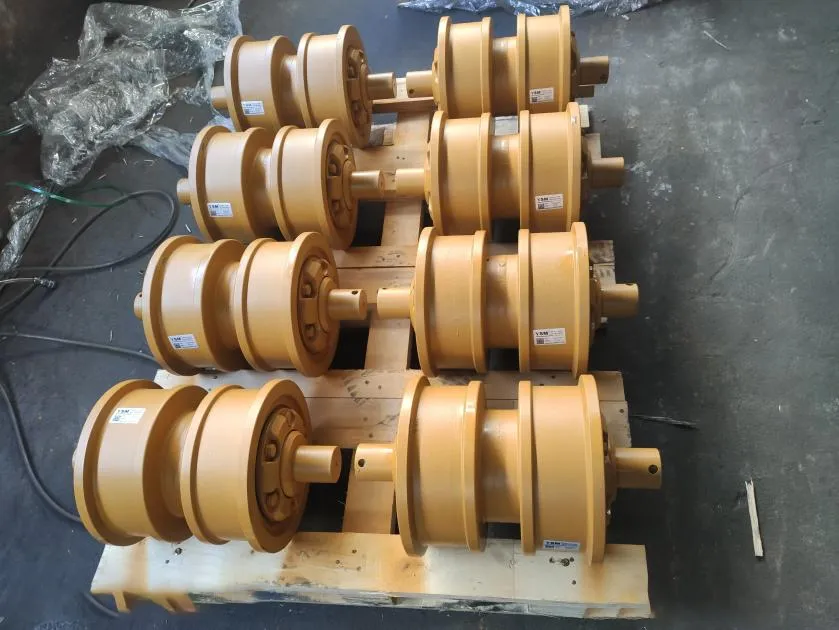
| Common designs | Single-flange and double-flange positions may be mixed in a specified sequence | Single-flange, double-flange, or model-specific tread and bracket designs |
| Frequent concerns | Tread and flange wear, leakage, seizure, shell damage, loose mounts | Leakage, seizure, flat spots, upper-chain rubbing, bracket or shaft damage |
The names are descriptive, not interchangeable. A carrier roller should not be selected from appearance alone, and a track roller cannot be replaced by a similar-diameter upper roller. Internal shafts, seals, tread profiles, brackets, bolt spacing, and load capacity may differ even when two components look alike.
2. How to identify an unknown excavator roller
Start with the installed position
Photograph the roller in the machine before removal. Include the surrounding frame, chain rails, adjacent rollers, mounting bolts, and travel direction. An installed-position photo often resolves whether the component is a lower or upper roller faster than a close-up product photo.
Record the flange arrangement
Count the guiding flanges and note which side faces inward or outward. Many excavators use a planned combination of single- and double-flange track rollers. The sequence helps control the chain but varies by machine and crawler-frame configuration. Never create a replacement sequence from a generic diagram.
Check the mounting method
Record whether the roller uses a central shaft, end blocks, a saddle bracket, vertical bolts, horizontal bolts, or another arrangement. Measure center-to-center bolt spacing, mounting width, pilot features, shaft diameter, overall length, tread diameter, and flange spacing only from agreed reference points.
Look for readable identification
Clean the non-wearing surfaces and photograph cast marks, stamped codes, labels, or old part numbers. Record the complete excavator model and serial plate separately. A readable number is useful evidence, but production substitutions and previous repairs still require cross-checking.
3. Track roller and carrier roller wear signs are not identical
| Observed condition | Possible contributors | Next inspection |
|---|---|---|
| Lower roller has active oil leakage | Seal damage, impact, abrasive contamination, internal wear, or shaft movement | Clean, confirm active leakage, compare heat and rotation, inspect the mounting |
| Lower roller flange is heavily polished | Chain side loading, alignment, idler guidance, slope work, tight turns, or frame issues | Compare rails, idler guides, guards, roller sequence, and both crawler sides |
| Carrier roller will not rotate | Internal seizure, seal loss, material packing, shaft damage, or distorted mount | Stop travel, clean safely, compare temperature, chain contact, and bracket condition |
| Upper chain rubs the frame | Worn or missing carrier roller, excessive chain wear, incorrect tension, or damaged support | Inspect every upper roller, chain pitch, adjuster position, and frame contact |
| One roller develops a flat tread | Seizure, restricted rotation, packing, internal damage, or dragging chain contact | Do not diagnose by the flat alone; check lubrication loss, heat, movement, and related parts |
Oil staining, heat, noise, vibration, and uneven wear are inspection signals rather than proof of one failure. Compare left and right sides, front and rear positions, and the machine's operating history before defining repair scope.
4. Inspect rollers as part of the complete undercarriage
A roller problem rarely exists in isolation. Clean enough material away to see the track chain, links, pins, bushings, shoes, rollers, carrier rollers, idler, sprocket, adjuster, guards, and frame. Park on stable ground, lower the attachment, isolate the machine, and follow the exact operation and maintenance manual before close inspection.
- Track chain: check pitch wear, stiff joints, rail wear, seal loss, shifted pins, and side damage.
- Front idler: inspect tread, flanges, guides, side play, and position in the frame.
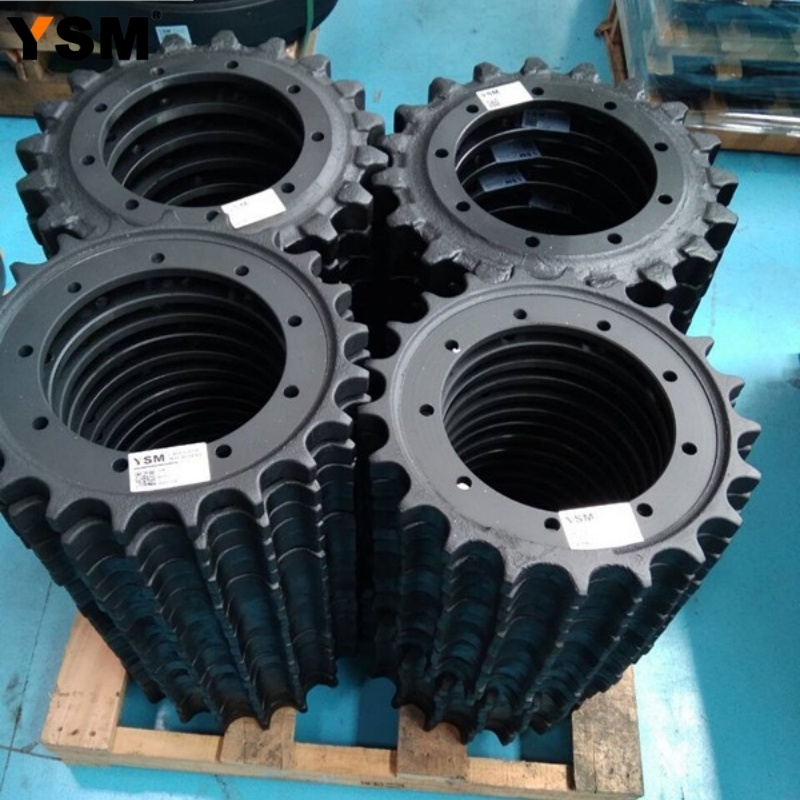
- Sprocket: inspect tooth profile and how the bushings enter and leave the teeth.
- Track tension: use the model-specific cleaning, positioning, and measurement method; no single sag value applies to every excavator.
- Frame and guards: look for bent mounts, cracked welds, missing hardware, polished contact areas, and trapped material.
If several rollers show the same flange wear, replacing one roller may not correct the cause. Alignment, chain wear, track tension, shoe width, working slope, or operating habits may be driving the pattern.
5. Fitment data needed before ordering either roller
- machine brand, complete model, suffix, serial number or PIN, and market;
- roller type: lower track roller or upper carrier roller;
- installed position and required quantity;
- single-flange, double-flange, or other tread configuration;
- readable old part number and casting marks;
- overall length, tread diameter and width, flange spacing, shaft details, and offsets;
- mounting-block dimensions, bolt-hole diameter, and center spacing;
- clear photos from the side, both ends, mounting face, and installed position;
- observed failure, working conditions, destination country, and requested quantity.
Measure an agreed reference surface and include a ruler or caliper clearly in the photo. Do not treat an approximate outside diameter as sufficient evidence. Two rollers with similar shells can have different shafts, mounts, offsets, or chain-contact geometry.
6. Common roller-selection mistakes
Ordering by base model only
One model family may have standard, long-carriage, narrow, wide, forestry, demolition, or regional configurations. Serial ranges and previous undercarriage changes can also alter the installed roller.
Ignoring roller sequence
Lower rollers may use different flange arrangements at different frame positions. Count and photograph the full sequence on both sides instead of assuming every lower roller is identical.
Replacing the visibly worst part only
A leaking or seized roller needs attention, but the chain rails, adjacent rollers, idler, sprocket, guards, alignment, and tension determine whether the replacement will run correctly.
Using generic dimensions
Catalog dimensions and field measurements must refer to the same points. Ask for a measurement diagram when possible, and verify the final selection against the machine and component records.
Frequently Asked Questions
Is a carrier roller the same as a track roller?
No. The carrier roller supports the upper return chain, while the lower track roller carries machine load through the lower chain rails.
Can all track rollers on one excavator be the same?
Some machines use more than one flange configuration or position-specific roller. Confirm the parts catalog, serial range, and installed sequence.
Does a leaking roller always need immediate replacement?
Confirm whether the oil is active leakage or old contamination, then check temperature, rotation, play, and the manual's service criteria. A hot, loose, damaged, or seized roller requires prompt qualified assessment.
Can roller diameter alone confirm fitment?
No. Shaft, mounting blocks, bolt spacing, overall length, offsets, flange geometry, and part identification are also important.
Technical references
Check Excavator Roller Fitment Before Ordering
Send the installed-position photos, complete machine identification, part markings, roller type, flange arrangement, and agreed measurements. We can check suitable supply options for requested undercarriage items such as:
- single- and double-flange track rollers;
- carrier rollers and related mounting parts;
- track chains, idlers, sprockets, track shoes, and fasteners.
Corporate Email: sales@china-ysm.com
WhatsApp: +86-18606961587
Compatibility and availability must be confirmed from the complete model, serial number, part number, clear photos, requested dimensions, quantity, destination country, and working conditions before ordering.