
22-tonne crawler excavator identification and track care
JCB JS220 Undercarriage Inspection and Replacement Parts Guide
The JCB JS220 is a 22-tonne-class tracked excavator, but the model name alone does not identify every undercarriage component. JS220, JS220LC, market specification, serial range, shoe option, and previous repairs can change the installed track group. Accurate maintenance and replacement planning therefore begin with the machine plate and the actual crawler frame.
1. Identify the exact JCB JS220 before selecting parts
Photograph the machine identification plate and record the complete model, suffix, serial number or PIN, destination market, engine or emissions version when relevant, and any application package. Photograph both crawler frames from the side, front, and rear. Include the installed shoe type and width, all rollers, carrier rollers, front idler, sprocket, guards, and visible markings.
Current JCB product information describes the JS220 as a 22-tonne tracked excavator and highlights its welded X-frame undercarriage. Published JS200, JS210, and JS220 literature also separates standard, narrow, and long-carriage configurations. That makes the suffix and serial identity essential: a listing for a base JS220 should not be assumed to match every JS220LC or regional build.
This independent educational guide is not affiliated with or endorsed by JCB. Brand and model names are used only to identify equipment and explain inspection requirements.
2. JS220 configuration details that can affect fitment
| Detail | Why it matters | What to record |
|---|---|---|
| JS220, JS220LC, NLC, SC, regional or later build | Crawler-frame length, width, installed group, and component quantities may differ | Complete designation and plate photo |
| Serial number or PIN | Production changes can divide rollers, chains, idlers, sprockets, seals, and hardware | Full number without omitted characters |
| Shoe width and grouser style | Influences flotation, leverage, bolt pattern, and application | Overall width, grouser profile, holes, and markings |
| Lower-roller and carrier-roller sequence | Helps verify frame configuration and flange arrangement | Count and photograph both sides |
| Link count, pitch, and master connection | Defines the chain group and sprocket engagement | Counts, measured pitch span, connection photos |
| Mounting and offset dimensions | Similar-looking parts may use different brackets, shafts, bolt centers, or profiles | Agreed measurement diagram and clear photos |
Official JCB parts pages encourage serial-number-based identification for rollers. Apply the same discipline to all replacement items. Previous repairs may also mean the installed component differs from the original build record, so catalog and physical evidence should agree.
3. JCB JS220 undercarriage inspection checklist
Park on firm, level ground, lower the attachment, apply the parking controls, stop the engine, and isolate stored energy according to the correct manual. Keep personnel outside the travel path. Recoil springs, track adjusters, grease pressure, and heavy components require trained service procedures.
Track chain, pins, bushings, and links
Clean enough material away to find stiff or dry joints, seal loss, cracked links, shifted pins, abnormal side wear, rail-height differences, damaged master connections, and inconsistent articulation. Measure pitch over the specified number of sections and compare it with the correct model data; do not use a universal wear percentage.
Track rollers and carrier rollers
Check every roller for active leakage, fresh oil paths, shell cracks, flat spots, restricted rotation, abnormal heat, mounting movement, and excessive flange contact. Record whether each lower roller is single- or double-flange and preserve its installed sequence. Compare front, center, rear, left, and right positions.
Front idler and track adjuster
Inspect idler tread and flanges, side play, guide contact, position in the frame, visible damage, fresh grease, valve and fitting condition, and blocked drainage. An idler that sits unusually far forward may indicate chain wear, but packing or adjustment history must also be checked.
Sprocket, shoes, guards, and crawler frame
Inspect tooth profile, chain engagement, mounting hardware, shoe bending, grouser wear, elongated bolt holes, loose fasteners, guard contact, welds, and mounting surfaces. Look for polished areas that reveal rubbing and note any side that wears faster.
4. Use JS220 wear patterns to plan the next check
| Condition | Possible contributors | Next check |
|---|---|---|
| One crawler side wears faster | Repeated turning, slope work, unequal packing, alignment, frame condition, or tension difference | Compare measurements, travel history, and both complete sides |
| Heavy lower-roller flange contact | Chain side loading, idler guidance, guard contact, tight turns, slope work, or misalignment | Rails, rollers, idler guides, frame, and operating pattern |
| Upper chain rubs the frame | Carrier-roller wear or seizure, chain wear, tension, packing, or damaged mounts | Every carrier roller, chain pitch, adjuster position, and contact marks |
| Rough or noisy sprocket engagement | Pitch elongation, tooth wear, stiff joints, debris, or mismatched components | Measure chain and sprocket as a mating system |
| Track tension changes after adjustment | Grease leakage, valve or seal issue, worn chain, packing, adjuster, or recoil problem | Repeat the exact manual method and obtain qualified inspection |
These observations narrow the investigation but do not confirm one cause. Measurements, service history, operating conditions, and the serial-specific manual must support the repair decision.
5. Check JCB JS220 track tension with the correct manual
Track sag depends on the exact crawler configuration, installed chain and shoes, ground material, machine position, and measurement method. Clean and position the excavator exactly as the applicable operation and maintenance manual directs. Do not transfer a value from another JS model, another serial range, or a generic online chart.
An over-tight track raises loads through the pins, bushings, rollers, idler, adjuster, and final drive. Excessive slack can allow impact, poor engagement, guide contact, or derailment. If the tension will not remain stable, stop repeated adjustment and inspect for leakage, packing, worn chain pitch, valve problems, or internal adjuster damage.
Never face a grease fitting while releasing pressure, dismantle a recoil unit without approved procedures, or rely on the excavator attachment as the only support for undercarriage work.
6. Information needed for JCB JS220 undercarriage parts
- complete model designation, serial number or PIN, market, and application;
- part name, installed side and position, required quantity, and readable part number;
- lower-roller, carrier-roller, track-link, and shoe counts from both sides;
- shoe width, grouser type, bolt pattern, hole count, and travel direction;
- single- or double-flange roller type and the complete installed sequence;
- clear overall, end, mounting-face, wear-surface, and installed-position photos;
- dimensions taken from agreed reference points, including offsets and bolt centers;
- observed problem, operating conditions, previous repair, and destination country.
Measure the complete wear system before defining the repair scope. A new roller, chain, sprocket, or idler cannot correct a bent mount, distorted frame, worn mating component, or alignment fault. When replacing chains or sprockets, assess their engagement and wear stage together.
Frequently Asked Questions
Are JCB JS220 and JS220LC undercarriage parts identical?
Do not assume so. Verify the complete suffix, serial range, crawler dimensions, installed counts, part numbers, mounting details, and physical measurements.
Can a JS200 roller fit a JS220?
Catalogs may show shared parts for defined serial ranges, but the base model name is not enough. Confirm through serial-specific parts information and the installed component.
How many rollers should a JS220 have?
The count depends on the exact crawler-frame configuration. Count both sides and compare the result with the correct serial-specific catalog rather than copying a generic number.
Should a new sprocket be installed without measuring the track chain?
No. Chain pitch, bushing wear, tooth profile, tension, and alignment interact. Inspect the mating system before planning replacement.
Technical references
Check JCB JS220 Undercarriage Replacement Options
Send the full machine identification, serial plate, installed-part photos, markings, counts, and agreed measurements for a model-specific review. We can check suitable supply options for requested items such as:
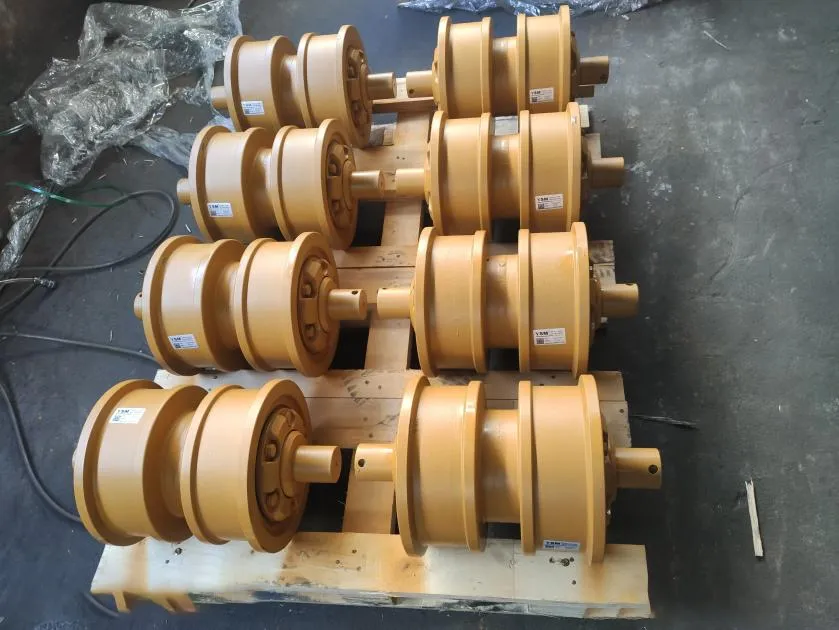
- track rollers and carrier rollers;
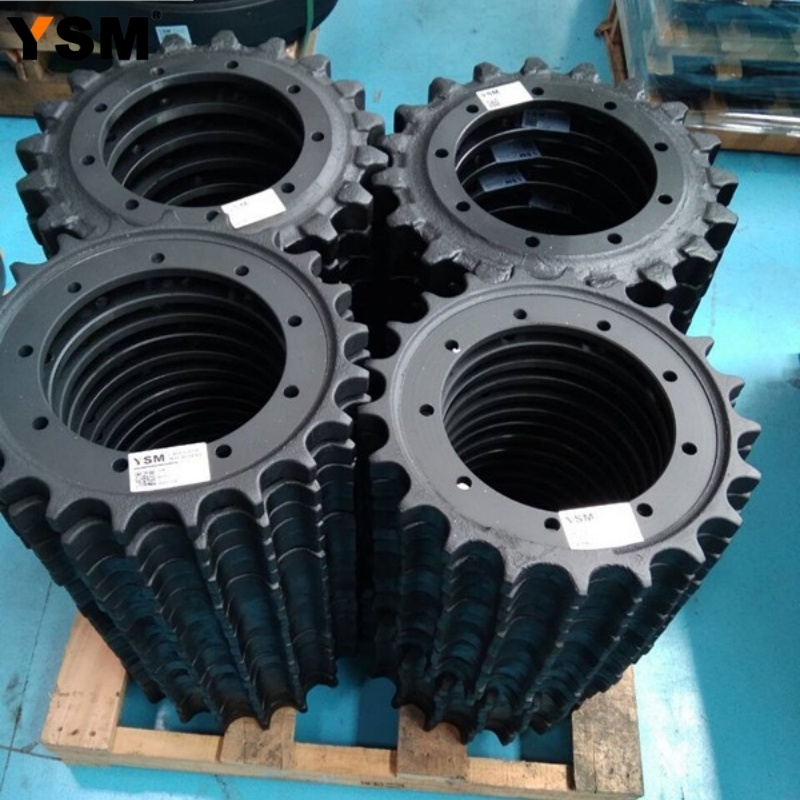
- front idlers and sprockets;
- track chains, track shoes, adjusters, and related fasteners.
Corporate Email: sales@china-ysm.com
WhatsApp: +86-18606961587
Compatibility and availability must be confirmed from the complete model, serial number, part number, clear photos, requested dimensions, quantity, destination country, and working conditions before ordering.