-
-
ApplicationOur products consist of undercarriage parts for bulldozer and excavator such as Track link,Track roller,Carrier roller,Sprocket,ldler,Track shoe,Cutting edge,End bit,Tooth Bucket,Track pin,Track bush, Engine parts,Track boit&nuts.U-bolt,Centre bolt,Wheel bolt and other related parts.

-
About UsFujian Yongsheng Machinery Parts Co., Ltd. is located in Quanzhou City, Fujian Province, which is one of the most developed regions of China Machinery Manufacturing.The company was established in 2003, after approximately 10years' effort, and now it is one of the leading construction machinery parts auto parts manufacturers in CHINA.
-
BlogSuppliers who pass Quality ManagementSystem Certification, and have onsitematerials or finished products inspected,as certified by independent third parties.
Excavator Undercarriage Maintenance Guide: Daily Inspection, Track Sag Optimization & Wear Prevention
Expert excavator undercarriage maintenance guide. Learn about daily crawler track frame cleaning, track sag adjustment, roller seal inspection, and cost reduction strategies.
Jul 14,2026
Excavator Undercarriage Maintenance Guide: Daily Inspection, Track Sag Optimization & Wear Prevention
The undercarriage group controls the bottom line of any tracked crawler excavator operation. Representing approximately half of all heavy equipment repair investments over the lifetime of a machine, managing the chassis assembly requires proactive, structured care. Excavators constantly rotate, climb slopes, and maneuver through abrasive materials, pushing intense structural stress directly into track rollers, chains, and sprockets. Implementing a precise excavator undercarriage maintenance guide is the most reliable way to secure your uptime. This guide breaks down essential daily routines, track tension calculations, and component sourcing frameworks to achieve true chassis cost reduction.
The Principle of Interdependent Undercarriage Wear
An excavator undercarriage operates as an interdependent mechanical system. Because individual parts wear down in unison, allowing mud pack accumulation or improper track adjustment to persist will cause rapid degradation across every link rail, bushing, and roller flange. Sourcing high-quality parts must be paired with precise daily fleet care to maximize your preventive maintenance ROI for heavy equipment.

1. The Daily Crawler Inspection Checklist
Fleet operators must integrate a standardized routine at the start and conclusion of every shift. Intercepting minor visual warning signs prevents extensive track framework failures in the field.
How to Clean Excavator Track Frames Effectively
At the end of the working day, operators should use a spade or heavy-duty pressure washer to remove packed soil, mud, and rocks from the track frame rollers. When packed clay is left to dry or freeze overnight, it locks the bottom track rollers and top carrier rollers in place. The next morning, the track chain link rails will slide over frozen roller shells instead of turning them, producing severe flat spots within hours and requiring immediate replacement.
Inspecting for Mechanical Seal Ingress
Walk around the machine to perform a direct CAT 320 carrier roller inspection and check all bottom roller groups. Look closely for clear oil weeping from the dual-cone mirror seals along the shaft lines. If oil leakage goes unchecked, the internal bearing will burn out from lack of lubrication, locking up the roller shell and causing premature track chain degradation.
| Maintenance Frequency | Required Inspection Target | Technical Alignment Action | Primary Sourcing / Operational Goal |
|---|---|---|---|
| Every Shift (Daily) | Track frame debris cleaning | Spade out packed clay from top and bottom rollers | Prevent roller flat spots and frozen bearing seizures |
| Weekly (50 Hours) | Track tension sag measurement | Adjust grease cylinder valve parameters | Eliminate high-tension friction and track stretch |
| Monthly (250 Hours) | Track shoe bolt torque review | Check target torque settings with a torque wrench | Prevent shoe loosening and master link ovality damage |
| Bi-Annually (1000 Hours) | Link rail height tracking | Measure remaining link depth using calipers | Map out upcoming pin & bushing turning schedules |
2. Mastering Excavator Track Sag Adjustment Mechanics
Improper track tension adjustment is a leading cause of accelerated undercarriage wear. Sourcing excellent parts will not offset the damage caused by operating with an over-tightened track chain assembly.
Technical Guide: Measuring Track Sag Correctly
To evaluate track sag, lift the machine chassis off the ground using the boom and bucket assembly, allowing the bottom track loop to hang naturally. Measure the vertical distance from the bottom of the track frame to the top face of the lowest track link rail. Review the grease cylinder tensioning tips: for standard 20-ton excavators, the target sag should rest within 40mm to 55mm. Adjust the grease valve to maintain specified slack.
The Hidden Danger of Tight Track Chains
Operating an excavator with tight tracks puts immense pressure on all internal pins and bushings. This intense load strips away internal grease films, accelerating internal pitch elongation and causing premature track stretch. Additionally, tight tracks increase load limits on final drive bearings and front idler hubs, elevating fuel consumption and reducing the machine's overall breakout efficiency.
Conversely, excessive slack causes the track chain to slap against the carrier frame at high speeds. This slack can lead to track derailment during reverse maneuvers or counter-rotation on slopes, risking severe structural impact damage to the frame components.
3. Hardness Specifications and Material Rules
To ensure a long service life under high shock loads, quality aftermarket components must meet precise induction-hardening specifications. Core materials must balance surface durability with structural core flexibility.
| Undercarriage Component | Standard Steel Grade | Surface Hardness Range | Induction Depth | Primary Failure Risk |
|---|---|---|---|---|
| Track Roller Shell | 40Mn2 / 50Mn Forged | 52 - 58 HRC | 8mm - 12mm | Flange cracking & tread grooving |
| Track Link / Chain | 35MnB Boron Steel | 50 - 55 HRC | 6mm - 10mm | Rail mushrooming & pin hole deformation |
| Track Pin & Bushing | 20CrMnTi Carburized | 55 - 62 HRC | 3mm - 5mm | Internal pitch elongation (Stretch) |
| Front Idler Rim | 35# Steel / Cast Mango | 50 - 55 HRC | 5mm - 8mm | Center tread wear & hub cracking |
4. Sourcing Strategy: Repair vs. Full Replacement Criteria
Evaluating excavator track chain wear limits requires assessing structural integrity alongside long-term operating costs.
| Diagnosed Wear Condition | Repair Strategy Option | Associated Investment Tier | Strategic Field Action |
|---|---|---|---|
| Internal Pitch Elongation Only (Links >60% remaining) | Pin & Bushing Turning | Moderate Investment | Highly cost-effective; extends chain life by up to 50%. |
| Dry Links / Individual Seal Leak | Sectional Pressing | Minimal Sourcing Budget | Isolate and replace damaged pins/seals immediately. |
| Link Rails and Bushings Both Worn Out | Not Recommended | High Capital Tier | Replace with a new track group assembly; rebuilding is not viable. |
| Completely Grooved Roller Shells | Not Recommended | Moderate Investment | Replace completely; source forged track rollers built for heavy-duty durability. |
5. Troubleshooting Undercarriage Misalignment
Asymmetric wear across undercarriage components points to structural frame tracking issues that require immediate attention.
Komatsu PC200 Track Alignment Troubleshooting Matrix
If your monthly undercarriage tracking reveals heavy wear on only one side of the bottom roller flanges, or if the track link rails show severe wear along their inside faces, the track frame is running out of parallel alignment.
Common root causes include bent front idler yokes (guide frames) or worn manganese slider pads within the track frame channels. Correcting these mechanical guide clearances early prevents localized track chain tracking problems from destroying a new track link adventures.
Multi-Brand Drop-In Compatibility Framework
Premium replacement parts are engineered to provide an exact dimensional match for major global earthmoving equipment platforms, ensuring perfect alignments and direct compatibility:
- Caterpillar Series (e.g., CAT 320, 323, 336): Designed to match original factory dimensions and track shoe bolt torque specs perfectly, minimizing structural shifting.
- Komatsu Series (e.g., PC200, PC300, PC400): Precision-machined to ensure proper grease-groove alignment, facilitating smooth grease distribution through internal pathways.
- Hitachi / Kobelco Crawler Platforms: Features deep case-hardened shells and robust center flanges to manage the high torsional loads generated during rapid counter-rotation.
Conclusion: Quality Sourcing Drives Fleet Profitability
Achieving comprehensive crawler undercarriage lifecycle optimization requires balancing daily maintenance routines with high-quality component sourcing. Avoiding low-grade casting alternatives for high-impact track shells ensures long-term operational success. Partnering with an ISO 9001:2015 certified aftermarket undercarriage components factory allows fleet operations to secure premium boron-alloyed steels and advanced dual-cone mirror seals at a sustainable investment tier, protecting machine performance and operational budgets.
Connect with Our Track Sourcing Engineers
For technical advice on track tension adjustments, custom track pad specifications, or factory-direct wholesale pricing:
Corporate Email: sales@china-ysm.com
Technical Hotline / WhatsApp: +86-18606961587
We supply precision-forged track components engineered to lower your fleet's long-term operating costs.
PREVIOUS:
Related Posts
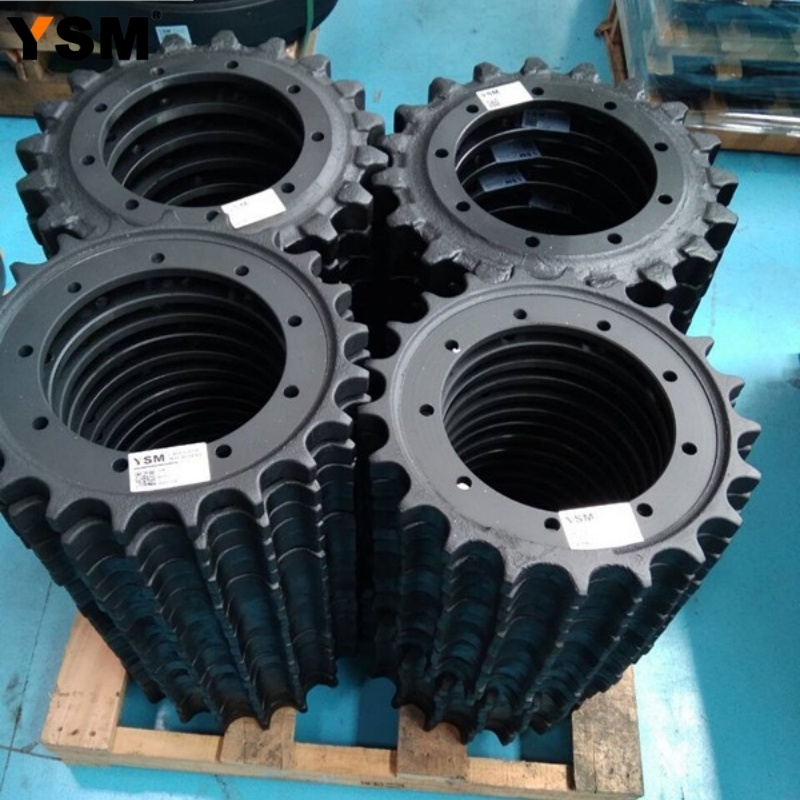
How Should The Supporting Wheels Be Selected To Avoid Stepping On Thunder?
High-quality support wheels mainly depend on the performance of its steel. The material of the roller body is generally 50Mn, 40Mn2, (MN: synonymous with the element of manganese).
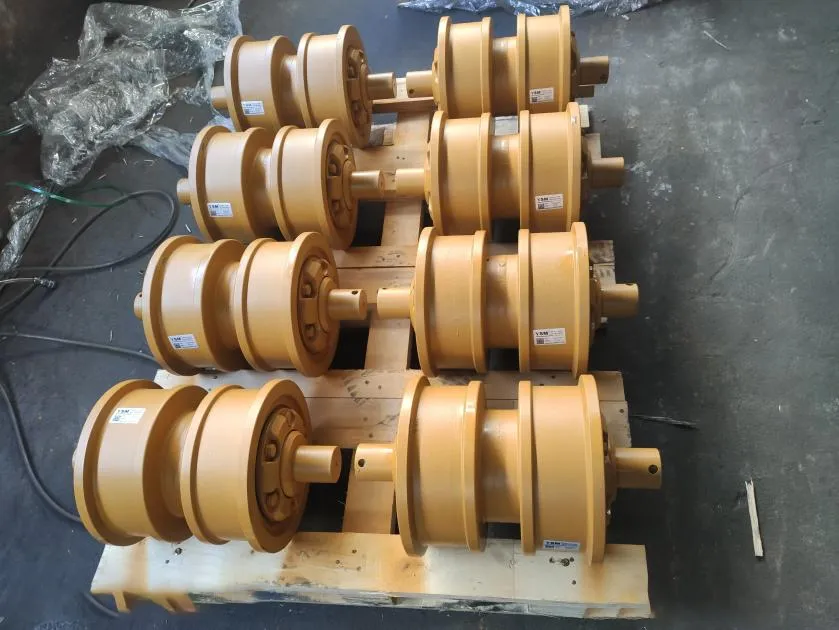
Carrier Wheels Are Suitable For Various Models At Home And Abroad
Sprocket wheels are mainly used in various crawler bulldozers, excavators, pavers, milling machines, rotary drilling rigs or other crawler machinery equipment at home and abroad.
Contact Us
E-mail :
sales@china-ysm.com
Phone/WhatsApp:
+86-18606961587
Address:
No.8 Binjiang Street, Binjiang Industrial Zone, Xiamei Town, Nan An City, Quanzhou City, Fujian Province, China
Request Quote
Andy Shi
No.8 Binjiang Street, Binjiang Industrial Zone, Xiamei Town, Nan An City, Quanzhou City, Fujian Province, China


Request Quote