
-
-
ApplicationOur products consist of undercarriage parts for bulldozer and excavator such as Track link,Track roller,Carrier roller,Sprocket,ldler,Track shoe,Cutting edge,End bit,Tooth Bucket,Track pin,Track bush, Engine parts,Track boit&nuts.U-bolt,Centre bolt,Wheel bolt and other related parts.

-
About UsFujian Yongsheng Machinery Parts Co., Ltd. is located in Quanzhou City, Fujian Province, which is one of the most developed regions of China Machinery Manufacturing.The company was established in 2003, after approximately 10years' effort, and now it is one of the leading construction machinery parts auto parts manufacturers in CHINA.
-
BlogSuppliers who pass Quality ManagementSystem Certification, and have onsitematerials or finished products inspected,as certified by independent third parties.
Heavy Equipment Drive Sprocket Guide: Wear Diagnosis, Segment Replacement & Maintenance Standards
Technical guide on heavy equipment drive sprockets and segments. Learn about sprocket wear indicators, pitch mismatch, induction hardening, and replacement timing.
Jul 14,2026
Heavy Equipment Drive Sprocket Guide: Wear Diagnosis, Segment Replacement & Maintenance Standards
The drive sprocket is the ultimate delivery point of a crawler machine's tractive power. Mounted directly to the final drive travel motor, the sprocket converts raw rotational torque into the linear movement of the track chain loop. Since undercarriages operate in abrasive and high-impact conditions, sprockets and sprocket segments handle continuous crushing force, metal-to-metal friction, and soil pack-wear. Implementing a structured maintenance routine based on this excavator sprocket segment replacement guide is vital to protect your track links from premature failure. This technical guide reviews critical wear indicators, metallurgy metrics, and cost-efficient replacement strategies for B2B fleet operations.
Understanding Sprocket Configurations: Monoblock vs. Segments
Crawler undercarriages utilize two primary drive sprocket configurations depending on the weight class and application of the machinery:
- Monoblock Sprockets (Solid Drive Sprockets): A single-piece cast ring welded or bolted directly to the final drive hub. These are standard on almost all compact to medium-sized excavators.
- Sprocket Segments: Individual bolted sector groups (typically 3 to 5 teeth per segment, forming a full wheel when combined). This modular setup is highly favored in heavy-duty bulldozers because it allows field service teams to perform replacements without removing the track frame or splitting the track chain.
Sourcing high-integrity components from a certified aftermarket crawler sprocket factory is crucial to ensure that the pitch geometry aligns perfectly with your track links.

1. Primary Crawler Sprocket Wear Indicators
Because sprocket teeth engage directly with the track chain bushings, tracking crawler sprocket wear indicators is essential to avoid destroying your track assembly. Mechanics should monitor three main wear areas during daily walkarounds:
Knife-Edge Teeth Profiles
A healthy sprocket tooth features a broad, rounded profile designed to distribute load evenly across the bushing surface. As abrasive sand and rocks grind between these components, the metal thins out, wearing the tooth top down to a sharp, pointed knife-edge. Operating with sharp teeth causes immediate, rapid scuffing on track bushings, accelerating total undercarriage decay.
Root Pocket Gouging
The root pocket is the curved saddle area between adjacent sprocket teeth where the track bushing is supposed to sit fully during engagement. If the sprocket has worn unevenly, or if there is severe soil packing, the bushing will not seat properly. This creates deep gouging or "stepping" on the tooth root, leading to sudden impact shocks that can fracture the bushings.
Pitch Mismatch Wear
When internal track link pitch elongation (commonly called track stretch) occurs, the distance between track pins increases. As a result, the track chain no longer matches the sprocket teeth spacing. This undercarriage sprocket pitch mismatch forces the bushing to slide up the tooth face rather than rolling smoothly into the root, causing rapid wear on the back-drive sides of the sprocket teeth.
| Observed Wear Indicator | Primary Root Cause | Wear Threshold / Replacement Sign | Consequence of Neglect |
|---|---|---|---|
| Knife-Edge Teeth | Continuous abrasive material grinding | Tooth top width reduced by 40% | Accelerated wear and cracking of track bushings |
| Root Pocket Gouging | Soil packing and improper track tension | Stepped pocket wear exceeding 3mm | High-frequency vibration; broken track bushings |
| Reverse-Face Wear | Frequent reverse travel / alignment drift | Asymmetrical thinning on tooth sides | Track jumping, risk of derailment on slopes |
| Pitch Mismatch | Stretched track links (worn pins & bushings) | Link pitch growth exceeds 3% | Rapid sprocket tooth tip hook wear |
2. Sourcing Tech: Forged vs. Cast Drive Sprockets
When procurement managers look to buy bulldozer sprocket segments wholesale, evaluating the manufacturing technology and metallurgy is essential. The components must handle extreme shearing loads without structural fractures.
Cast Steel Sprockets & Segments
Most standard excavator drive sprockets are cast using high-strength alloy steels. This process allows for cost-effective mass production of complex monoblock shapes with precise mounting holes.
- ✓ More affordable initial investment tier
- ✓ Excellent for standard excavators operating in general earthmoving and clay soils
- ✗ Slightly more vulnerable to internal casting voids if not quality-tested
Forged Steel Sprocket Segments
Premium bulldozer segments are forged from specialized medium-carbon boron steels (such as 35MnB). Under high-tonnage forge pressing, the steel's grain boundaries align along the load-bearing contours, producing unmatched structural density.
- ✓ Maximum resistance to structural impact cracking and chipping
- ✓ Highly recommended for large mining dozers operating in hard rock quarries
- ✗ Higher initial capital tier with specialized fabrication cycles
Induction Hardening and Depth Standards
Both cast and forged sprockets require precise heat treatment. Quality manufacturers utilize advanced induction hardening on the teeth and root pocket to meet a drive sprocket hardened depth HRC of 50 to 56. The hardening must penetrate at least 10mm to 15mm deep. This deep-case hardening ensures that as the outer surface wears over thousands of hours, the core retains its high-toughness alloy state to resist brittle cracking.
3. Replacing Sprockets: Segment Rotation vs. Full Replacement
When evaluating excavator drive sprocket replacement cost parameters, B2B managers should follow strict engineering rules to determine the most cost-effective maintenance path.
The Golden Rule of Sprocket Replacement
Never install a brand-new track chain assembly on a set of heavily worn sprockets. The worn sprocket teeth will immediately force the new track bushings into a pitch mismatch, destroying your new track chain investment within a fraction of its normal operating life. Always replace sprockets or sprocket segments when installing a new track link group.
Sprocket Segment Rotation and Bolt Care
Because bulldozers spend significant operational hours executing unilateral pushing or turning, sprocket segments on one side of the machine often wear faster than the other. If the track links are still in good condition, rotating the individual segment groups from left to right can help balance the wear profile. When performing segment maintenance, always adhere to precise bulldozer track shoe bolt torque and segment bolt specifications, using new hardware to prevent bolts from loosening under high vibration.
| Diagnosed Wear Condition | Repair Strategy Option | Associated Investment Tier | Strategic Field Action |
|---|---|---|---|
| Slightly Pointed Teeth Tips (Bushings are still excellent) | Rotate segments left to right to balance wear | Minimal Investment | Highly cost-effective; extends sprocket service life. |
| Stepped Root Pocket Wear <3mm | Weld rebuilding of root profiles (emergency only) | Moderate Investment | Temporary fix; not recommended for high-impact mining. |
| Knife-Edge Teeth Profile >40% Loss | Complete replacement of segments / monoblock | Moderate Investment | Replace segments instantly to protect the track chain. |
| Broken or Fractured Tooth Base | Immediate segment replacement | Minimal to Moderate | Replace the fractured segment immediately to prevent final drive damage. |
4. Multi-Brand Cross-Compatibility Framework
Aftermarket segments and sprockets must match original equipment specifications perfectly to avoid severe pitch mismatching. Sourcing from a certified manufacturer ensures direct drop-in compatibility:
- Caterpillar J/D Series (e.g., CAT 320, D6R, D6T, D8T): Standardized bolt-hole matrices. Bulldozer variants require precise CAT D6 sprocket segment compatibility matching to align with Sealed and Lubricated Tracks (SALT).
- Komatsu Series (e.g., PC200, PC300, D65): High-strength Komatsu PC200 drive sprocket assembly options match precise factory hub dimensions and tracking alignments.
- Shantui Series (e.g., SD16, SD22, SD32): Designed to withstand heavy pushing loads. Features extra-thick segment shoulders to handle the extreme torque generated during heavy-duty pioneering work.
Comprehensive Sprocket Preventive Maintenance Checklist
Implementing a structured maintenance routine is the most reliable way to extend the service life of your sprocket drive groups:
- Daily Shift Inspections (10 Hours): Clean out packed rocks, dry clay, and debris from the sprocket teeth pockets. Packed mud prevents the track bushing from seating properly, causing immediate pitch mismatch wear.
- Weekly Sag Verifications (50 Hours): Perform a standard track sag adjustment. Operating with overly tight tracks increases the force between track bushings and sprocket teeth, doubling the wear rate of both components.
- Monthly Structural Checks (250 Hours): Inspect segment mounting bolts for proper torque. Check for micro-cracks around the bolt holes, which can occur under extreme side-loading.
- Bi-Annual Technical Audits (1000 Hours): Measure sprocket tooth thickness using a wear gauge. Check for signs of abnormal undercarriage alignment and sprocket wear, such as heavier wear on one side of the teeth.
Conclusion: Quality Sourcing Protects Your Undercarriage Investment
Achieving successful undercarriage lifecycle optimization requires managing sprockets and segments with the same diligence applied to track links and rollers. Avoiding low-grade casting alternatives for heavy-duty applications ensures reliable performance. Sourcing case-hardened, precision-machined sprockets from an ISO 9001:2015 certified partner allows fleet managers to secure OEM-grade durability at a sustainable investment tier, protecting machine performance and operational budgets.
Consult Our Drive Group Sourcing Engineers
For custom bolt-hole cross-referencing, mining-duty segment specifications, or factory-direct wholesale pricing:
Corporate Email: sales@china-ysm.com
Technical Support / WhatsApp Line: +86-18606961587
We supply precision-forged track segments engineered to lower your fleet's long-term operating costs.
Related Posts
How Should The Supporting Wheels Be Selected To Avoid Stepping On Thunder?
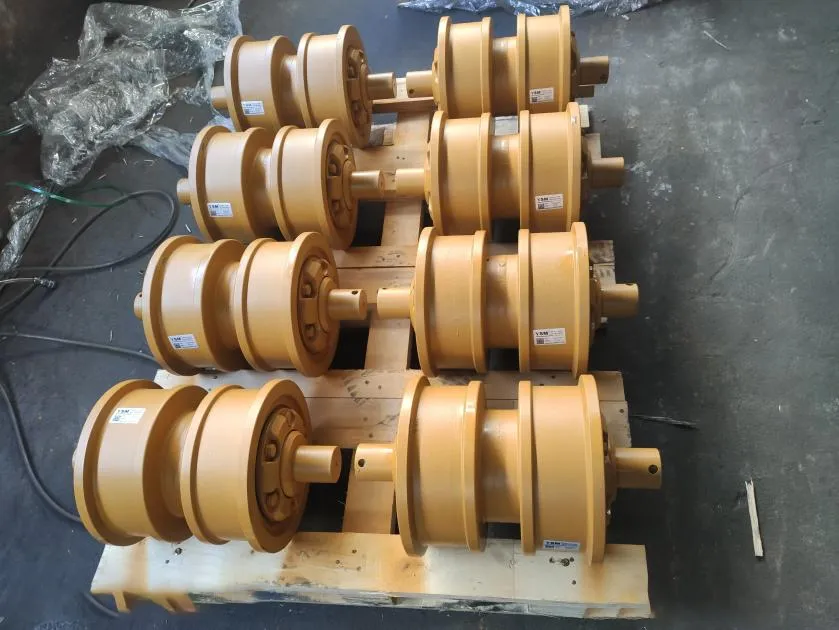
High-quality support wheels mainly depend on the performance of its steel. The material of the roller body is generally 50Mn, 40Mn2, (MN: synonymous with the element of manganese).
Carrier Wheels Are Suitable For Various Models At Home And Abroad
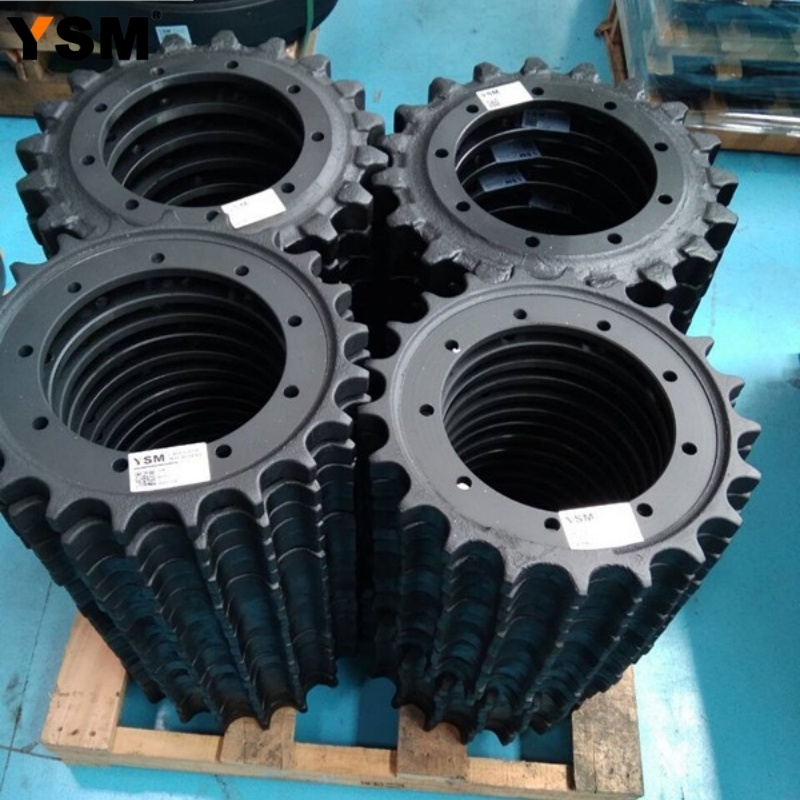
Sprocket wheels are mainly used in various crawler bulldozers, excavators, pavers, milling machines, rotary drilling rigs or other crawler machinery equipment at home and abroad.
Contact Us
E-mail :
sales@china-ysm.com
Phone/WhatsApp:
+86-18606961587
Address:
No.8 Binjiang Street, Binjiang Industrial Zone, Xiamei Town, Nan An City, Quanzhou City, Fujian Province, China
Request Quote
Andy Shi
No.8 Binjiang Street, Binjiang Industrial Zone, Xiamei Town, Nan An City, Quanzhou City, Fujian Province, China


Request Quote