-
-
ApplicationOur products consist of undercarriage parts for bulldozer and excavator such as Track link,Track roller,Carrier roller,Sprocket,ldler,Track shoe,Cutting edge,End bit,Tooth Bucket,Track pin,Track bush, Engine parts,Track boit&nuts.U-bolt,Centre bolt,Wheel bolt and other related parts.

-
About UsFujian Yongsheng Machinery Parts Co., Ltd. is located in Quanzhou City, Fujian Province, which is one of the most developed regions of China Machinery Manufacturing.The company was established in 2003, after approximately 10years' effort, and now it is one of the leading construction machinery parts auto parts manufacturers in CHINA.
-
BlogSuppliers who pass Quality ManagementSystem Certification, and have onsitematerials or finished products inspected,as certified by independent third parties.
Heavy Equipment Track Chain & Link Guide: Wear Diagnosis, SALT Care & Replacement Standards
Expert guide on crawler excavator and bulldozer track chains and links. Learn about track link assembly wear patterns, pitch elongation, SALT chain care, and replacement criteria.
Jul 15,2026
Heavy Equipment Track Chain & Link Guide: Wear Diagnosis, SALT Care & Replacement Standards
The track chain assembly is the structural spine of a crawler machine's tractive power. Representing up to half of all heavy equipment undercarriage repair investments over the lifetime of a machine, managing the chain assembly requires proactive, structured care. Crawler excavators and bulldozers continuously push, climb, and maneuver through abrasive soils, transmitting immense load forces directly into track link rails, pins, and bushings. Implementing a precise heavy equipment track chain maintenance guide is the most reliable way to secure your uptime and lower your cost-per-hour. This technical guide reviews critical wear indicators, metallurgy metrics, and cost-efficient replacement strategies for B2B fleet operations.
Anatomy of a Crawler Track Link Assembly
The track chain is a continuous loop of steel links pinned together, acting as a flexible rail system that guides the machine over the ground. The assembly depends on three key structural components working in perfect harmony:
- Track Links: Forged steel structures featuring precision-ground rails that ride against the bottom rollers. They must have extreme surface hardness to prevent wearing down.
- Pins & Bushings: The mechanical joints of the chain. The pin acts as a hinge inside the bushing, allowing the chain to bend smoothly around the sprockets and idlers.
- Internal Seals & Spacers: Polyurethane sealing structures (especially in lubricated systems) designed to keep abrasive sand out of internal contact zones while trapping vital lubricants.
Because undercarriage components wear down interdependently, a single failed seal or a stretched link can initiate accelerated wear across bottom rollers, sprockets, and idlers alike.

1. Metallurgy and Hardness Standards: Forged vs. Cast Links
When fleet managers look to buy crawler track chains wholesale, evaluating metallurgical composition is the most critical first step. Sourcing links that utilize high-grade boron-alloyed steel guarantees superior resistance to fatigue and crack propagation.
Cast vs. Forged Track Links
While some utility applications use cast track chains for lighter machines, heavy-duty crawler dozers and medium-to-large excavators rely entirely on forged links. During the forging process, steel is heated and hammered under extreme hydraulic tonnage. This compression aligns the steel’s internal grain structure, eliminating micro-porosity and internal casting voids. Forged links deliver up to 40% higher tensile strength and much higher fracture resistance compared to cast alternatives.
Induction Hardening Specifications
To resist continuous abrasion, the link rails undergo induction hardening, achieving a surface hardness of **50 to 55 HRC**. The hardening must penetrate deep enough (**6mm to 10mm**) to ensure that as the outer wear surface slowly erodes, the inner core remains highly ductile and tough to handle severe shock impacts without cracking.
| Component Group | Primary Material Grade | Surface Hardness Range | Induction Depth Standard | Primary Engineering Target |
|---|---|---|---|---|
| Track Links (Forged) | 35MnB Boron Steel | 50 - 55 HRC | 6mm - 10mm | Resist link rail wear and flange impact |
| Track Pins | 20CrMnTi Alloy (Carburized) | 55 - 62 HRC | 3mm - 5mm | Resist high shear and structural bending |
| Track Bushings | 20Mn / 40Cr Alloy Steel | 55 - 60 HRC | 4mm - 6mm | Resist extreme sprocket teeth friction |
| Master Pin Assembly | 40CrMo Forged Steel | 56 - 62 HRC | Through-Hardened | Secure chain closure under peak torque |
2. Diagnosing Track Link Assembly Wear Patterns
Executing regular track link assembly wear patterns audits is the key to preventing catastrophic failures. Maintenance teams must be trained to identify three primary wear signatures during daily and weekly walkarounds:
Link Rail Height wear (Mushrooming and Scalloping)
As the track chain rides over bottom rollers, the link rail wears down. Under heavy-duty operations, the top of the link rail can deform, showing a "mushroomed" or "scalloped" appearance. When link rail height wears past allowable limits, the bottom roller flanges will begin striking the link pin boss, producing severe vibration and damage to the chain framework.
Internal Pin and Bushing Wear (Track Stretch)
Often referred to as track stretch, this is not actually the solid steel links stretching out. Rather, it is the gradual wearing away of metal between the outer surface of the pin and the inner wall of the bushing. As this clearance expands, the center-to-center distance between adjacent pins increases, causing a pitch growth across the entire chain assembly.
Bushing External Wear (Sprocket Scrubbing)
The outer surface of the bushing experiences continuous high-friction scrubbing as it engages with the drive sprocket. High-speed travel, especially in reverse gear, accelerates this outer bushing wear, thinning the metal and making it highly vulnerable to cracking.
Technical Guide: Measuring Pitch Elongation (Track Stretch)
To perform a bulldozer track chain elongation measurement, drive the machine forward slowly on a flat floor and allow it to coast to a stop, ensuring the upper track loop is pulled straight. Measure the distance across four consecutive links (pin-center to pin-center). Compare this dimension against factory specifications. A pitch growth exceeding 3% to 4% indicates that the internal pin-and-bushing lifecycles are maxed out, and the chain is running out of pitch alignment with the sprocket teeth.
3. Sourcing Technology: Grease-Packed vs. SALT Assemblies
Selecting the right lubrication technology is a major decision when planning an excavator track link replacement criteria review. The choice dictates the lifetime cost-per-hour of your undercarriage.
Sealed and Lubricated Tracks (SALT) Care
SALT represents the gold standard for heavy-duty bulldozer operations. A synthetic oil reservoir is trapped inside a hollow pin, continuously coating the internal contact zone. High-durability dual-cone polyurethane seals keep the lubricant locked in while completely blocking dirt, grit, and moisture.
- ✓ Eliminates internal pin and bushing dry-friction wear
- ✓ Drastically delays track link pitch elongation (track stretch)
- ✓ Reduces operating noise and vibration significantly
- ✗ Requires a higher initial procurement investment
Grease-Packed / Sealed Track Chains
Standard on almost all mid-sized excavators. These use a heavy-duty grease packed during initial assembly, backed by polyurethane lip seals. While highly effective for excavators that spend less time traveling, they lack an active oil reservoir and require close monitoring to prevent dry joints in high-travel conditions.
4. Cost Management: Repair vs. Full Replacement Criteria
Evaluating undercarriage track stretch troubleshooting requires checking remaining component lifecycles to choose the most cost-effective path between minor repairs and a full chain replacement.
Understanding Pin and Bushing Turning Criteria
If your track pin and bushing wear limits tracking shows that the internal pins are worn near their service limits, but your link rails still have >50% height remaining, you can perform a pin and bushing turn. A hydraulic **track chain pin press repair** is used to press out the pins and bushings, rotate them 180 degrees to expose the unused, unworn sides, and press them back in.
This procedure restores original pitch tolerances and eliminates track stretch for a moderate labor investment, saving you from purchasing a brand-new chain group prematurely.
| Diagnosed Wear Condition | Repair Strategy Option | Investment Tier | Strategic Field Action |
|---|---|---|---|
| Internal Pitch Growth Only (Link rails have >50% height left) | Pin and Bushing Turning | Moderate Investment | Highly cost-effective; restores internal clearances and doubles chain life. |
| Dry Joints / Individual Seal Leaks | Sectional press out and pin/seal replacement | Minimal Investment | Execute repair immediately to prevent dry friction from ruining adjacent links. |
| Link Rails and Bushings Both Worn Out | Not Recommended | High Capital Tier | Replace with a new track group assembly; rebuilding is not viable. |
| Cracked Link Bosses / Heavy Structural Damage | Complete Chain Replacement | High Capital Tier | Replace immediately; structural integrity compromised, risking track throwing. |
5. Preventive Track Chain Maintenance Best Practices
Implementing a structured daily and weekly preventive maintenance routine is the most reliable way to protect your heavy duty track link assembly factory investments:
- Maintain Proper Track Tension (Sag): Check track sag weekly. Operating with tight tracks puts immense pressure on all internal pins and bushings, stripping away grease films and accelerating track stretch. Adjust the grease cylinder valve to maintain recommended sag.
- Execute Daily Mud Clean-out: Clean out packed mud, clay, and debris from the track frame rollers. Dried debris can lock top carrier rollers in place, forcing the track links to slide over them and creating flat spots on the rails.
- Minimize High-Speed Reverse Travel: Reverse travel causes high-friction sliding contact between track links and sprockets, doubling wear velocity compared to forward travel. Limit unnecessary high-speed backing.
- Perform Visual Inspections: Regularly check for leaking seals on track links, missing pin retainer clips, and rock guard cracks.
Conclusion: Strategic Fleet Sourcing
Maximizing crawler undercarriage lifespans depends on choosing the correct material specifications and maintaining precise operating parameters. Avoiding low-grade casting alternatives for heavy-duty applications ensures reliable, long-term performance. Sourcing case-hardened, precision-forged track chains from an ISO 9001:2015 certified aftermarket manufacturer allows fleet managers to secure OEM-grade durability at a sustainable investment tier, protecting machine performance and operational budgets.
Consult Our Undercarriage Sourcing Engineers
For custom track pitch cross-referencing, SALT chain specifications, or factory-direct wholesale pricing:
Corporate Email: sales@china-ysm.com
WhatsApp: +86-18606961587
We supply precision-forged track components engineered to lower your fleet's long-term operating costs.
Related Posts
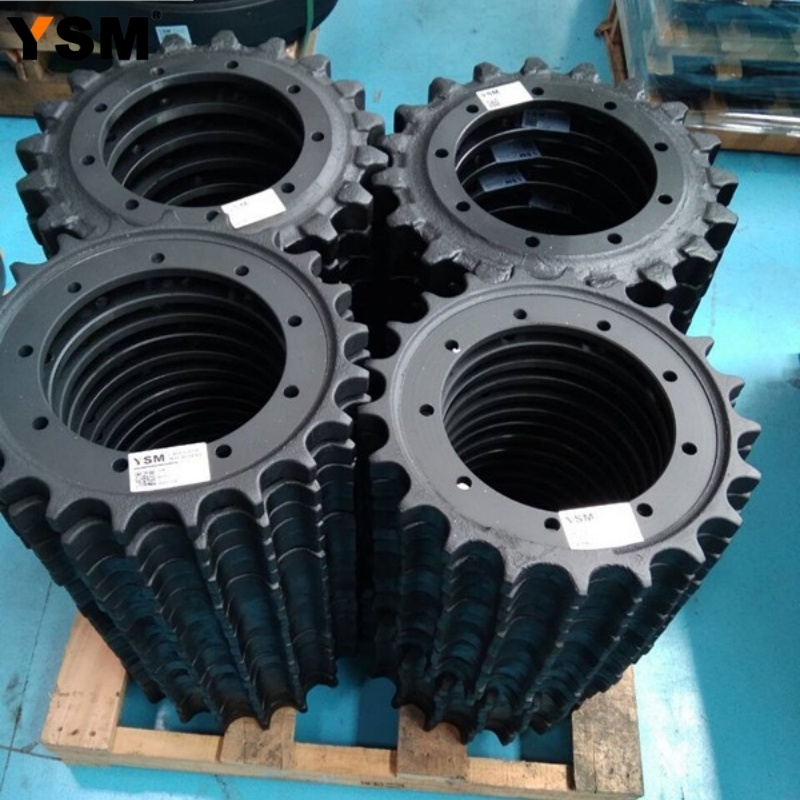
How Should The Supporting Wheels Be Selected To Avoid Stepping On Thunder?
High-quality support wheels mainly depend on the performance of its steel. The material of the roller body is generally 50Mn, 40Mn2, (MN: synonymous with the element of manganese).
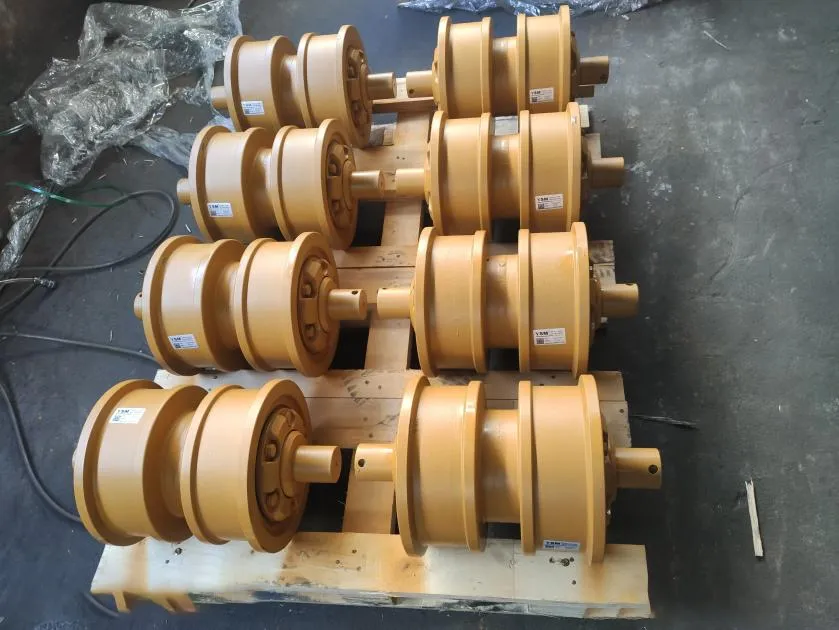
Carrier Wheels Are Suitable For Various Models At Home And Abroad
Sprocket wheels are mainly used in various crawler bulldozers, excavators, pavers, milling machines, rotary drilling rigs or other crawler machinery equipment at home and abroad.
Contact Us
E-mail :
sales@china-ysm.com
Phone/WhatsApp:
+86-18606961587
Address:
No.8 Binjiang Street, Binjiang Industrial Zone, Xiamei Town, Nan An City, Quanzhou City, Fujian Province, China
Request Quote
Andy Shi
No.8 Binjiang Street, Binjiang Industrial Zone, Xiamei Town, Nan An City, Quanzhou City, Fujian Province, China


Request Quote