
Model guide | 20-ton class crawler excavator
Hitachi ZX210LC-7 Undercarriage Inspection and Parts Guide
A crawler excavator undercarriage is a connected wear system. On a ZX210LC-7, the track chains, lower and upper rollers, front idlers, sprockets, shoes, guards and adjusters should be inspected together. A clean, repeatable survey helps distinguish normal application wear from a developing fault and gives a parts supplier the information needed for a reliable fitment review.
Confirm the Exact ZX210LC-7 Configuration
The model plate is the starting point, not the color or the shape of the upper structure. Record the brand, complete model including every suffix, serial number or PIN, production market and any readable component numbers. Photograph the identification plate, both complete track groups, the shoe pattern, the master connection and the guard arrangement.
Used machines may contain a mixed undercarriage assembled during earlier repairs. Count the links and shoes only when the machine is safely positioned, and record track-chain pitch or roller dimensions only at clearly defined measuring points. Do not identify a replacement roller from one overall dimension or a casting mark alone.
The ZX210LC-7 is a search-active candidate because a current manufacturer model release and current results for model-specific undercarriage components remain discoverable. This indicates active information and parts-search intent; it does not establish an exact monthly search volume, sales rank or installed fleet size.
What Is Different About the ZX210LC-7 Undercarriage?
Hitachi's model release describes an anti-mud-compaction lower-roller design intended to help prevent mud from entering and damaging oil seals. It also describes improved sealing around the upper and lower rollers and a track undercover that protects a joint from potential damage. These details explain why cleaning and seal-area inspection matter, but they do not make the undercarriage immune to packing, impact or wear.
A protective cover can hide packed material as well as shield components. Inspect behind accessible guards according to the service procedure. A dry exterior does not prove that a roller is healthy, and a wet exterior does not by itself prove an active seal failure. Clean the area, find the highest fresh wet point and compare it with adjacent positions.
Manufacturer literature can describe a model family, while actual components can vary by serial range, market and option. Use the machine-specific parts catalog and service information before ordering or setting wear limits.
A Practical Daily Undercarriage Walk-Around
- Observe before cleaning. Photograph mud packing, trapped rock, wire, oil films and fresh impact marks while their original locations are visible.
- Clean safely. Remove harmful debris using the approved site method. Keep hands and tools away from loaded pinch points.
- Compare both sides. Look for different track position, idler extension, shoe alignment, roller height or side contact.
- Check shoe hardware. Note missing fasteners, damaged heads, shiny movement marks, bent plates and cracks around mounting holes.
- Inspect each roller. Number lower-roller positions from front to rear so that notes and photographs can be repeated.
- Check chain engagement. Observe dry joints, shifted pins, external bushing wear and the way bushings enter and leave the sprocket.
- Listen during controlled travel. Repeated clicking, knocking or squealing is a reason to inspect; sound alone is not a diagnosis.
Add the date, machine hours, operator, travel distance, turning pattern, slope direction and ground condition to the record. Trend data is more useful than an isolated photograph because it shows whether a condition is stable or progressing.
Lower Rollers, Upper Rollers and Front Idlers
Lower rollers
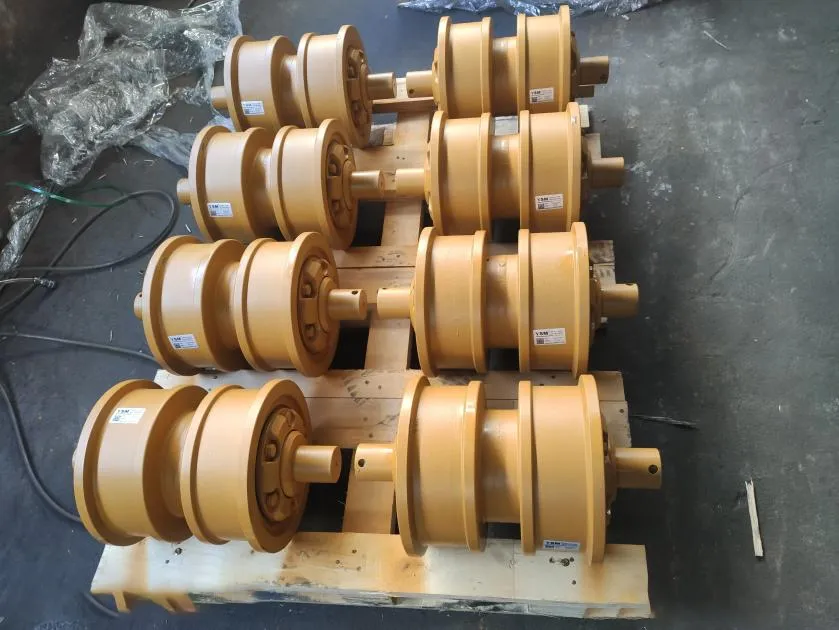
Inspect every lower roller for fresh oil, material stuck to a wet film, flat spots, broken flanges, tread wear and restricted rotation. Map polished flange contact by position and side. Repeated contact on the same flange face can relate to slope work, turning, idler guidance, link wear or frame geometry; it is not proof of one cause.
Compare front, center and rear rollers. One seized roller can change the loading on neighboring components. Measure tread and flange dimensions at the specified points with calibrated tools, then compare the results with the correct wear chart.
Upper rollers
Inspect each carrier roller actually fitted to the machine. Check leakage, flange wear, packed material and abnormal chain contact. Confirm quantity and position on the physical machine rather than an AI illustration or a general catalog photograph.
Front idler and adjuster
Look for uneven tread wear, chipping, leakage and excessive side polishing. Check the guide path for impact marks and packed debris. A forward idler position may relate to chain wear, adjustment or packing and does not automatically mean that the idler has failed.
The recoil spring and grease adjustment system can contain dangerous stored energy. Do not loosen, heat, cut or dismantle them during a routine check. Use only the model-specific track-tension procedure and measuring condition.
Track Chains, Pins, Bushings and Sprockets
Track-chain pitch increases as internal pin-and-bushing surfaces wear. Rail height and external bushing surfaces also wear as the chain runs over rollers and engages the sprocket. Inspect for cracked links, leaking or dry joints, shifted pins, unusual end play, stiff articulation and uneven rail contact.
One hot or noisy joint is an inspection signal. Clean it, compare neighboring joints and use the approved measurement method. Temperature can be influenced by load, travel and ambient conditions, so a handheld temperature reading alone cannot identify the internal condition.
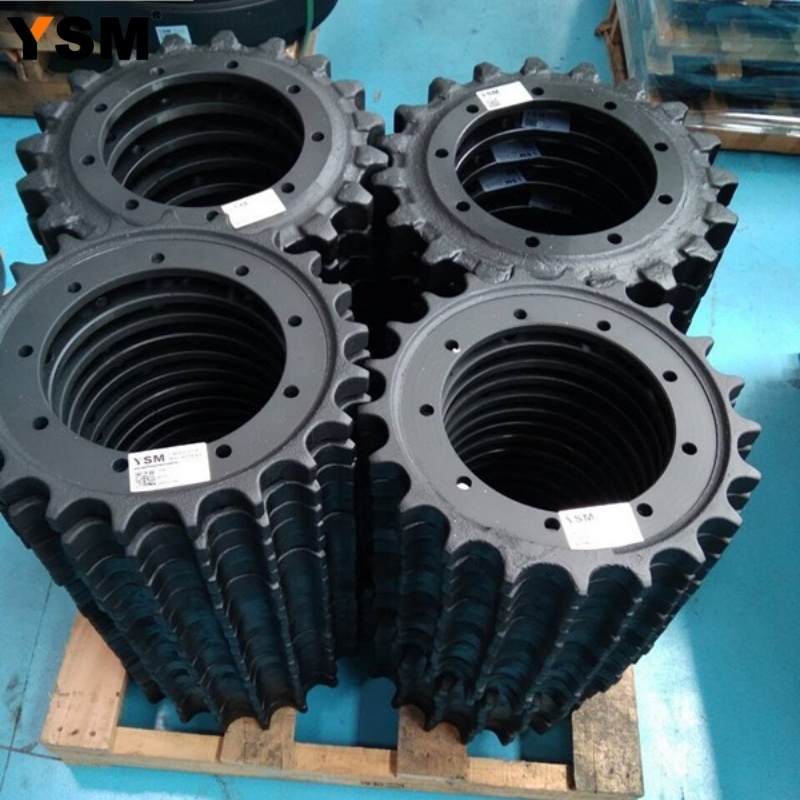
Inspect sprocket teeth around the accessible circumference for hooking, sharpening, root wear, side polishing, cracks and packing. Evaluate the tooth profile together with chain pitch and external bushing wear. A new chain on a severely worn sprocket, or a new sprocket with a highly worn chain, may produce poor mating contact.
Oil in the travel-drive area can move from more than one source. Clean the area and trace the highest fresh wet point before assigning the leak to the final drive. Oil-level checks and disassembly must follow the service procedure.
Track Shoes, Guards and Working Conditions
Inspect shoes for bent wings, reduced grouser height, plate cracks, elongated holes and movement on the links. Loose shoe hardware can damage both the shoe and the link seating surfaces. Replacement requires the correct fasteners, surface preparation and tightening procedure.
Shoe width affects flotation and undercarriage loading. Wide shoes can help in soft ground, but on firm or rocky surfaces they can add bending leverage and side load. Select an approved configuration for the machine and the actual work cycle rather than choosing the widest available shoe.
Mud, clay, frozen material and demolition debris can pack around the chain and guards, increasing tension and abrasion. Repeated one-direction turning, long travel, side-slope operation and counter-rotation can create uneven patterns. Record these operating factors before blaming a single component.
ZX210LC-7 Undercarriage Wear-Pattern Table
| Observed pattern | Possible contributors | Next check |
|---|---|---|
| One track side wears faster | Slope work, turning direction, travel cycle, packing or geometry | Compare operating history, roller map, idler guidance and chain measurements |
| One lower roller is wet | Service residue, seal damage, impact or internal wear | Clean, recheck for fresh oil and inspect adjacent rail contact |
| Several roller flanges polish on one face | Side loading, chain guidance, idler position or alignment | Map contact continuously from idler through rollers to sprocket |
| Sprocket teeth hook or sharpen | Chain pitch and bushing engagement wear | Measure chain and inspect external bushing surfaces |
| Track becomes tighter during work | Material packing or an incorrect measuring condition | Clean and repeat the manual-specific tension check |
| Shoes move on the links | Loss of clamp, damaged holes, hardware or seating faces | Inspect the complete bolted joint and both mating surfaces |
This table organizes the inspection; it does not confirm a single failure cause. Preserve left, right and position-specific records for workshop review.
Maintenance and Replacement Planning
Build a survey that covers chain pitch and rail condition, lower and upper rollers, idlers, sprockets, shoes, hardware, guards and adjuster position. Use clean reference surfaces, calibrated tools and the current wear limits. Dirt, burrs and tool angle can change a measurement.
There is no safe universal track-sag value for every excavator. Machine preparation, measuring points and acceptable range must come from the operation and maintenance information for the exact serial range and track configuration.
Plan mating components together, but do not replace serviceable items without measurements. After installation, verify the specified fastener procedure, tension, free movement, leakage and abnormal contact. Establish a new measured baseline after the initial inspection interval defined by the service information.
ZX210LC-7 Undercarriage Parts Fitment Checklist
For a reliable replacement-parts review, send:
- equipment brand and complete model with every suffix;
- serial number or PIN and a clear identification-plate photograph;
- part name, requested quantity and readable part number where available;
- overall, side, mounting and damaged-area photographs;
- requested dimensions with the measuring points clearly identified;
- roller position and left or right side where relevant;
- shoe width, grouser type, bolt pattern and master-connection details;
- track-chain pitch and link count when requested;
- destination country and typical soil, rock, travel, slope and impact conditions.
Compatibility and availability must be confirmed before ordering. A model-family resemblance is not a fitment decision.
Frequently Asked Questions
Does the ZX210LC-7 lower-roller design eliminate seal problems?
No. Hitachi describes measures intended to reduce mud entry and improve sealing, but inspection, cleaning and correct operation are still required.
Can a single leaking roller be replaced?
It may be possible if the rest of the system remains within applicable limits. Inspect all rollers, chain rails and mating components before deciding.
Is ZX210LCN-7 undercarriage fitment the same?
Do not assume so. Confirm the complete model, serial number, parts information, dimensions and installed track group.
Can a universal track-tension value be used?
No. Use the preparation, measuring points and range stated for the exact machine and configuration.
Technical References
- Hitachi Construction Machinery Americas: ZX210LC-7 Product Release - model context and described undercarriage durability features.
- Hitachi Construction Machinery: Undercarriage Parts List - undercarriage component categories.
- Hitachi Construction Machinery: Parts and Services - manufacturer maintenance and parts-service context.
- Komatsu: Do Not Overlook the Undercarriage - general cleaning, inspection and operating-practice guidance.
This independent educational guide is not affiliated with or endorsed by Hitachi Construction Machinery. Hitachi and model names are trademarks of their respective owner. The accompanying image is an AI-generated size-class illustration, not an official product or inventory photograph. Always follow the manuals and site procedures for the exact machine.
Ask About ZX210LC-7 Undercarriage Parts
We can check suitable supply options for track rollers, carrier rollers, front idlers, sprockets, track chains, track shoes, track assemblies and related hardware after reviewing the exact machine and application.
Corporate Email: sales@china-ysm.com
WhatsApp: +86-18606961587
Send the equipment brand, complete model and suffix, serial number or PIN, part name, part number, clear photos, requested dimensions, quantity, destination country and working conditions. Compatibility and availability must be confirmed before ordering.