
Model guide | Small crawler dozer
Komatsu D37EX-24 and D37PX-24 Undercarriage Maintenance Guide
The D37EX-24 and D37PX-24 share a model family but use different standard track widths in current Komatsu information. The EX configuration emphasizes a narrower track arrangement, while the PX uses wider shoes for lower ground pressure. Maintenance and replacement planning must therefore begin with the complete model, serial number and installed undercarriage rather than the D37 name alone.
Identify D37EX-24 Versus D37PX-24
Komatsu's current North American product information lists a 460 mm single-grouser standard shoe for the D37EX-24 and a 600 mm single-grouser standard shoe for the D37PX-24. The PX arrangement provides more ground-contact area and lower listed ground pressure in that configuration. Regional equipment and optional arrangements can differ.
Do not identify EX or PX only by measuring one worn shoe. Read the complete model and serial information from the machine plate. Record track gauge, shoe width, link count, master connection and readable component numbers. A used dozer may have been converted or repaired with a different track group.
Photograph both full track assemblies before cleaning. Then capture the chain side, shoes, rollers, idler, sprocket, guards, adjuster area and any casting or stamped marks. The combination of serial information, photographs and dimensions is stronger than any one identifier.
D37EX-24 and D37PX-24 are active search candidates because current Komatsu product pages, a 2026 brochure revision and current parts catalogs remain visible in search. This does not prove exact monthly volume, worldwide fleet share or popularity rank.
Understand the Current D37-24 Undercarriage Layout
Current Komatsu specifications describe a rigid, monocoque track roller frame with six lower rollers and one carrier roller on each side. The front idler guides the chain, the conventional low rear sprocket transfers drive, and the single-grouser shoes provide traction.
The same information lists lubricated rollers and idlers, bolt-on sprockets, end-section roller guards and a sealed-and-lubricated PLUS track-shoe assembly. These descriptions help structure an inspection, but the physical machine and serial-specific parts catalog determine what is installed.
A complete undercarriage survey should connect the wear surfaces: link rails run on roller and idler treads; bushings engage sprocket teeth; shoes transfer load to the ground; and tension influences the load carried by the entire system.
Daily D37EX-24 and D37PX-24 Cleaning and Inspection
- Observe before cleaning. Photograph packed mud, stones, wire, wet areas, displaced guards and fresh contact marks.
- Clean the track frames. Remove harmful debris around rollers, the carrier roller, idler, sprocket, pivot and equalizer areas using an approved method.
- Inspect hardware. Check shoe bolts, sprocket fasteners, guards and visible frame attachments for missing parts or movement marks.
- Inspect chain joints. Look for lubricant loss, dry or hot joints, shifted pins, cracked links and abnormal bushing contact.
- Check rollers and idlers. Look for leakage, flat spots, damaged flanges, packed debris and restricted rotation.
- Compare track position. Note left-to-right differences in sag, idler position, shoe contact and roller-flange polishing.
- Listen during controlled operation. Repeated squeal, click or knock can direct further inspection but does not prove one cause.
Use a fixed front-to-rear route and record the date, machine hours, operator, work area and ground conditions. Cleaning is especially important when material packs between the chain, guards and frame because packing can change effective tension.
PLUS Track Chain, Pins and Bushings
Komatsu PLUS is a system, not only a marketing name for one chain. Manufacturer undercarriage literature describes a rotating-bushing concept and explains that conversion from a standard undercarriage can require a coordinated group of components, including the link assembly, shoes, hardware, sprocket components, rollers, carrier rollers and guards where fitted.
That system relationship matters during repair. Do not mix a PLUS chain with conventional mating components unless the exact Komatsu procedure and parts information approve the combination. Similar dimensions alone do not establish compatibility.
Inspect links for cracks, rail wear, seal damage, lubricant loss, abnormal side contact and master-connection condition. Inspect bushings for uneven sprocket engagement, pitting, cracking or movement. Rotating-bushing behavior and service limits must be checked according to the installed system.
A hot or noisy joint is an inspection clue. Surface temperature depends on operating time, load and contamination, so compare equivalent joints safely. Never touch a suspected hot joint with bare skin.
Track Rollers, Carrier Rollers and Front Idlers
Six lower rollers
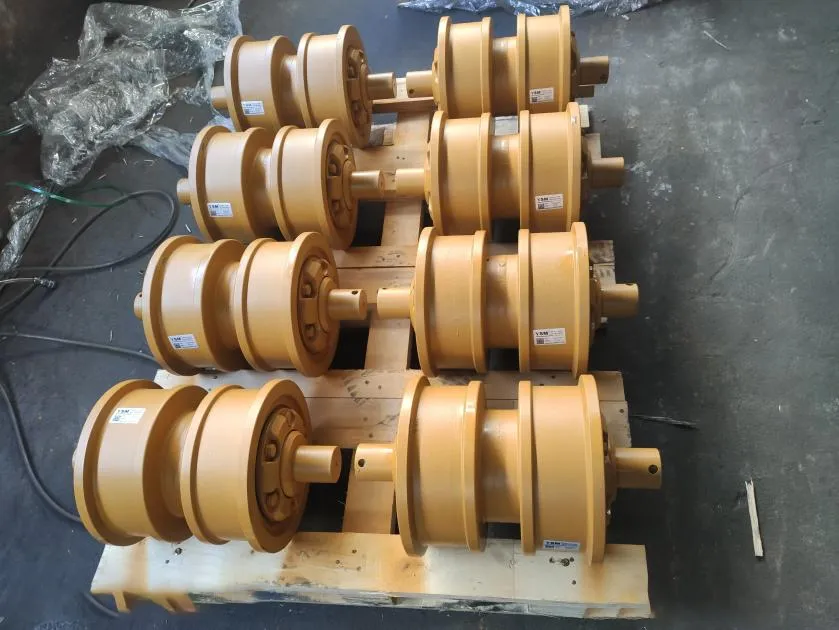
Number the six lower roller positions from front to rear on each side. Inspect for oil leakage, flat spots, tread wear, flange damage, loose mounts and packed material. A seized roller can change link-rail contact and increase the load carried by neighboring rollers.
Carrier roller
Inspect the upper carrier roller for free rotation, leakage, flange wear and debris buildup. If packed material stops it from turning, the chain can slide over the surface and create a different wear pattern.
Front idler
Check tread and flange wear, leakage, side contact and movement through the guide path. An idler position near one end of its travel may reflect chain wear or adjustment, but position alone does not diagnose an idler problem.
Roller and idler measurements
Clean the designated reference areas and use calibrated tools. Compare front, middle and rear rollers as well as left and right sides. The applicable limits come from the correct wear chart for the installed D37-24 undercarriage.
Bolt-On Sprocket and Final-Drive Area
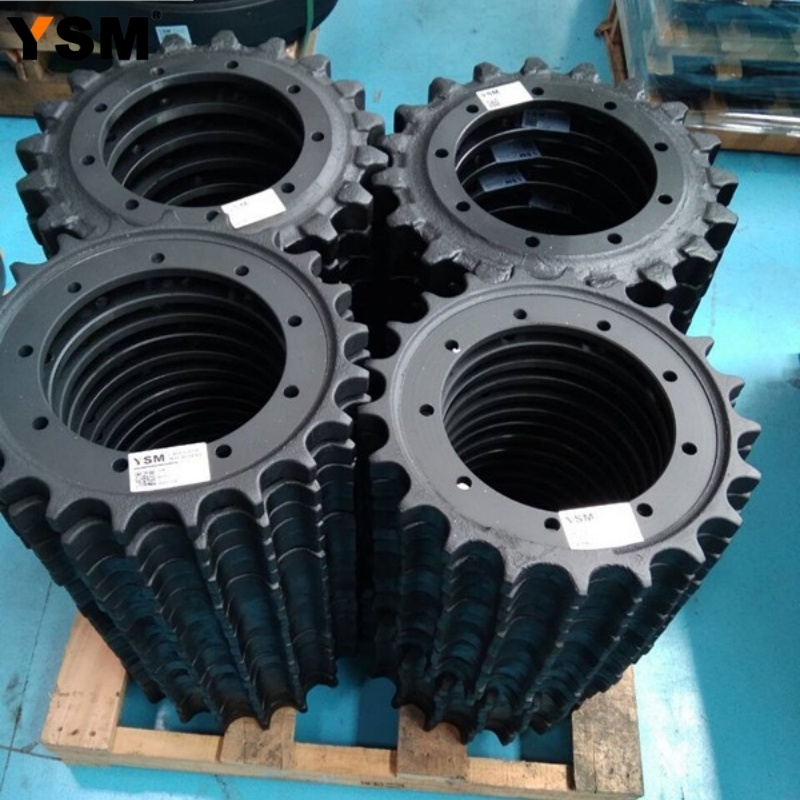
Current D37-24 information lists a bolt-on sprocket arrangement. Inspect tooth profile, roots, side polishing, cracks, packed material and fastening condition. Hooked or sharpened teeth can accompany chain engagement wear, but the chain must be measured before deciding on sprocket replacement.
New sprocket components working against a worn chain, or a new chain working against severely worn teeth, can create poor mating contact. PLUS and conventional track systems may use different components, so confirm the installed design and part number.
Oil around the rear drive area should be traced after cleaning. A wet sprocket does not automatically mean that the sprocket is defective. Follow the exact final-drive oil-level, sampling and service procedure.
D37EX-24 and D37PX-24 Track-Shoe Considerations
| Current listed configuration | Standard shoe in the cited US information | Application consideration |
|---|---|---|
| D37EX-24 | 460 mm single grouser | Narrower arrangement generally reduces shoe-wing leverage and suits firmer ground where flotation remains adequate |
| D37PX-24 | 600 mm single grouser | Wider arrangement increases ground-contact area for lower ground pressure but requires attention to side loading and bending on firm uneven ground |
These values describe the cited current standard configurations, not every regional or modified machine. Confirm actual shoe width, hole pattern, grouser design and approved option before ordering.
Inspect plates and grousers for wear, bending and cracks. Check holes, bolts, nuts and link seating surfaces for movement. A wide shoe that repeatedly bridges rock can experience high bending load, while a narrow shoe may not provide sufficient flotation in very soft material.
Use the narrowest approved shoe that still provides the required flotation and stability for the application. Do not change EX to PX assumptions or convert a complete system without manufacturer-approved parts and configuration information.
Track Tension and Operating Habits
Track tension influences pins, bushings, idlers, rollers, sprockets and the travel system. Excessive tension increases loads. Excessive looseness can reduce guidance and increase impact or derailment risk. Packed material can temporarily make a correctly adjusted track too tight during work.
There is no universal sag dimension for every D37EX-24 or D37PX-24 condition. Clean and prepare the track, position the machine and measure between the exact points stated in the current operation and maintenance manual. The adjuster and recoil system store energy; use the approved grease-release method.
Wear-aware operating habits
- limit unnecessary pivot turns and track spin;
- use gradual turns when production and site safety allow;
- avoid repeated high-speed reverse travel where a better work pattern is practical;
- vary slope orientation and turning direction when the job allows;
- remove packed material before it hardens or freezes;
- review shoe configuration when the machine moves between soft ground and hard rock;
- record travel, impact, material and application changes.
Wear Measurement and Repair Planning
Measure the complete system instead of replacing the first visibly worn item. Record link rails and joints, all lower rollers, carrier rollers, idlers, sprockets, shoes, hardware, guards and adjustment position. Use consistent reference points and calibrated tools.
| Observed pattern | Possible contributors | Next check |
|---|---|---|
| One side wears faster | Slope work, turning direction, packing, shoe choice or geometry | Compare operating history and full left-to-right measurements |
| Repeated roller-flange contact | Side loading, idler guidance, chain condition or alignment | Map contact from the front idler through all rollers |
| Sprocket teeth wear unevenly | Chain engagement, bushing condition or mixed components | Confirm PLUS or conventional system and measure the chain |
| Shoes bend or crack | Rock impact, excessive width for ground, advanced wear or loose hardware | Inspect application, remaining section, bolts and link seating |
| Track tightens during work | Material packing or unsuitable measuring condition | Clean and repeat the model-specific tension procedure |
| One roller leaks or stops | Seal damage, impact, internal wear or seizure | Inspect mount, rotation and neighboring link-rail contact |
Plan mating components together and keep removed parts identified by machine side and position. Remaining life depends on measured wear rate, future conditions and applicable limits; it cannot be guaranteed from a single photograph.
D37EX-24 and D37PX-24 Parts Fitment Checklist
Before requesting undercarriage parts, provide:
- equipment brand and the complete D37EX-24 or D37PX-24 designation;
- serial number or PIN and a clear identification-plate photograph;
- installed PLUS, conventional or other confirmed track-system information;
- part name, required quantity and readable part number or casting marks;
- overall, side, mounting and damaged-area photographs;
- requested dimensions and clearly identified measuring points;
- shoe width, grouser type, bolt pattern and master connection;
- track pitch and link count when requested;
- left or right position where the component is side-specific;
- destination country and typical ground, slope, travel and impact conditions.
EX and PX arrangements, serial ranges and complete undercarriage systems must not be assumed interchangeable. Compatibility and availability must be confirmed before ordering.
Frequently Asked Questions
What is the main undercarriage difference between D37EX-24 and D37PX-24?
Current US information lists a narrower 460 mm standard shoe for the EX and a wider 600 mm standard shoe for the PX. Confirm the actual regional machine and installed track group.
How many track rollers are listed for the D37-24?
Current Komatsu specifications list six lower rollers and one carrier roller per side for both cited configurations. Serial-specific parts information remains necessary.
Can PLUS parts be mixed with conventional undercarriage parts?
Do not assume they can. Komatsu describes PLUS as a coordinated system, and conversion may require chains, shoes, hardware, sprocket components, rollers and guards.
Can one sag value be used for both EX and PX?
Use the exact manual procedure and value for the machine and installed configuration. Preparation, packing and measuring points affect the result.
Is the model name enough to order a D37 roller or idler?
No. Provide the complete model, serial information, system type, part number or casting marks, photographs, dimensions, quantity and destination.
Technical References
- Komatsu: D37PX-24 Product Page - current EX and PX undercarriage specifications, listed shoe widths and equipment.
- Komatsu: D37EX-24 and D37PX-24 Brochure - 2026 model and undercarriage information.
- Komatsu: Undercarriage Systems - PLUS system design and conversion-component context.
- Komatsu: Undercarriage Parts - current component-category and parts-search context.
This independent educational guide is not affiliated with or endorsed by Komatsu. Komatsu, PLUS and the model names are trademarks of their respective owner. Always follow the operation and maintenance manual, service instructions, wear chart and site safety procedures for the exact machine.
Ask About D37EX-24 and D37PX-24 Undercarriage Parts
We can check suitable supply options for track rollers, carrier rollers, front idlers, sprockets, track chains, track shoes, track assemblies and related hardware after reviewing the exact machine and installed system.
Corporate Email: sales@china-ysm.com
WhatsApp: +86-18606961587
For a fitment check, send the equipment brand, complete model and suffix, serial number or PIN, part name, part number, clear photos, requested dimensions, quantity, destination country and working conditions. Compatibility and availability must be confirmed before ordering.