
Mid-size dozer crawler identification and maintenance
Komatsu D61EX-24 and D61PX-24 Undercarriage Inspection Guide
Komatsu D61EX-24 and D61PX-24 undercarriage parts should be selected from the complete machine and track-system identity. The current US product pages describe PLUS tracks with lubricated rotating bushings, while EX and PX configurations use different standard shoe widths. An inquiry shortened to "D61 track parts" leaves important fitment and maintenance questions unanswered.
1. Confirm the exact D61-24 machine and track system
Photograph the machine plate and record every model suffix and serial character. Add the market, work application, shoe width, installed guards, and previous undercarriage repairs. Intelligent-control variants and earlier generations should retain their full designation throughout the inquiry.
Komatsu's current US D61EX-24 page lists a 600 mm standard single-grouser shoe, while the D61PX-24 page lists an 860 mm standard single-grouser shoe and lower ground pressure than the EX configuration. Treat these as the described market specifications. They do not prove that a used machine still carries the original shoe or chain group.
This independent educational article is not affiliated with or endorsed by Komatsu. Brand and model names identify the equipment under discussion.
2. Why PLUS identification matters before maintenance
Komatsu identifies the Parallel Link Undercarriage System, or PLUS, as a lubricated track design with rotating bushings. The D61 brochure describes the rotating-bushing design as changing the need for conventional bushing-turn work. The installed system must therefore be established before a workshop applies a familiar chain-service plan.
Rotating bushings do not make the crawler maintenance-free. Inspect links, joints, bushings, rollers, idlers, sprockets, guides, shoes, and fasteners, and use the correct wear references. Do not infer joint condition merely because a bushing can rotate, or force a component to test it without the approved procedure.
Keep any conventional-chain conversion or previous component substitution documented. A shared machine-family name is insufficient evidence that chains, sprockets, roller profiles, or repair methods can be mixed.
3. Record the configuration before measuring wear
| Record | Inspection value | Fitment question |
|---|---|---|
| EX or PX designation and serial | Identifies the machine and applicable documentation | Which serial-specific group is fitted? |
| PLUS or another installed chain | Determines joint construction and service method | What markings and part numbers confirm it? |
| Shoe width and profile | Connects flotation and leverage with working conditions | Do holes, thickness, and hardware match? |
| Roller sequence and guides | Shows the actual chain guidance arrangement | Are flange types, mounts, and offsets correct? |
| Component repair history | Separates old and new wear surfaces | Have chains, segments, or rollers been substituted? |
Count the actual shoes, links, rollers, and carrier rollers where fitted. Verify the catalog rather than transferring counts from another D61, another region, or a supplier's generic listing.
4. D61EX-24 and D61PX-24 inspection checklist
Park on firm level ground, lower the blade and rear attachment, stop the engine, and isolate stored energy according to the exact manual. Clean enough packed material away to reveal contact surfaces and leakage. Inspect one crawler side at a time, then compare them.
Links, joints, bushings, and sprocket engagement
Look for cracks, spalling, stiff or abnormal articulation, lubricant loss, shifted components, side contact, and an altered engagement pattern. Measure the specified link, bushing, and rail surfaces using the correct system references. Inspect the sprocket or segments at the same time.
Rollers and idlers
Record leakage, tread condition, flange contact, flat areas, cracks, mounting movement, and evidence of restricted rotation. Check idler guidance and support condition. Preserve the installed roller sequence in photos before removing parts.
Shoes, hardware, guides, and frame
Inspect grousers, plate bending, cracks, overlapping edges, loose or missing fasteners, and damaged mounting holes. Look for guard rubbing, distorted brackets, frame cracks, debris traps, and bright metal contact. Shoe width and the operating surface belong in the record.
Suspension and adjuster areas
Check accessible equalizer-bar and pivot-shaft areas for leaks, damage, and abnormal movement indicators using the approved method. Record tension stability, adjuster grease leakage, and idler position. These findings need qualified evaluation before disassembly or heavy-component work.
5. Use wear patterns to guide the next check
| Finding | Possible contributors | Next evidence |
|---|---|---|
| One side wears faster | Turning direction, slopes, packing, adjustment, or alignment | Comparable readings and work history on both sides |
| Strong flange or link-side contact | Lateral load, guides, roller profile, mounts, or suspension condition | Contact photos, guidance checks, and approved clearance measurements |
| Rough sprocket engagement | Chain wear, tooth wear, joint condition, packing, or mismatch | Measured chain and sprocket condition together |
| Tension changes after adjustment | Packing, leakage, valve or seal issue, or adjuster damage | Repeat the exact manual method and obtain service assessment |
| New chain or roller wears unusually quickly | Incorrect part, worn mating surfaces, loading, or installation issue | Part identity, assembly record, and full-system inspection |
A symptom identifies an investigation path, not a certain diagnosis. Avoid replacing one visible component before checking the condition that may have loaded it abnormally.
6. Keep adjustment and repair procedures system-specific
Komatsu's general maintenance guidance emphasizes correct adjustment, cleaning, less unnecessary reversing, working-condition awareness, and measured wear monitoring. Apply these principles through the exact D61-24 manual. Do not transfer a track-sag value or service limit from a conventional system or another dozer.
Plan chain and sprocket work together. Check mounts, guidance, rollers, and shoes before returning a repaired machine to production. A new component cannot correct a distorted mounting surface or unsuitable assembled combination.
Recoil springs, grease pressure, chain separation, and heavy assemblies require approved support and qualified service procedures. Do not improvise a bushing turn, chain shortening, weld retention, or component conversion from a general article.
7. Information needed for D61-24 replacement parts
- Complete EX, PX, EXi, or PXi model, serial number, market, and machine-plate photo.
- Installed chain-system identity, readable part markings, pitch, link count, and connection type.
- Shoe width, grouser type, mounting pattern, hardware details, and quantity.
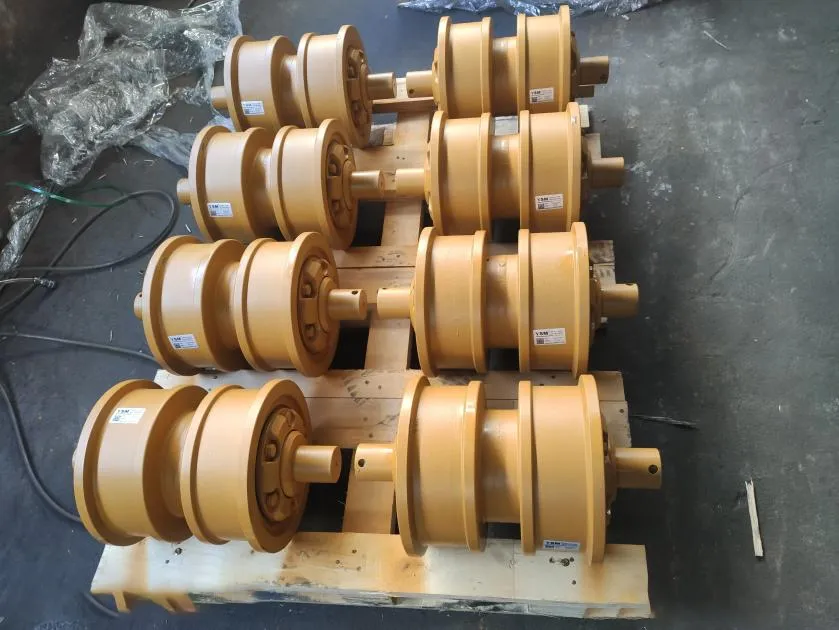
- Roller flange arrangement, position, mounting centers, bracket or shaft features, and offsets.
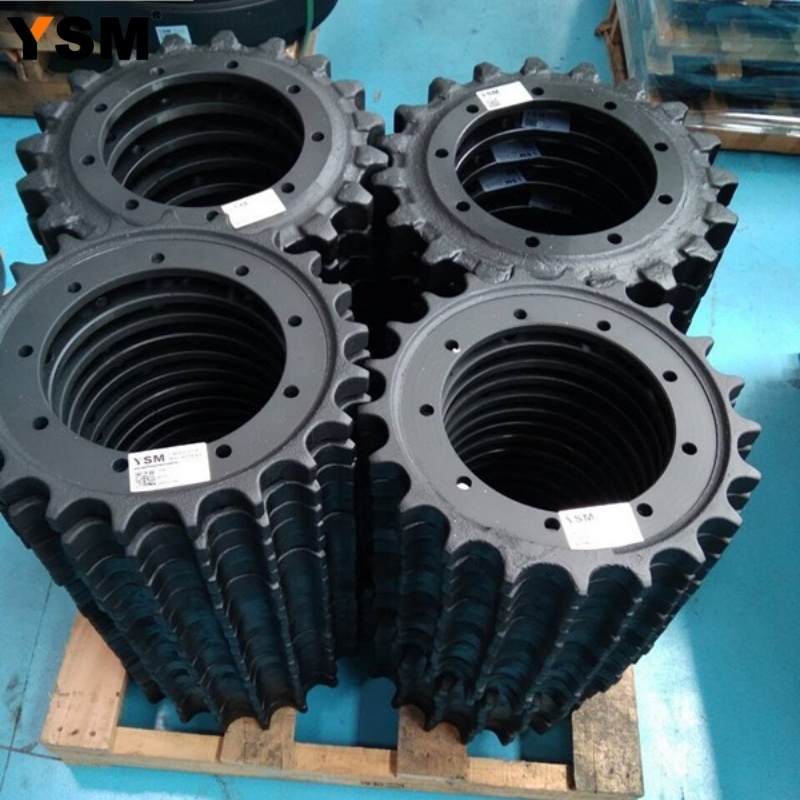
- Idler and sprocket or segment markings, mounting details, and mating-chain identity.
- Overall, end, mounting-face, wear-surface, and installed-position photos.
- Measured condition, previous repair or conversion, working conditions, and destination country.
Confirm whether fasteners and other installation items are included. Keep the final quotation tied to the identified machine and track group, with unknown dimensions resolved before ordering.
Frequently Asked Questions
Are D61EX-24 and D61PX-24 track parts interchangeable?
Do not assume so. Confirm the exact serial range, installed chain system, shoe group, part numbers, mounting features, and dimensions for each requested item.
Does PLUS use the same service plan as a conventional lubricated chain?
Its rotating-bushing construction changes relevant service decisions. Use the PLUS-specific manual and qualified assessment before planning joint work.
Does a rotating-bushing system still need inspection?
Yes. Check joints, links, lubrication loss, rail wear, rollers, idlers, sprockets, guidance, shoes, hardware, and track adjustment.
Can a wider PX shoe be fitted to an EX machine?
Only if the complete conversion or fitment is approved for the exact machine. Width affects more than flotation; verify clearance, loading, hardware, and undercarriage configuration.
Technical references
Check Komatsu D61-24 Undercarriage Supply Options
Our China-based manufacturing and wholesale supply team can review the requested undercarriage items after receiving the complete D61 model identity and installed track-system evidence. Suitable supply options can be checked for:
- track rollers, carrier rollers, and idlers;
- sprockets or segments and relevant fasteners;
- track chains, shoes, and assemblies after system-specific fitment confirmation;
Corporate Email: sales@china-ysm.com
WhatsApp: +86-18606961587
Compatibility and availability must be confirmed from the complete model, serial number, part number, clear photos, and requested dimensions before ordering. Include quantity, destination country, and working conditions.