
Track overhaul decisions and parts planning
Can You Reuse Track Shoes with New Excavator Track Chains?
You may be able to reuse track shoes with new excavator track chains, but only after checking their condition, mounting integrity, application, and compatibility. A new chain does not restore worn grousers, cracked plates, damaged bolt holes, or distorted mounting faces. The decision should follow a measured inspection rather than the appearance of the shoes from a distance.
1. Treat chain wear and shoe condition as separate decisions
The chain and shoes perform different jobs. Pins, bushings, and links form the articulated chain, while the shoes provide the ground-contact surface and traction profile. Their condition can differ because travel, ground material, turning, impact, and previous repairs affect each surface differently.
Ask why the chain is being replaced. Internal joint wear, a local crack, seal loss, or widespread rail wear can lead to different repair scopes. Then assess the shoes independently. A chain replacement does not automatically require every shoe to be renewed, but it also does not establish that the old shoes are suitable.
Keep the left and right sets identified. Photograph the installed shoe type and record width, quantity, markings, and any mixed profiles before disassembly.
2. Inspect these areas on every proposed reusable shoe
| Area | What to look for | Decision evidence |
|---|---|---|
| Grousers | Low, uneven, chipped, or damaged ribs | Measured profile and suitability for the next application |
| Plate | Cracks, bending, thinning, or impact damage | Correct service limits and qualified structural assessment |
| Bolt holes | Elongation, deformation, cracks, or a history of movement | Hole geometry and correct hardware seating |
| Mounting faces | Fretting, steps, burrs, distortion, rust scale, or contamination | Sound contact with the new link mounting surfaces |
| Overlapping edges | Heavy rubbing, wear, cracks, or interference | Compatibility and clearance through the chain path |
Do not inspect only a convenient sample and assume the complete set is identical. If some shoes differ substantially, identify their previous repair history and decide whether the proposed assembled group remains suitable.
3. Check grouser height relative to the next job
A shoe may still have an intact plate while its ground-contact profile is unsuitable for the planned work. Record grouser condition using the correct reference method. Consider traction, turning resistance, working surface, and the position of the installed bolt heads.
Janssen Track warns that when worn grousers leave new bolt heads exposed to contact on hard surfaces, the fasteners can receive direct impact. This is a practical inspection concern, not a universal dimensional limit for every shoe. Compare the proposed shoe and hardware assembly with the applicable machine or undercarriage guidance.
Soft-ground operation does not automatically make a damaged shoe acceptable. Cracks, mounting defects, or an unsuitable profile still require assessment. Likewise, moving a machine to concrete or rock can change the consequences of a shoe previously used on soil.
4. Damaged holes and mounting faces can defeat reuse
The shoe-to-link joint needs sound mating surfaces and controlled clamping. If a shoe has been moving, inspect the holes and mounting faces after safe removal. Repeatedly installing new bolts cannot replace metal lost from an elongated hole or correct a distorted contact face.
Keep hardware decisions separate from shoe decisions. A shoe approved for reuse may still require new bolts and nuts under the applicable installation procedure. Confirm bolt diameter, pitch, grip length, head and nut profiles, material specification, and seating arrangement. Do not assume that a familiar thread size proves suitability.
Use the exact tightening method, sequence, surface preparation, and recheck requirements for the installed group. Caterpillar's general maintenance guidance highlights specified track-hardware tightening and loose-bolt inspections; it does not provide one setting for every excavator. Do not add washers, thread treatments, oversized bolts, or weld repairs without an applicable approved procedure.
5. Verify that the old shoes fit the new chain
Confirm the new chain identity before planning shoe transfer. Matching nominal pitch or shoe width alone is insufficient. Check the link mounting-face arrangement, hole count, centers, hole shape, hardware clearance, shoe overlap, and any master-connection requirement.
Manufacturer shoe listings distinguish dimensions such as width, plate thickness, hole type, and bolt specification. These are useful examples of why a shoe that looks similar can belong to a different assembly. Use the exact part numbers and agreed measurements rather than a broad tonnage match.
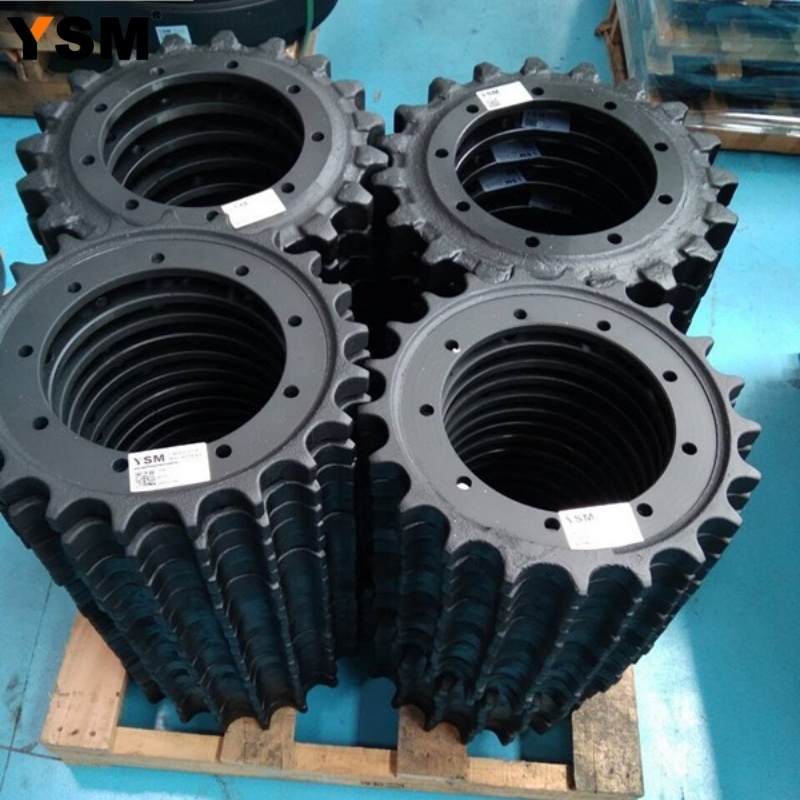
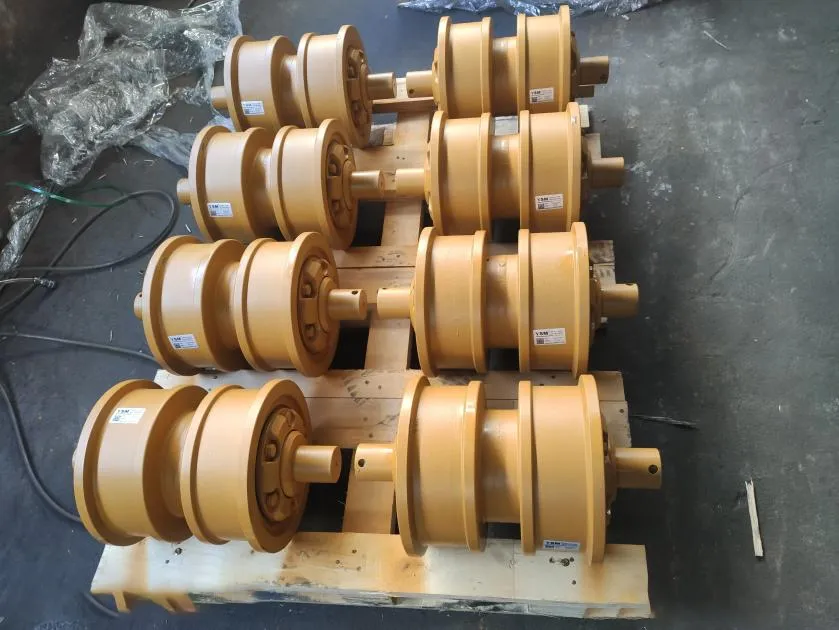
Also inspect the sprocket, idler, rollers, guards, and frame. Reusing or renewing the shoes is only one part of a chain overhaul. Worn mating parts or damaged guidance can compromise the new chain independently of shoe condition.
6. Compare three realistic repair options
| Option | When to consider it | What must be included |
|---|---|---|
| Reuse accepted shoes | Condition and fitment are confirmed for the intended work | Inspection record, correct hardware, and approved assembly |
| Replace shoes identified as unsuitable | A qualified repair plan allows a compatible assembled group | Profile consistency, mounting compatibility, and full-set review |
| Renew the shoe set or complete track assembly | Widespread damage, wear, mismatch, or assembly considerations support it | Defined chain, shoes, hardware, and mating-component scope |
Compare the actual work involved: removal, cleaning, inspection, seized or damaged hardware, assembly, transport, and planned downtime. There is no supportable universal saving percentage. Ask for an itemized scope so the same tasks are included in each quotation.
7. Information to send before ordering
- Machine brand, full model, serial number or PIN, market, and destination country.
- Existing and proposed chain part numbers, pitch, link count, construction, and master connection.
- Shoe width, grouser type, plate thickness, hole shape, hole count, and bolt centers.
- Readable shoe markings and photos of the top, underside, edges, and mounting faces.
- Measured wear, cracks, hole damage, previous repairs, and the quantity proposed for reuse.
- Hardware specification, intended ground conditions, and requested quantities.
Approve the reusable quantity only after the inspection is complete. A clear accepted, rejected, or pending-assessment record prevents damaged shoes from returning to the new chain by mistake.
Frequently Asked Questions
Do new track chains always need new shoes?
Not necessarily. Reuse depends on the condition, application, mounting integrity, compatibility, and approved repair scope of the existing shoes.
Can a shoe with elongated bolt holes be reused?
Do not assume it can. Have the holes, plate, and mounting faces assessed against the applicable requirements. New bolts alone do not restore a damaged joint.
Can old bolts be reused when the shoes are transferred?
Follow the exact hardware procedure. Shoe reuse and fastener reuse are separate decisions; damaged hardware must not be returned to service.
Is it cheaper to buy a complete track assembly?
Compare itemized quotations covering the same chain, shoes, hardware, labor, and transport scope. The result depends on condition and local assembly requirements.
Technical references
Review Track Chain and Shoe Replacement Options
Our China-based manufacturing and wholesale supply team can review a defined undercarriage repair inquiry after receiving the machine identity, inspection results, and shoe-to-chain mounting details. Suitable supply options can be checked for:
- track chains and link assemblies;
- track shoes, complete track assemblies, bolts, and nuts;
- sprockets, idlers, track rollers, and carrier rollers where required;
Corporate Email: sales@china-ysm.com
WhatsApp: +86-18606961587
Compatibility and availability must be confirmed from the complete model, serial number, part number, clear photos, and requested dimensions before ordering. Include quantity, destination country, and working conditions.