
30-tonne-class crawler identification and maintenance
Volvo EC300 and EC300F Undercarriage Inspection and Parts Guide
Searching for Volvo EC300 undercarriage parts can bring up current EC300F configurations, earlier EC300E machines, and market-specific EC300 versions. Those results should not be treated as one interchangeable parts group. Begin with the machine plate, generation, serial number, crawler arrangement, and actual installed components before requesting a chain, roller, idler, sprocket, or shoe.
1. Separate EC300 search results from machine identity
Volvo's current EC300 product page identifies an EC300F L configuration in its specification notes. Other official pages retain EC300E and market-specific EC300 information. Record the exact plate designation and serial number, rather than shortening the inquiry to "EC300."
Add the destination market, crawler designation, boom arrangement, shoe width, and application package. Photograph the full machine and both crawler sides. A previous repair may have changed a part from the original build record, so the installed markings and physical measurements should agree with the catalog.
This independent educational guide is not affiliated with or endorsed by Volvo Construction Equipment. Brand and model names are used for identification.
2. What the published EC300F crawler data tells you
The cited Stage V product guide describes an X-shaped frame with greased and sealed chains. Its EC300F L/LR and NL tables list 50 shoes per side, 203 mm link pitch, nine bottom rollers per side, and two top rollers per side. Triple-grouser shoe options in those tables are 600, 700, 800, and 900 mm.
These are publication-specific references, not proof of the fitted part number or compatibility across generations. Matching a pitch and link count does not confirm link profile, shoe mounting, seals, sprocket engagement, or mounting geometry.
| Configuration detail | What to confirm | Why it affects an inquiry |
|---|---|---|
| EC300 generation and market | Complete plate designation and serial number | Separates similar search labels and production groups |
| L, LR, NL, or special arrangement | Actual crawler, work equipment, and build information | May change dimensions, loading, guards, or installed group |
| Shoe choice | Width, grouser type, thickness, and bolt pattern | Defines application and chain-to-shoe interface |
| Replacement history | Part numbers, invoices, counts, and physical dimensions | Installed equipment may differ from the original record |
3. Inspect the EC300F undercarriage one side at a time
Park on stable level ground, lower the attachment, stop the engine, and isolate energy according to the exact operator manual. Clean the crawler enough to reveal contact surfaces, joints, fasteners, and leakage. Use the same inspection order on each side.
Chain, links, pins, and bushings
Record stiff joints, seal loss, shifted pins, link cracks, spalling, side-face contact, pin-boss wear, and uneven rail condition. Measure pitch by the installed chain's specified span and method. Count links and shoes rather than inferring the count from appearance.
Shoes and fasteners
Inspect grousers, plate bending, cracks, overlapping surfaces, loose or missing hardware, and damaged bolt holes. Record width and grouser pattern. Strong flotation requirements do not automatically make the widest available shoe appropriate for hard, high-impact ground.
Lower and upper rollers
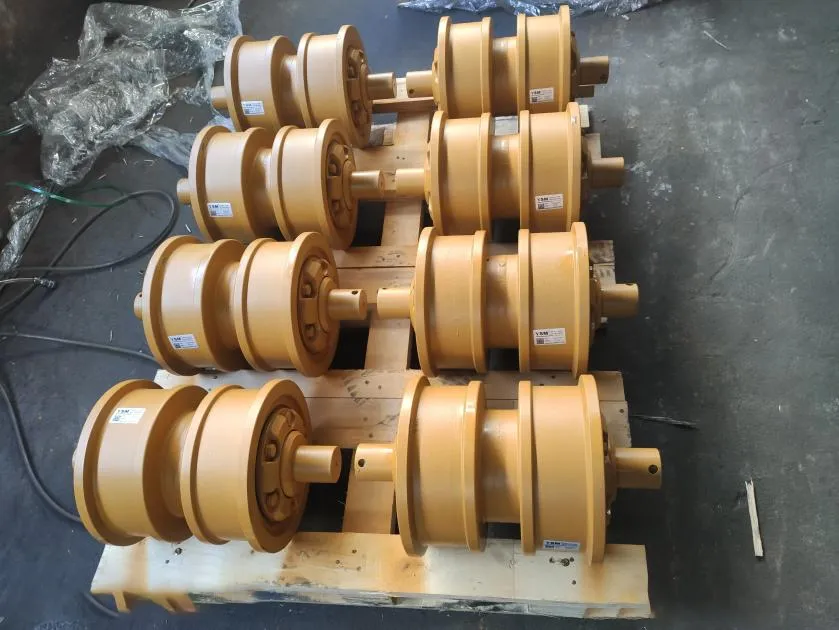
Check each actual position for leakage, flat areas, cracks, mounting movement, restricted-rotation evidence, and flange contact. Record tread and flange condition separately. A normal-looking shell diameter cannot rule out seal or mounting defects.
Idler, adjuster, sprocket, and frame
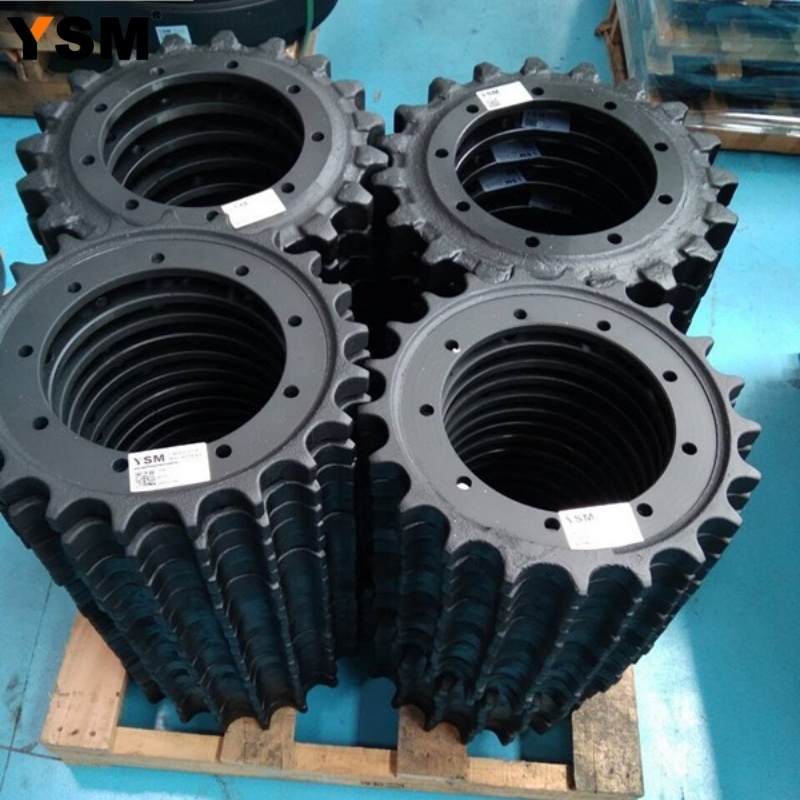
Inspect idler tread and guidance, adjuster grease leakage, tension stability, sprocket profile, tooth damage, fasteners, guard contact, welds, and roller mounts. Measure the chain and sprocket as mating components before choosing a replacement scope.
4. Turn wear patterns into inspection questions
| Finding | Possible contributors | Next evidence |
|---|---|---|
| One crawler wears faster | Turning, slopes, unequal packing, adjustment, or alignment | Comparable left-right readings and operating history |
| Heavy flange or link-side contact | Lateral loading, guides, roller profile, or mounting condition | Contact map, roller positions, idler guides, and guards |
| Rough sprocket engagement | Pitch wear, tooth wear, stiff joints, or debris | Chain and sprocket measurements together |
| Upper chain rubbing | Carrier-roller condition, chain wear, packing, or tension | Both upper rollers and the exact sag procedure |
| Tension changes after adjustment | Grease leakage, valve or seal issue, packing, or adjuster damage | Repeat the manual method and obtain qualified service assessment |
The pattern helps locate the next check. It does not prove a single failed part. Combine photographs with measured condition and maintenance history.
5. Keep adjustment and maintenance model-specific
Volvo's inspection guidance calls for cleaning, documented tension checks, component observations, and comparison of both sides. Apply those principles with the exact EC300 operator manual. Visual inspection supports, but does not replace, scheduled dimensional wear management.
No universal sag dimension, roller wear limit, bolt setting, or service interval can be assigned from the EC300 family name. Record the chain type and configuration used for each measurement. Make any track adjustment only through the approved procedure; grease pressure and recoil energy require controlled servicing.
Keep repeat readings from the same positions. Note changes in shoe width, ground material, packing, travel duty, turning pattern, and repairs. Sudden leakage, abnormal heat, structural cracking, loose major mounts, or repeated derailment needs prompt service assessment rather than another routine adjustment.
6. Prepare an accurate EC300 or EC300F parts inquiry
- Full plate designation, serial number or PIN, market, crawler suffix, and application.
- Requested part name, side, installed position, part number, and quantity.
- Actual chain-link, shoe, lower-roller, and top-roller counts.
- Pitch, link profile, chain construction, master connection, and shoe mounting details.
- Shoe width, grouser profile, bolt pattern, and hole dimensions.
- Roller flange arrangement, mounting centers, shaft or bracket features, and offsets.
- Idler or sprocket mounting photos and mating-chain identity where relevant.
- Clear overall and close photos, agreed measurements, failure history, and destination country.
Ask whether hardware, seals, brackets, or other installation items are included. Confirm any cross-reference against the exact serial range and physical evidence. A current EC300 listing is a starting point for research, not a guarantee that a component fits an earlier EC300E or another regional build.
Frequently Asked Questions
Are Volvo EC300 and EC300F the same parts identifier?
Not by themselves. Current product pages may use EC300 as a display name while configuration notes identify EC300F. Use the machine plate, serial range, market, and installed components.
How many lower rollers are listed for the cited EC300F configuration?
The cited Stage V guide lists nine bottom rollers per side for its L/LR and NL tables. Confirm the actual machine and serial-specific catalog before ordering.
Does a 203 mm pitch guarantee a chain will fit?
No. Link profile, count, bushings, seals, master connection, shoe mounting, and sprocket compatibility also need confirmation.
Can EC300E rollers be ordered for an EC300F?
Only when the part number, serial applicability, mounting dimensions, offsets, and profile confirm the proposed cross-reference. Do not infer fit from the family name.
Technical references
Check Volvo EC300-Family Undercarriage Supply Options
Our China-based manufacturing and wholesale supply team can review the requested undercarriage items after receiving the exact machine identity and installed-part evidence. Suitable supply options can be checked for:
- track rollers and carrier rollers;
- front idlers and sprockets;
- track chains, shoes, assemblies, and related fasteners;
Corporate Email: sales@china-ysm.com
WhatsApp: +86-18606961587
Compatibility and availability must be confirmed from the complete model, serial number, part number, clear photos, and requested dimensions before ordering. Include quantity, destination country, and working conditions.