
Model Guide · Undercarriage Parts
Komatsu PC200-10M0 Undercarriage Parts Guide: Identify Components Before Ordering
A PC200-10M0 undercarriage quotation should begin with the complete machine identity—not simply “PC200.” Series, market specification, shoe option, serial number and previous repairs can change the required component or hardware. This guide explains the main wear parts, the official base configuration and the checks that reduce avoidable fitment errors.
Why “PC200” Alone Is Not Enough for Parts Identification
PC200 is a model family, not a single permanent undercarriage specification. A quotation may involve a PC200-8, PC200LC-8, PC200-10M0, regional CE specification or another suffix and serial range. Long-carriage versions, optional shoe widths, guarding packages and parts installed during a previous overhaul can create important differences.
The PC200-10M0 itself is a 20-ton class hydraulic excavator developed for general construction and civil-engineering applications in selected markets. Komatsu currently lists the model in its Asia and Oceania crawler-excavator range, and the company announced a South African introduction in March 2026. That current official activity makes it a useful research priority for export parts content, but it is not evidence of a worldwide sales ranking or exact keyword volume.
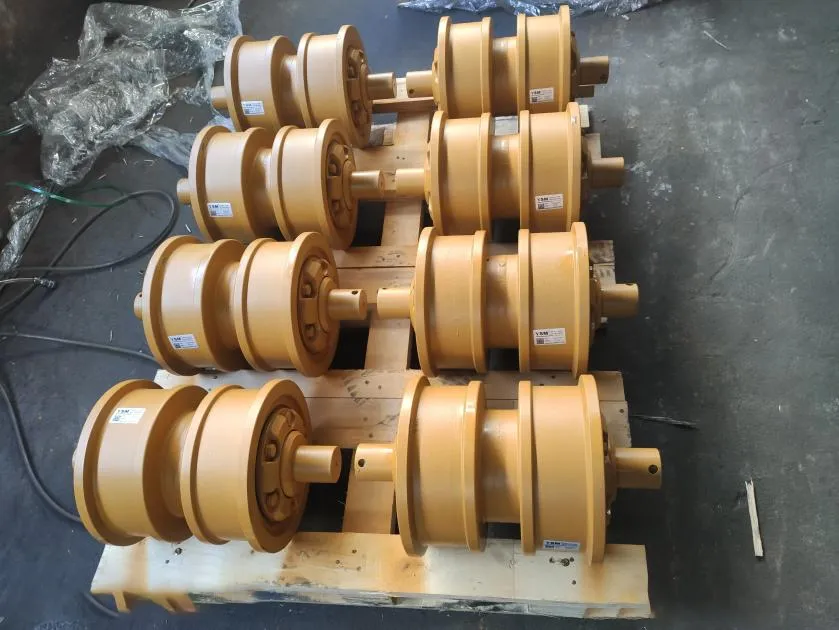
When the serial plate is unavailable, do not select a component from appearance alone. A track roller with a similar shell can still differ in mounting-hole spacing, overall length, flange spacing or bracket geometry. A sprocket can have a different tooth count, pitch relationship or bolt pattern. A track chain can differ in pitch, link count, pin diameter or shoe-bolt pattern.
PC200-10M0 Undercarriage Parts and Their Roles
The undercarriage works as one moving wear system. The final drive turns the sprocket, the sprocket engages the track chain, the track rollers carry machine weight on the lower rail, the carrier roller supports the return run, and the front idler guides the chain while the adjuster manages track position and tension.
| Component | Main function | Useful inspection points |
|---|---|---|
| Track rollers / bottom rollers | Carry the machine on the lower track-chain rail and help guide the chain. | Oil traces, seized rotation, flat spots, flange wear, shell wear, loose mounting hardware and uneven contact. |
| Carrier roller / top roller | Supports the upper return section of the track chain. | Oil leakage, shell wear, abnormal chain contact, side wear and a roller that does not rotate correctly. |
| Front idler | Guides the chain at the front and moves with the recoil and adjustment system. | Tread and flange wear, side play, leakage, guide alignment, abnormal contact and restricted movement. |
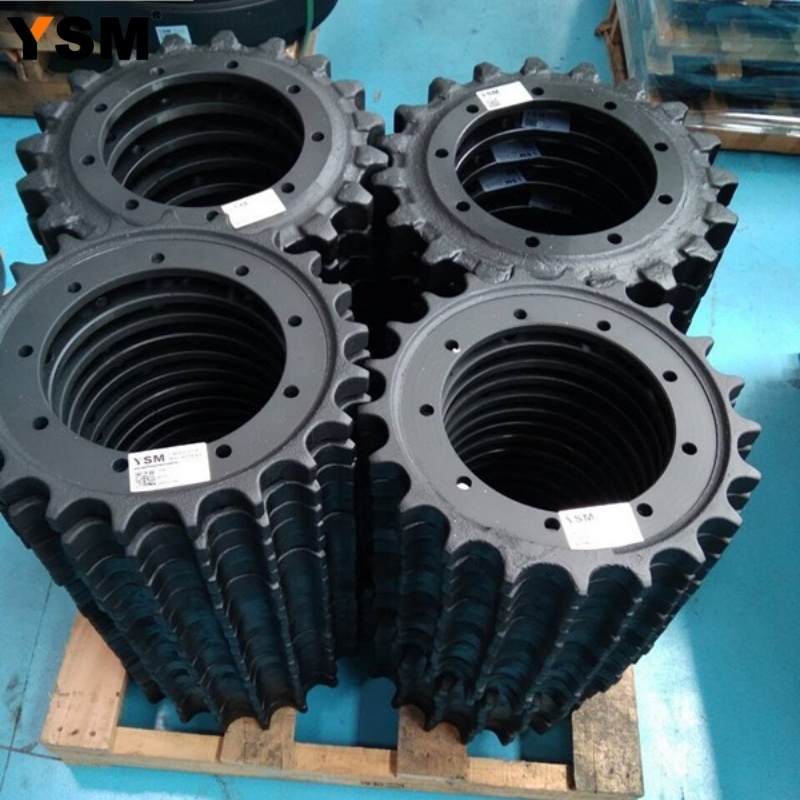
| Sprocket | Transfers travel drive force into the track-chain bushings. | Uneven tooth profiles, cracks, damaged fasteners and poor engagement with bushings. |
| Track chain / link assembly | Provides the articulated rail on which rollers travel and carries the shoes. | Pitch growth, pin-and-bushing wear, dry or stiff joints, rail-height loss, cracked links and uneven side wear. |
| Track shoes and hardware | Provide ground contact and attach to the link assembly. | Bent or cracked plates, grouser wear, elongated holes and loose, missing or damaged bolts and nuts. |
| Track adjuster, recoil unit and guides | Maintain the specified track position and absorb certain shock loads. | Grease leakage, damaged cylinder surfaces, restricted recoil movement, broken guides and repeated loss of adjustment. |
Official brochure details for the base PC200-10M0 include seven track rollers per side and 600 mm triple-grouser shoes. The same brochure lists 790 mm and 800 mm triple-grouser shoes as options for certain applications. Confirm the actual machine rather than assuming the standard specification remains installed.
What to Inspect Before Ordering PC200-10M0 Undercarriage Parts
1. Record the machine identity
Photograph the complete model and serial plate clearly. Record the exact suffix, serial or product identification number, destination market and whether the machine is a standard or long-carriage version. The machine identity is stronger evidence than a painted model decal.
2. Inspect both sides in the same order
Begin at the front idler and move toward the sprocket, checking each shoe, link, roller and guard. Repeat the same sequence on the opposite side. Photograph the whole side and then each abnormal point. A consistent sequence makes left-to-right wear differences easier to compare.
3. Clean packed material before judging wear
Mud, clay and stones can hide leaks, cracks, loose hardware and abnormal contact. Komatsu guidance emphasizes regular cleaning, correct track adjustment and wear monitoring. Clean without directing damaging pressure at seals, then allow wet surfaces to dry before deciding whether a dark area is fresh oil or only moisture.
4. Measure instead of relying on color or shape
Useful measurements may include roller diameter and flange spacing, mounting-hole center distance, overall length, chain pitch over the specified number of links, shoe width, bolt-hole pattern, sprocket tooth count and relevant mounting dimensions. The correct measurement method and service limit must come from the exact manual, service data or a qualified undercarriage inspection. There is no universal wear percentage that applies to every configuration.
5. Note the working condition
Abrasive sand, sticky clay, demolition debris, rocky ground, slopes and long-distance traveling create different wear patterns. Record typical material, moisture, gradient, daily travel and turning habits. This context helps distinguish ordinary wear from a mismatch, alignment issue or maintenance problem.
Why One Worn Part Can Point to a System-Level Problem
A failed roller may not be an isolated event. A track that is too tight can add load throughout the system. Packed material can restrict rotation and alter track tension. A worn chain may engage poorly with a newer sprocket, while severely worn sprocket teeth may accelerate bushing wear on a replacement chain. Misalignment can produce repeated flange contact on rollers and the idler.
Before replacing one visible component, compare wear across the chain, sprocket, rollers, idler, shoe hardware, guards and track frame. Check the opposite side as a reference, but do not assume both sides must be replaced automatically. The decision should depend on measurements, remaining wear life, operating plan, failure risk and the effect on mating parts.
Track tension also needs model-specific handling. A generic sag number found online may be measured under different conditions or for another series. Follow the PC200-10M0 operation and maintenance manual for cleaning, machine position, measurement method and adjustment procedure.
PC200-10M0 Parts Fitment Checklist
Send the following information together. It is faster and safer than exchanging model names alone:
- Equipment brand and complete model, including every suffix;
- Serial number or PIN and a clear serial-plate photo;
- Required part name and existing part number, if readable;
- Clear overall, side, end and mounting-area photos of the removed part;
- Critical dimensions taken with a ruler or caliper shown in the photo;
- For chains and shoes: pitch, link count, shoe width and bolt-hole pattern;
- For sprockets: tooth count, bolt-hole count, pilot diameter and bolt-circle dimensions;
- Quantity, destination country and typical working condition.
If the machine has been rebuilt, say whether the full track group or only individual components were replaced. A readable old part number is helpful, but should still be checked against dimensions and machine identity because markings can be incomplete or superseded.
Frequently Asked Questions
Does every Komatsu PC200 use the same track roller?
No. PC200 series, suffix, serial range, regional specification and previous modifications can affect the roller. Confirm the mounting design and dimensions rather than ordering by “PC200” alone.
How many track rollers does a PC200-10M0 have?
Komatsu’s published PC200-10M0 brochure lists seven track rollers on each side for the documented base machine. Verify the serial-specific parts information and the actual undercarriage before ordering.
Is the 600 mm track shoe the only PC200-10M0 option?
No. The brochure lists 600 mm triple-grouser shoes as standard equipment and also lists 790 mm and 800 mm triple-grouser options. Availability and suitability depend on specification and application.
Can a new chain be installed on old sprockets?
It should not be decided by age alone. Measure and inspect the chain and sprocket engagement as a matched system. Worn mating profiles can reduce the value of replacing only one component.
Can photos replace measurements?
Photos are useful for identifying structure and wear, but perspective can hide dimensional differences. Combine photos with serial information, part numbers and measured mounting dimensions.
Technical References
- Komatsu PC200-10M0 hydraulic excavator brochure — documented specifications, standard and optional undercarriage equipment.
- Komatsu PC200-10M0 launch for Southeast Asia — model positioning and application context.
- Komatsu South Africa, PC200-10M0 CE introduction, March 23, 2026 — current regional model activity.
- Komatsu undercarriage maintenance tips — cleaning, adjustment and wear-monitoring guidance.
Komatsu is a trademark of its owner. This independent educational guide does not claim affiliation, endorsement or original-equipment status. Always follow the serial-specific manual and approved service procedures.
Ask Our Undercarriage Team About PC200-10M0 Fitment
We can check suitable supply options for track rollers, carrier rollers, idlers, sprockets, track chains, track shoes, track assemblies and related track hardware after the machine and component are identified.
Corporate Email: sales@china-ysm.com
WhatsApp: +86-18606961587
For a fitment check, send the brand, complete model and suffix, serial number/PIN, part name and number, clear photos, requested dimensions, quantity, destination country and working condition. Compatibility and availability must be confirmed before ordering.